Mid-century modern living rooms look like costume parties when you buy matching furniture sets without understanding what actually makes the style work. These mid-century modern living room ideas for 2026 show you how to mix vintage finds with new pieces, choose the right wood tones, nail the color palette, and create that cozy retro vibe without spending a fortune. Save these mid-century modern decor ideas for later.
Your Living Room Looks Too Matchy And Not Vintage Enough
Here’s the problem: you see a Pinterest-perfect mid-century modern living room and try to recreate it by buying a whole furniture set from West Elm or Article, and somehow it looks… off. Too new. Too coordinated. Like a showroom instead of a home someone actually lives in.
Real mid-century modern spaces weren’t designed to look like museum exhibits – people bought furniture over time, mixed hand-me-downs with new pieces, and ended up with rooms that felt collected and personal instead of decorated all at once. That vintage credenza your grandma had? It was just her TV stand, not a statement piece.
The best mid-century modern living rooms I’ve seen lately get this. They have one or two actual vintage pieces – maybe a credenza from an estate sale or a coffee table from Facebook Marketplace – mixed with new stuff that has the right vibe. They use color in a way that feels intentional but not overthought. They look like real people decorated them, not like someone copied a magazine spread.
I’m going to walk you through 15 mid-century modern living room ideas that actually work in regular homes with regular budgets. We’ll talk about which pieces are worth splurging on, how to fake the vintage look when you can’t find the real thing, and how to make your living room feel retro and cozy without looking like you’re trying too hard. Let’s do this.
Pay Attention To How Low Everything Sits
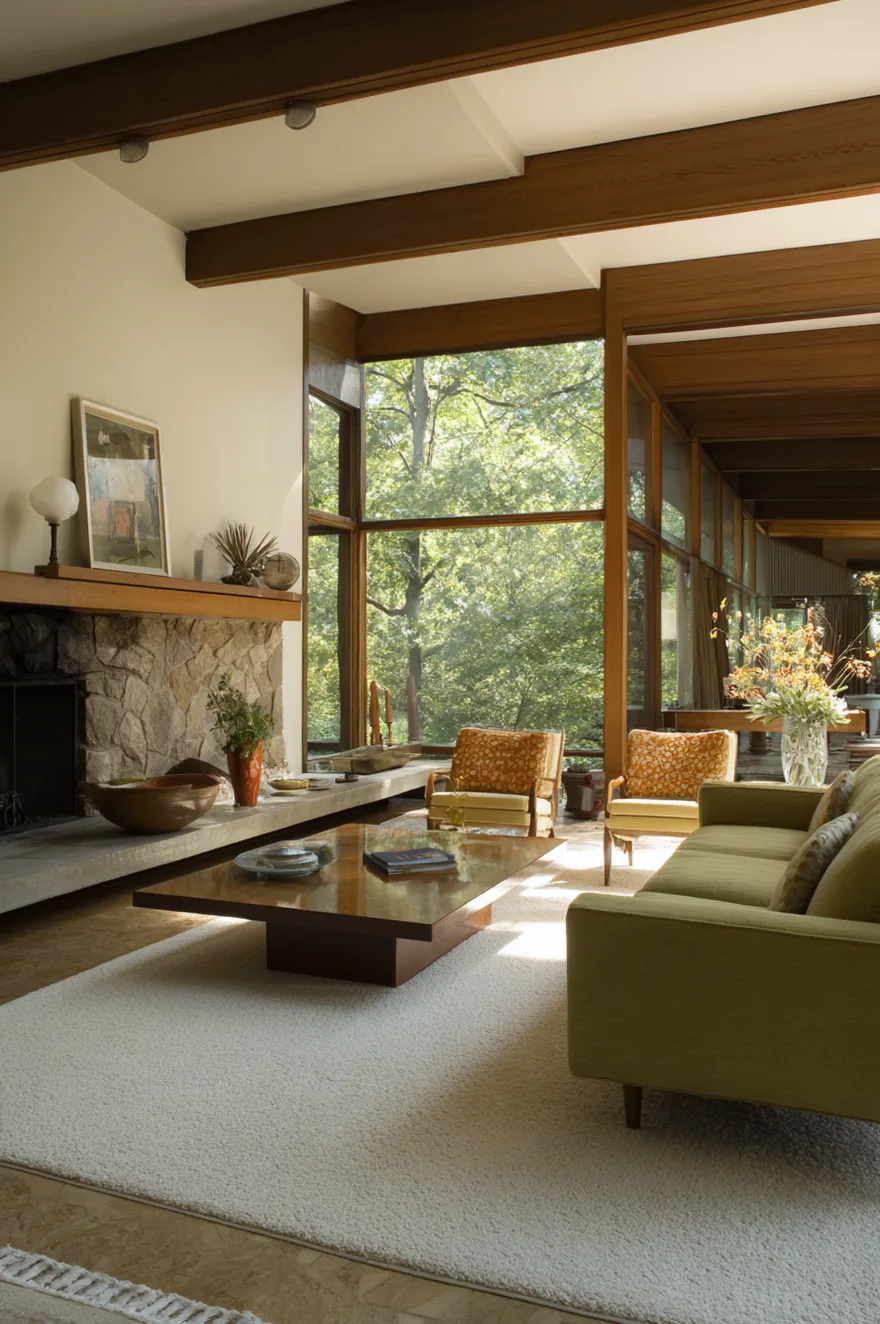
Mid-century furniture sits lower than contemporary furniture, and if you mix pieces with really different seat heights, it’s going to look weird. A sofa that sits 22 inches off the ground next to chairs that sit 16 inches off the ground makes the chairs look like kid furniture.
When you’re shopping, measure the seat height. Mid-century sofas are usually around 17-19 inches off the ground. Chairs are around 16-18 inches. Coffee tables are 16-18 inches tall, which puts them at or just below seat level. These proportions work together and create that characteristic low horizontal look.
Also pay attention to how deep the furniture is. Mid-century pieces tend to be shallower than contemporary equivalents – a credenza might be only 18 inches deep instead of 24. This matters in small rooms where every inch counts. The furniture doesn’t jut out as far, so the room feels more spacious even if you haven’t changed the amount of furniture in it.
The Sofa And Chairs Set The Whole Vibe
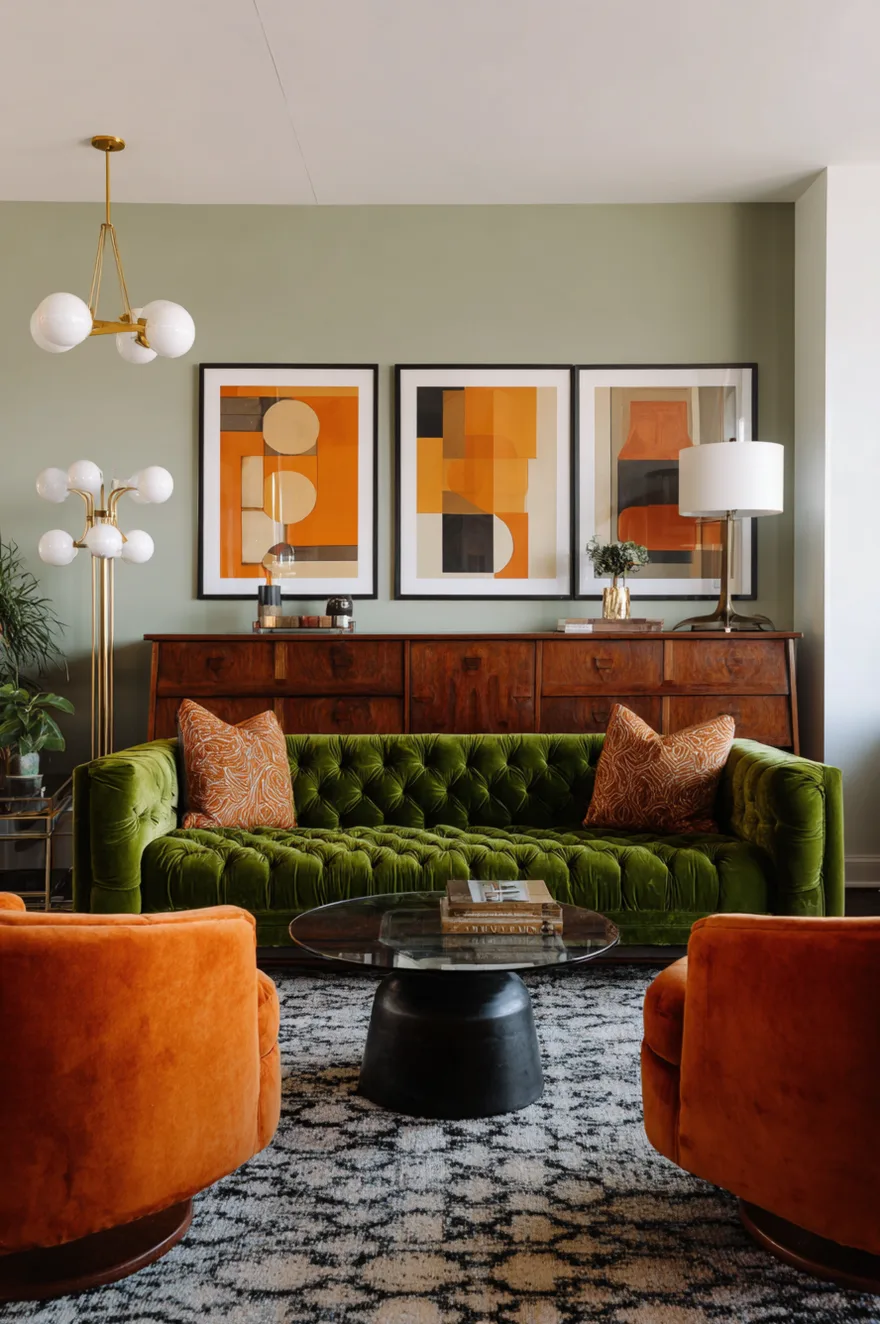
Start with your seating because everything else in the room has to work with these pieces. You need a sofa with a low profile and visible legs – those tapered wood legs are what make mid-century furniture look light and airy instead of heavy and blocky.
I learned this the hard way when Jake and I first moved in together. We had this chunky contemporary sofa with hidden legs, and no matter what else we added to the room, it never looked mid-century. The sofa was too tall, too deep, and it sat on the floor like a brick. Once we swapped it for a lower sofa with those classic tapered legs, suddenly everything clicked.
Pair your sofa with accent chairs instead of a matching loveseat. Two separate chairs give you more flexibility and look way more interesting than a furniture set. Go for chairs with curved arms and wood frames – bonus points if you can find vintage ones at an estate sale or thrift store. Upholster the chairs in a different color than the sofa but keep them in the same family. Olive green sofa with burnt orange chairs? Yes. Beige sofa with teal chairs? Also yes. Gray sofa with gray chairs? Boring.
Texture Over Pattern When You’re Nervous About Color

If bold color scares you, focus on texture instead. Different materials – jute, leather, linen, wood, ceramic, brass – create visual interest through texture rather than pattern or color, and it’s way easier to pull off.
A jute rug, leather sofa, linen curtains, ceramic vases, brass lamp – each material has its own surface quality and light reflection that adds depth to the room. The leather develops patina and gets a nice worn-in look over time. The jute stays rough and nubby. The linen has that slightly wrinkly organic texture. All these variations keep a neutral room from feeling flat.
This approach saved me when we first moved in and I was too nervous to commit to colorful furniture. We went with a tan leather sofa, cream linen curtains, jute rug, and walnut furniture. All neutrals, but the mix of textures made it feel layered and interesting instead of boring. Then I got braver and added the colorful pillows and art later.
Stick With Walnut Or Teak For All Your Wood
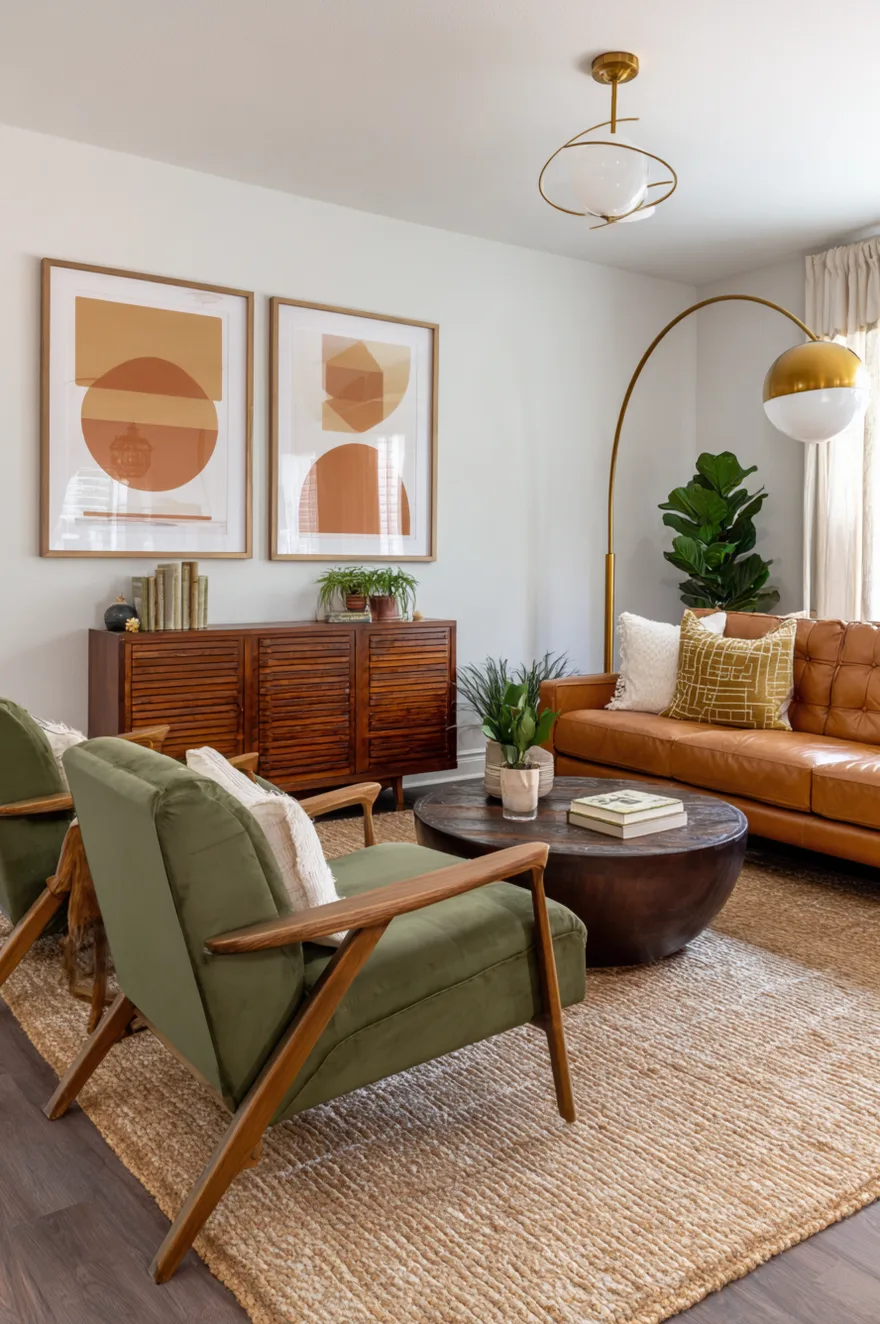
This is huge: pick either walnut or teak and use that same wood tone for your coffee table, credenza, side tables, and shelving. Mixing wood tones randomly makes the room look chaotic and unplanned, like you just grabbed whatever was on sale.
Walnut is darker with lots of grain variation – it’s dramatic and rich. Teak is lighter and more uniform – it’s warm and glowy. Both are classic mid-century woods, and both work great. The important thing is consistency. If your coffee table is walnut, your credenza should be walnut too. If your side table is teak, don’t throw in a dark walnut bookshelf.
I spent months hunting for a walnut credenza to match our walnut coffee table, and it was worth the wait. When we finally found one at an estate sale (for $200, which felt like winning the lottery), the room suddenly looked intentional instead of random. Everything tied together through that shared wood tone, and it made the space feel way more pulled-together without any extra effort.
One Bold Accent Chair Changes Everything
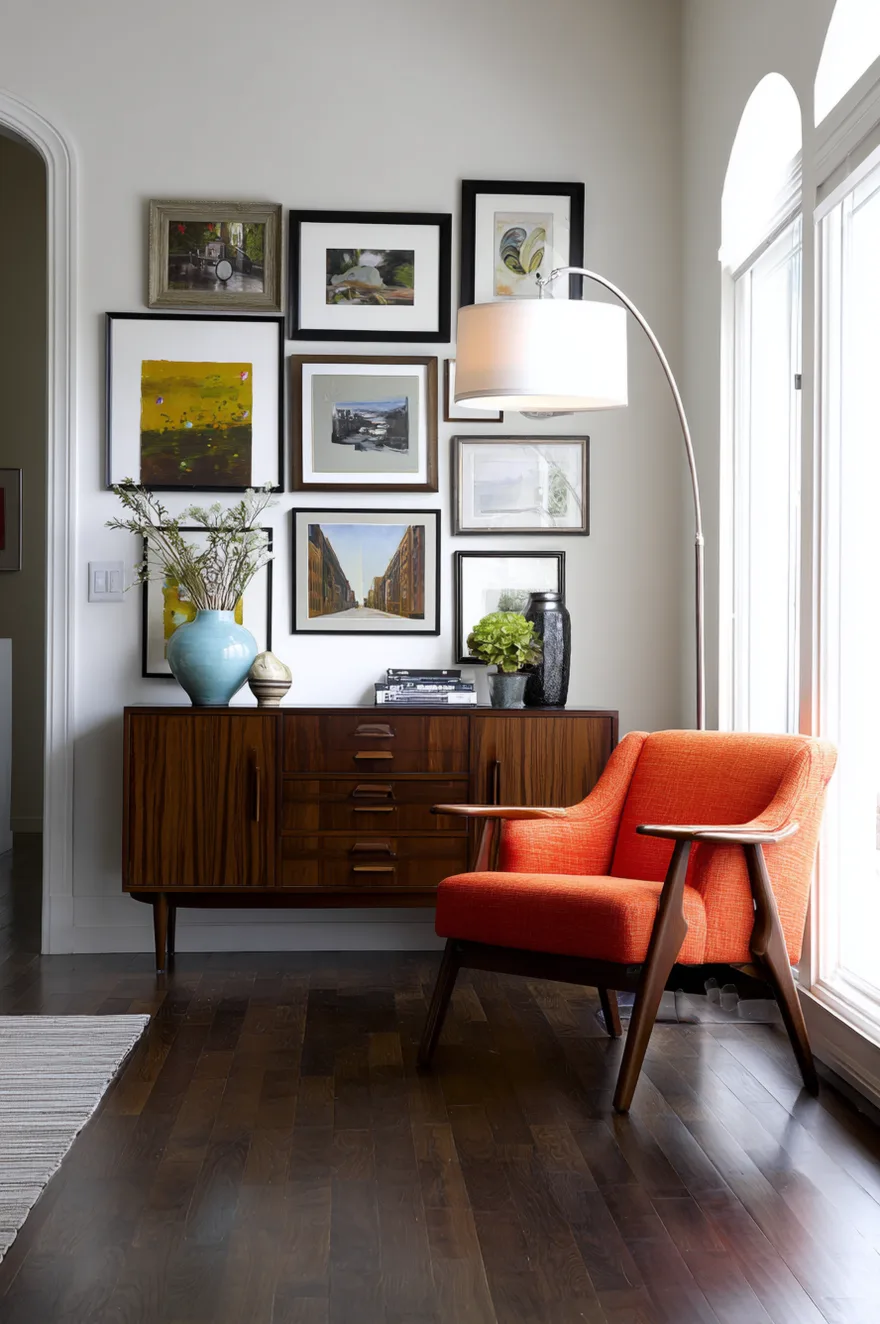
If your main seating is neutral, one accent chair in a bold saturated color becomes an instant focal point. It adds personality and visual interest without overwhelming the room or requiring you to commit to color on your bigger, more expensive pieces.
Go for a chair with a cool shape – an egg chair, womb chair, or a sculptural lounge chair with curves. The form should be interesting on its own, and then the color makes it even better. Burnt orange, mustard yellow, teal, rust – pick something that relates to colors elsewhere in the room but bold enough to stand out.
We almost bought a mustard yellow chair for the corner by our window, but Jake talked me out of it because Nora would 100% spill something on it within a week. We went with olive green instead (hides stains better), and I only occasionally regret the more practical choice. The point is, pick a color you love and put the chair somewhere it’ll actually get used – near a window with a reading lamp, angled toward the sofa, wherever makes sense for your space.
Layer Your Lighting Like You Mean It
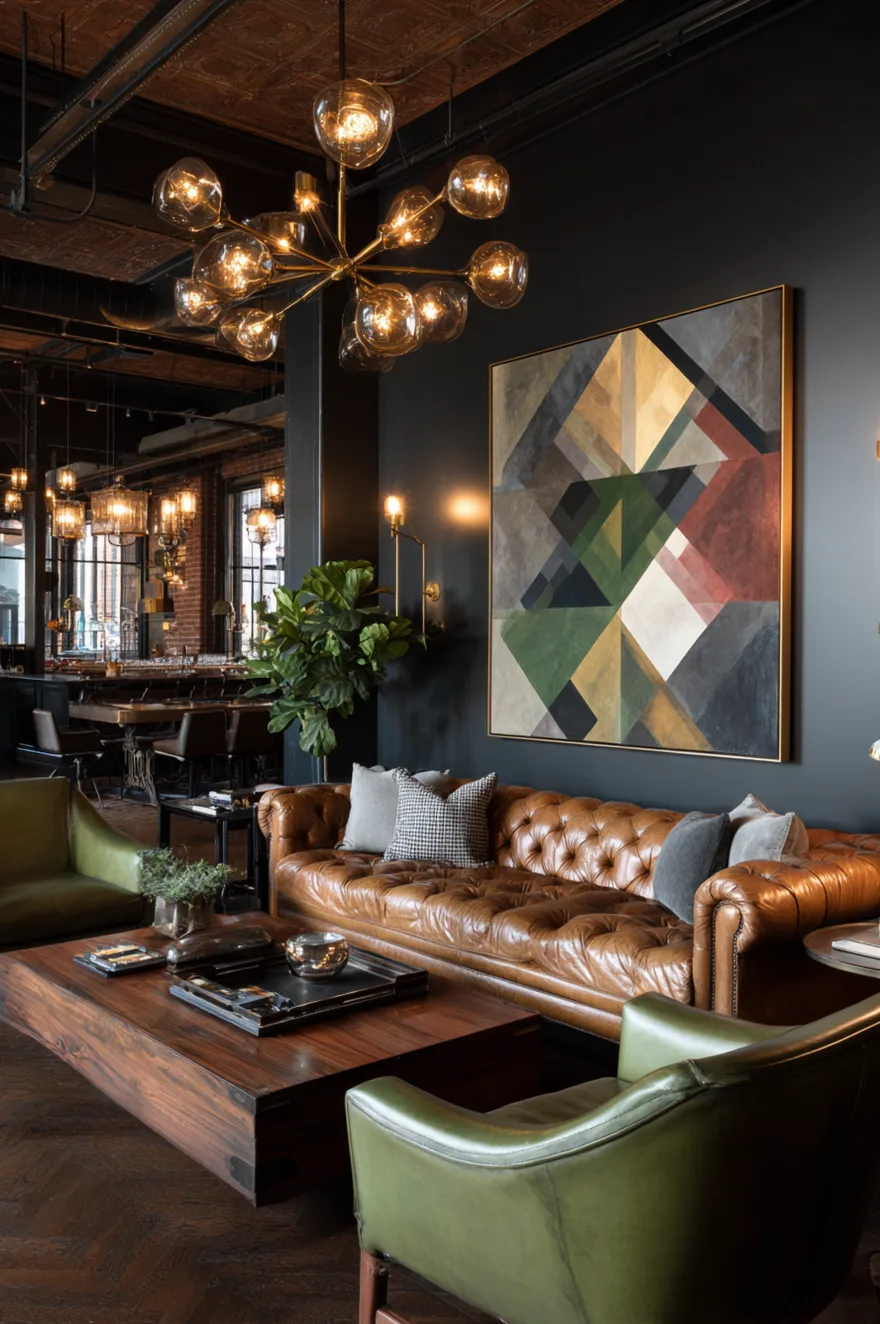
One overhead light is not enough. You need multiple light sources at different heights – a floor lamp, a table lamp, maybe a cool vintage chandelier if your ceiling can handle it. This is how you get that warm, cozy glow that makes mid-century rooms feel so inviting.
Start with an arc floor lamp. This is the iconic mid-century lighting move, and there’s a reason it shows up in every single vintage room photo – it looks cool and it’s functional. The lamp arcs over your seating area and provides overhead light without requiring ceiling installation. We got ours from West Elm (not vintage, but it looks the part) and it’s easily one of my favorite pieces in the room.
Add a table lamp on your credenza or side table. Look for lamps with ceramic or wood bases in organic shapes – those bulbous mid-century lamp bases are so distinctive. Top them with simple drum shades in white or cream. Then if you want to go all-in, add a statement chandelier. The Sputnik is the classic choice, but any brass or globe fixture with mid-century vibes works. Just make sure it’s on a dimmer so you can control the mood.
Gallery Wall With Geometric Prints
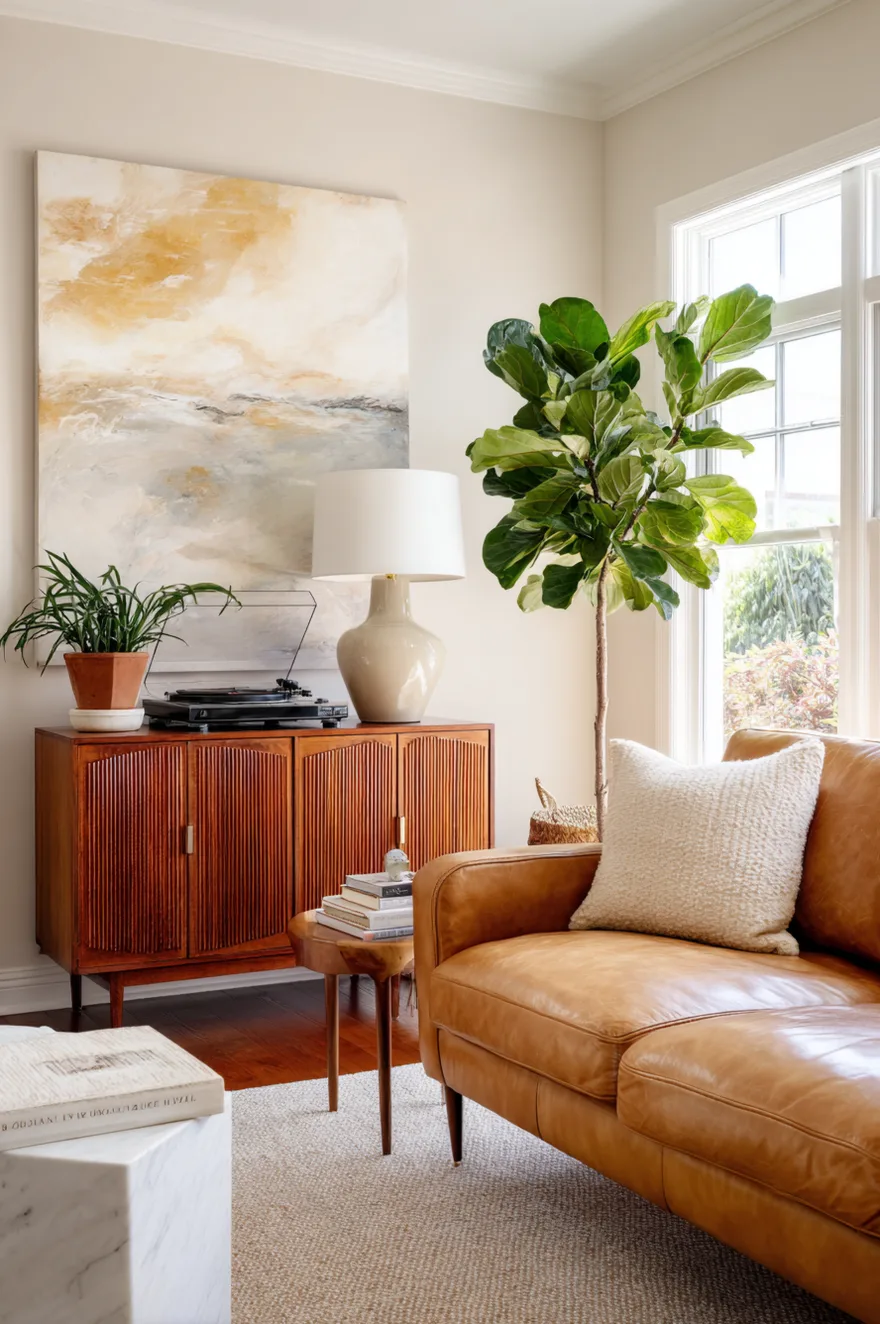
You don’t need expensive original art to nail the mid-century look. A gallery wall of affordable geometric prints in the right color palette does the job just as well and costs way less.
I found all our prints on Etsy – digital downloads that I printed at Staples and framed in simple wood frames from IKEA. Total cost for six framed prints: under $150. They’re all geometric or abstract designs in burnt orange, olive green, mustard, black, and cream, which ties into our furniture colors. Hung them in a grid on the wall behind the sofa, and boom – instant focal point.
The key is keeping the frames consistent and making sure the art shares a color story with your room. If your sofa is green and your chairs are orange, find prints that use those colors. Avoid super busy patterns or photorealistic images – mid-century art leans toward clean graphic shapes and bold simple compositions. Think circles, arches, geometric forms, stylized leaves. Simple, bold, graphic.
Built-In Shelving For Books And Stuff
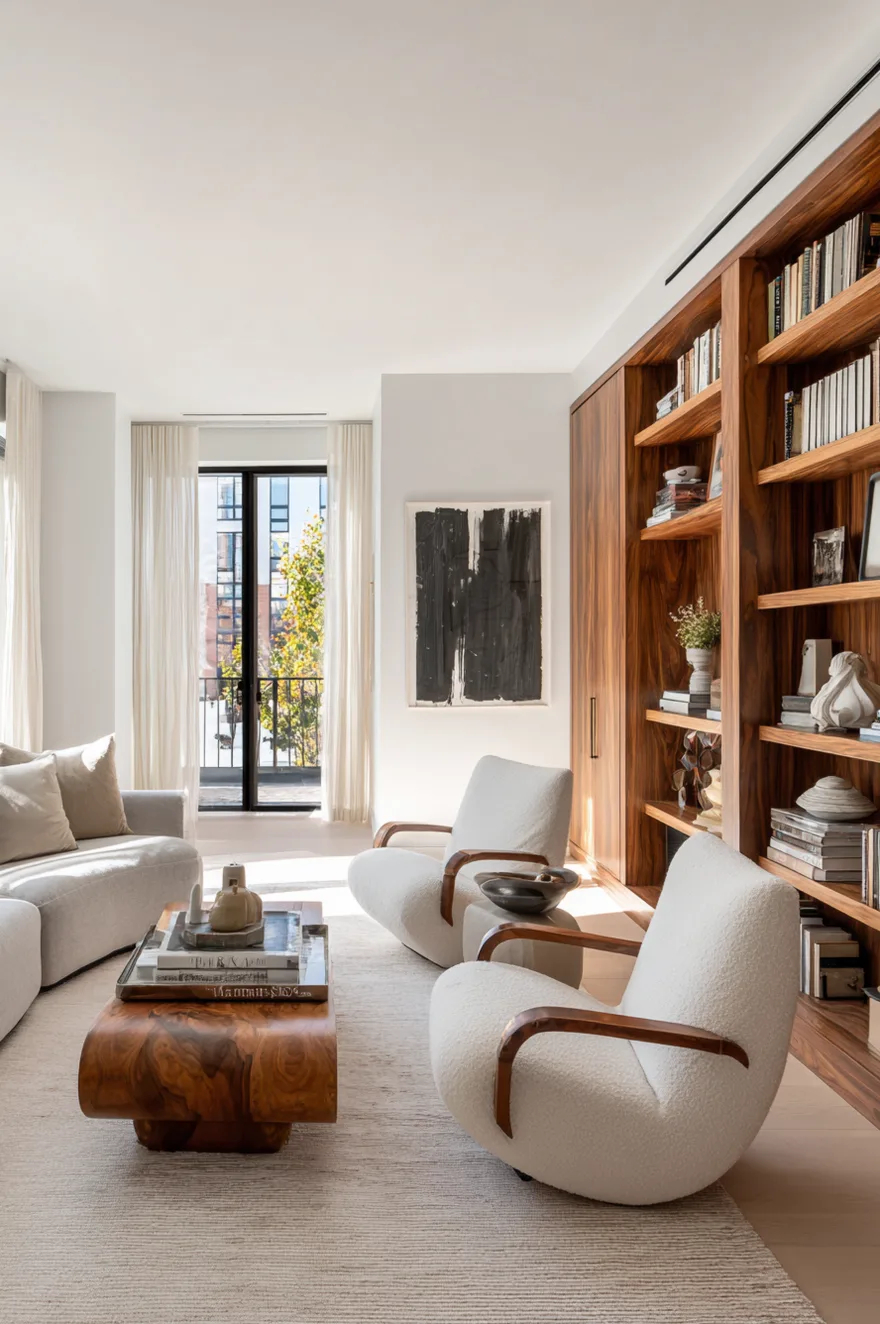
If you have the budget and the wall space, built-in shelving in walnut or teak is one of the best investments you can make. It gives you tons of storage, it looks architectural and intentional, and it solves the “where do I put all my stuff” problem that every living room has.
We don’t have built-ins (rental life), but my sister does in her house and I’m wildly jealous. Floor-to-ceiling walnut shelves on one wall, styled with books, plants, ceramics, and a few meaningful objects. It looks amazing and holds an insane amount of stuff without looking cluttered.
If built-ins aren’t in the cards, a good bookshelf in the right wood tone works too. Just style it thoughtfully – don’t cram every shelf full. Leave some breathing room, mix horizontal and vertical book stacks, add a plant here and there. The goal is curated, not packed.
Your Colors Need To Work Together
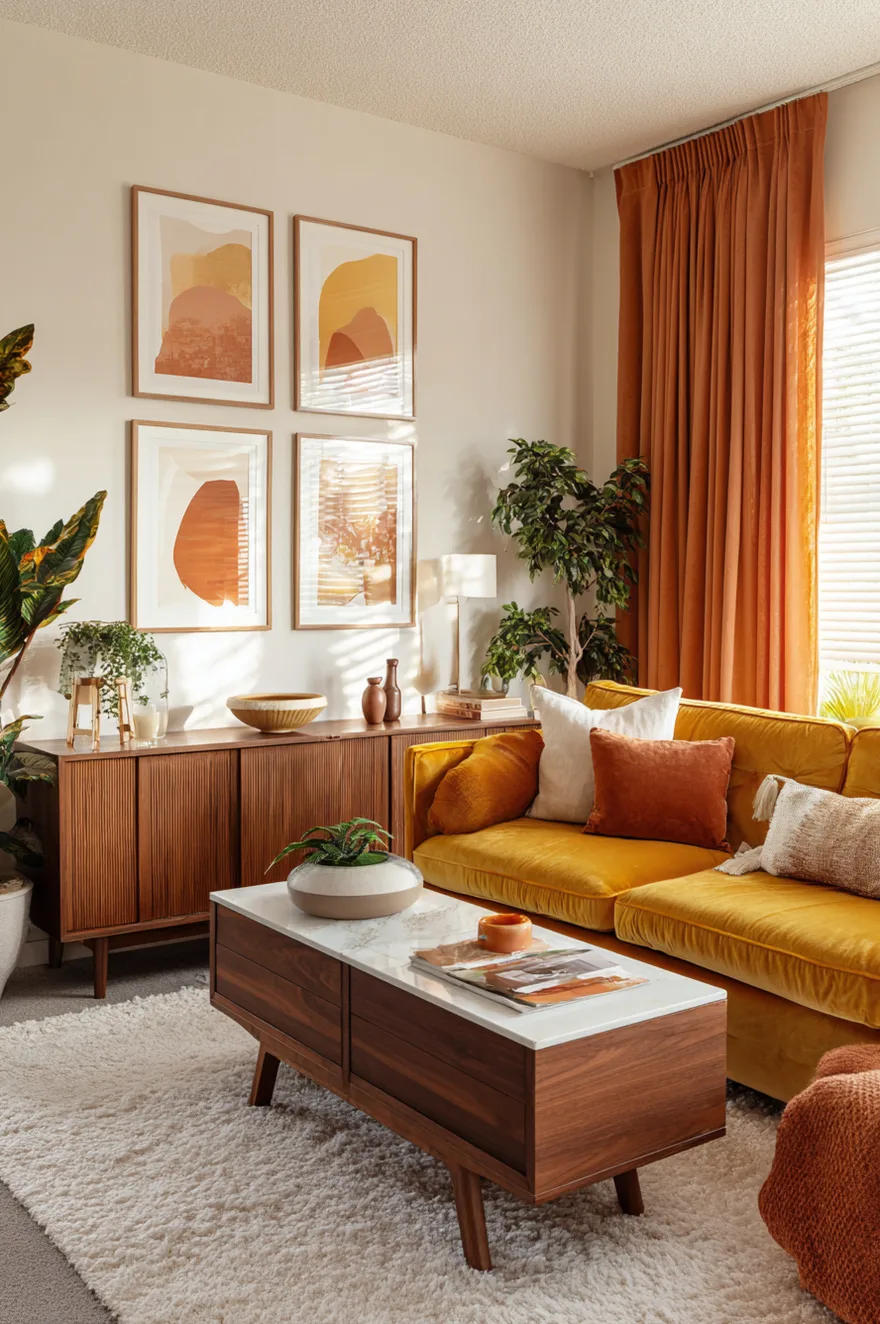
The exact shades matter less than whether the colors harmonize with each other and with your wood tones. You want colors that feel like they belong together because they have similar saturation levels and undertones.
Start with your wood and build from there. Walnut has warm reddish tones, so colors with warm undertones work best – olive green, burnt orange, warm rust, mustard. If you’re working with lighter teak, you can handle slightly brighter colors because the wood won’t compete as much.
Test everything in your actual space before committing. Paint samples on your wall. Fabric swatches from your sofa next to your rug sample. Colors look completely different under your specific lighting than they do in a store. I learned this the hard way with throw pillows that looked perfect in Target and completely wrong once I got them home. Now I always bring samples home and live with them for a few days before buying the real thing.
Arrange Furniture For Talking, Not TV Watching
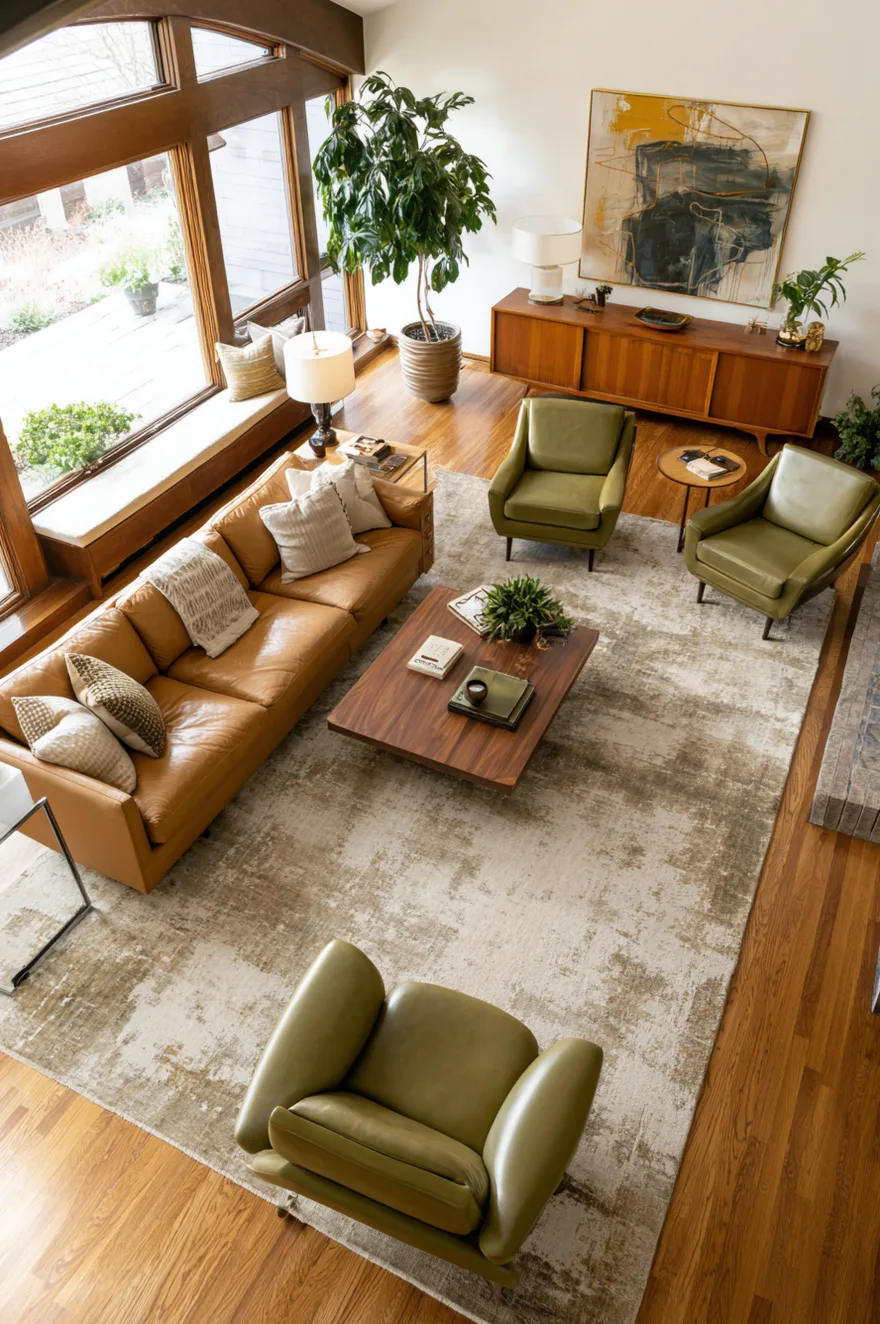
Mid-century layouts prioritize conversation over TV viewing. Arrange your sofa and chairs to face each other rather than all pointing at the TV like you’re in a theater.
Put your sofa and chairs in an L-shape or facing each other about 6-8 feet apart – close enough to talk comfortably without shouting. The coffee table sits in the middle within reach of everyone. This creates an actual conversation zone where people naturally interact instead of just sitting side-by-side staring at a screen.
Float your furniture away from the walls if you have the space. Use your area rug to define the seating zone and leave open floor space around the edges. This makes even small rooms feel bigger because you’re not cramming everything against the walls. The TV can be off to the side or behind the seating – it doesn’t have to be the focal point of the whole room.
Style Your Credenza Like You Care
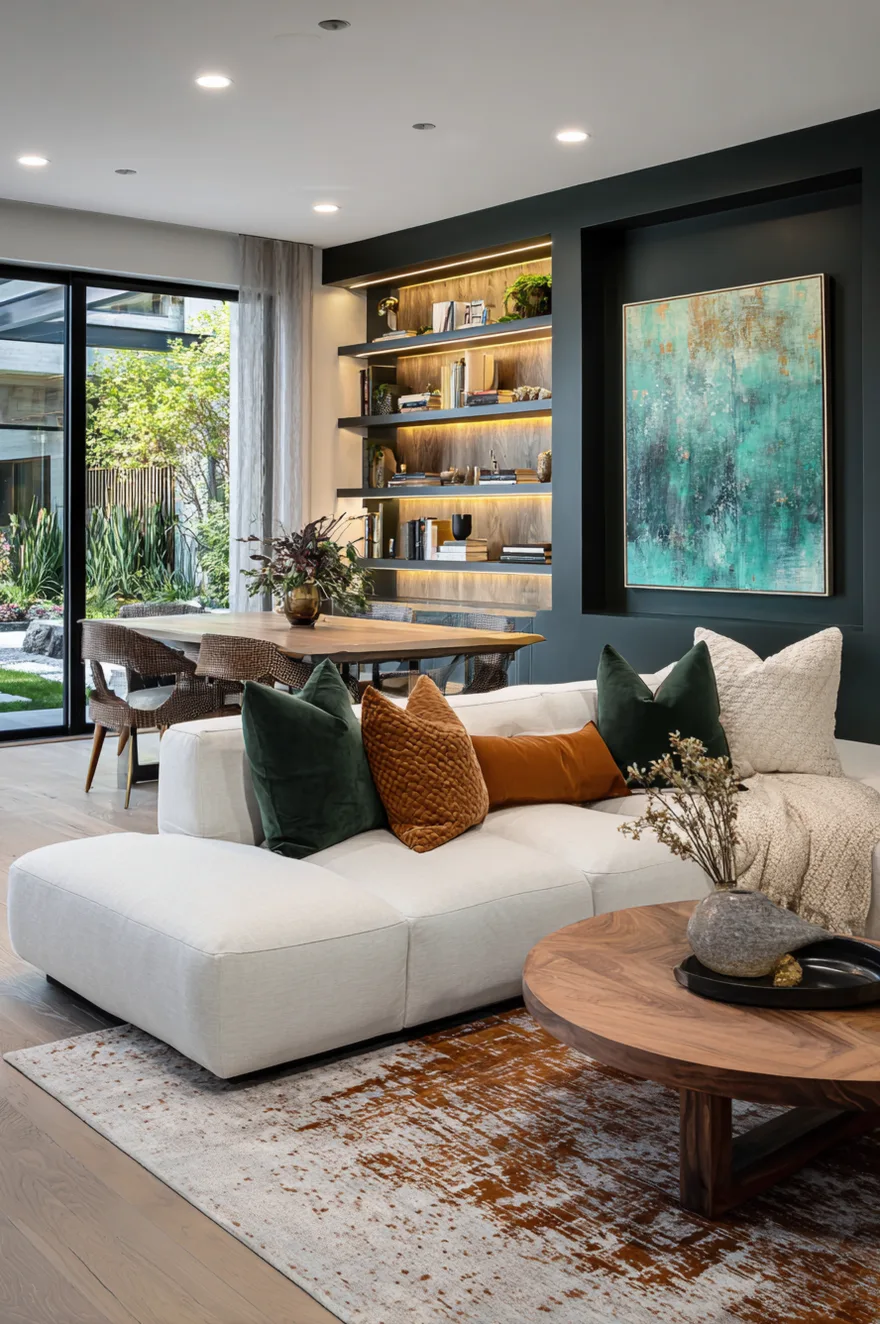
The credenza or media console is where a lot of people drop the ball. They shove the TV on top, pile remotes and cables everywhere, and call it done. Don’t do this.
Get a credenza with doors that close so you can hide your router, cable box, and all that ugly tech stuff. Walnut with sliding doors or regular hinged doors – either works. Then style the top surface with restraint. A table lamp on one end for ambient light. A small grouping of objects on the other end – maybe a ceramic vase, a small plant, and a brass sculpture or candle. Leave the middle relatively clear.
The trick is making it look intentional without making it look fussy. You’re going for “I put some thought into this” not “I’m trying to impress you.” A few well-chosen objects beat a cluttered surface every time. And please, for the love of design, hide your cables. Velcro cable ties are like $8 on Amazon and they will change your life.
Navy Or Teal Keeps It From Feeling Too Warm
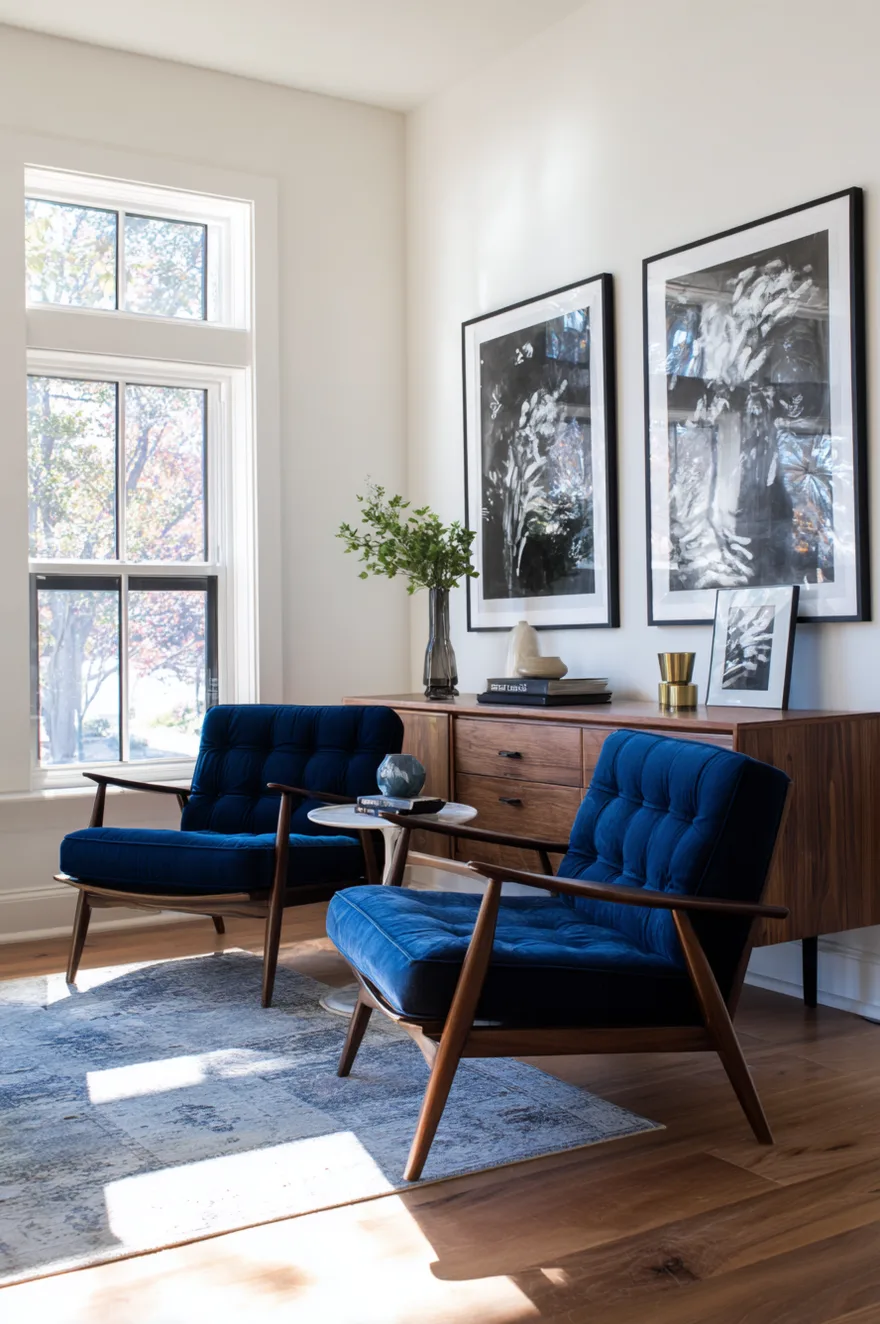
If your whole room is olive green, burnt orange, and brown, it can start feeling a little one-note. Adding navy blue or teal as an accent color gives you some contrast and keeps the palette from feeling too matchy.
Use navy or teal in smaller doses – throw pillows, a chair, artwork, or objects on your shelves. We have a pair of teal pillows on our olive green sofa and they make such a difference. The cool tone balances all the warm wood and earth colors, and it feels sophisticated instead of just retro.
These colors show up a lot in vintage mid-century rugs and art too, so they’re totally period-appropriate. A rug with navy, rust, and cream pulls together a room with mixed furniture colors. Teal in your art connects to a teal pillow and a teal vase, creating little visual connections across the room that make everything feel intentional.
Mix In Some Vintage Black-And-White Photos
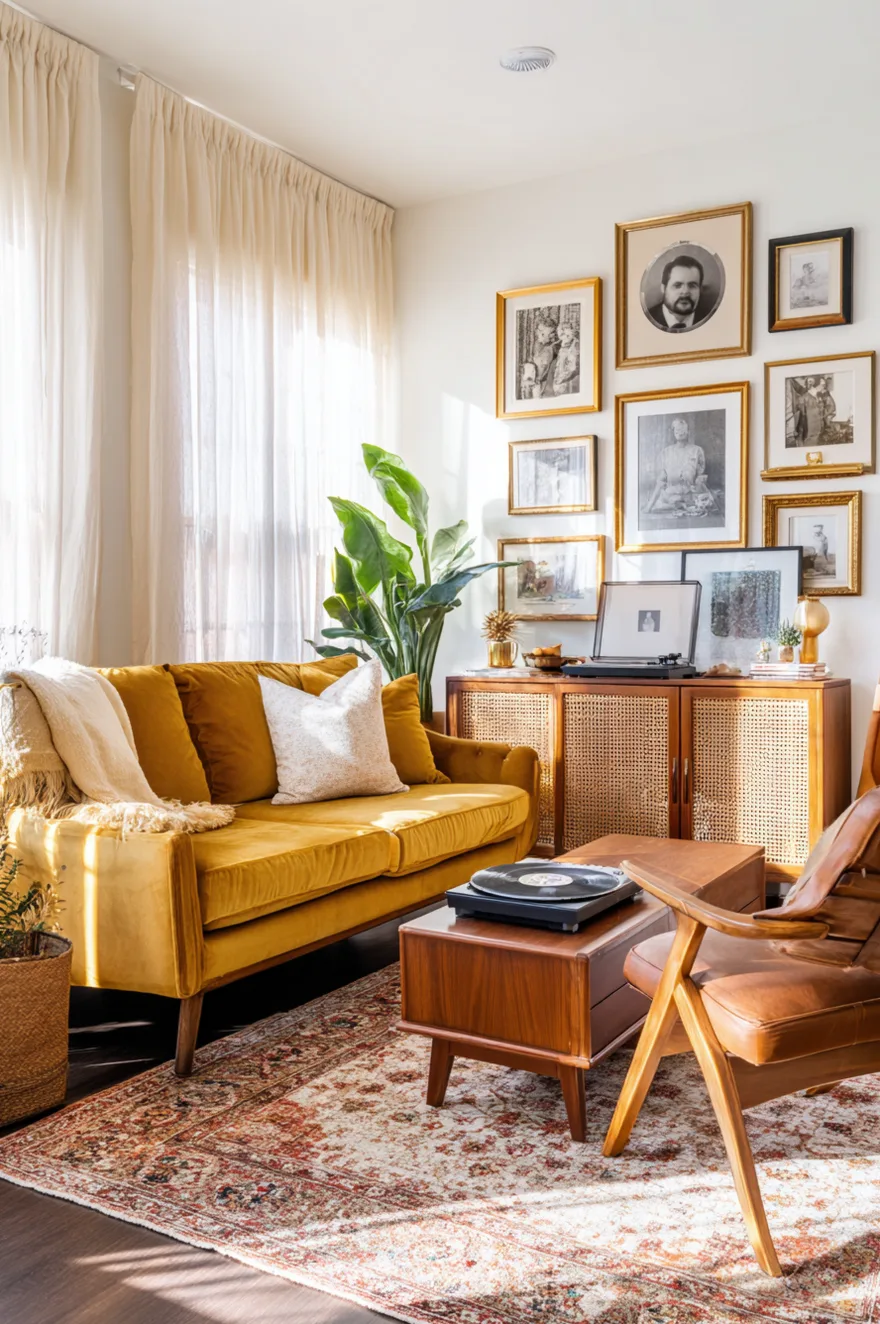
Gallery walls don’t have to be all geometric prints. Mixing in some vintage black-and-white photography or vintage portraits adds variety and keeps the wall from looking too same-y.
I found a set of vintage portrait prints on Etsy – old fashion photos from the 60s and 70s – and framed them in simple black frames. Mixed them in with our geometric prints on the gallery wall, and it added so much more interest. The faces draw your eye in a different way than the abstract shapes do.
Look for photos with strong composition and good contrast. Architectural details, dramatic portraits, landscapes with graphic shapes. Frame all the photos the same way to create visual consistency, but differently from your abstract prints. Like black frames for photos and wood frames for abstracts. This creates distinction while keeping the whole arrangement cohesive.
You Can Mix New And Vintage Furniture
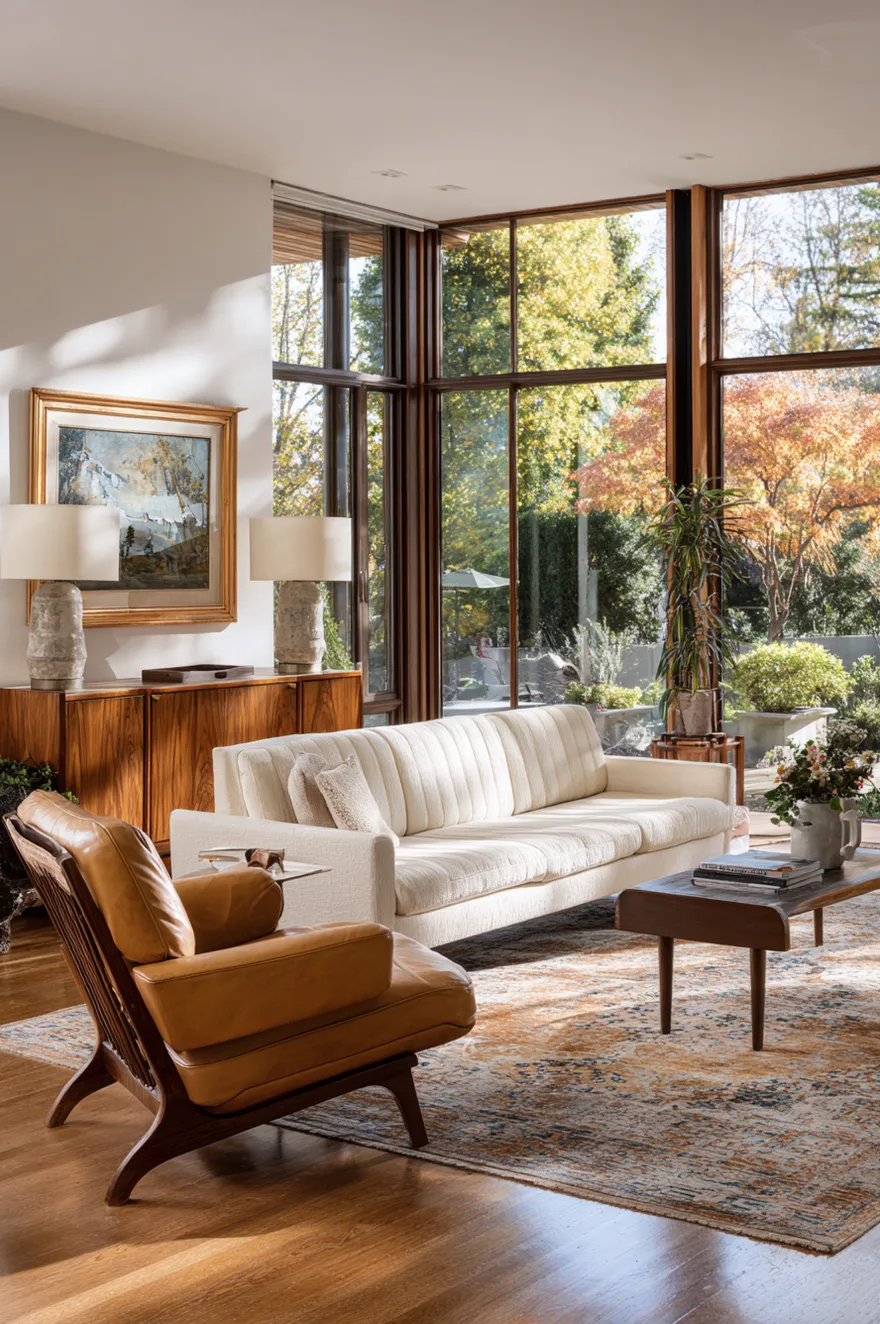
You don’t need all-vintage furniture to nail the mid-century look. In fact, mixing new pieces with vintage finds usually creates a more comfortable and personal space than a room full of authentic vintage that you’re scared to actually use.
The trick is keeping the proportions and materials consistent. A new sofa with clean lines and exposed legs works fine next to a vintage credenza as long as the scale is similar. What breaks the look is mixing something huge and contemporary (like an oversized sectional) with delicate vintage pieces.
Let your vintage pieces set the tone and buy new pieces that complement them. If you scored an amazing vintage credenza at an estate sale, build the room around it. Your new sofa should work with the credenza’s wood tone and scale. This creates rooms that feel collected over time, which is honestly more interesting than everything matching perfectly.
Mid-Century Curtains That Actually Work
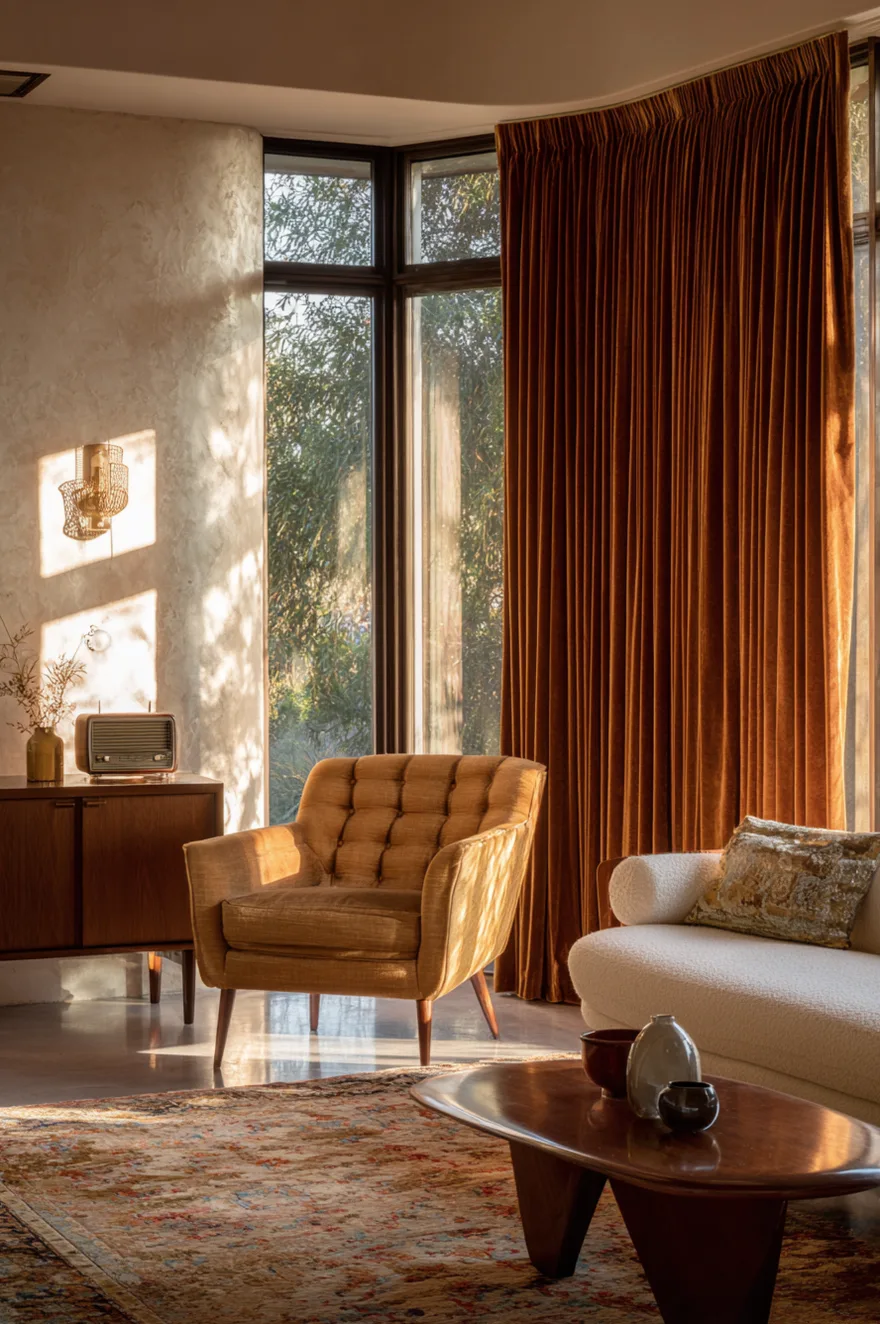
Window treatments in mid-century rooms need to be functional and simple – they filter light, provide privacy, and soften the hard edges of windows without blocking views or adding unnecessary decoration.
Go for floor-length curtains in linen or cotton in warm neutrals. Hang them as high as possible and let them puddle slightly on the floor for that relaxed organic feel. Use simple rods in brass or wood – nothing fancy or decorative.
If you need more coverage, layer sheers under heavier panels. The sheers diffuse harsh sunlight during the day while keeping your view, and the heavier panels close at night for privacy. This gives you flexibility without looking fussy. Skip tiebacks, valances, or any complicated hardware. Simple and functional is all you need.
The Right Rug Makes Everything Look Intentional
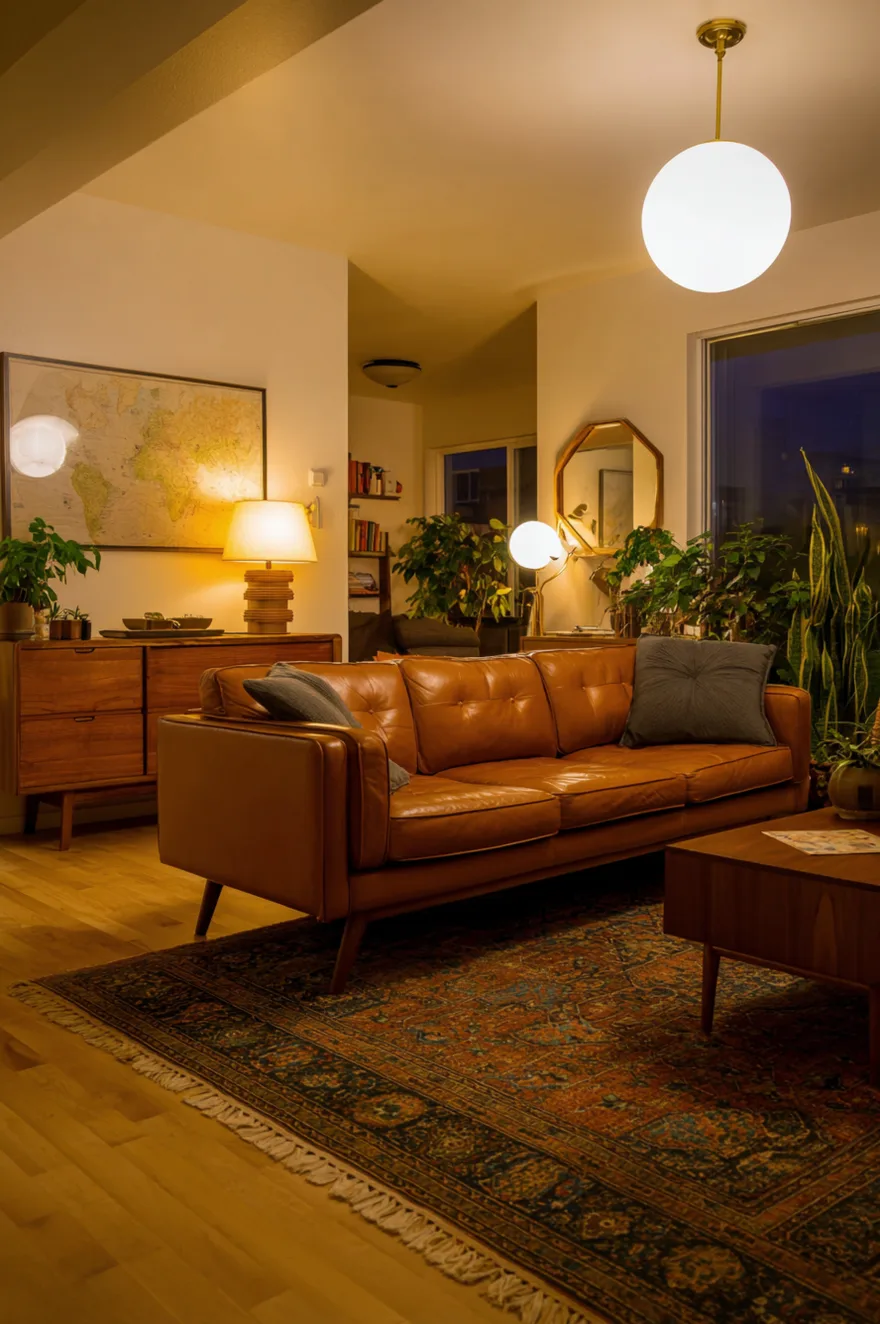
A big area rug anchors your furniture and ties the whole room together. Go big – like, bigger than you think you need. All the front legs of your sofa and chairs should sit on the rug. This creates a cohesive seating zone and makes the furniture look like it belongs together instead of floating randomly in space.
For mid-century rooms, you’ve got two good options: a vintage Persian or Turkish rug in rich colors, or a textured neutral rug in jute or wool. The vintage rug route adds pattern and color – look for rugs with geometric designs in rust, navy, coral, cream, and olive green. They’re surprisingly affordable if you’re willing to hunt on eBay or estate sales. We got ours for $300 and it’s probably my favorite thing in the room.
The neutral route works if you’ve already got a lot of color and pattern happening with your furniture and art. A big jute rug or a low-pile wool rug in cream or tan provides a calm base that lets your furniture be the star. Either way works – just make sure the rug is big enough and ties into your color palette.
What Actually Matters In Mid-Century Modern Design
Okay, so after all that, here’s what actually matters: low furniture with visible legs, warm wood in one consistent tone, a color palette built on earth tones plus one or two pops of saturated color, geometric art, layered lighting, and natural materials that add texture.
Start with the big stuff – sofa, chairs, credenza – and make sure you get those right. Everything else you can add over time as you find pieces that work. Honestly, the best mid-century rooms evolve slowly as you hunt for the perfect vintage coffee table or score an amazing arc lamp at an estate sale.
Don’t stress about making it perfect right away. My living room took two years to feel finished, and even now I’m still swapping things out when I find better pieces. That’s part of the fun – the room grows with you instead of being designed all at once and then frozen in time.
Which of these mid-century modern living room ideas are you going to try first? Let me know in the comments – I love hearing what you’re working on and I’m happy to help you figure out the best approach for your space and budget.
With love,
Liv