Attic bedrooms feel cramped and awkward when you don’t know how to work with slanted ceilings and low angles. These attic bedroom ideas for 2026 show you how to use skylights, built-in storage, neutral colors, and cozy textures to turn angled ceilings into an aesthetic advantage. Keep these slanted ceiling bedroom ideas for your next attic makeover.
The Slanted Ceiling Problem Everyone Faces
You walk into your attic and see wasted space everywhere. The ceiling angles down on both sides, leaving maybe four feet of usable headroom along the edges. You can’t fit a standard dresser without blocking a window. The bed placement feels wrong no matter where you try it. And somehow, even with all that square footage, the room feels smaller than the bedroom downstairs.
I get it. When Jake and I bought our house three years ago, the attic was basically a storage dump with exposed insulation and one sad lightbulb. Everyone told us to leave it alone, but we had a baby on the way and needed the space. Turning that attic into Nora’s bedroom taught me everything about working with angled ceilings instead of fighting them.
Attic bedrooms fail when you try to force regular bedroom layouts into irregular spaces. A king bed shoved against the tallest wall. A wardrobe blocking the only window. Overhead lights that cast weird shadows on slanted ceilings. The good news? Once you understand how to use the angles, attic spaces become some of the coziest rooms in the house. I’m going to walk you through 17 attic bedroom ideas that actually work – layouts, storage, lighting, colors, and all the details that make slanted ceilings feel intentional instead of awkward.
Low Platform Beds For Low Ceilings
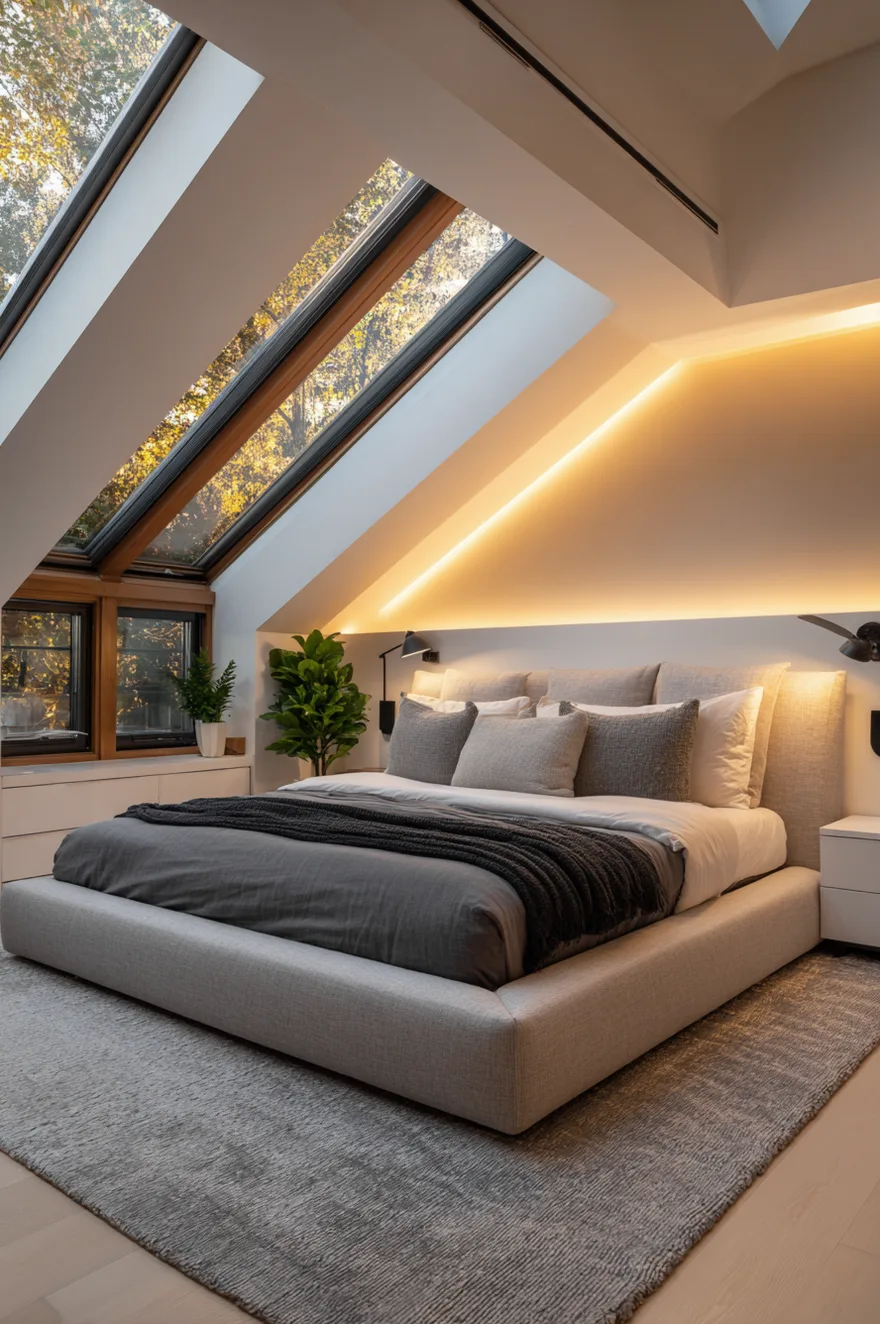
A low platform bed keeps the visual weight down and gives you more usable headroom in attic bedrooms with lower ceilings. The bed sits closer to the floor, which makes the ceiling feel higher by comparison, and you don’t lose inches to bulky bed frames or box springs.
I learned this the hard way when we first moved a regular bed frame up to the attic. The frame added 14 inches of height, which meant less clearance for sitting up and made the whole room feel squashed. We swapped it for a simple platform bed that sits maybe 10 inches off the floor, and suddenly the room felt way more open.
Platform beds also give you built-in storage underneath if you go with one that has drawers. In an attic where floor space is limited and you can’t fit full dressers, that under-bed storage is gold. We keep Nora’s extra blankets, out-of-season clothes, and her approximately seven thousand stuffed animals in those drawers.
Built-In Shelving For Awkward Corners
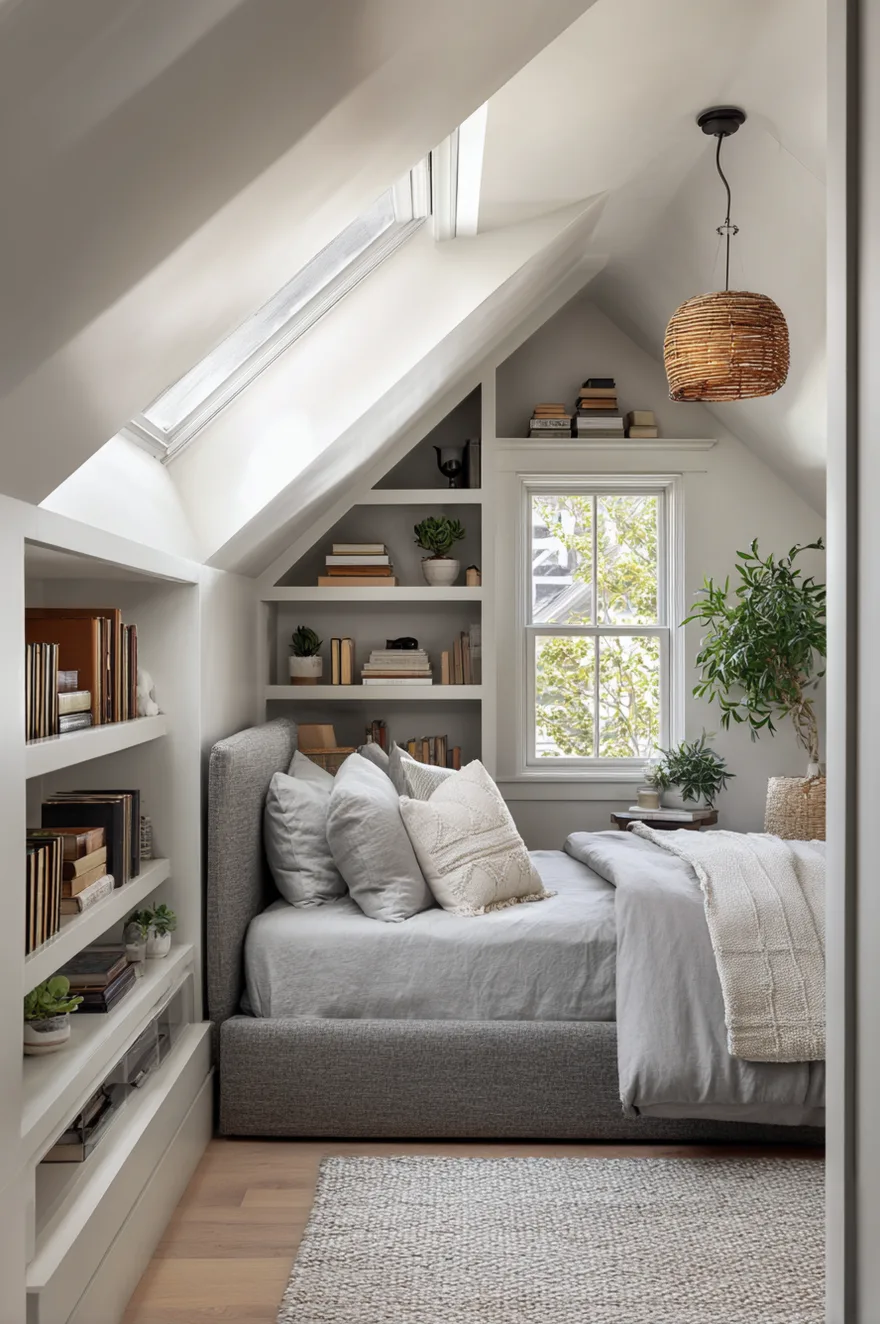
Those weird triangular corners where the slanted ceiling meets the floor? Perfect for custom built-in shelving that follows the angle and turns dead space into functional storage. You can’t put regular furniture there anyway, so built-ins make sense.
We have a corner in Nora’s room where the ceiling drops down to maybe 3 feet off the floor, and we had the carpenter build a custom set of shelves that follows that angle – tall on one side, short on the other. It holds all her books, and the lower shelves are perfect for bins and baskets. If we’d tried to put a bookshelf there, we would’ve wasted half the height because the ceiling cuts it off. Custom built-ins use every inch.
Paint them the same color as the walls so they fade into the architecture, or paint them a contrast color if you want them to be a feature. We went white-on-white so they disappear, which keeps the room feeling clean and simple. The books and toys add enough color – the shelves themselves don’t need to.
Attic Bedrooms With Ensuite Bathrooms
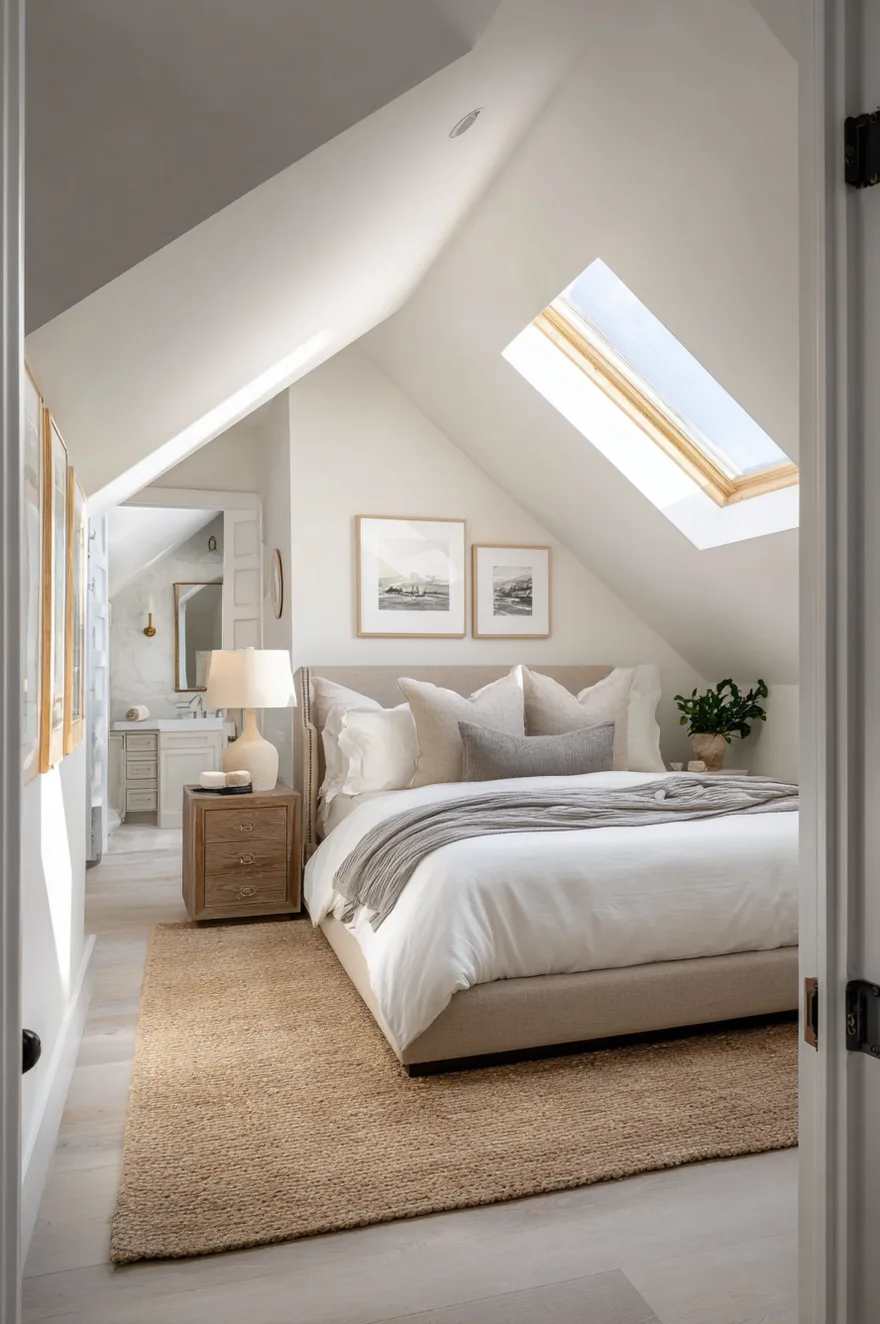
If you’re doing a full attic conversion, adding a small ensuite bathroom makes the space feel like a true primary suite instead of just an extra bedroom. Tuck the bathroom into the low-ceiling area where it doesn’t matter that you can’t stand up fully – you’re mostly sitting or bending over a sink anyway.
My cousin converted her attic into a primary suite with a tiny ensuite bathroom, and it completely changed how she uses the space. The bathroom is under the lowest part of the slanted ceiling – maybe 5 feet of headroom at the tallest – but it has a toilet, a small vanity, and a walk-in shower with a glass door. She can’t stand fully upright in parts of it, but honestly, who cares? It’s a functional bathroom that means she doesn’t have to go downstairs in the middle of the night.
Use the same design tricks as the bedroom – skylights for natural light, white walls to keep it bright, built-in storage to save space. A bathroom with a slanted ceiling and a skylight feels like a spa, especially if you add a rain showerhead and some plants.
Angled Ceiling Paint Ideas
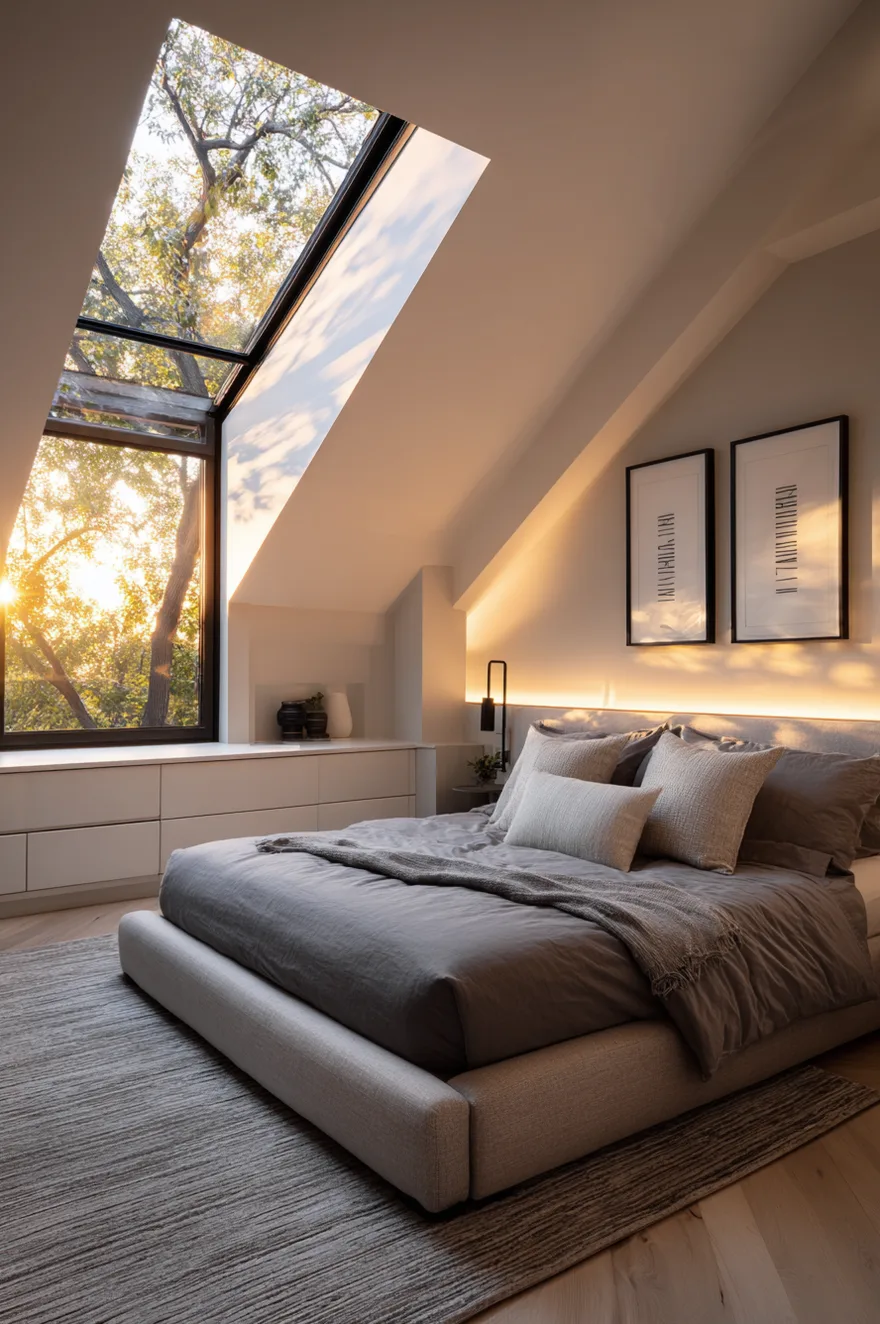
Painting the slanted walls a different color than the vertical walls helps define the architecture and makes the ceiling angles feel intentional. You can go light on the slanted sections and darker on the vertical walls, or vice versa, depending on the mood you want.
I’ve seen attic bedrooms where the slanted ceiling is painted a soft warm gray and the short vertical walls (the knee walls) are painted white. The contrast makes it really clear where the ceiling starts and the wall ends, which actually makes the room easier to read visually. Without that definition, everything kind of blurs together and the space feels more confusing.
Another option: paint the entire ceiling (including the slanted parts) one color, and paint the walls a different color, even if it’s just a few shades different. The color break defines the geometry and emphasizes the vaulted shape. Just keep it subtle – you want to highlight the architecture, not make it feel like you’re inside a color-blocked art project.
Vaulted Ceilings With Exposed Beams
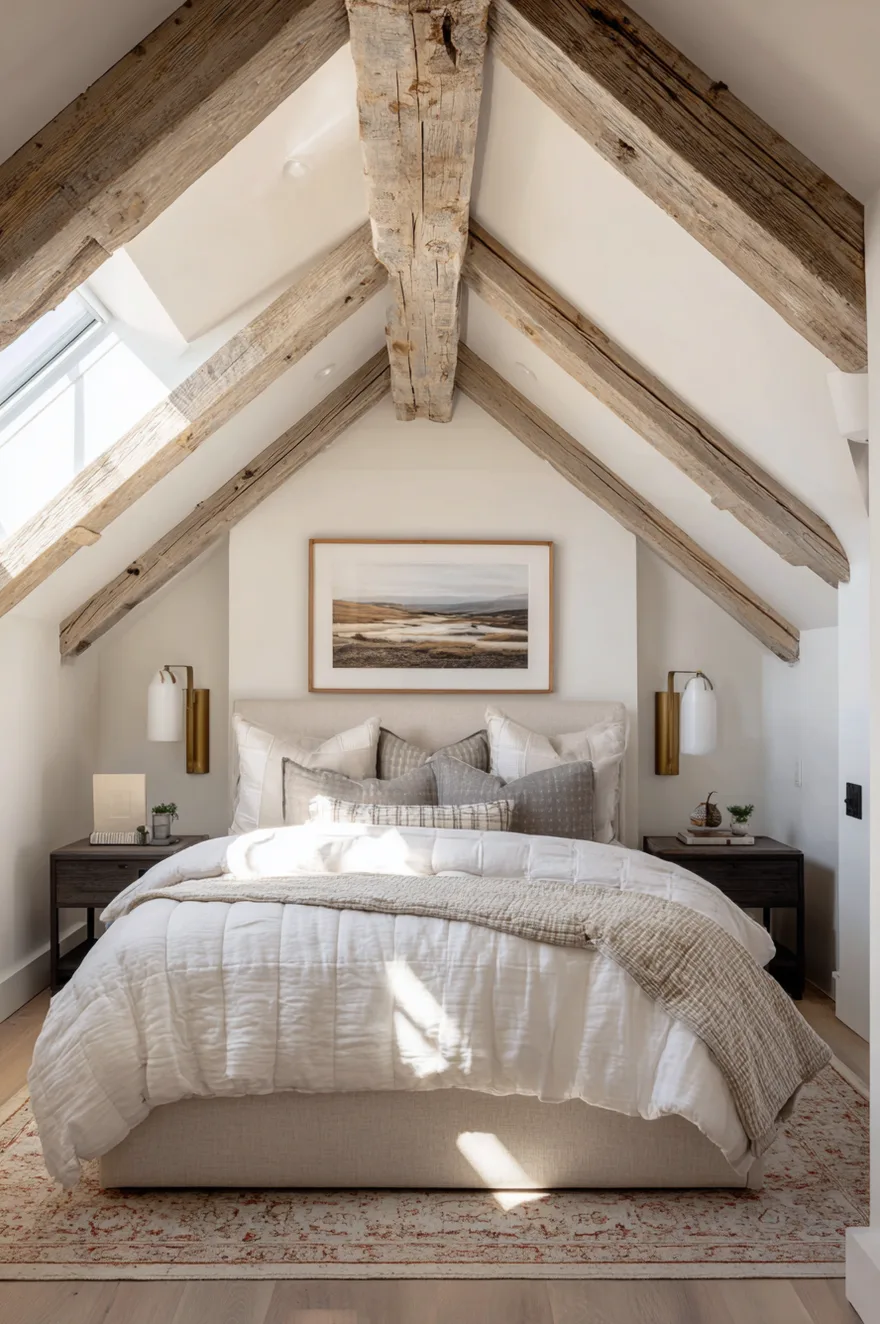
Keeping the ceiling beams exposed and painting them a contrasting color adds architectural interest without adding furniture or decor. The beams define the structure of the space and make the vaulted ceiling feel more dramatic, and they give your eye something to follow along the angles.
I love exposed beams painted in a darker tone than the ceiling – like natural wood beams on a white ceiling, or black-painted beams on a light gray ceiling. The contrast emphasizes the lines and makes the geometry of the space more obvious, which is a good thing in attics where the architecture is already interesting and you might as well lean into it.
If you have existing ceiling beams that are covered by drywall, talk to a contractor about exposing them. It’s not always possible depending on how the attic was finished, but if it is, it’s a relatively inexpensive way to add a ton of character. Even if the beams are rough or unfinished, you can sand them, stain them, or paint them to match your aesthetic.
Small Attic Bedrooms With Built-In Beds
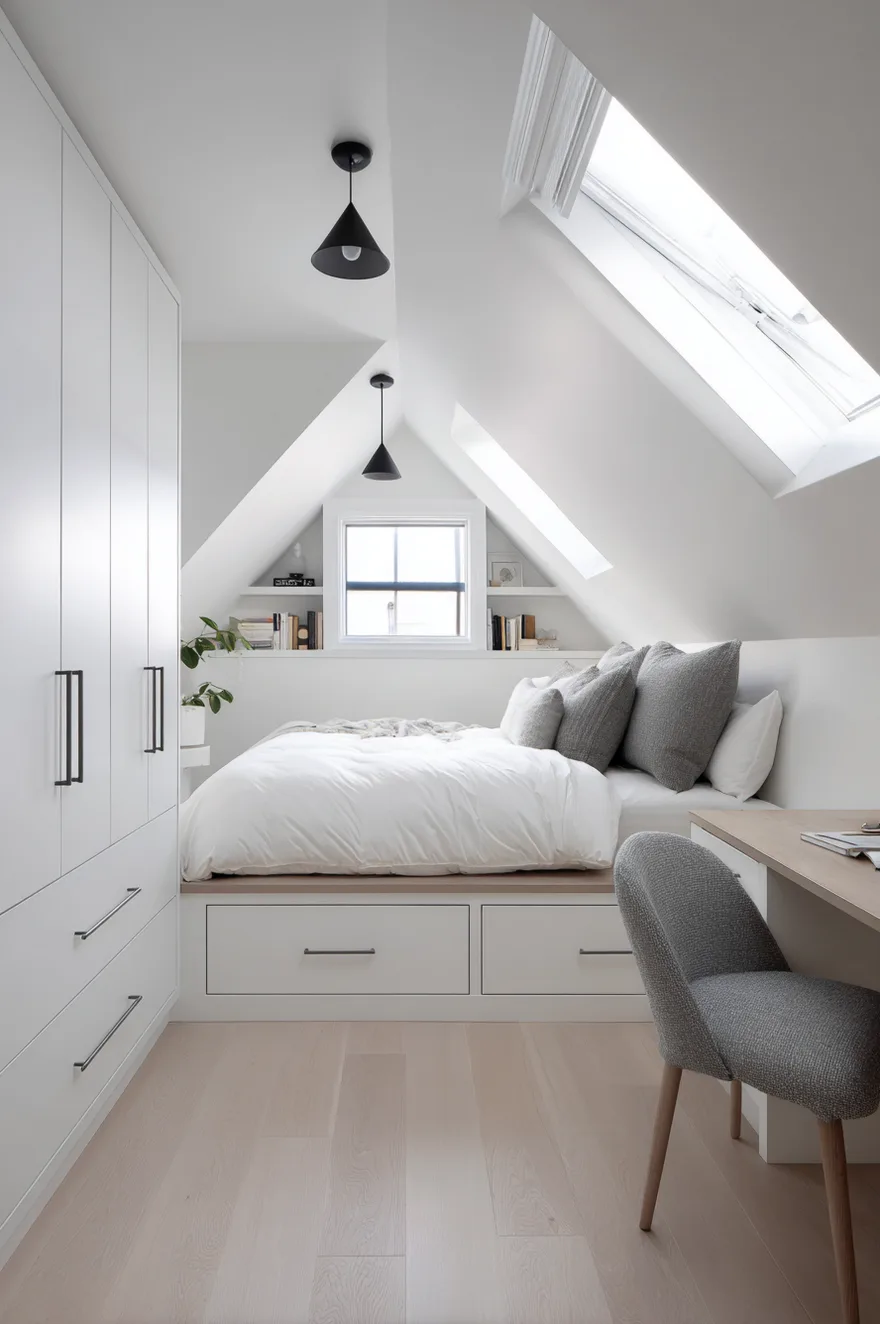
Building the bed into the wall along the low slanted section creates a cozy alcove that feels like a sleeping nook, and it frees up the center of the room for other uses. The built-in bed tucks into the space you couldn’t use for anything else anyway, and it makes even a tiny attic feel functional and intentional.
I’ve seen this done in attic guest rooms where the bed is basically a built-in daybed with drawers underneath, positioned lengthwise along the slanted wall. You slide in from the side, and once you’re lying down, the low ceiling doesn’t matter because you’re not trying to sit up. It’s like sleeping in a bunk, but way more grown-up and designed.
Add a reading light on the wall above the pillow, some open shelving next to the bed for books and a water glass, and maybe a small desk or chair in the taller part of the room. This layout works especially well for kids’ attic bedrooms or guest rooms where you’re maximizing a small footprint and want the space to feel multi-functional.
Center The Bed Under The Highest Point
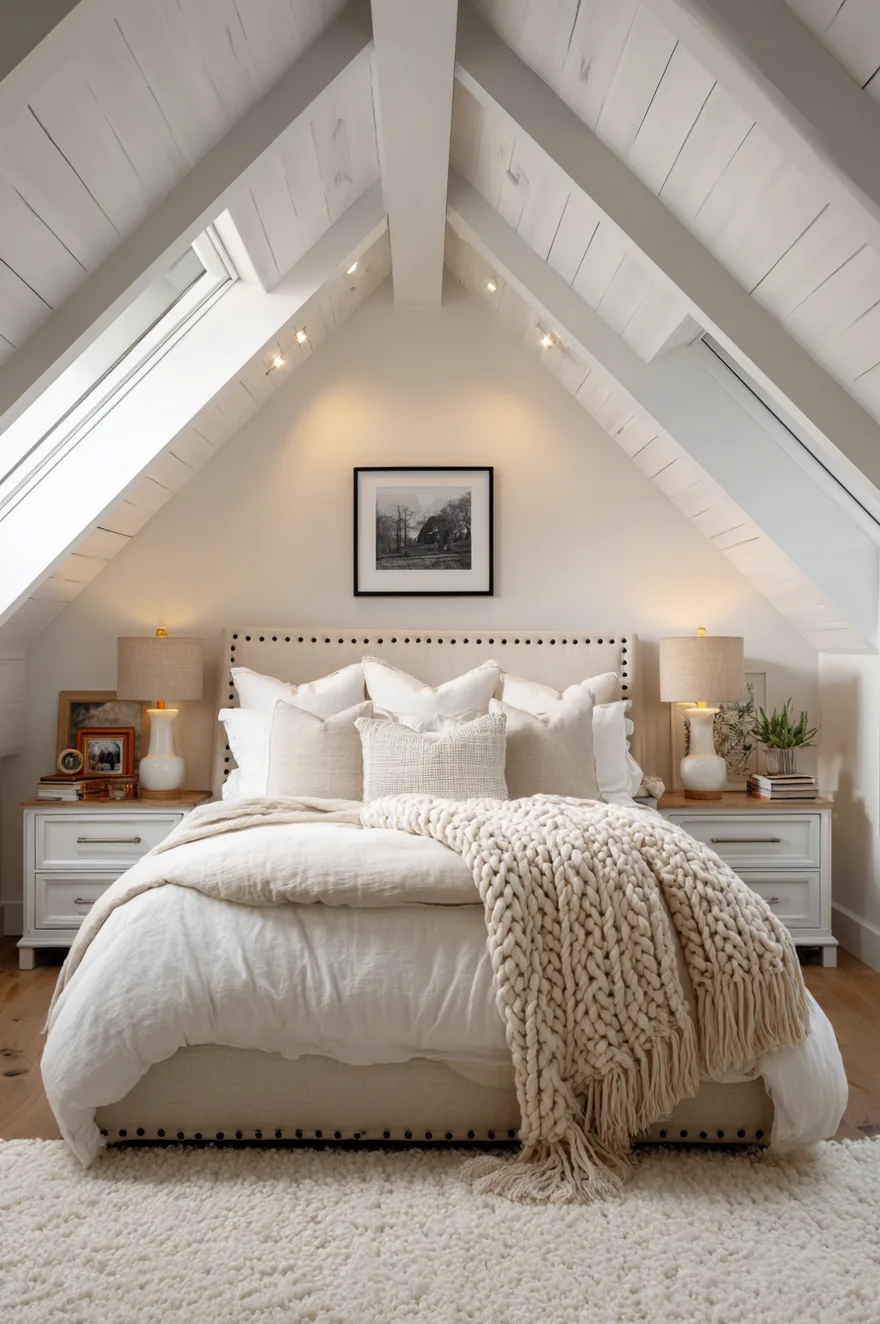
Put your bed directly under the tallest part of the ceiling – usually the center peak or ridgeline. This gives you the most headroom where you actually sit up and move around, and it makes the room feel balanced instead of lopsided.
I tried putting Nora’s bed against the side wall first because that’s what felt normal, but every time I walked in to check on her at night, I had to duck to avoid hitting my head. Once we moved the bed to the center, the whole room opened up. You can stand at the foot of the bed without crouching, and the angled walls on both sides frame the bed instead of crowding it.
If you have a skylight directly overhead, even better. Waking up to natural light pouring in from above completely changes how the room feels. Just make sure you have blackout shades if you’re a light sleeper – summer sunrise at 5:30 AM gets old fast.
Attic Offices With Sleeping Lofts

If you don’t need a full bedroom, consider using part of the attic for an office or workspace and keeping just a small sleeping area for guests. The desk goes in the tallest section where you can sit comfortably, and the sleeping loft or daybed tucks into the lower section where you only need to lie down.
My friend Kate did this in her attic and it’s honestly genius. She has a full desk setup with a monitor, shelves for books, and a rolling chair in the center of the room where the ceiling is tallest. Along one slanted wall, she has a built-in daybed with storage drawers underneath. It’s her home office 99% of the time, and when her parents visit, they sleep up there. Dual purpose, no wasted space.
Add good task lighting for the desk area – a desk lamp with adjustable arm or a pendant light that hangs low over the workspace. Keep the sleeping area separate with its own lighting (wall sconces or a small bedside lamp) so you can use one zone without lighting up the whole attic.
Skylights Change Everything
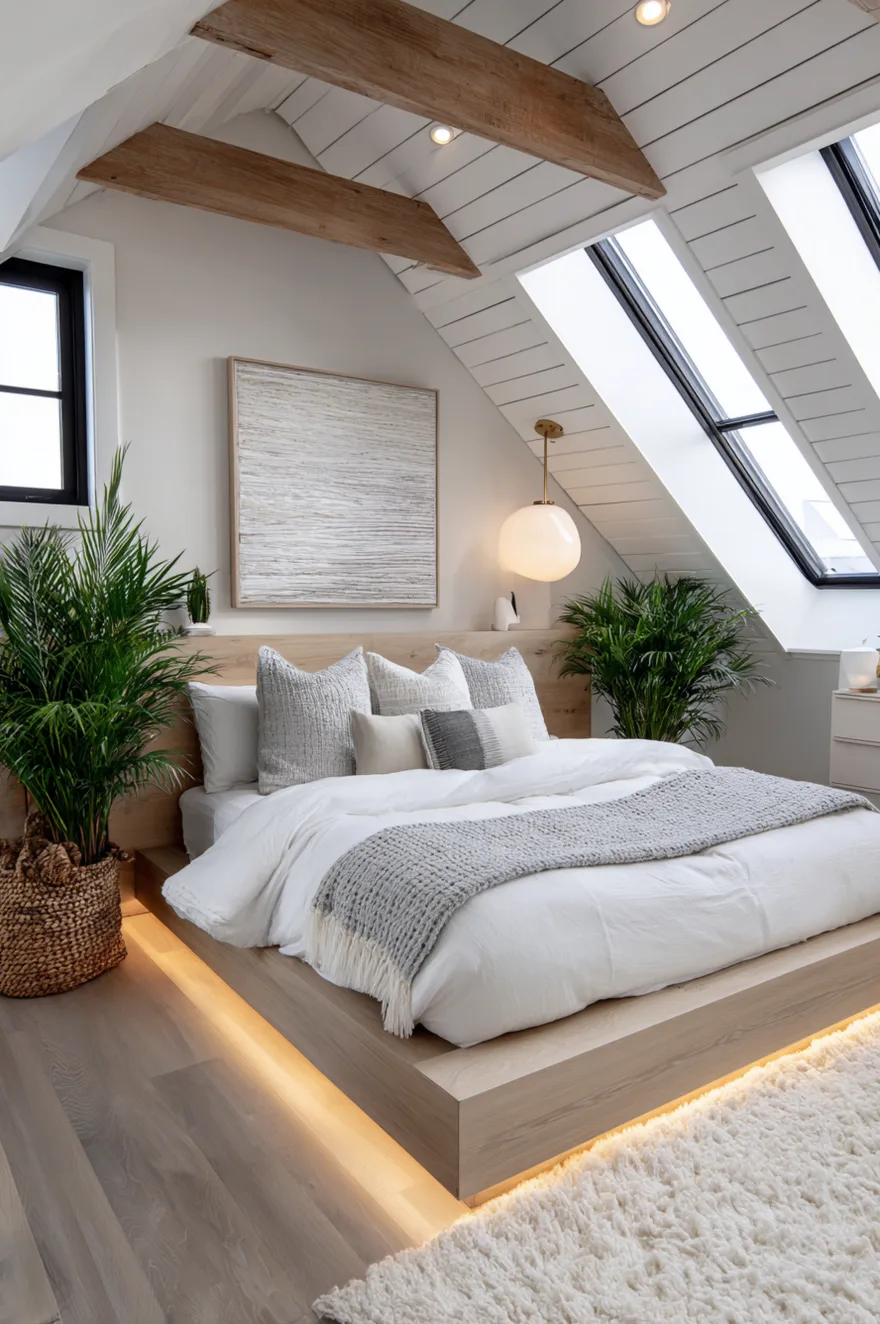
Skylights are the single best investment you can make in an attic bedroom. They flood the space with natural light during the day, make the ceiling feel higher than it actually is, and give you views of the sky instead of claustrophobic walls closing in.
We added two Velux skylights to Nora’s room – one on each side of the peak – and it went from dungeon to dreamy. The natural light bounces off the white walls and makes the whole space feel twice as big. At night, she can see stars from her bed, which she’s obsessed with.
Go for skylights that open if you can. The ventilation helps in summer when heat rises and gets trapped up there, and there’s something really nice about being able to crack a window without losing wall space. Just budget for blackout cellular shades or blinds – skylights let in a lot of light, which is great until you’re trying to sleep past 6 AM on a Saturday.
All-Wood Attic Bedrooms Feel Like Cabins
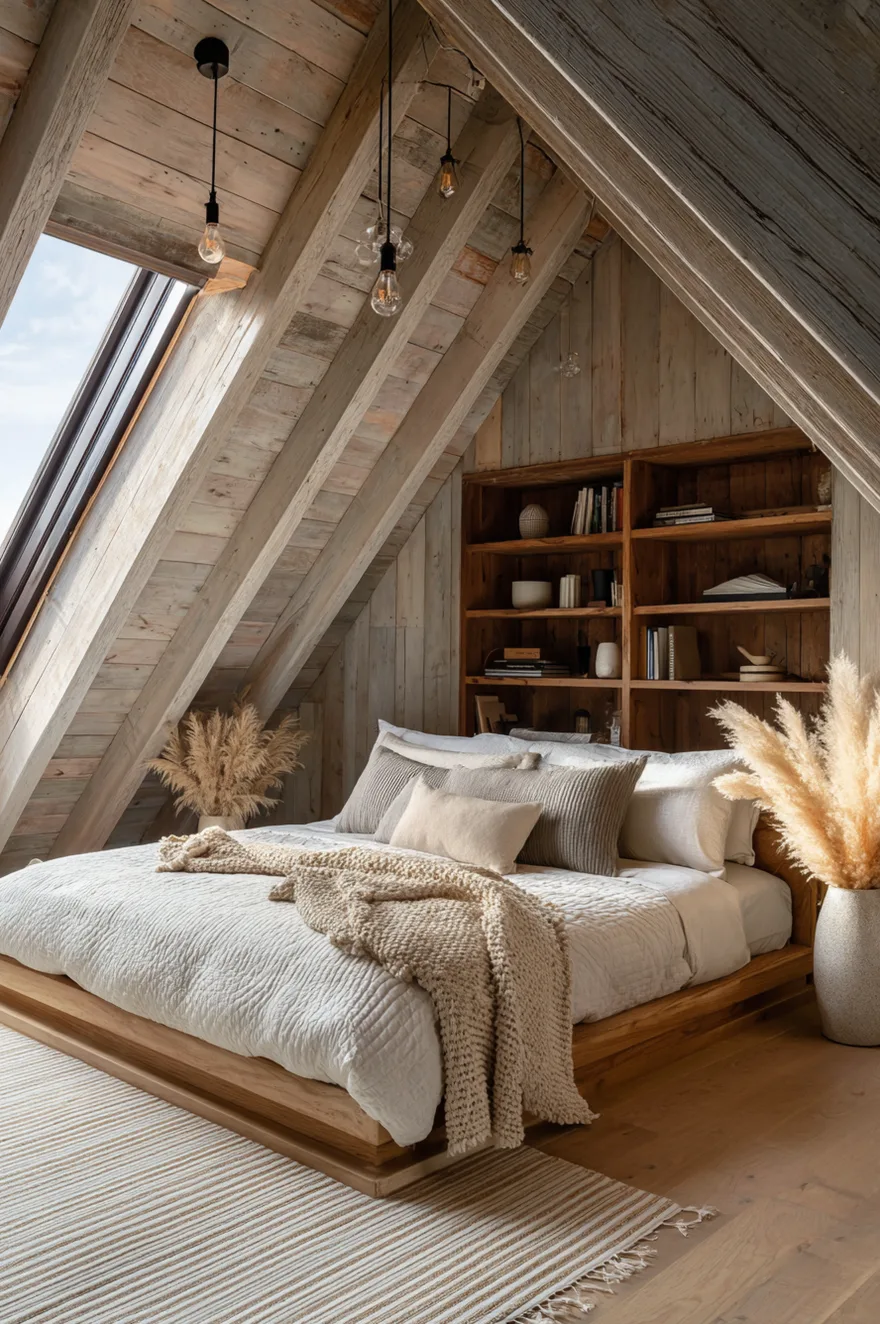
Keeping the wood ceiling and walls exposed creates that cabin-in-the-woods vibe that makes attic bedrooms feel cozy instead of cramped. Natural wood adds warmth, texture, and character without any effort, and it works especially well in attic spaces where the architecture already has that rustic angle.
One of my favorite attic bedrooms I’ve seen was completely clad in light pine – walls, ceiling, floors, everything. It felt like sleeping in a treehouse. The wood reflected light from the skylights and made the whole space glow golden in the afternoons. They kept the bedding neutral in whites and taupes so the wood was the star, and it looked incredible.
If you go this route, keep the rest of the decor simple. Too many colors or patterns compete with the wood grain and make the space feel busy. Stick with neutrals, add texture through chunky knit throws and woven rugs, and let the wood do the heavy lifting. Also, make sure you have good lighting – wood absorbs light, so you’ll need more sources than you’d expect.
Floor-To-Ceiling Windows In Modern Attics
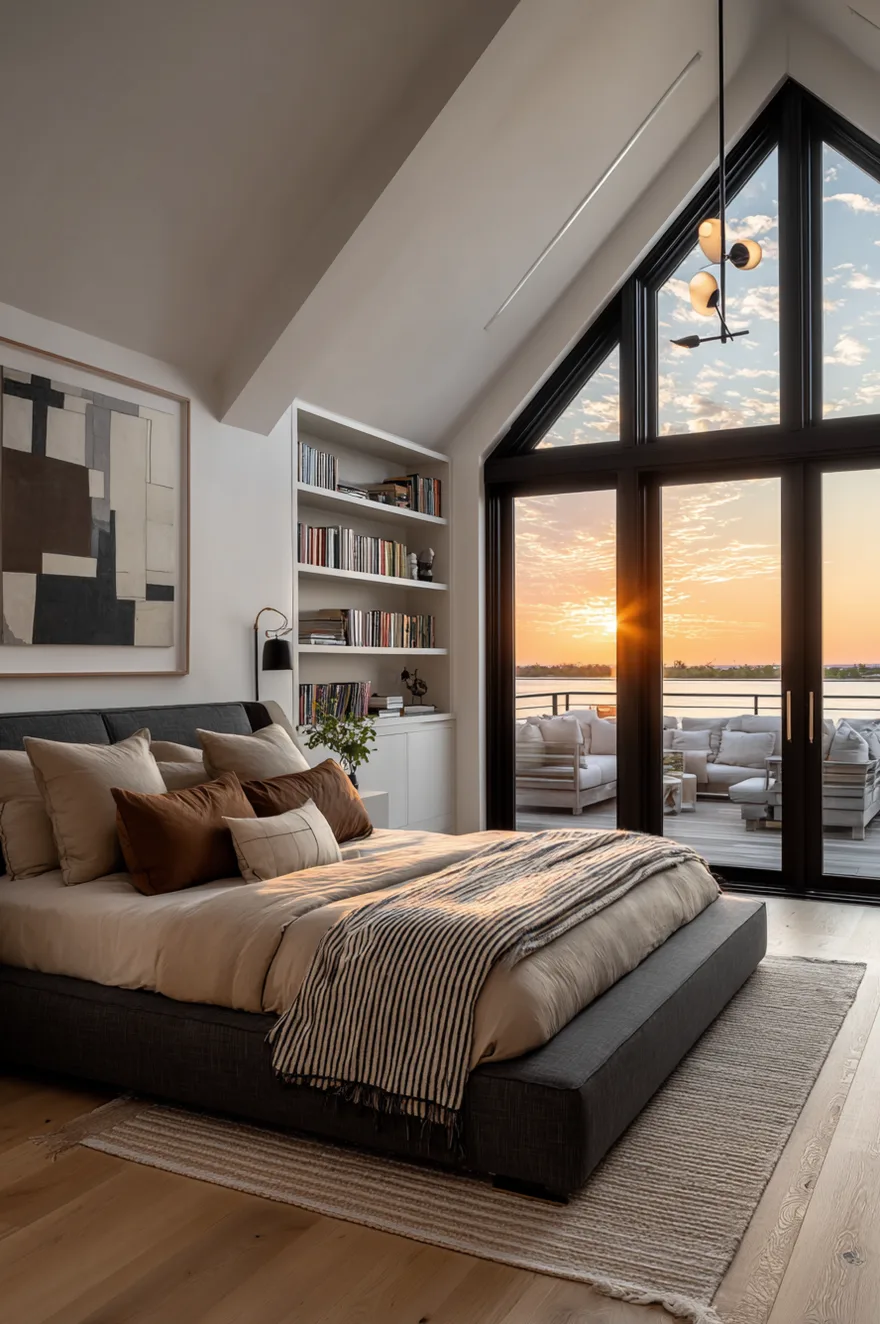
If you’re doing a full attic renovation and can add windows, go big. Floor-to-ceiling windows along the slanted roofline bring in massive amounts of light and make the ceiling angles feel dramatic instead of awkward.
I’ve seen modern attic conversions where they replaced entire sections of the slanted roof with glass – huge black-framed windows running from the floor up to the peak. It’s a bigger investment than skylights, but the payoff is incredible. The room feels like a glass box floating above the house, and you get views in multiple directions instead of just straight up.
Pair those big windows with minimal decor so nothing competes with the views and the architecture. A simple platform bed, built-in storage, neutral bedding, maybe one large plant. Let the windows and the light do all the work. Just be prepared for people to walk in and immediately go “wow” – it’s that kind of statement feature.
Dark Attic Bedrooms For A Moody Vibe
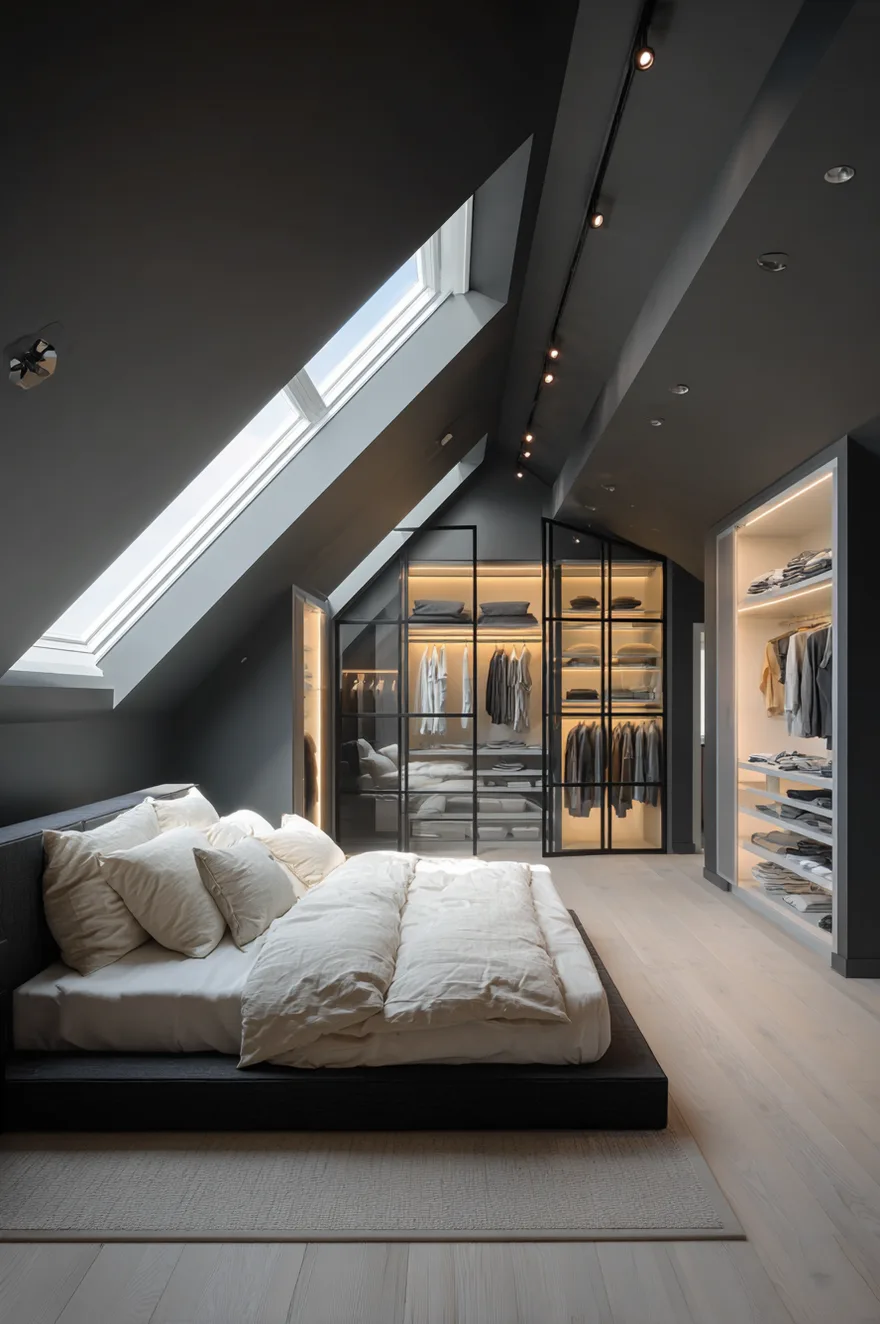
Painting an attic bedroom dark – charcoal gray, deep navy, forest green, even black – creates a dramatic, cocoon-like vibe that feels intentionally cozy instead of accidentally cramped. The dark walls absorb light instead of reflecting it, which makes the space feel more intimate, and it hides the awkward angles because everything blends together in shadow.
I’ll be honest, I was scared to try this for a long time because conventional wisdom says “small spaces need light colors.” But then I saw an attic bedroom painted in Sherwin-Williams Iron Ore (a deep charcoal gray) with white bedding and brass lighting, and it looked incredible. The dark color made the slanted ceiling feel intentional, like the designer chose the attic specifically to create that moody enclosed feeling.
If you go dark, you need really good lighting – multiple sources, all warm-toned. Bedside lamps, wall sconces, maybe string lights or LED strips. Without enough light, dark walls just look dingy. With enough light, they look sophisticated and dramatic. Also, keep the ceiling lighter than the walls (even if it’s still a medium tone) so the room doesn’t feel like a cave.
Built-In Storage Along The Slanted Walls
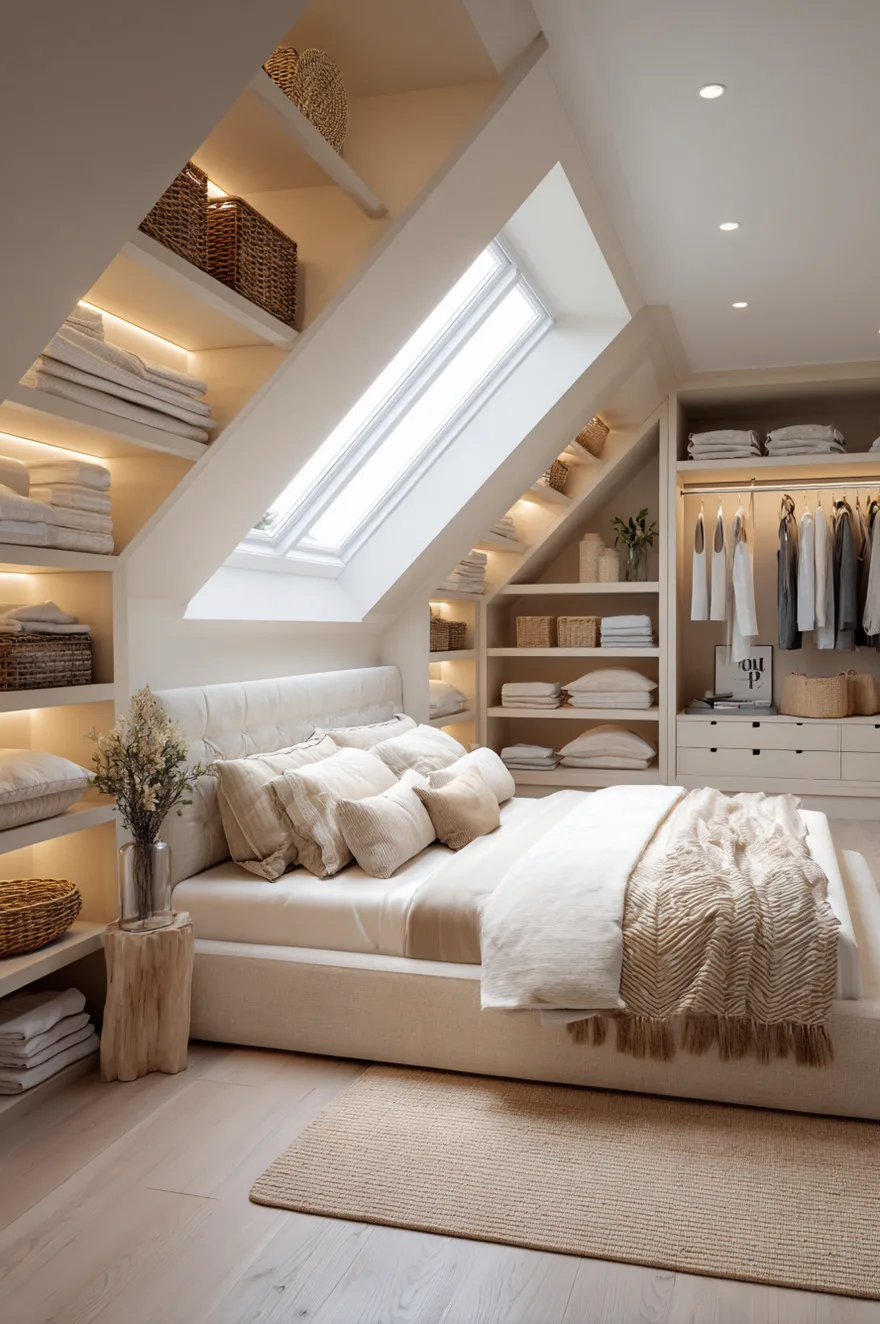
Custom built-ins that follow the angle of the ceiling are how you maximize storage without losing floor space in attic bedrooms. The low areas where you can’t stand become drawers, cubbies, and shelving that would otherwise be wasted dead space.
When we renovated Nora’s attic room, we had a carpenter build floor-to-ceiling storage along both slanted walls. The bottom sections are drawers for clothes and toys, the middle sections are open cubbies for books and baskets, and the top sections (where the ceiling is too low to use anyway) are closed cabinets for stuff we don’t need often. It gave us probably 40% more storage than we would’ve had with freestanding furniture, and it looks built-in and intentional instead of like we’re trying to cram stuff into weird corners.
Paint the built-ins the same color as the walls so they disappear into the architecture. If you paint them a contrasting color, they become a focal point, which can work, but in a small attic space I prefer keeping things calm and cohesive. White built-ins on white walls just fade away and let the bed and the windows be the stars.
Neutral Attic Bedrooms With Warm Lighting
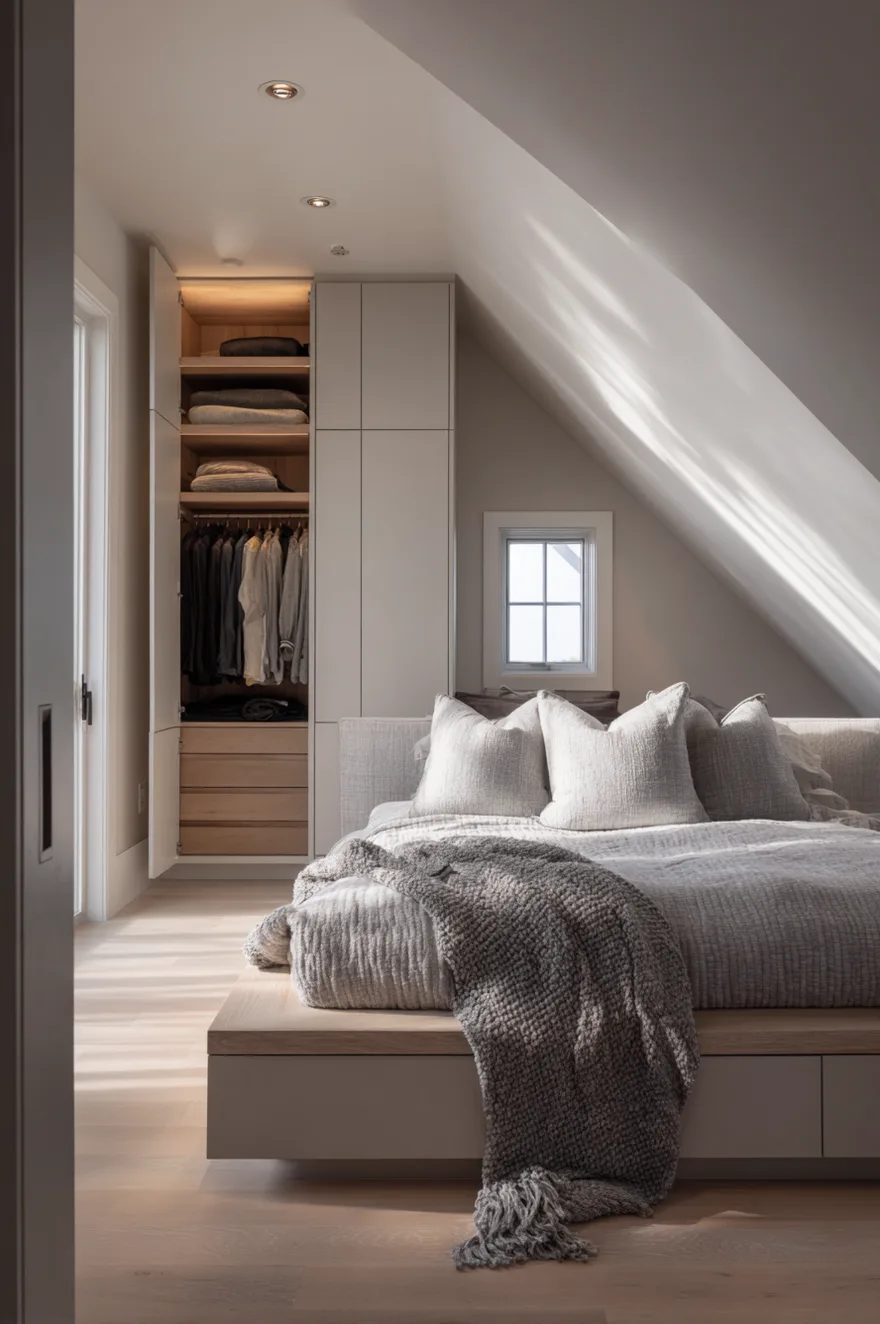
Keeping the color palette neutral and adding warm lighting makes attic bedrooms feel like they’re glowing from the inside. I’m talking soft whites, warm beiges, taupes, grays – colors that reflect light instead of absorbing it – paired with 2700K bulbs in every fixture.
The mistake I see people make is going too cool-toned with the paint and the lighting. Cool gray walls with daylight-temp bulbs make an attic feel cold and uninviting, especially in winter when there’s no sun. Warm neutrals with soft amber lighting create that cozy, tucked-away vibe that makes you actually want to spend time up there.
Layer your lighting. Recessed ceiling lights for general ambient light, bedside lamps for task lighting, maybe an LED strip running along the wall-ceiling joint for a soft glow at night. Dimmers on everything. An attic bedroom should feel like a cocoon, and lighting is how you create that mood. The best attic I’ve ever been in had probably eight different light sources you could turn on and off independently, so you could dial in exactly the right level for whatever you were doing.
Woven Pendant Lights For Texture
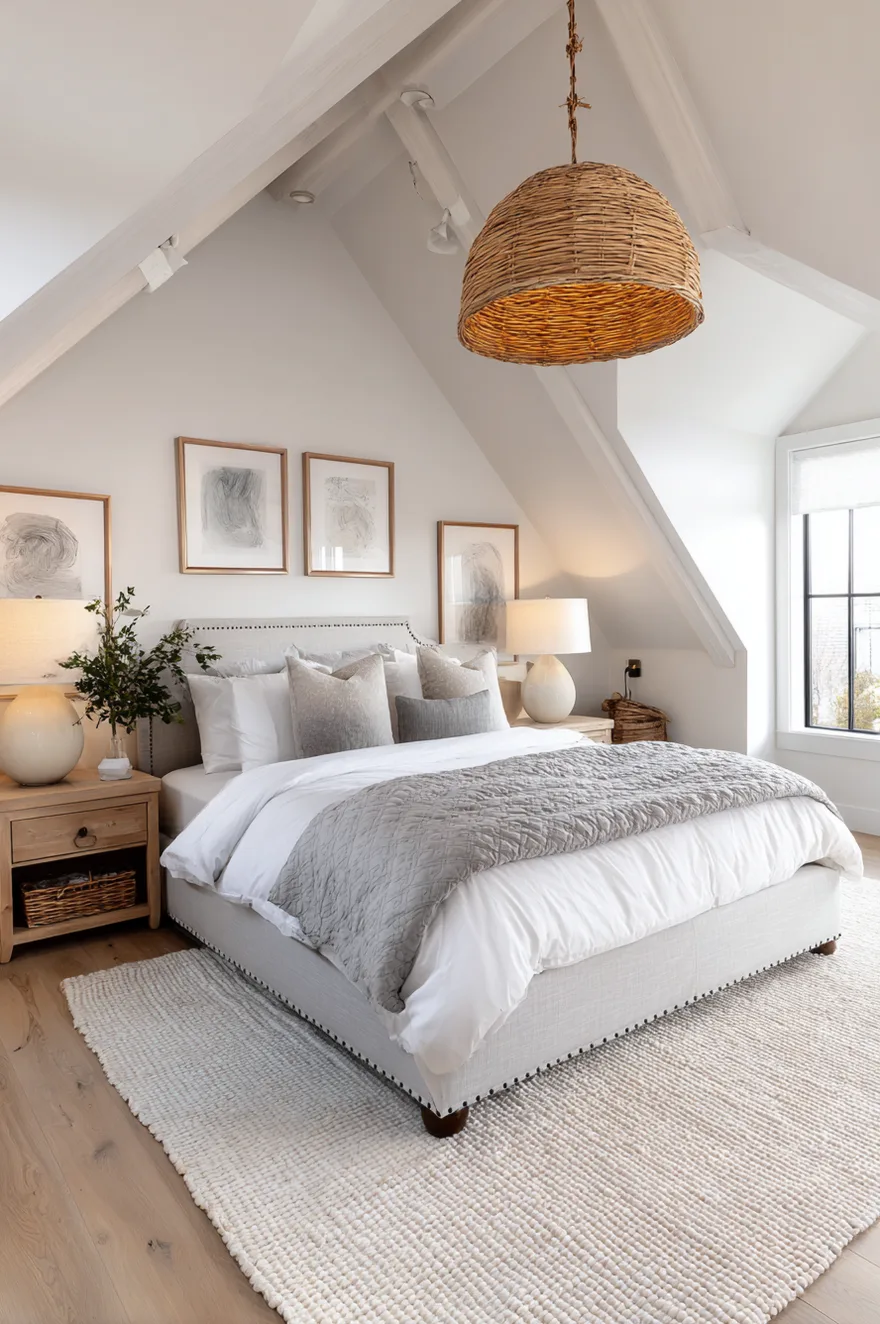
A woven rattan or wicker pendant light adds warmth and texture to attic bedrooms without taking up visual space. It hangs from the highest point of the ceiling, draws your eye up (which makes the room feel taller), and creates interesting shadows on the walls when it’s lit.
I hung a big basket-weave pendant in Nora’s room right over the foot of her bed, and it completely changed the vibe. Before that, we just had recessed lights, which were fine but kind of sterile. The pendant adds personality and makes the space feel more finished and intentional, like someone actually designed it instead of just throwing furniture in an attic.
Go bigger than you think you need. A pendant that’s too small gets lost in the volume of a vaulted ceiling. We went with a 20-inch diameter pendant, and it’s the perfect scale. Hang it low enough that it feels anchored to the room but high enough that you’re not hitting your head – usually around 7 feet from the floor is a good starting point.
Wood Accent Ceilings In Modern Attics
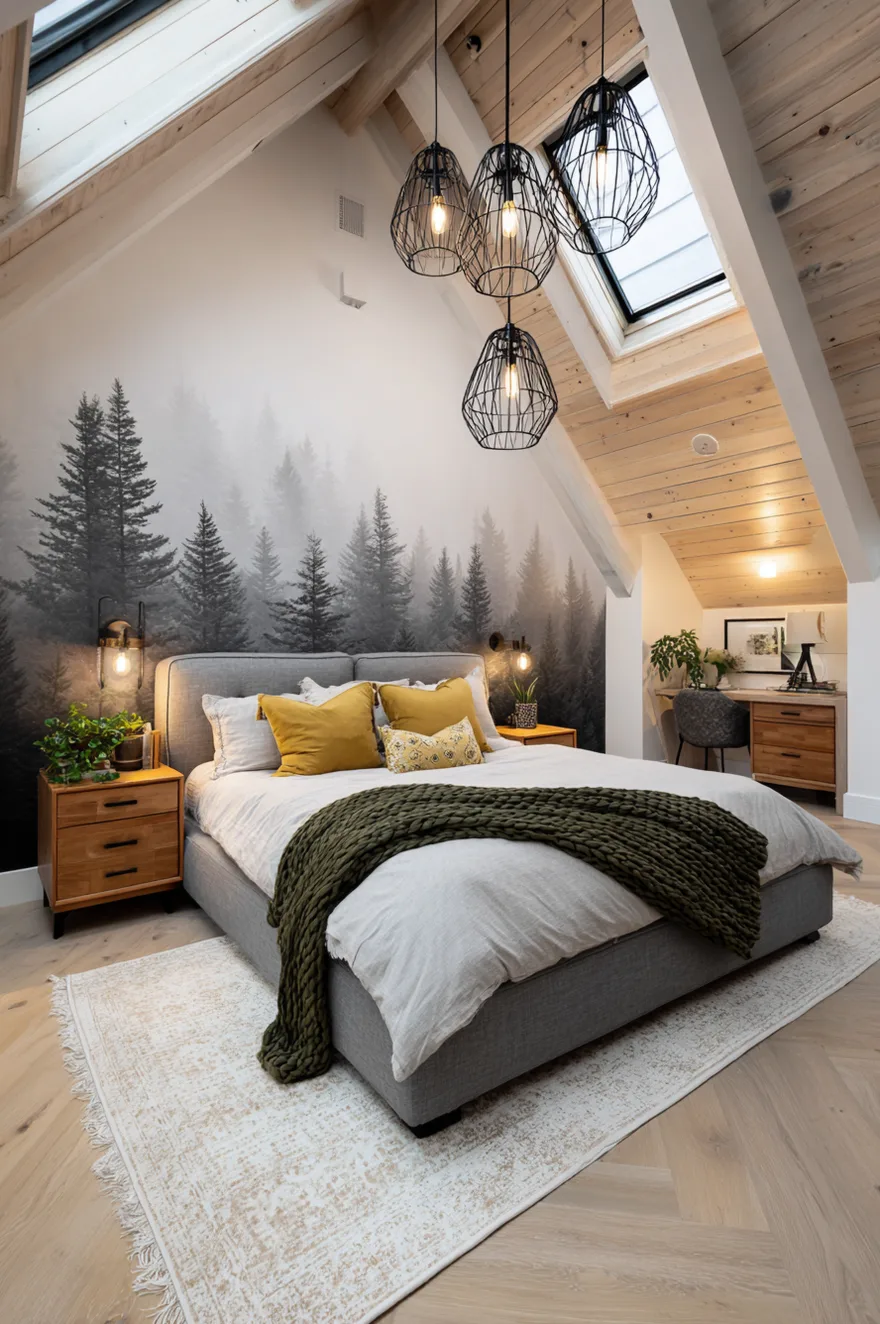
Covering just the ceiling in natural wood while keeping the walls white creates a modern Scandinavian look that’s warmer than all-white but cleaner than all-wood. The wood adds warmth overhead without closing in the walls, and it defines the ceiling plane in a way that makes the vaulted shape feel more dramatic.
I’ve seen this done with light pine, white oak, and even walnut in darker spaces. Light woods like pine or ash keep things bright and airy. Darker woods like walnut add drama but need really good lighting and white walls to balance them out. Either way, the contrast between the wood ceiling and white walls creates visual interest without patterns or color.
Run the wood planks horizontally across the ceiling following the direction of the rafters, or run them vertically up the slope for a different look. Horizontal usually feels more traditional and cabin-like. Vertical feels more modern and emphasizes the height. Both work – it just depends on the vibe you’re going for.
LED Strip Lighting Along Ceiling Angles
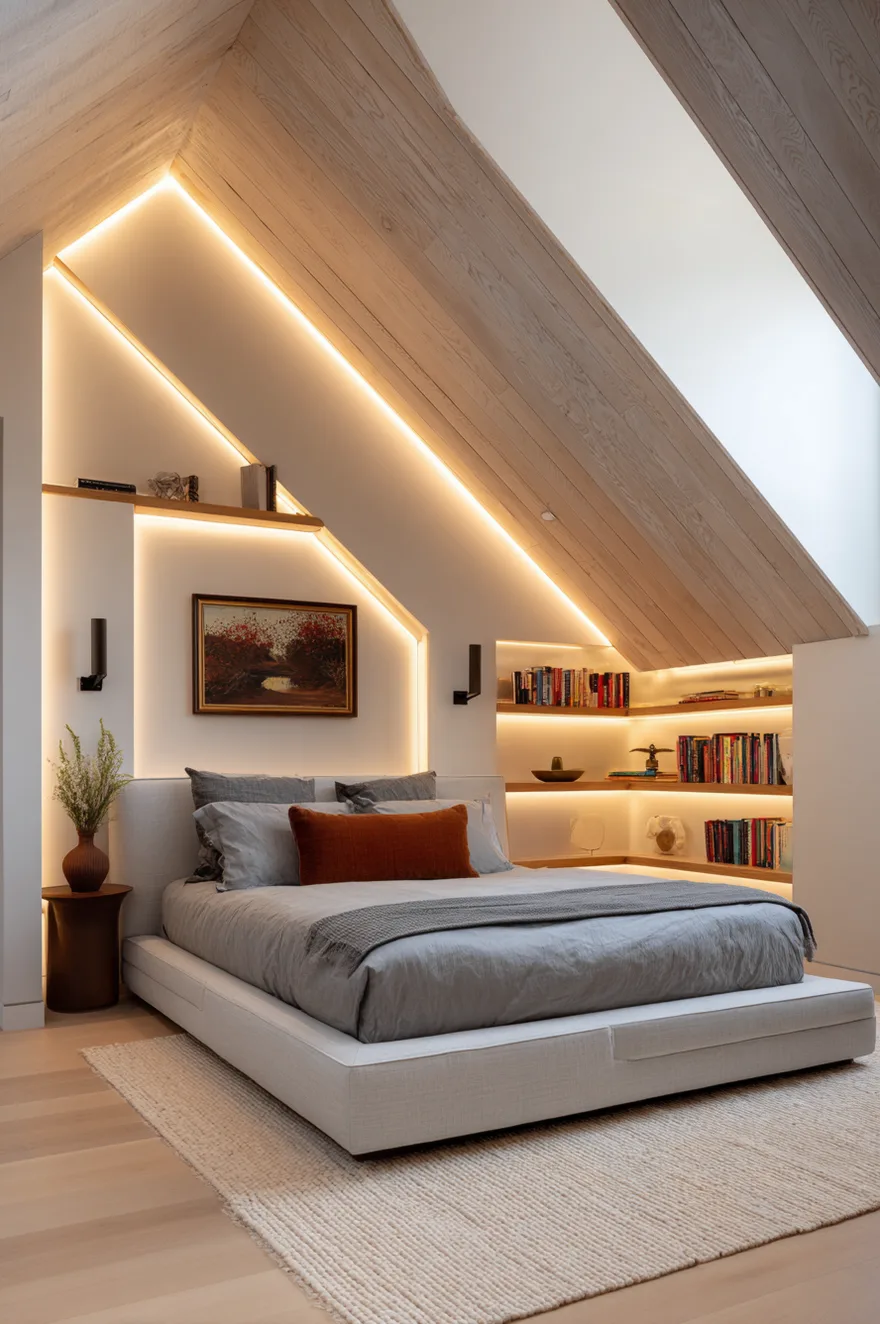
Running LED strip lighting along the joint where the wall meets the slanted ceiling creates indirect ambient light that makes the ceiling glow. It’s soft, it’s modern, it doesn’t take up any space, and it gives you light without the harsh shadows of overhead fixtures.
We added LED strips along both sides of Nora’s ceiling where the slanted walls meet the peak, and turning them on at night is like magic. The whole ceiling glows warm white, and the light bounces off the white paint and fills the room without any glare. It’s perfect for bedtime when you need some light but don’t want the overhead recessed lights blasting.
Get dimmable LEDs and put them on a smart switch so you can control the brightness from your phone. We have ours set to automatically dim to 20% at 7 PM for bedtime mode, and it’s been a game-changer for Nora’s sleep routine. The warm glow is calming, and she can still see to read or play quietly before lights-out.
Attic Bedrooms With Walk-In Closets
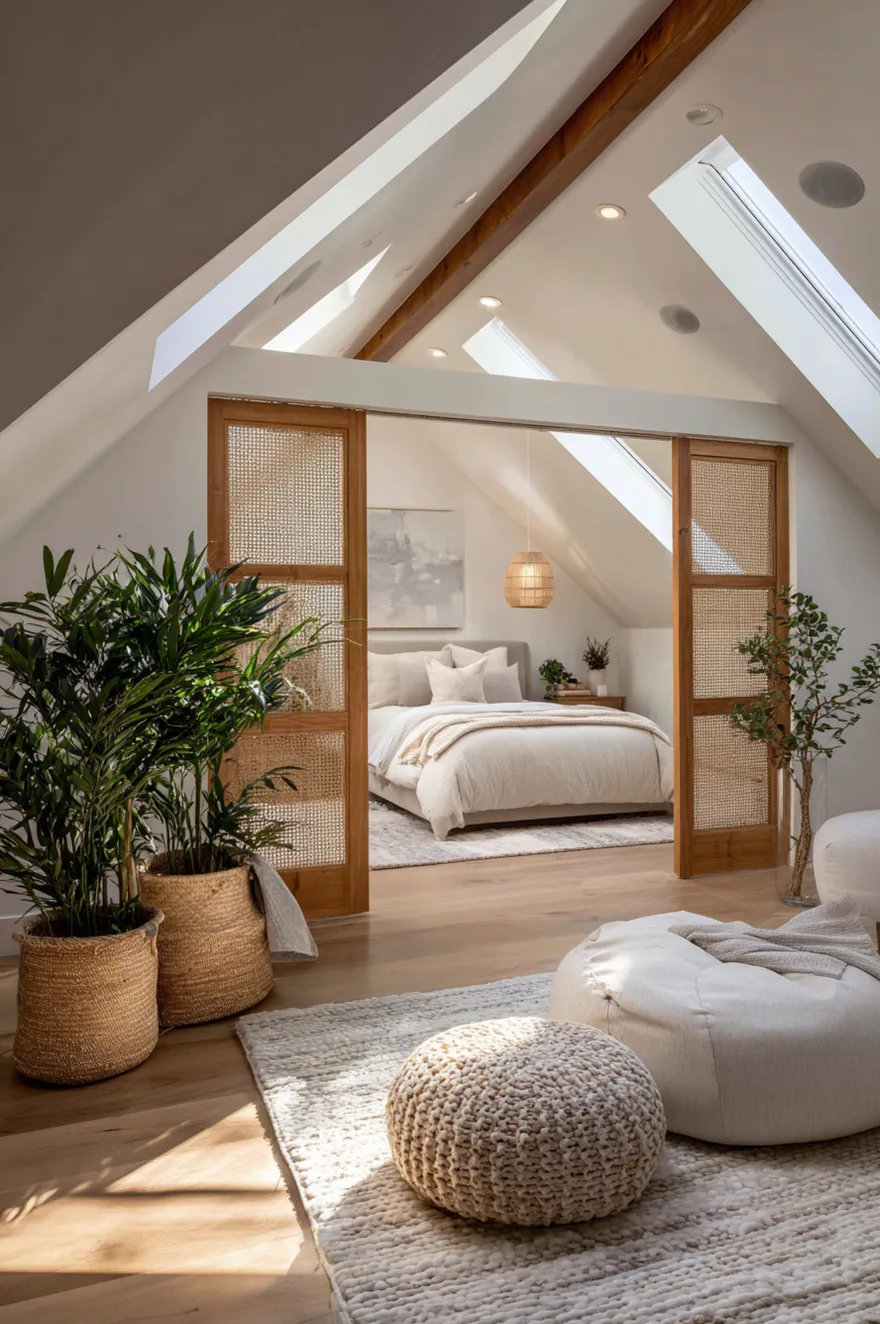
If you have the square footage, carve out a section of the attic for a walk-in closet behind a door or a partition. It hides the storage so the bedroom itself stays clean and minimal, and it gives you way more hanging and shelf space than built-ins alone.
We didn’t have room for this in Nora’s attic – it’s not huge – but my friend Emma did it in her primary attic suite and it’s incredible. She put up a partial wall with a door that separates the bedroom from the closet zone, and the closet takes up all the lowest part of the ceiling where you can’t stand anyway. She has hanging rods, shelves, shoe storage, the works, all tucked behind that door so the bedroom stays serene and uncluttered.
The trick is using the space where the ceiling is under 5 feet tall. You can’t use that for living space anyway, so turning it into closet storage makes sense. Just make sure you have good lighting in there – LED strips on every shelf so you can actually see what you’re grabbing.
Cozy Attic Bedrooms That Actually Work
Attic bedrooms work when you stop fighting the angles and start using them. Low ceilings become cozy instead of claustrophobic. Slanted walls become architectural features instead of problems. Awkward corners become built-in storage. Skylights turn the space into the brightest room in the house.
The three things that matter most: natural light (skylights are non-negotiable), smart storage (built-ins along the low walls), and thoughtful furniture placement (bed under the tallest point). Get those right and the rest is just styling.
Pick your three biggest priorities for your attic space – maybe it’s adding skylights, building storage, and painting it a moody dark color – and start there. An attic that nails the layout and the light will feel twice as big as one that tries to hide its angles with decorating tricks.
Which of these attic bedroom ideas are you going to try first? Let me know in the comments what you’re working with – dimensions, ceiling height, skylights – and I’ll help you figure out the best approach for your space.
With love,
Liv