Most finished basement ideas fail the same way – they stop at “functional” and never reach “somewhere you actually want to hang out.” This article covers 21 basement living room, home theater, bar, and game room ideas that treat the lower level like a real room, with real lighting, real texture, and real personality – most of them doable on a budget that won’t ruin your weekend.
Ours has been a disaster for two years. I’m not being modest – I mean a gray carpet remnant, two folding chairs, and a bare bulb situation that Jake called “functional” and I called “a cry for help.” The basement got used exactly twice: once when Nora’s cousins needed somewhere to run laps, and once when Benny chewed through a couch pillow and I needed to hide the evidence. So when I finally sat down with a mood board and a coffee and gave it a real plan, I wanted something that felt moody and intentional, not like a room we gave up on. The ideas below are what I found, what worked, and a few things I wish I’d known before I started.
1. Moody Basement Ideas That Feel Like a Real Room
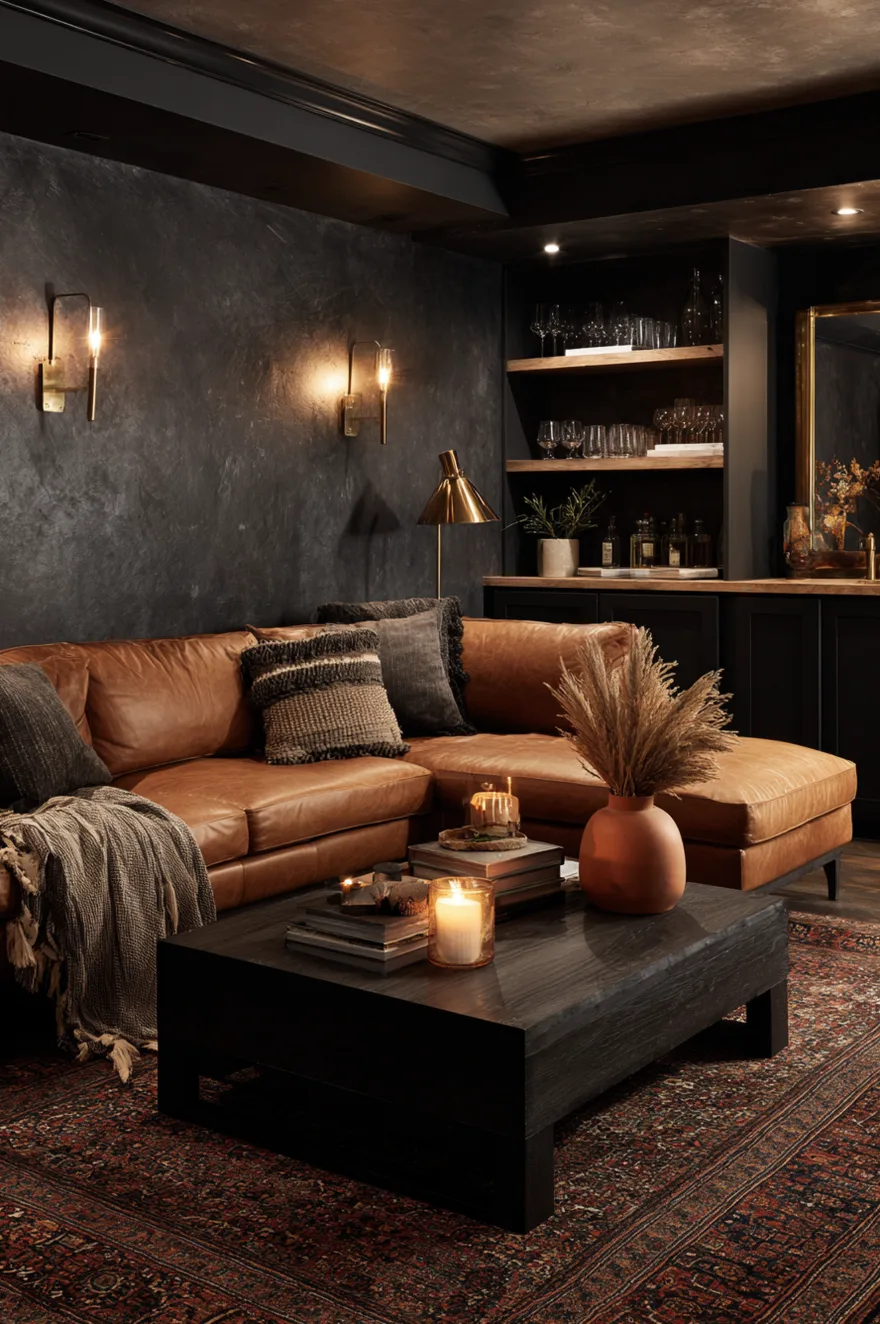
Charcoal limewash on all four walls changes everything about how a basement reads. It adds depth without darkness, especially in that chalky, slightly uneven finish that catches light from sconces and makes the whole room feel like it has texture and age. Pair that with a low-slung cognac leather sectional – nothing with legs higher than 18 inches – and the ceiling suddenly looks intentional rather than low.
The lighting plan is where this comes together or falls apart. Edison-bulb sconces on either side of the room, set to warm 2700K bulbs, will do more for the mood than any paint color. Skip the recessed cans entirely in this setup, or put them on a dimmer so you can dial them down to almost nothing in the evening. Add a vintage Persian rug – even a beat-up one from Facebook Marketplace – under the sectional, and the room stops reading as a basement.
A concrete-look side table and some dried pampas grass in a tall ceramic vase finish it off without making it fussy. This is the kind of finished basement ideas that works because every choice points in the same direction: warm, low, textured, deliberate. Start with the limewash, then work outward.
2. The Accent Wall Trick That Changes Everything
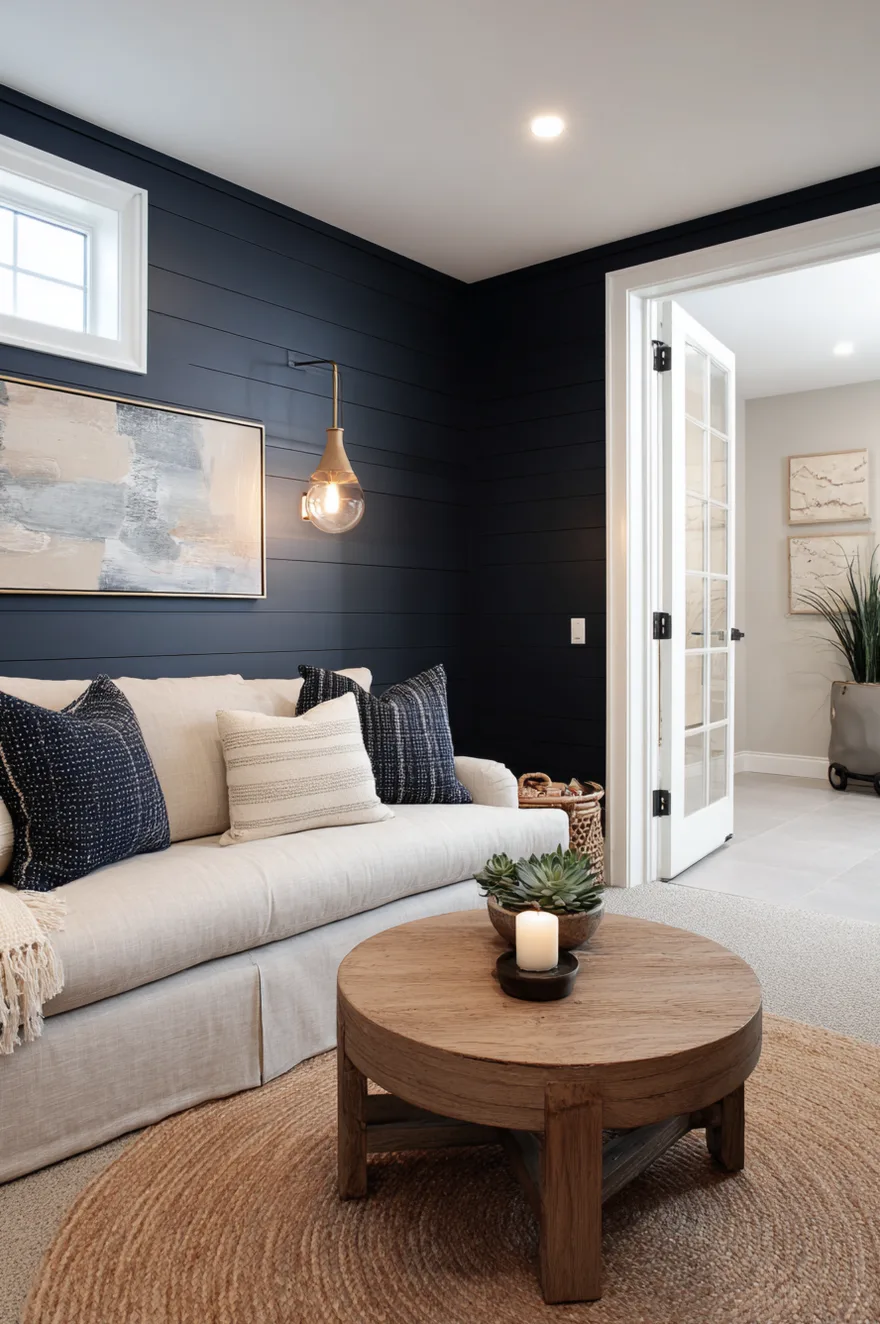
Floor-to-ceiling shiplap on one wall, painted in a deep navy or forest green, does something that all-over color cannot: it makes the room feel like someone made a decision. The remaining walls stay neutral – a warm off-white or a concrete-look gray – so the color lands as confident rather than claustrophobic. This is especially useful in finished basement ideas where the square footage is generous but the ceiling is fighting you.
One thing I’d push back on: a lot of people stop at a single coat of paint on shiplap and wonder why it looks flat. You need two coats minimum on the grooves, and a semi-gloss or satin finish on a deeply saturated color reads much richer than flat paint. Do the accent wall first, live with it for a weekend, then decide if the rest of the room needs to shift.
3. Basement Bar Ideas for Serious Entertainers
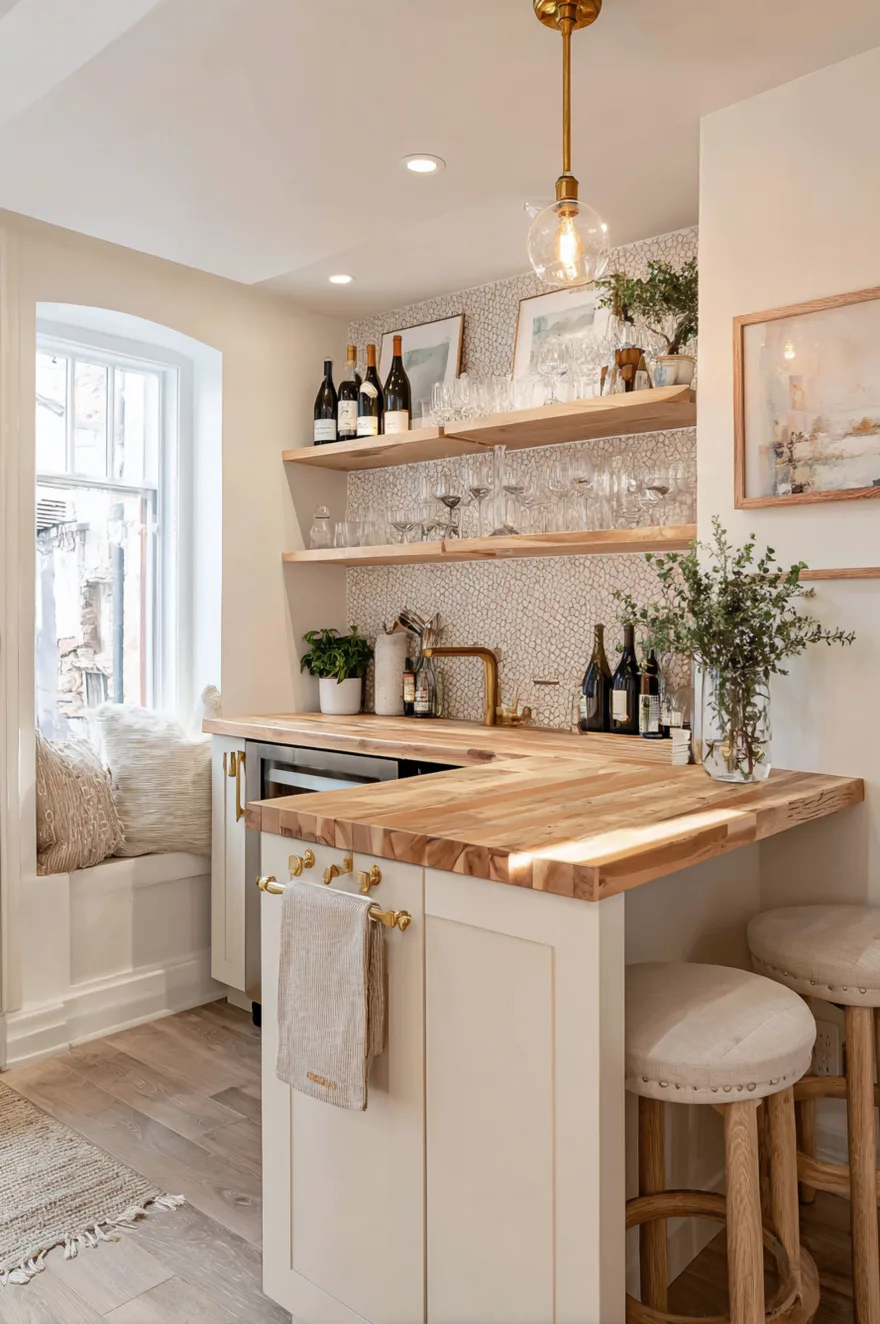
IKEA base cabinets in the Sektion line give you a surprisingly solid foundation for a DIY bar, especially when you top them with butcher block – the 1.5-inch thick stuff, not the thin BROR version. Sand it well, seal it with food-safe mineral oil, and it honestly looks like something you paid a carpenter to install.
Peel-and-stick penny tile on the backsplash is where I’d spend a little extra time. The small-scale pattern gives the bar area visual weight and makes it feel like a real destination rather than a counter in a corner. Open shelving above for glassware keeps it functional, and a couple of Edison-bulb pendants hanging from the ceiling (even on a plug-in cord) pull the whole thing together. Run the tile all the way to the underside of those shelves rather than stopping at a grout line mid-wall – it looks much more finished.
4. Why I Always Recommend Rattan Down Here
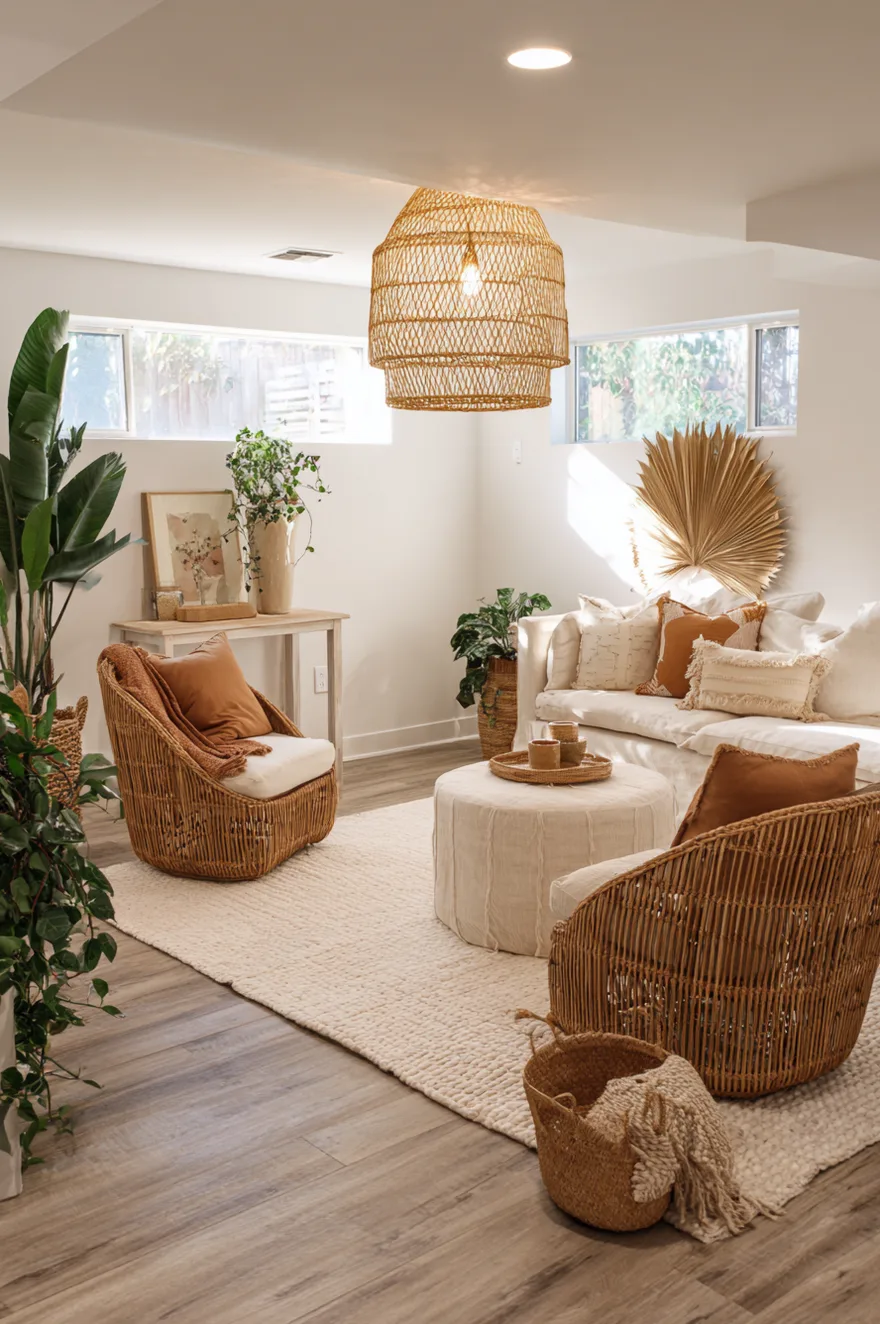
Basements trend cold – the light is limited, the floors are often hard, and without careful material choices the whole thing can read a little sterile. Rattan fixes that faster than almost anything else I’ve tried. A woven pendant light and two rattan accent chairs introduce a warmth that’s more about material temperature than actual light levels.
Pair the rattan with warm-toned plank vinyl flooring – something in a honey or light oak tone rather than a cool gray – and the room stops feeling like it’s underground. This combo works especially well in basement living room ideas where you want the space to feel welcoming year-round rather than just tolerable in summer. Shop the accent chairs on Facebook Marketplace first; rattan turns up constantly.
5. Home Theater Basement Ideas on a Real Budget
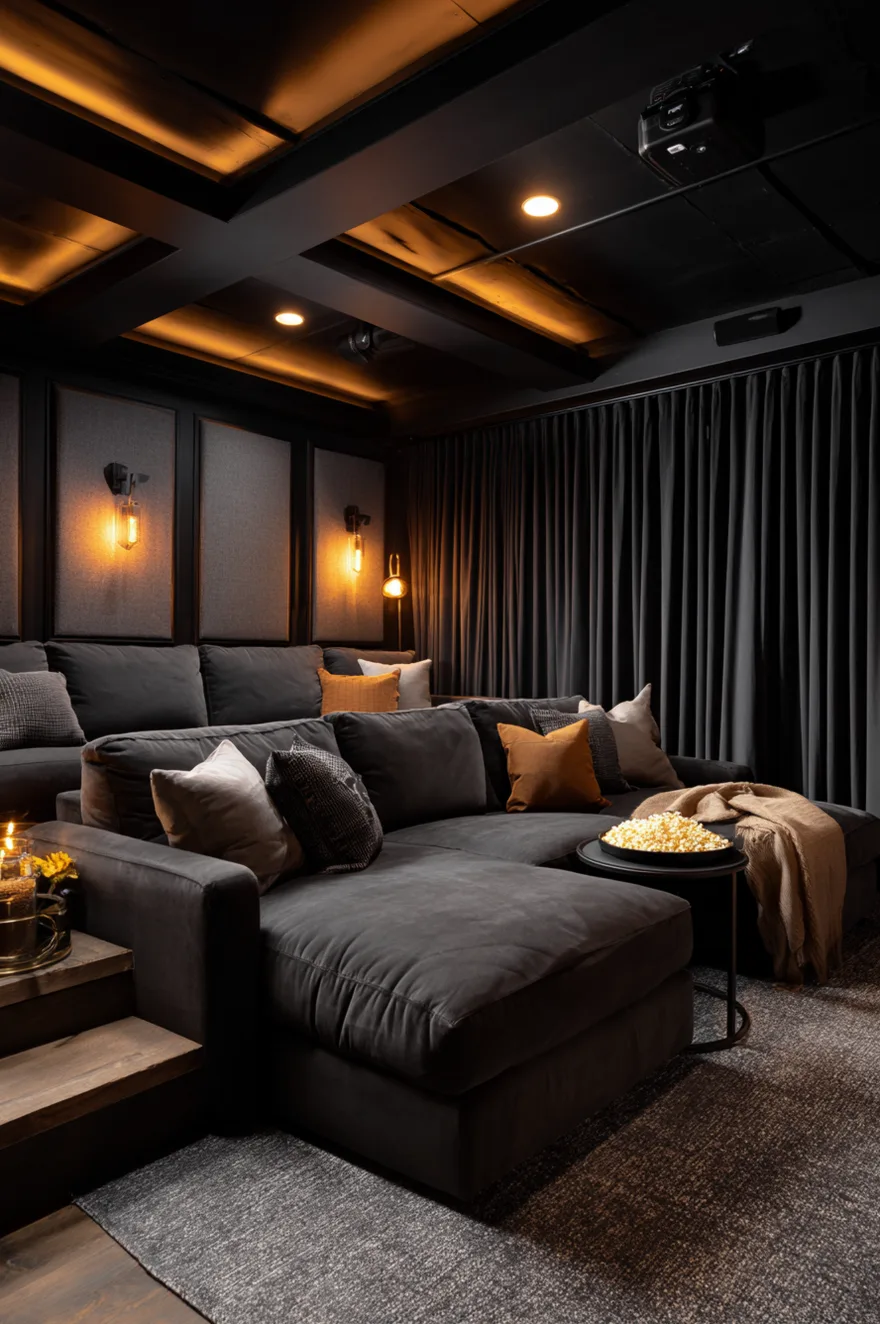
A black painted ceiling is free (relatively speaking) and dramatically changes how a basement theater reads. Paint the ceiling the same flat black as your walls, pull the color down behind the screen, and suddenly the room has cinema scale even if it’s only 12 feet wide. The black absorbs ambient light and makes your projector image read sharper – that’s not just an aesthetic choice, it’s a functional one.
Acoustic foam panels are genuinely useful, but bare foam looks unfinished. The move is to stretch a piece of fabric over a simple wooden frame – pick up 1×4 furring strips at Home Depot, cut a rectangle, staple charcoal linen across the front, and you have a wall panel that looks intentional. I’d do four of them, staggered on the long wall. A deep-pile charcoal area rug under the seating zone absorbs sound from below, and stadium-style risers built from plywood (with a little paint and some LED strips on the front edge for drama) give the back row a proper sightline.
Budget breakdown that’s actually realistic: projector screen under $150, paint around $80, fabric panels under $60 total, rug from Amazon or Rugs USA around $120 for an 8×10. You can do the whole thing for under $600 before seating. These finished basement ideas for a home theater are genuinely the high-drama, low-cost category.
6. What I’d Do With Exposed Ceiling Joists
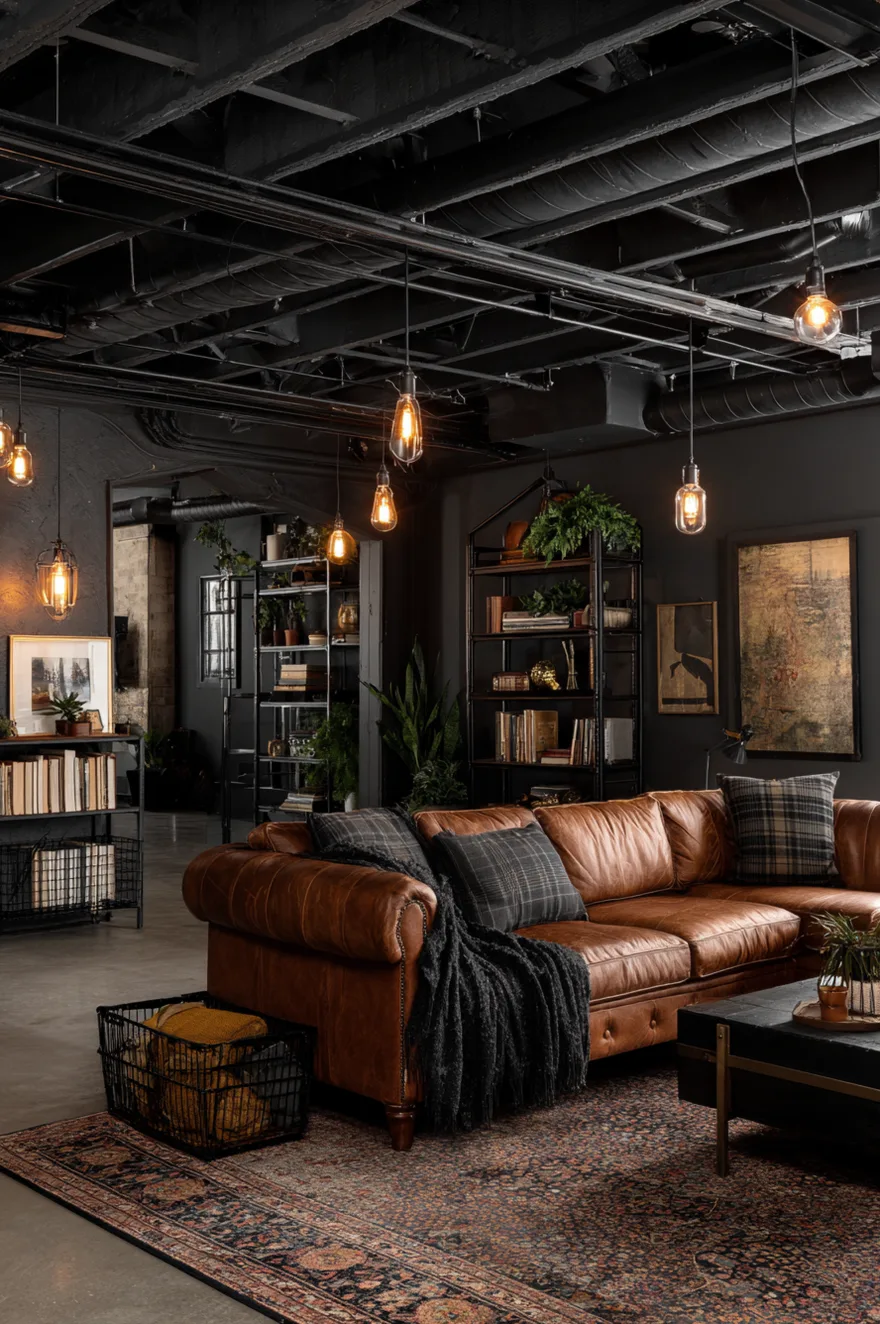
Don’t drywall them. I know that sounds counterintuitive but hear me out: painting every single thing – the joists, the pipes, the ductwork, all of it – in the same flat black makes the ceiling read as a deliberate industrial choice rather than an unfinished mistake. It photographs like a Brooklyn loft and it costs about $40 in ceiling paint.
The one rule is that it has to be everything. One unpainted pipe sticking out in a sea of black looks like an accident. All of it painted the same flat color looks like a decision. This is one of those finished basement ideas that I’m still a little surprised works as well as it does.
7. Rustic Basement Ideas That Start With the Floors
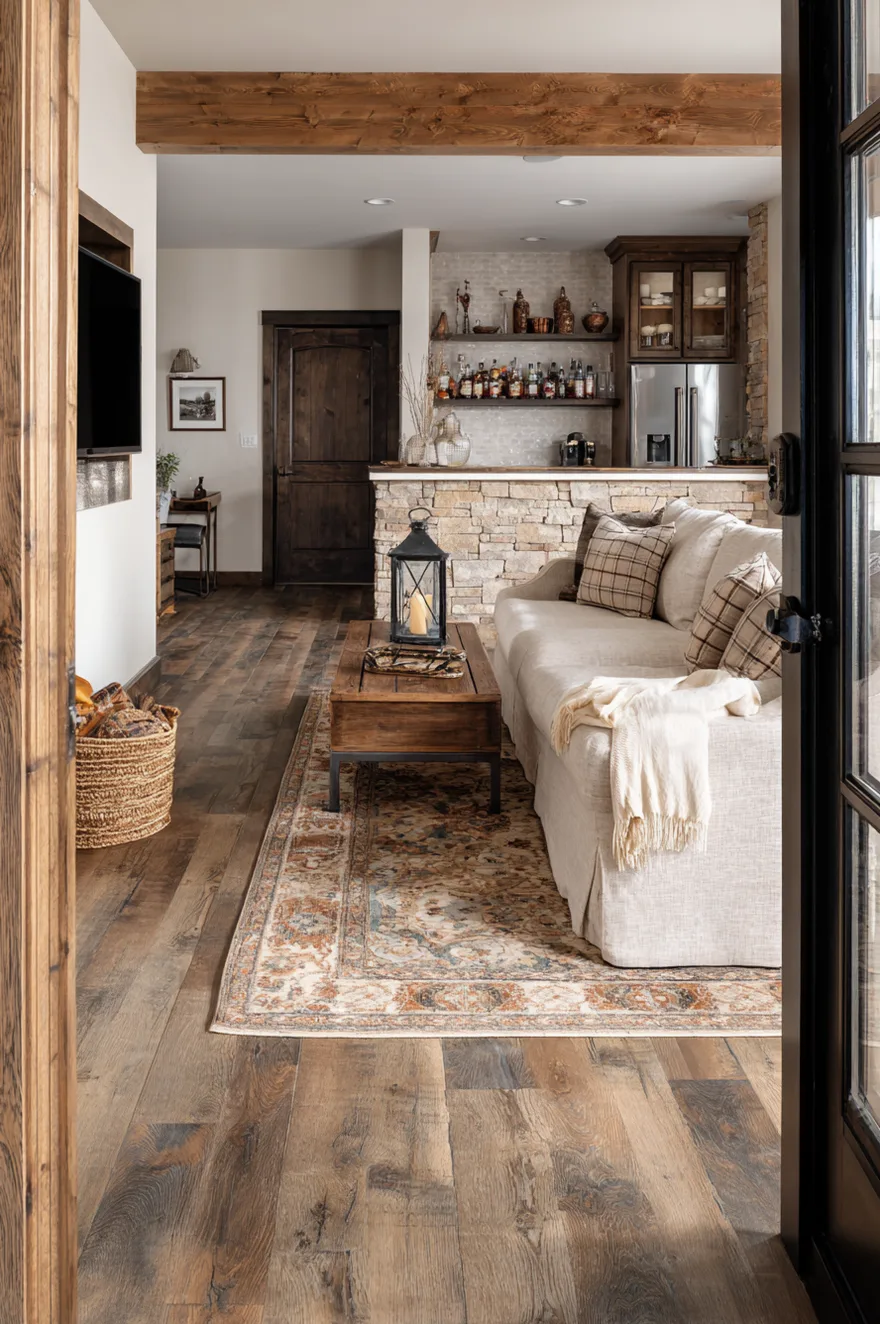
Wide-plank luxury vinyl in a weathered oak tone was the starting point for one of my favorite basement refreshes I’ve seen. The planks were 7 inches wide – wider than standard – which matters because it makes a smaller room read larger and more generous. From there, everything else was built in warm response to that floor.
A vintage Persian rug layered on top of the plank flooring adds the kind of pattern and color that a single material cannot. It doesn’t need to be expensive – a worn, slightly threadbare one from an estate sale or Facebook Marketplace often looks better than a pristine one because the fading plays with the weathered wood tone. The wet bar surround in stone-look porcelain pulled the palette together: cool enough to balance the warm wood, rough enough in texture to read as organic rather than sterile.
Viewed through a doorway, a room built this way has a sense of depth and warmth that is hard to manufacture with paint alone. Start with the floor. Let the rest follow. That’s the move with rustic basement ideas that actually hold up over time.
8. Basement Game Room Ideas Kids Actually Love
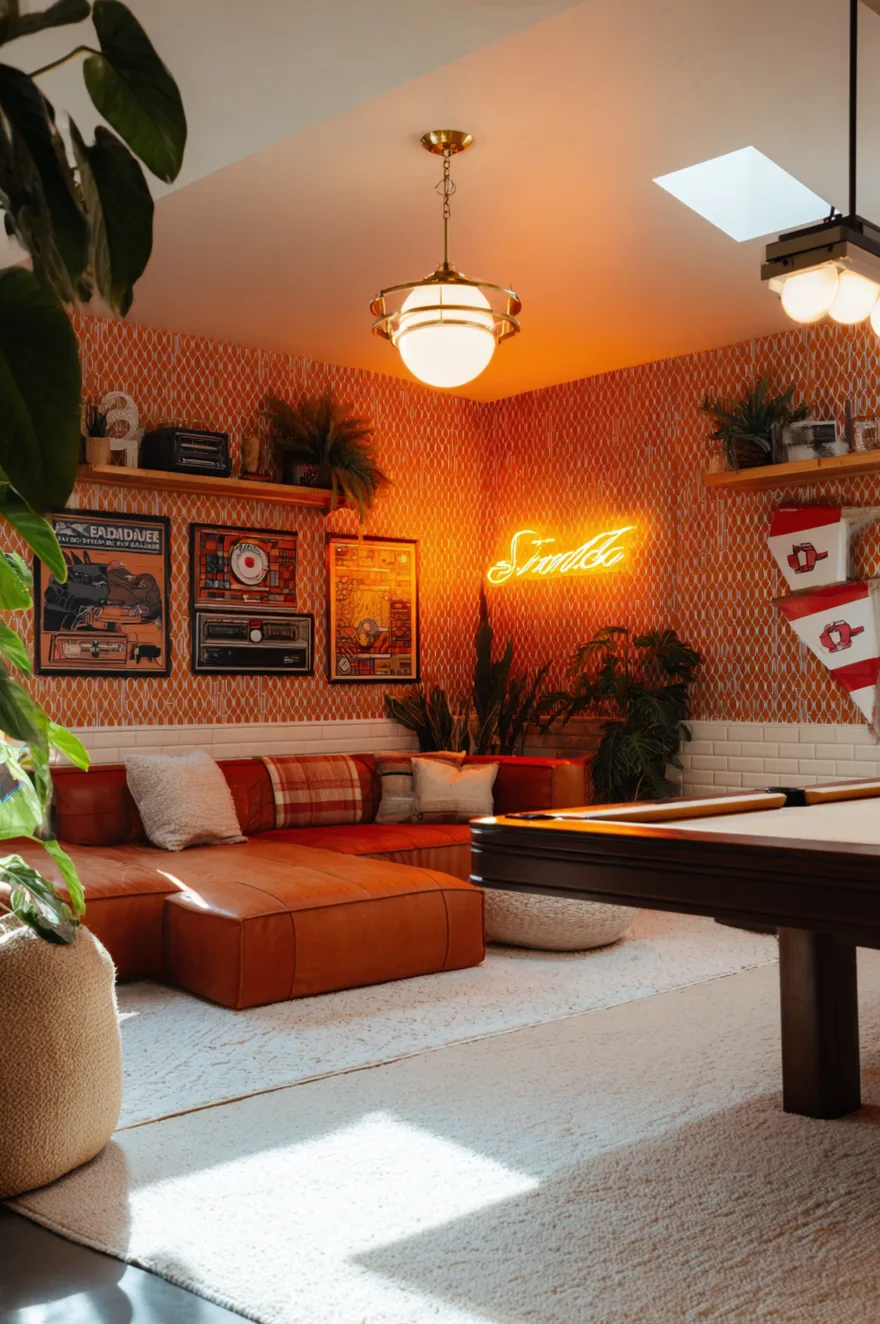
Terracotta and cream is a combination that works hard in a game room because it’s energetic without being chaotic. A retro neon sign – the kind with a simple word like “PLAY” in a warm pink or orange tube – on painted brick wallpaper gives the room a personality that kids respond to immediately. And honestly, so do adults.
The billiards table needs to be low enough for kids to actually use it comfortably; look for 7-foot options rather than regulation 9-foot if the space is under 500 square feet. Bean bags in cream boucle tucked into the corner give the room a landing spot that isn’t a chair, which Nora would absolutely stage a coup to get to. Keep the decor relatively minimal otherwise – a game room with too many competing elements just feels cluttered rather than fun.
9. A Swap You’ll Wish You Did Sooner
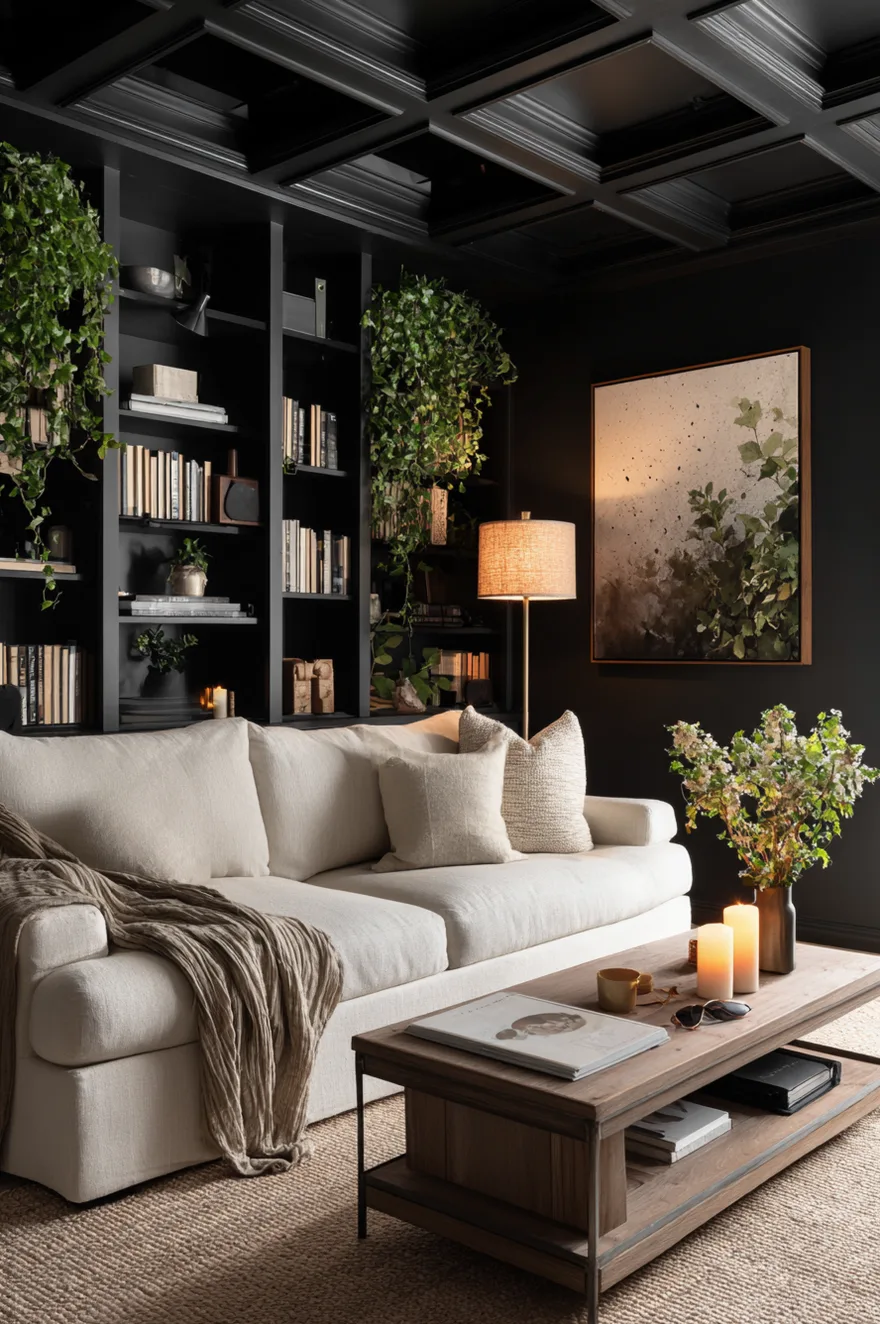
The drop ceiling is, I think, the single most demoralizing thing about a finished basement. Those dingy white tiles on a white grid look temporary even when they’ve been there for thirty years. But replacing the whole ceiling means losing access to the plumbing above, which is often not an option.
So here’s what actually works: paint the existing grid black, then swap the white tiles for linen fabric stretched over thin frames cut to the same dimensions. The fabric lets you keep the drop-ceiling access panels behind it (you can pop a panel out when needed), but the room suddenly reads as finished and considered rather than provisional. It’s one of those basement decor ideas that costs maybe $80 in fabric and an afternoon of slightly fiddly work, and the result looks like you spent real money.
10. Farmhouse Basement Ideas With Vintage Finds
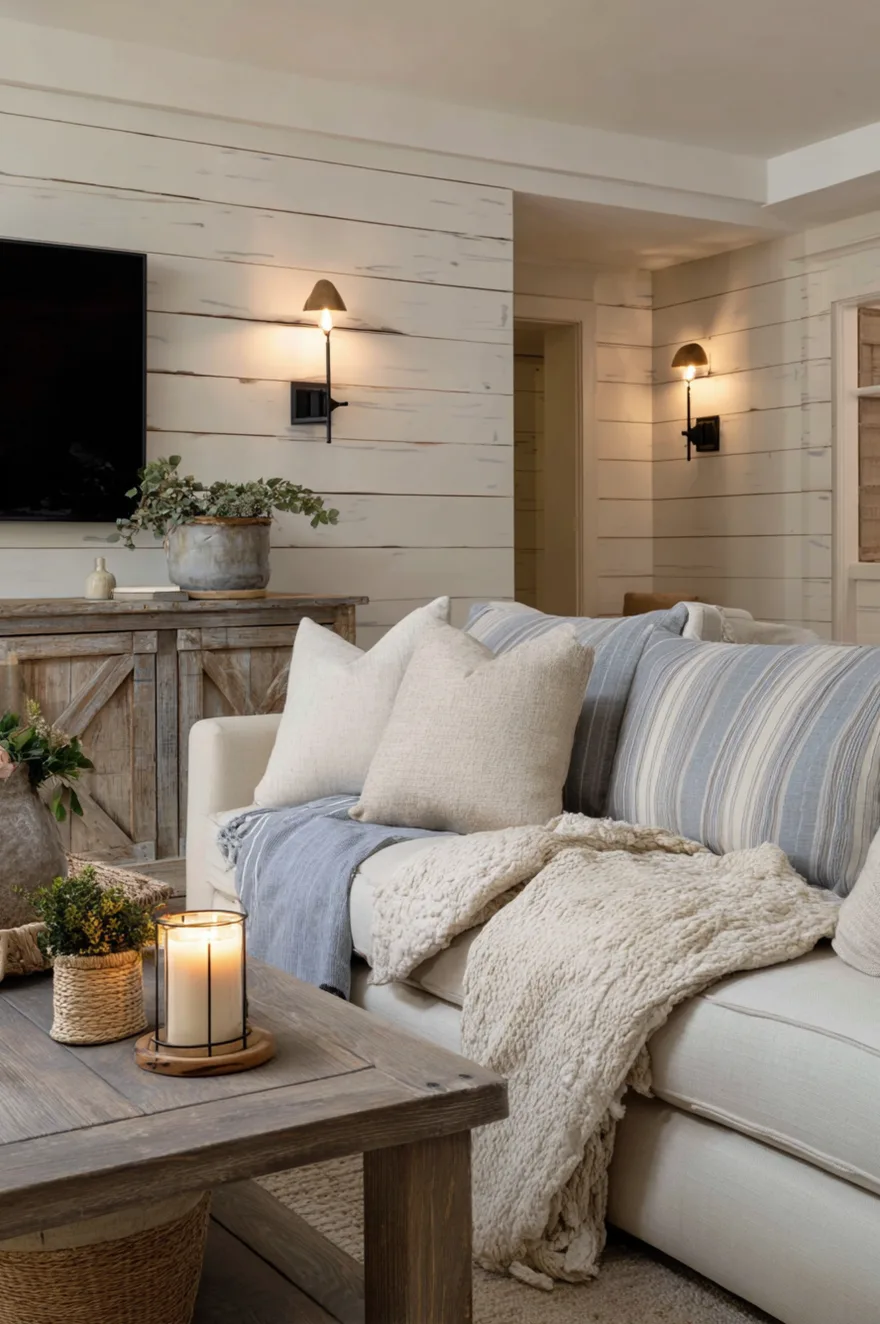
I found a salvaged barn-wood console at a flea market in Escondido and it became the piece that built an entire room around itself. That’s how farmhouse basement ideas work best – you start with one honest, worn, real material and let everything else defer to it.
Whitewashed plank paneling on the walls is the backdrop that lets the barn wood read correctly. Too smooth and polished and the console looks out of place; the plank texture gives it something to talk to. Galvanized metal sconces flanking the media wall add a light industrial note without going full factory floor, and a grain-sack-stripe sofa – the kind with a faded blue or black stripe on a cream ground – brings in the textile warmth that keeps it from feeling like a set design.
Layer a cream cotton throw over the arm and add a small vintage crock with dried cotton stems on the console. At lamp glow in the evening, the whole room has a quality that’s hard to name but immediately recognizable. Shop the grain-sack textiles on Etsy if you can’t find a sofa; even a couple of pillows in that fabric shift the whole palette.
11. Cozy Basement Ideas Begin With the Lighting Plan
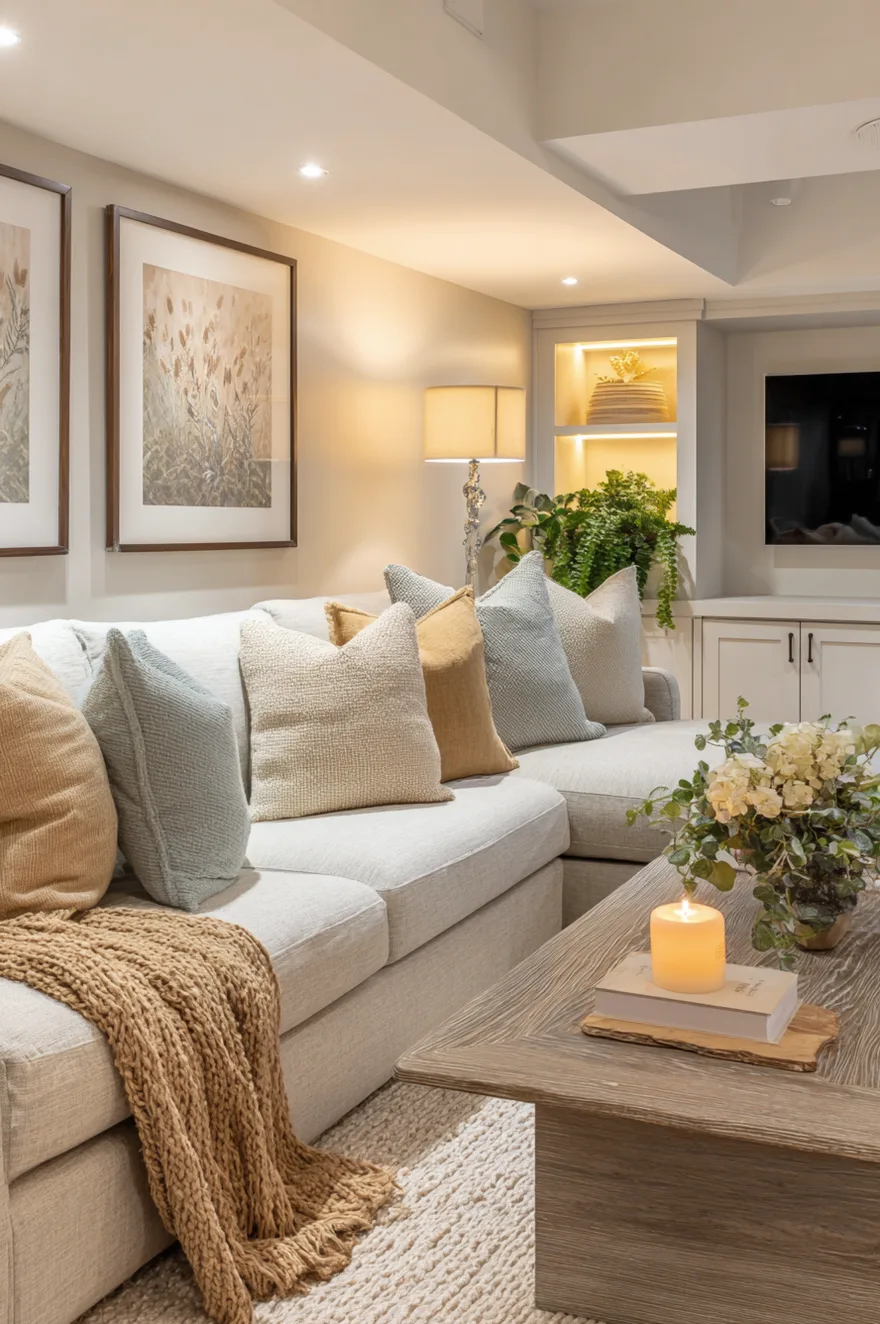
Three sources. That’s the rule I keep coming back to. Recessed cans on a dimmer for general light, a floor lamp tucked behind the sofa for ambient fill, and LED strip lighting running along the underside of a floating media console for a low, warm glow at eye level when you’re seated.
The recessed cans need warm-white bulbs – 2700K, not the blue-ish 4000K ones that come standard in most builder-grade fixtures. Swapping the bulbs alone costs about $15 and makes the room feel immediately less harsh. The floor lamp behind the sofa is one of those tricks that sounds too simple: it eliminates the flat-lit quality that a single overhead creates, gives depth to the room, and makes people look better in it. That last part matters more than people admit. For cozy basement ideas, this layered lighting approach does more than any single decorating decision.
12. Finished Basement Ideas That Hide the Ugly Parts
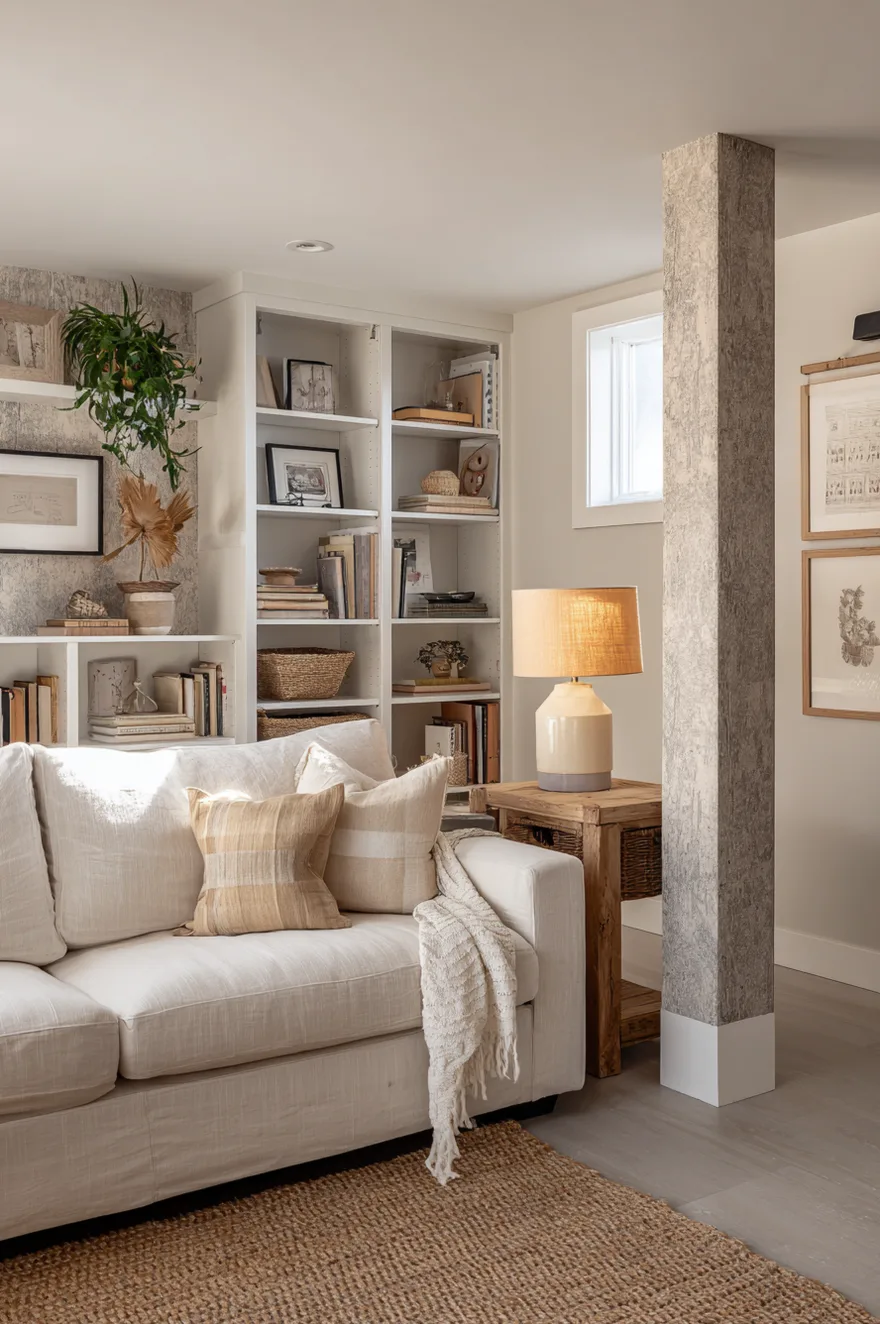
Support columns are the nemesis of every finished basement ideas plan. They land exactly where you don’t want them, they interrupt sightlines, and drywalling around them makes the ceiling even lower. IKEA BILLY bookcases flanking a column on both sides, with soapstone-look peel-and-stick wallpaper on the column face itself, is the solution I keep recommending.
It disguises the structural element entirely, adds floor-to-ceiling storage and display space, and looks like a built-in that was designed into the house. Style the shelves with a mix of books (spines facing out on some, spines facing in on others for a collected, lived-in look), small plants, and a few framed pieces. The column disappears. It sounds obvious but I only figured this one out last year, and I’m a little annoyed it took me so long.
13. The Velvet Moment Nobody Expects in a Basement
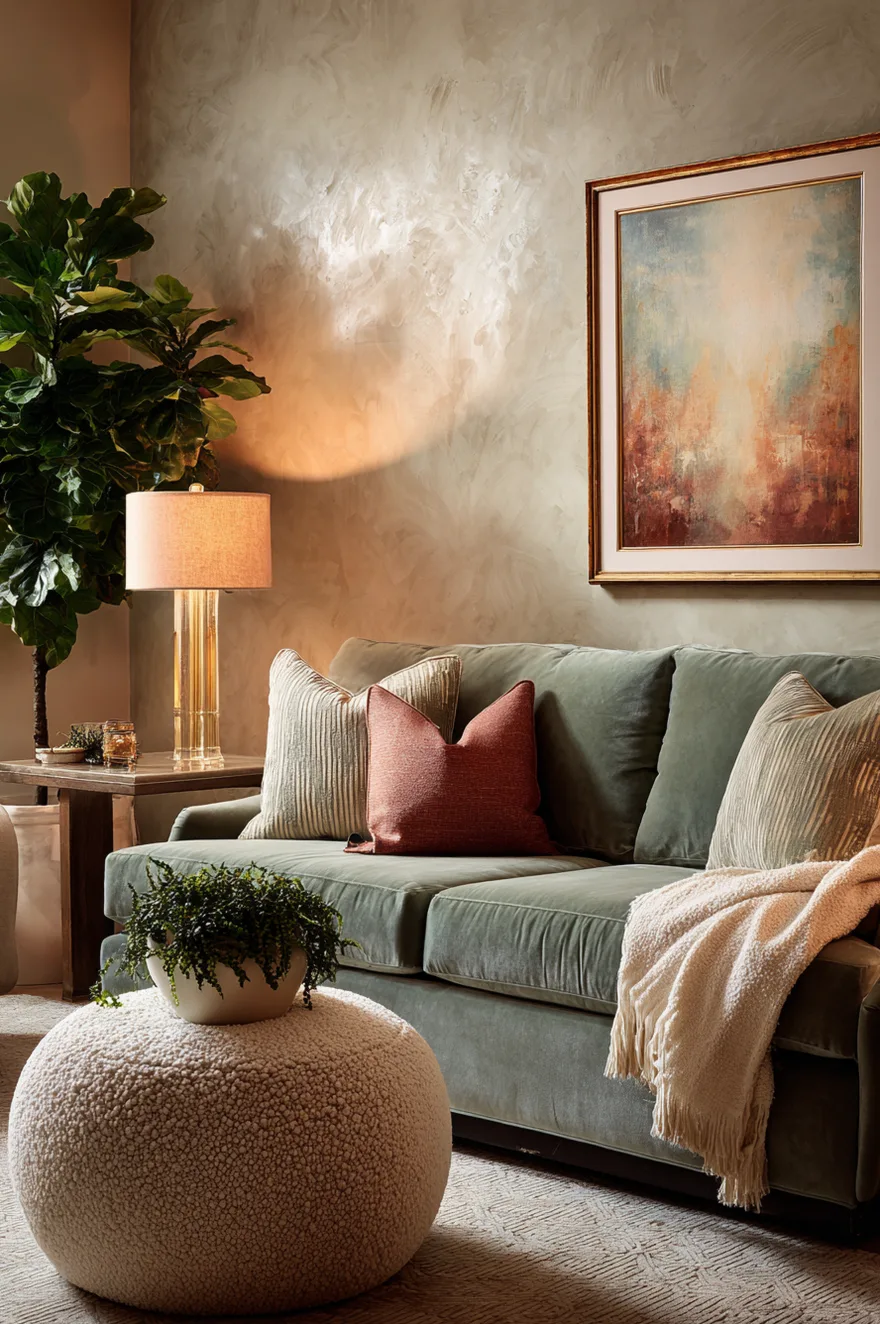
A dusty-sage velvet sofa is the last thing most people consider for a basement, and that’s exactly why it works. The material reads warm and considered in a space that usually defaults to leather or a sectional in a safe gray. Against a warm plaster-textured wall, the sage reads almost earthy rather than overtly colorful.
Unlacquered brass table lamps on either side, a cream boucle throw across one arm – the nubby texture of the boucle against the smooth velvet is a physical contrast that photographs extremely well. And a basement that looks good in photos gets used more often. (I cannot fully explain that logic but I stand by it.)
14. Modern Man Cave Ideas That Skip the Sports Clichés
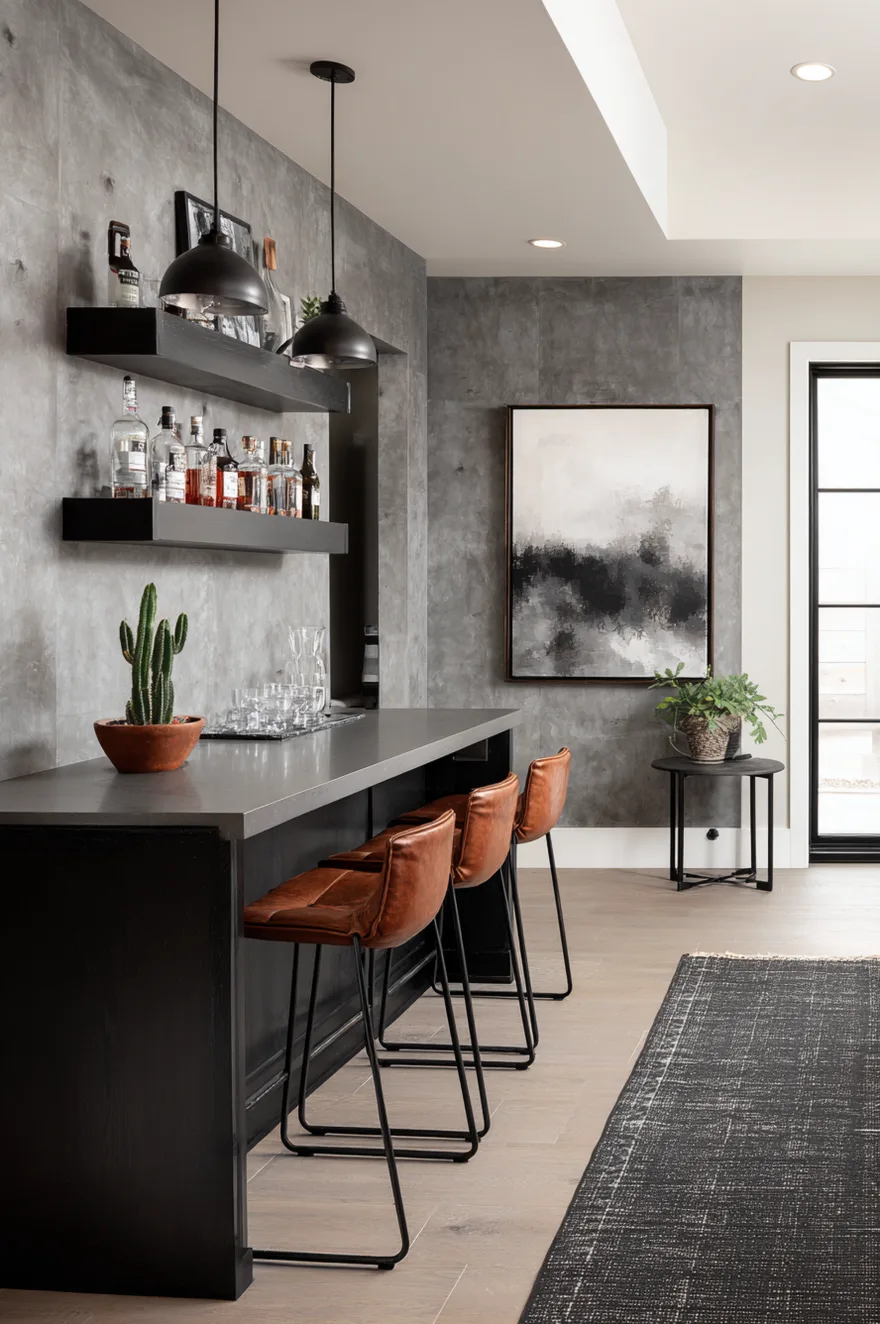
Concrete-panel wallpaper instead of actual poured concrete gives you the industrial look at a fraction of the weight and cost, and it’s rental-safe. Cover the long wall in it, keep the other walls in a warm off-white or greige, and the room gets a cool, matte quality that reads genuinely modern rather than decorated-to-a-theme.
A matte-black wet bar with floating shelves handles the functional need while keeping the aesthetic sleek. Steel and leather bar stools – and I mean real steel, not chrome, because chrome reads cheap against concrete – complete the seating. One large-format art print (abstract, not a sports jersey) on the wall opposite the bar gives the eye somewhere to land. The mistake most people make with modern man cave ideas is filling every wall. Restraint is harder and better. Leave space.
15. Basement Living Room Ideas With a Reading Nook Built In
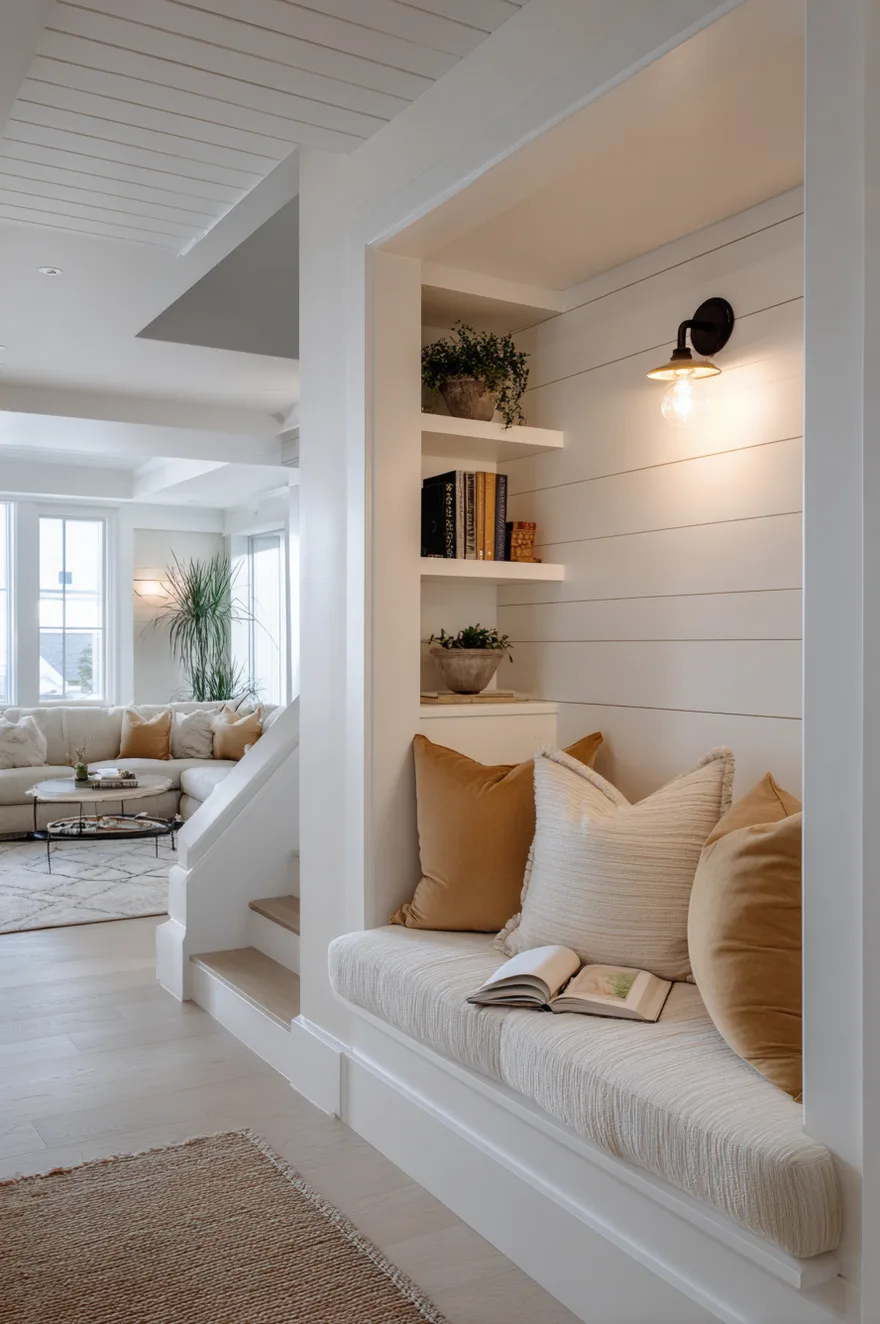
The dead space under a staircase is one of the best arguments for framing out a built-in nook. You add a reading spot that feels private without actually being separated from the main room – which matters in a basement where the square footage is already doing a lot of work.
Build a simple platform with a cushioned bench seat at about 18 inches high, line the interior walls with shiplap (it photographs well and adds texture in a tight space), and add a shelf or two above the bench for books and a small trailing plant. A plug-in sconce on one interior wall gives you focused light without running new electrical. The sconce needs a cord that you can route along the shiplap and paint to match – it’s not invisible, but it reads as intentional if you’re deliberate about it.
Line the cushion in something durable – I’d go with a performance linen or a canvas – because a reading nook in a basement becomes a favorite dog spot within approximately 48 hours. (Benny has claimed every cushioned surface we’ve introduced. This will not be different.)
16. Basement Accent Wall Ideas Using Peel-and-Stick
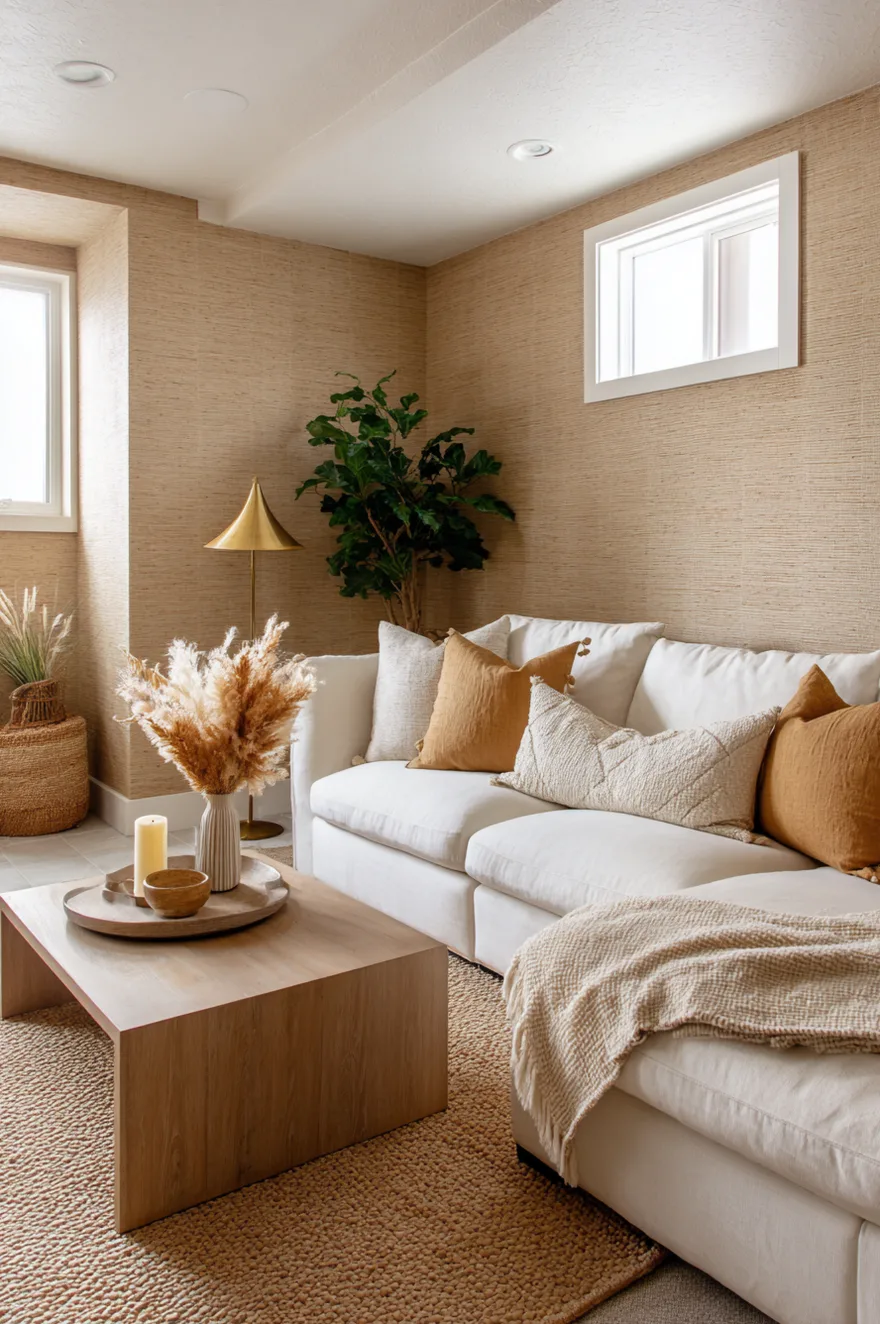
I swore I’d never do peel-and-stick wallpaper. I was wrong. The grasscloth versions in particular – warm caramel or a sandy linen tone – photograph with a texture and depth that reads expensive in a way that painted walls simply don’t. Applied floor-to-ceiling on the wall behind a sectional, it becomes the feature the whole room anchors to.
For rentals especially, peel-and-stick is one of those basement decor ideas that removes all the anxiety from commitment. Apply it carefully (work from a centered seam outward, use a credit card to smooth bubbles), and it holds beautifully for years. Check the Chasing Paper or Tempaper lines for grasscloth options in that warm caramel range – both have held up in rooms I’ve seen without peeling at the edges.
17. Why Tile to the Ceiling Works in a Basement Bar
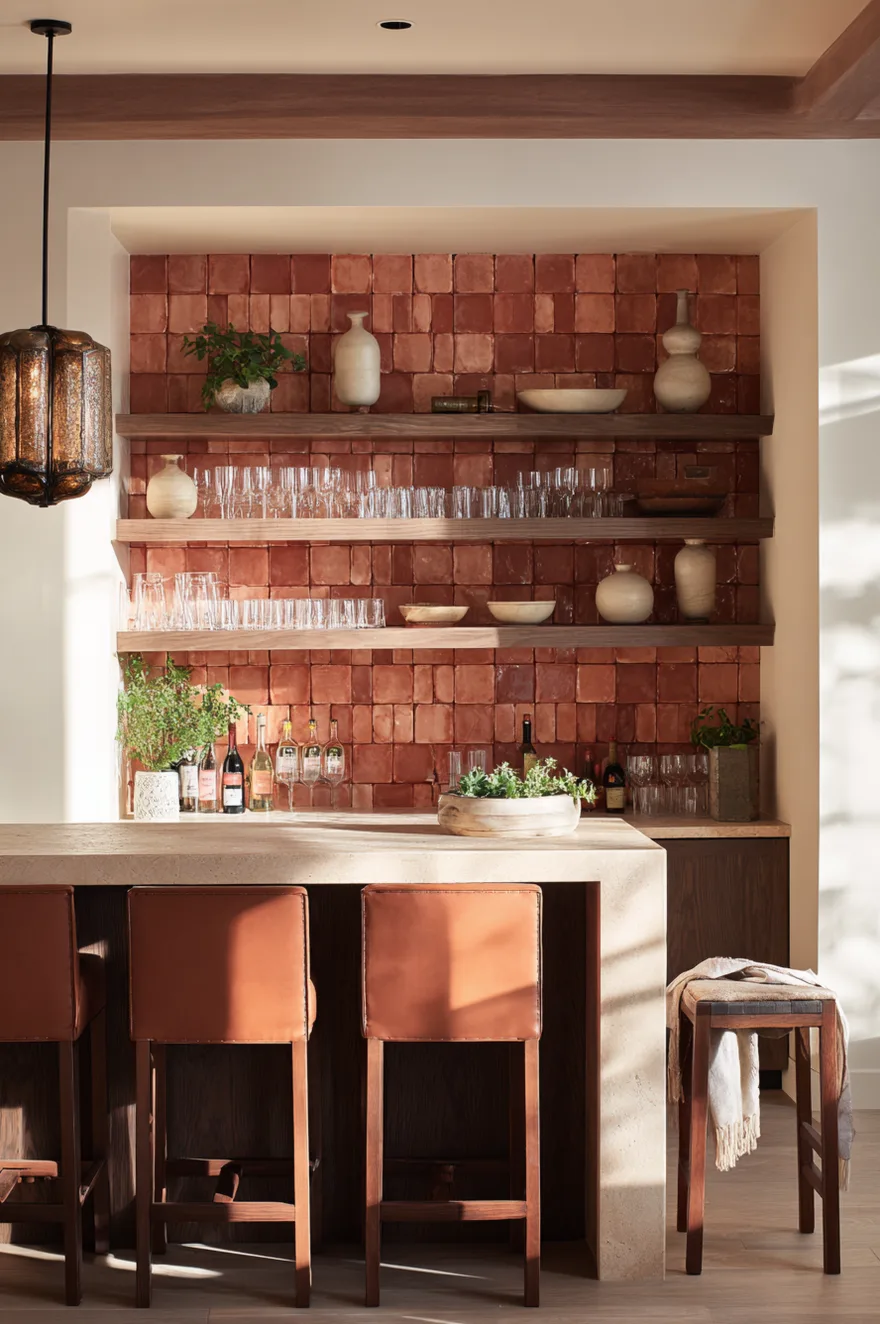
Most people tile the bar backsplash to 18 inches above the counter and call it done. Going all the way to the ceiling with a handmade-look terracotta tile makes the bar surround feel like its own room within the room – a proper destination rather than a counter on a wall.
The handmade tile matters here. Machine-cut tile in terracotta reads as trying; a slightly irregular, hand-glazed tile in the same color range reads as honest. Yes, it costs more per square foot, but you’re covering a bar surround, not a whole kitchen – the total yardage is manageable. Lean into the grout color too: a warm tan grout disappears into the terracotta and lets the tile variation carry all the visual work.
18. Cozy Basement Ideas That Use Color on the Ceiling
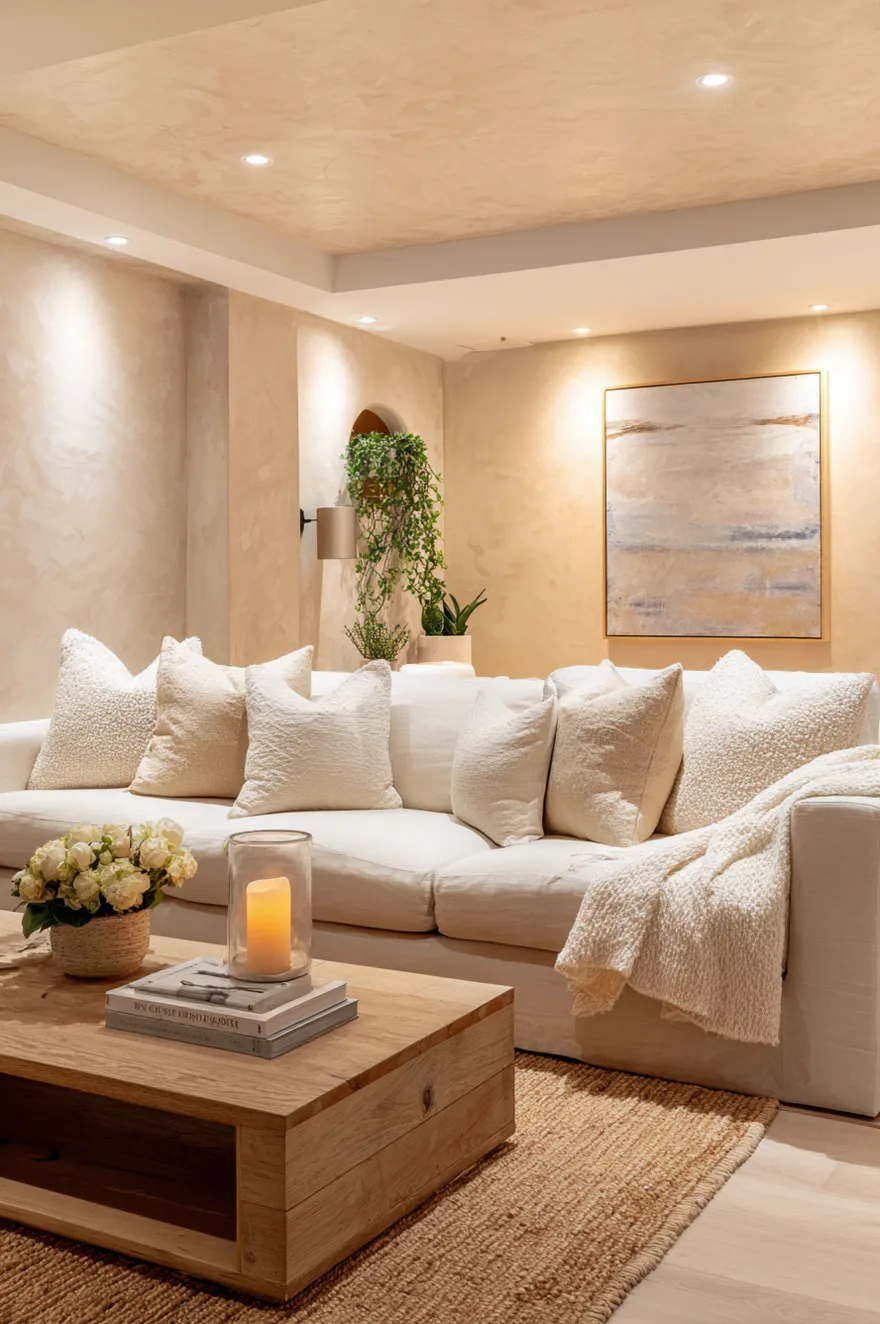
Painting the ceiling the same tone as the walls is a move that feels counterintuitive until you see it in person. A warm mushroom or a dusty blush, taken from the walls up onto the ceiling, wraps the room in color and actually makes the low ceiling feel like an architectural feature rather than a problem to solve.
Warm-white recessed lights on a dimmer work especially well here because they read as warm amber against the painted ceiling rather than harsh white discs punched into a surface. This is one of those cozy basement ideas that costs exactly the same as painting just the walls – you’re just adding a roller extension. Try it in a sample area first if you’re nervous, but I’d bet you commit to it.
19. The Thrift Store Score That Built This Whole Room
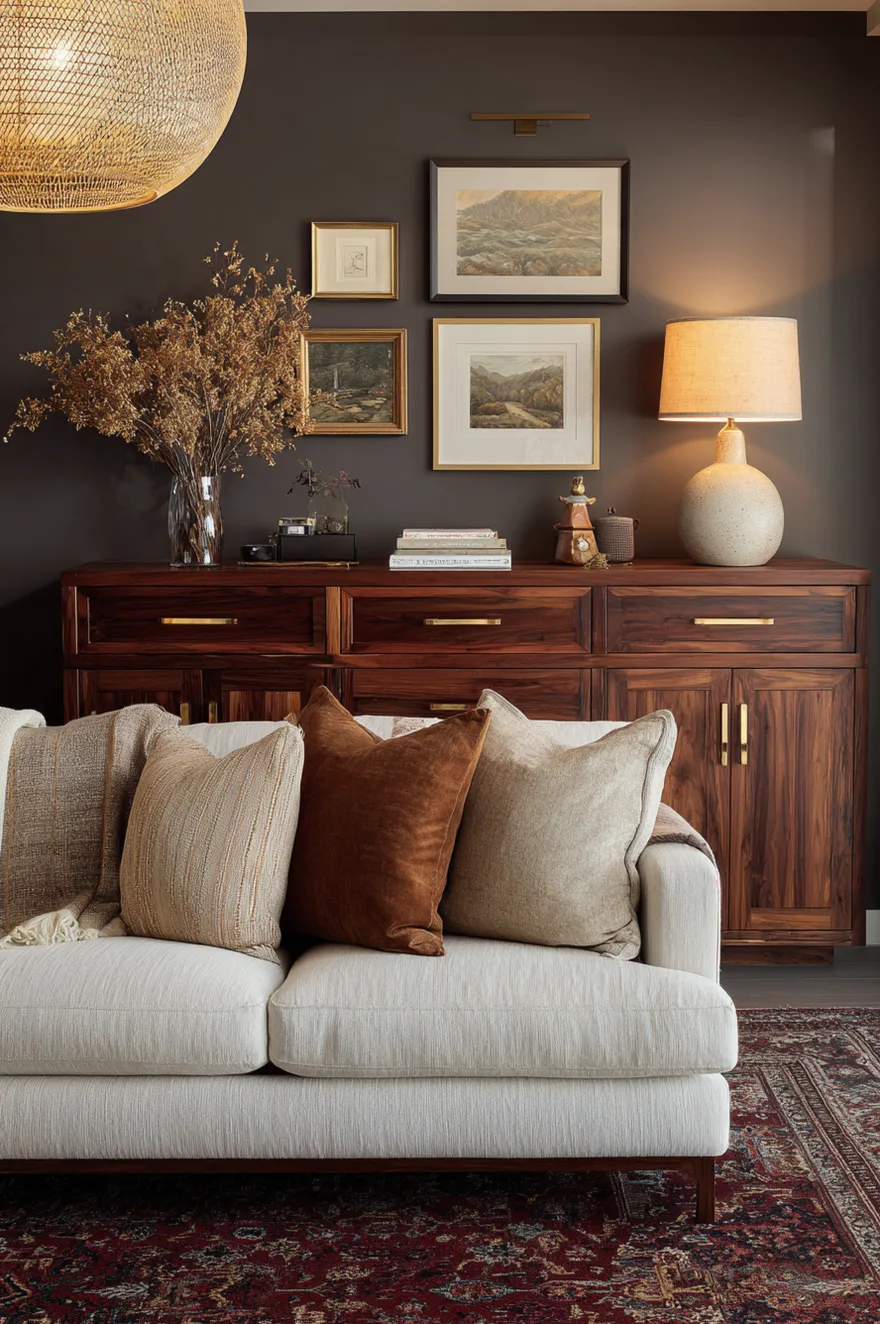
A $40 mid-century credenza from Goodwill in Chula Vista. I found it on a Tuesday, which is when the good stuff lands after weekend donations, and I almost walked past it because the veneer was lifting at one corner. Reader, I did not walk past it.
Stripped the veneer where it was bubbling, sanded the whole surface, and restained in a dark walnut using a gel stain (easier to control on old wood than a liquid stain). New brass pulls from Amazon – the kind with a long backplate, around $4 each – replaced the original hardware. After about six hours of work spread across a weekend, it looked like something from a boutique furniture shop with a $900 price tag.
That credenza became the anchor for a whole finished basement refresh: a vintage Persian rug that echoed the warm walnut tone, a woven pendant light above it, and a small gallery wall of thrifted frames above the console. The whole room cost under $400 total, including the rug. And honestly – still not totally sure the gel stain color was exactly right. It reads a little darker than I intended in certain lighting. But the brass pulls fix everything.
20. Basement Decor Ideas That Solve the Low-Light Problem
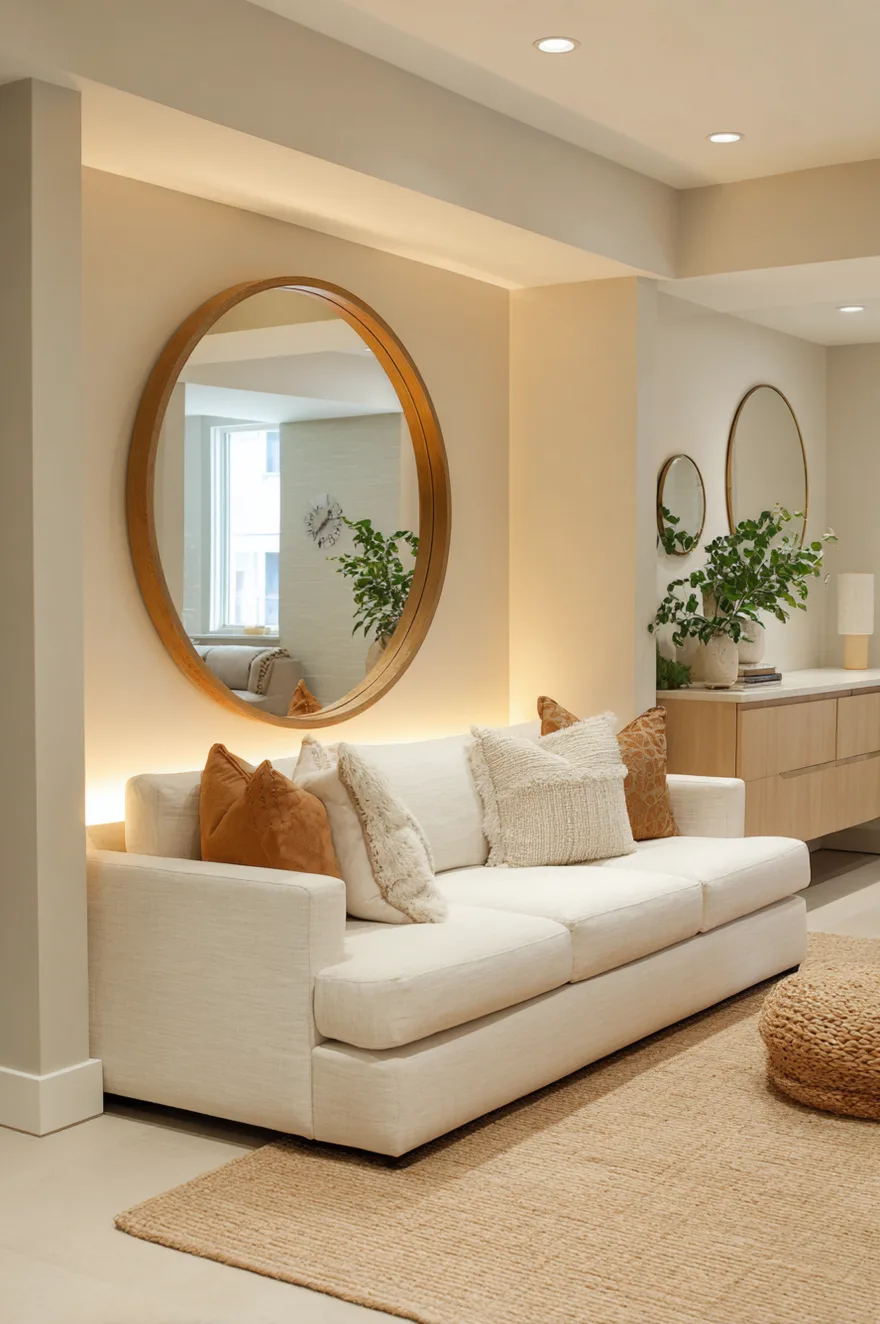
Mirrors opposite the only egress window are the most practical finished basement ideas I can give you if natural light is limited. An oversized leaner – something 60 inches or taller – placed directly across from the window bounces daylight deep into the room and makes the space read twice as bright without touching a single fixture.
Add two smaller circular mirrors in a loose gallery arrangement on an adjacent wall, and the light moves around the room rather than just reflecting in one direction. For evenings, warm LED strips under a floating media console fill in what the mirrors can’t do after dark – and the strip light reflection in the leaner adds a glow that’s genuinely warm rather than harsh. Shop the big leaner mirrors at HomeGoods or TJ Maxx, where they turn up regularly in the $80 to $120 range.
21. Finished Basement Ideas With a Soft Boho Edge
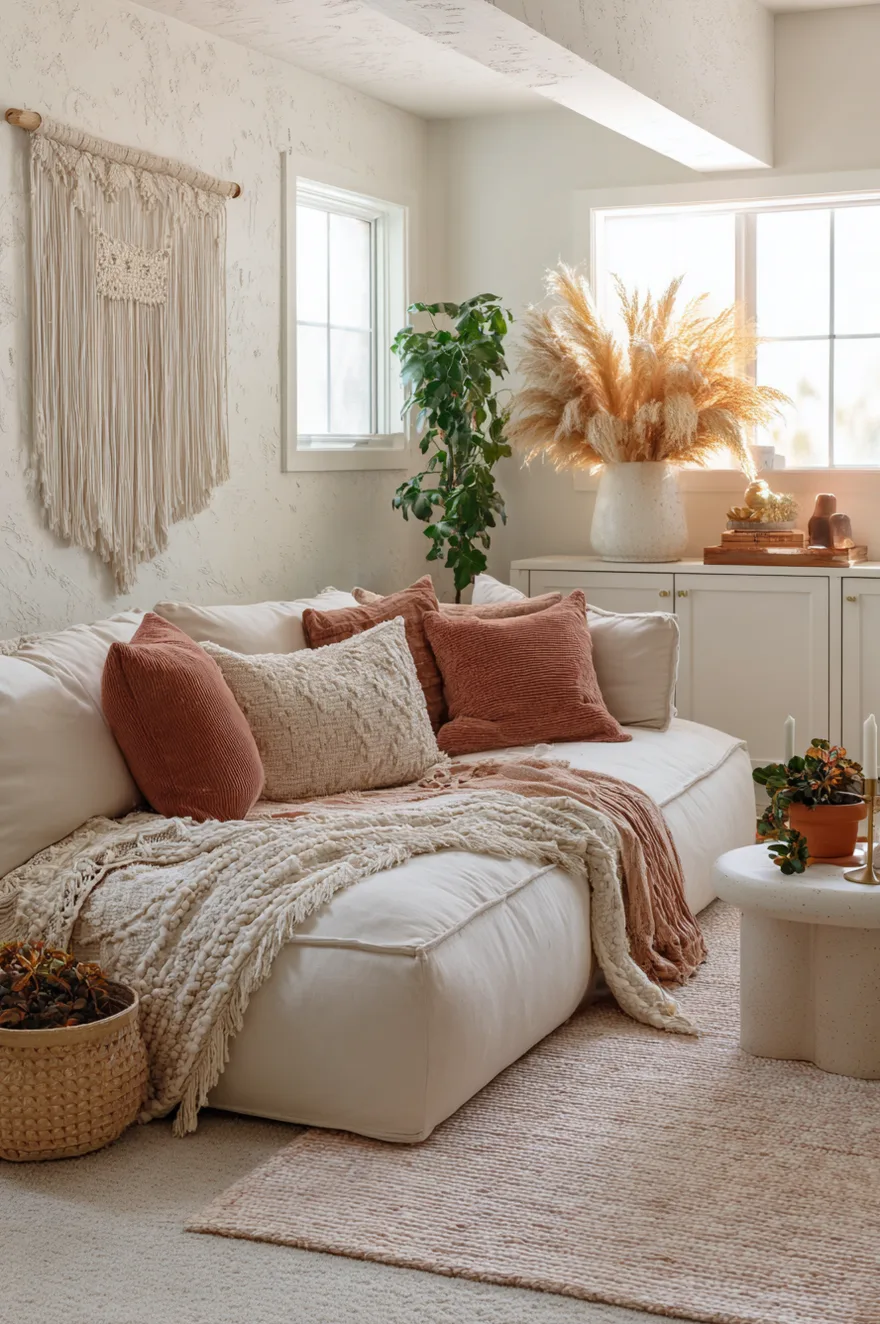
Cream plaster walls – or just cream paint with a flat finish that reads close to plaster – are the starting point for a boho-leaning basement that still feels grown-up. The softness of the wall backdrop lets the textiles carry the character: a Moroccan wedding-blanket throw on a low platform sofa, terracotta linen pillows, a macramé panel hung over the media wall in place of art.
None of this needs to be expensive. The wedding-blanket throws turn up on Etsy and at World Market, the macramé can come from Amazon or a local maker, and the terracotta pillows are consistently available at Target’s Threshold line for around $20 each. What ties it together is restraint in the color palette – cream, warm terracotta, natural fiber, and nothing else. Add one trailing pothos in a terracotta pot and let it grow. These finished basement ideas work because they’re about layering texture, not accumulating stuff.
Okay, that’s twenty-one ideas, which is maybe twenty-one more than you needed before you went down to look at your own basement and felt that particular mix of inspiration and overwhelm. My suggestion: pick two. The lighting plan (section 11) and one surface decision – a wall color, a rug, an accent wall. Those two things will make more difference than any amount of furniture shopping. Which one are you starting with? Tell me in the comments – especially if you try the thrift store credenza situation, because I love to hear how those go.
With love,
Liv