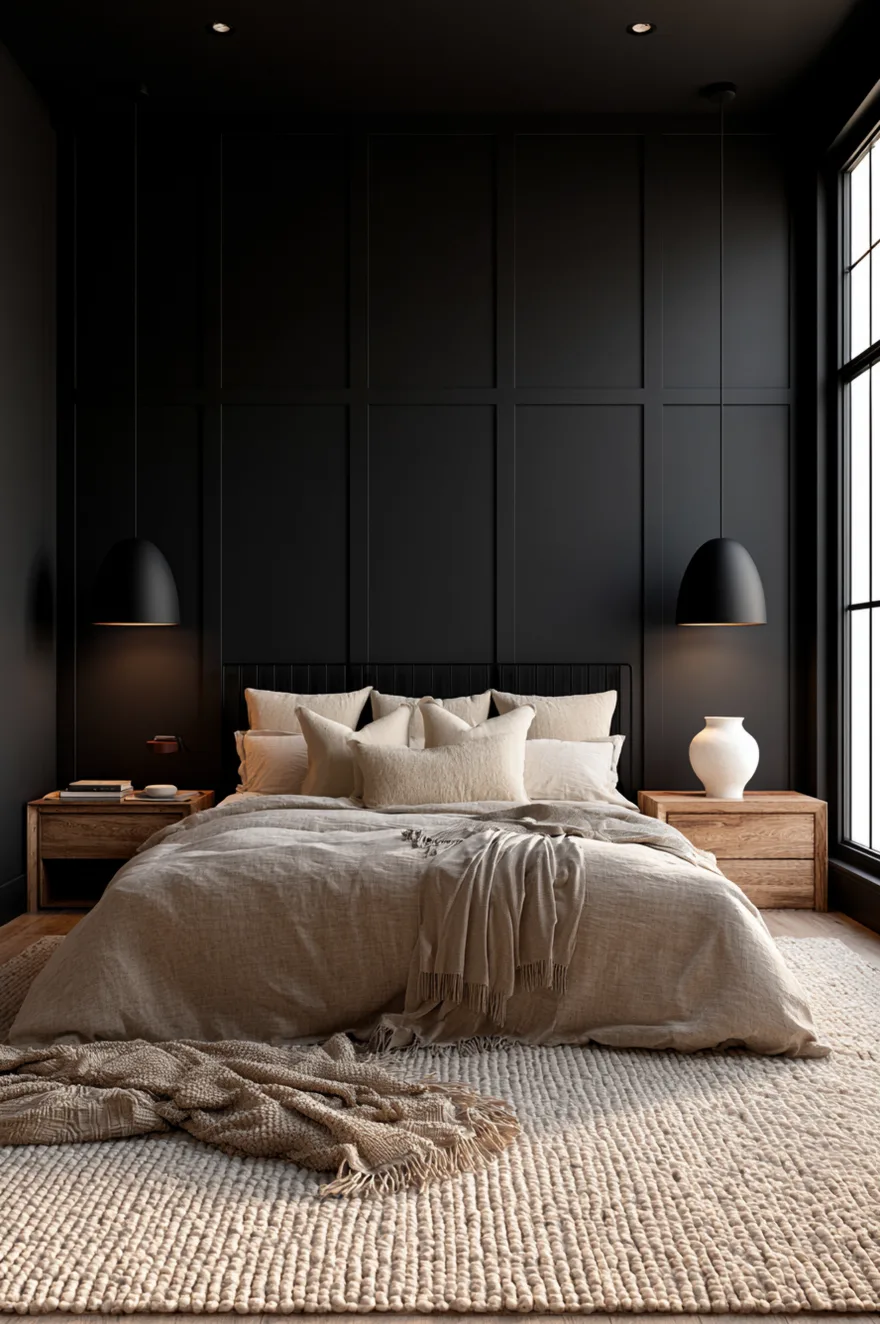
Want a bedroom that feels calming without being boring? Looking for that perfect balance between minimalist and actually livable? Wondering how to make your space feel like a spa retreat without spending a fortune? Japandi bedroom style might be exactly what you’re looking for. These Japandi bedroom ideas show you how to blend Japanese minimalism with Scandinavian coziness – clean lines meet warm textures, simple meets inviting, zen meets hygge. Whether you have a tiny apartment bedroom or a spacious primary suite, these ideas work.
I’ve been saving Japandi bedroom inspo on Pinterest for months now, and honestly, I think I’ve finally figured out why this style has completely taken over my feed.
It’s that magical combo of calm and cozy – like, you get the clean, uncluttered vibe of Japanese design but with all that Scandinavian warmth that actually makes you want to spend time in the room. Our bedroom right now is kind of a random mix of stuff we’ve collected over the years, and I keep thinking about how much more peaceful it would feel with that intentional Japandi aesthetic. Jake thinks I’m overthinking it, but I swear a bedroom should be the one place that doesn’t stress you out when you walk in.
Whether you’re working with a small space like we had in our first apartment or you’ve got a bigger primary bedroom, these Japandi bedroom ideas will help you create that calm, beautiful retreat you actually want to come home to.
1. That Low Bed Everyone’s Obsessed With
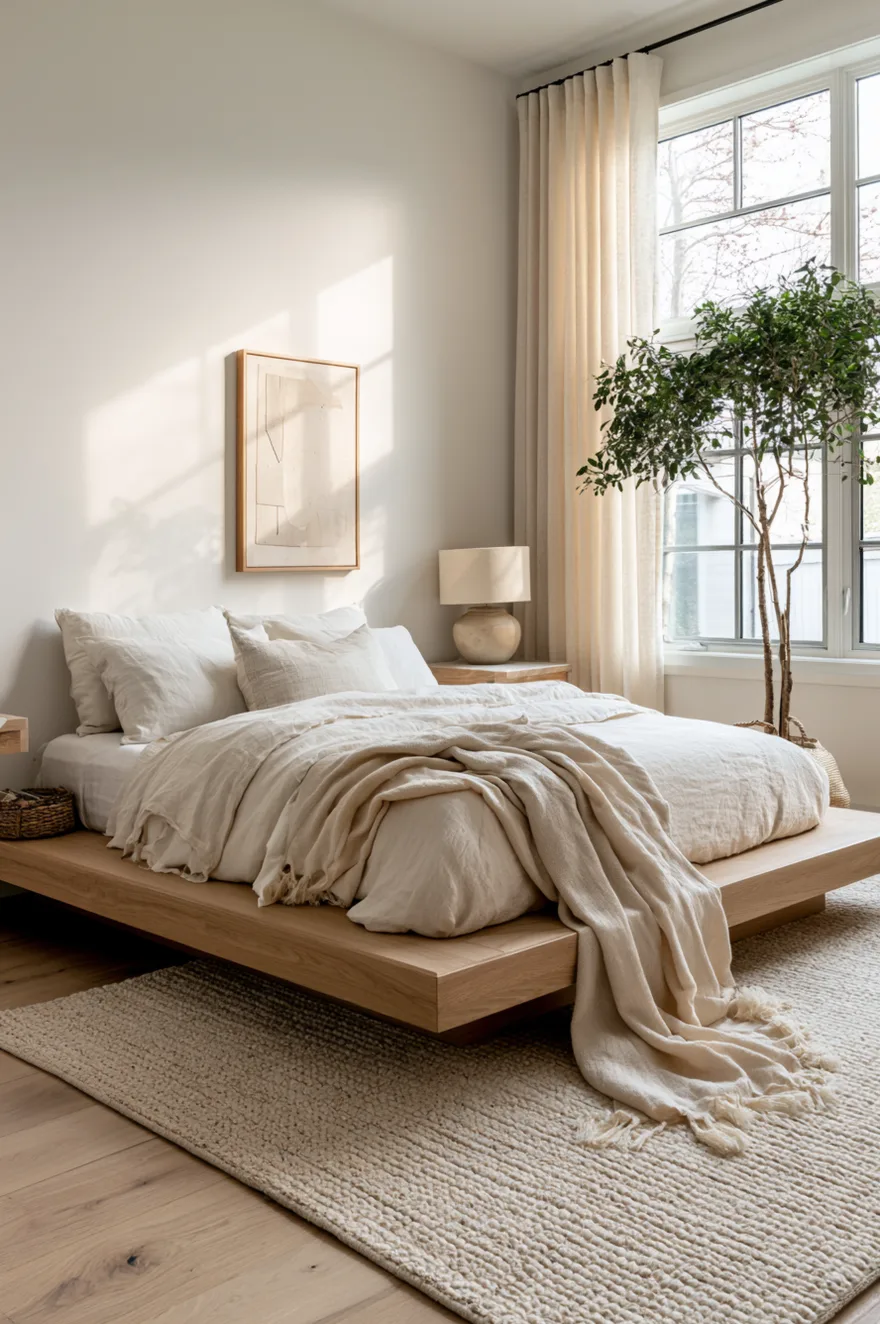
Okay so low platform beds are everywhere in Japandi bedrooms and for good reason. They make your whole room feel bigger because there’s more visual space above the bed, and there’s something about sleeping closer to the ground that just feels more grounded and calm.
I’d keep everything simple around it – white linen sheets, maybe one chunky knit throw, and a really minimal nightstand. The bed itself is the statement, so you don’t need a bunch of stuff competing for attention. Plus, if you have low ceilings like we do, this trick makes them feel way higher.
2. When Neutral Doesn’t Mean Boring
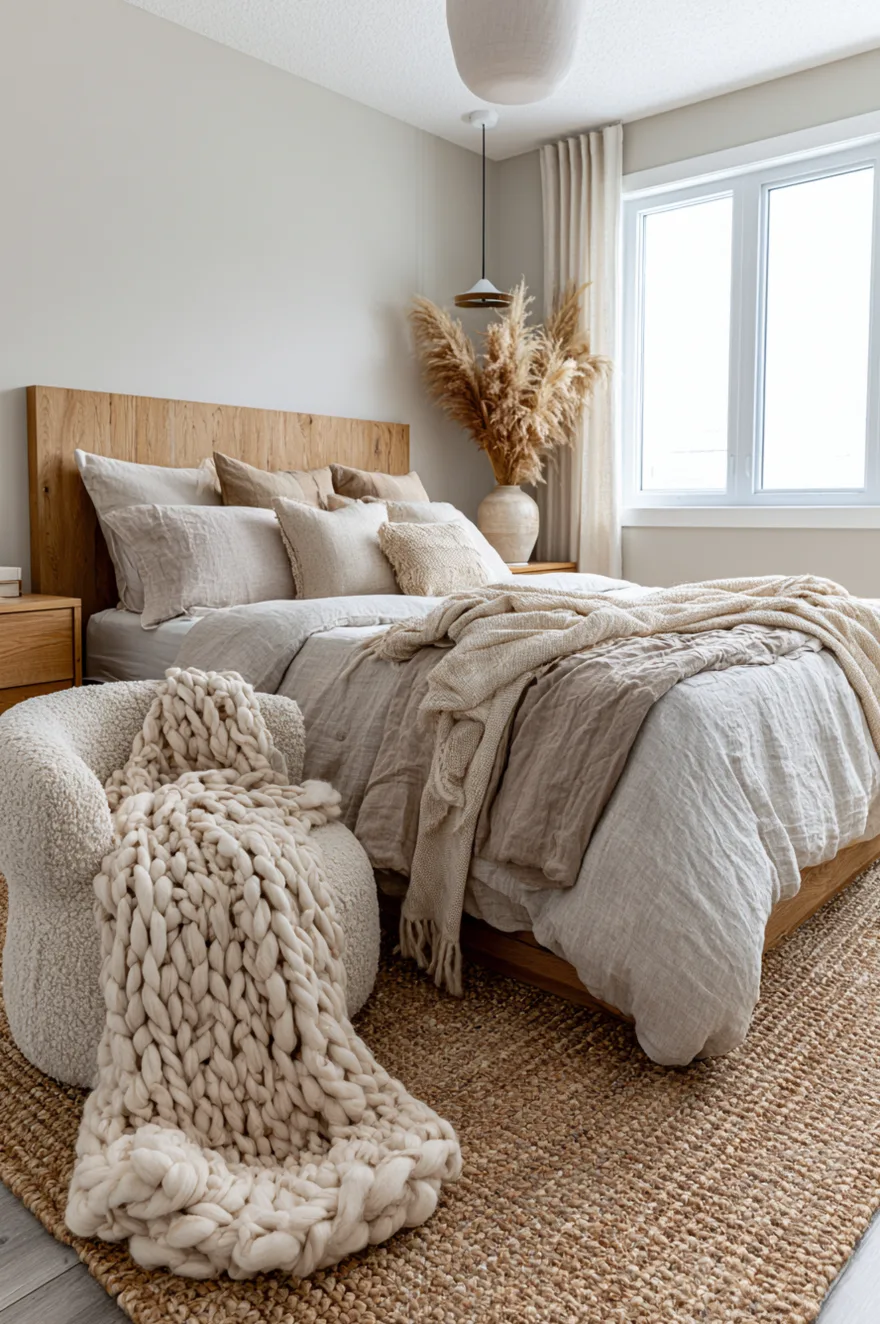
This is what I think of when someone says “cozy bedroom.” Layers and layers of neutral textures in different shades of beige, cream, oatmeal, and warm white. It’s not boring – it’s calming, which is totally different.
The trick is mixing textures like crazy. A linen duvet with a boucle chair, a chunky knit throw over a smooth bedspread, a jute rug under a soft sheepskin. Same color family, completely different feels. That’s how you get a Japandi bedroom that looks put together but still makes you want to dive into bed immediately.
3. Going Dark Without Going Goth
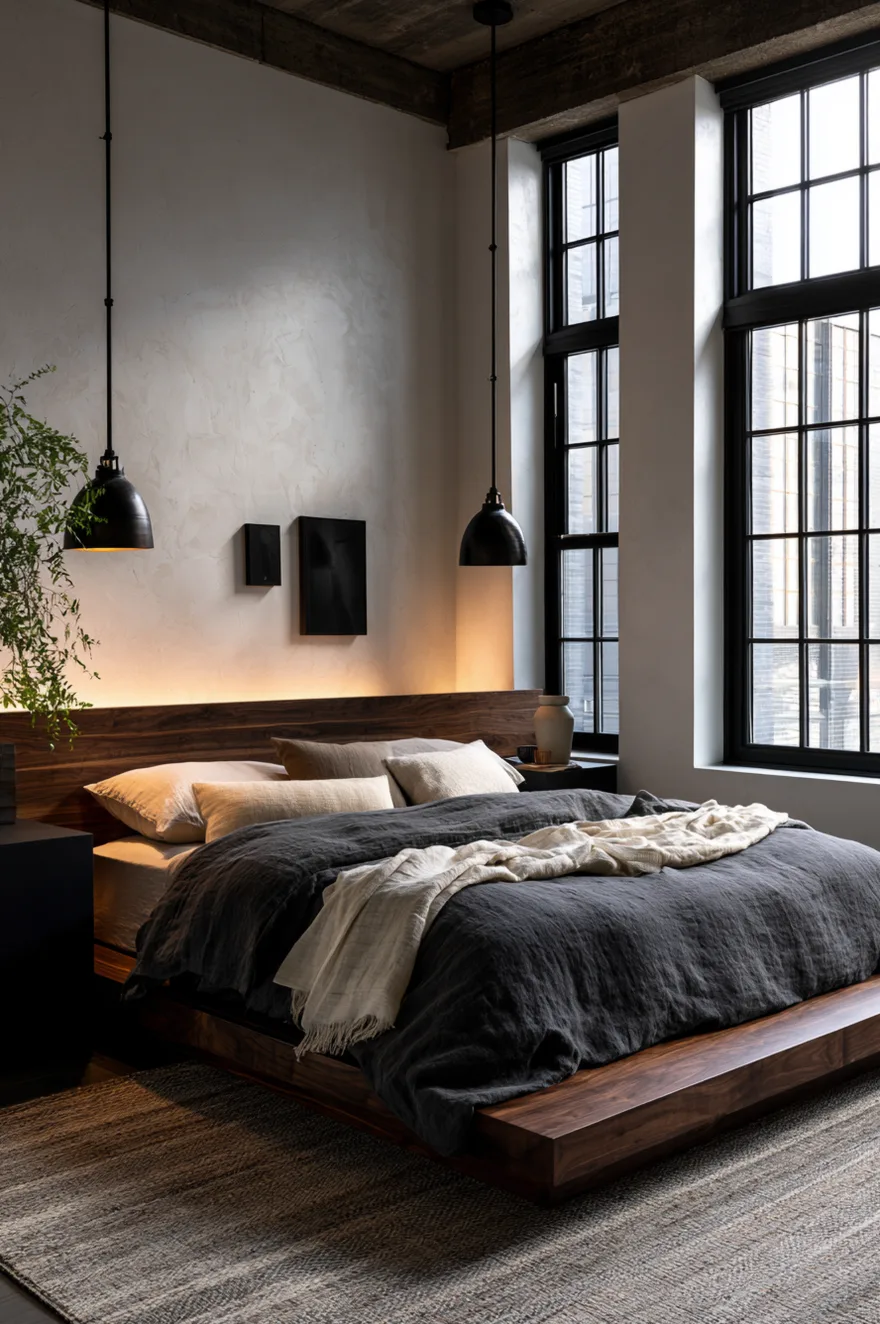
I never thought I’d be into dark bedrooms until I saw a moody Japandi bedroom with walnut furniture and black accents. It’s dramatic but somehow still feels calm, which I didn’t think was possible.
The secret is balancing all that dark wood – like a walnut bed frame or espresso nightstands – with really soft, light bedding and warm lighting. Add some cream linen sheets, a textured throw, and maybe a black matte lamp, and suddenly it’s cozy instead of cave-like. I’m seriously considering this for our bedroom makeover.
4. Letting Natural Light Do The Heavy Lifting
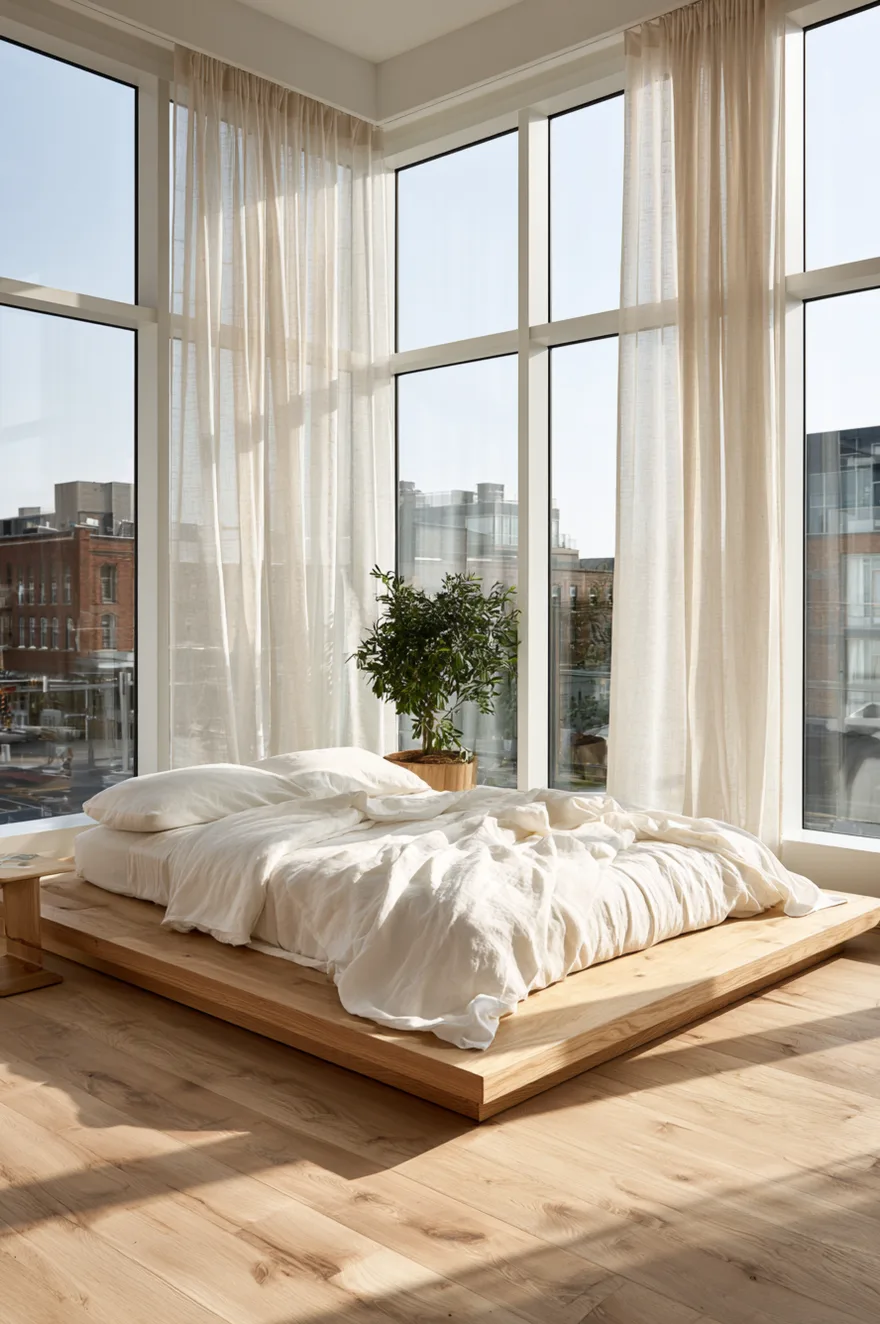
If you’re lucky enough to have big windows, lean all the way into them. Natural light is basically free decor, and in a Japandi bedroom it’s even more important because the whole vibe is about bringing the outside in.
Keep your window treatments super simple – sheer linen curtains or honestly nothing if you’ve got privacy. Pair those big windows with light oak furniture and minimal accessories, and the room basically styles itself. The sunlight on warm wood in the morning is better than any fancy light fixture you could buy.
5. Wabi-sabi: The Beauty Of Perfectly Imperfect
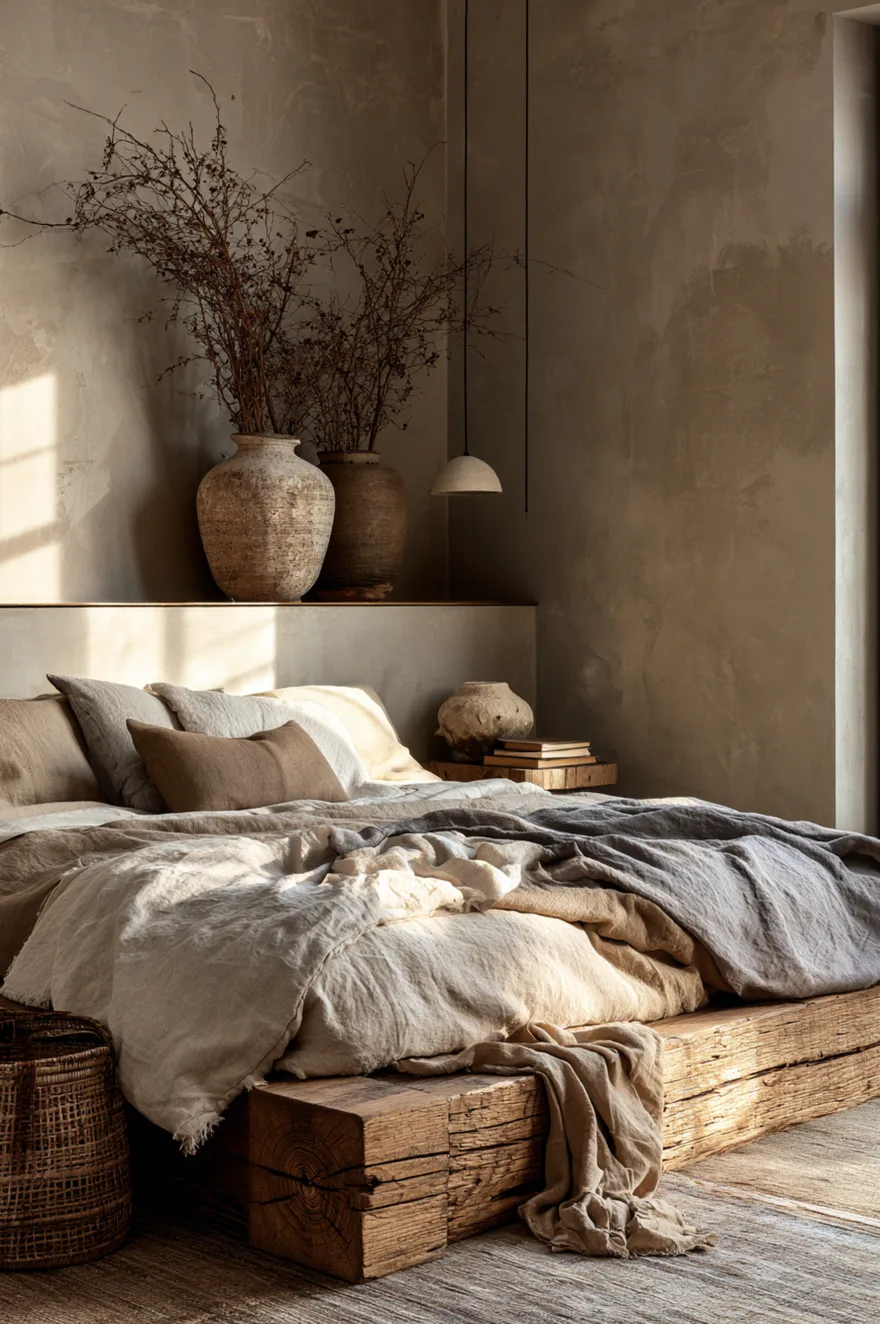
Wabi-sabi is this Japanese concept about finding beauty in imperfection, and honestly it’s such a relief after years of trying to make everything look Instagram-perfect. In a Japandi bedroom, that means handmade pottery with wonky edges, wood furniture with visible grain, textured walls that aren’t smooth.
I love this approach because it takes the pressure off. Your ceramic vase doesn’t need to be flawless, your linen sheets can be wrinkled, your wood nightstand can have knots and variations. That’s the whole point. It makes the room feel way more personal and less like a showroom.
6. One Big Light That Changes Everything
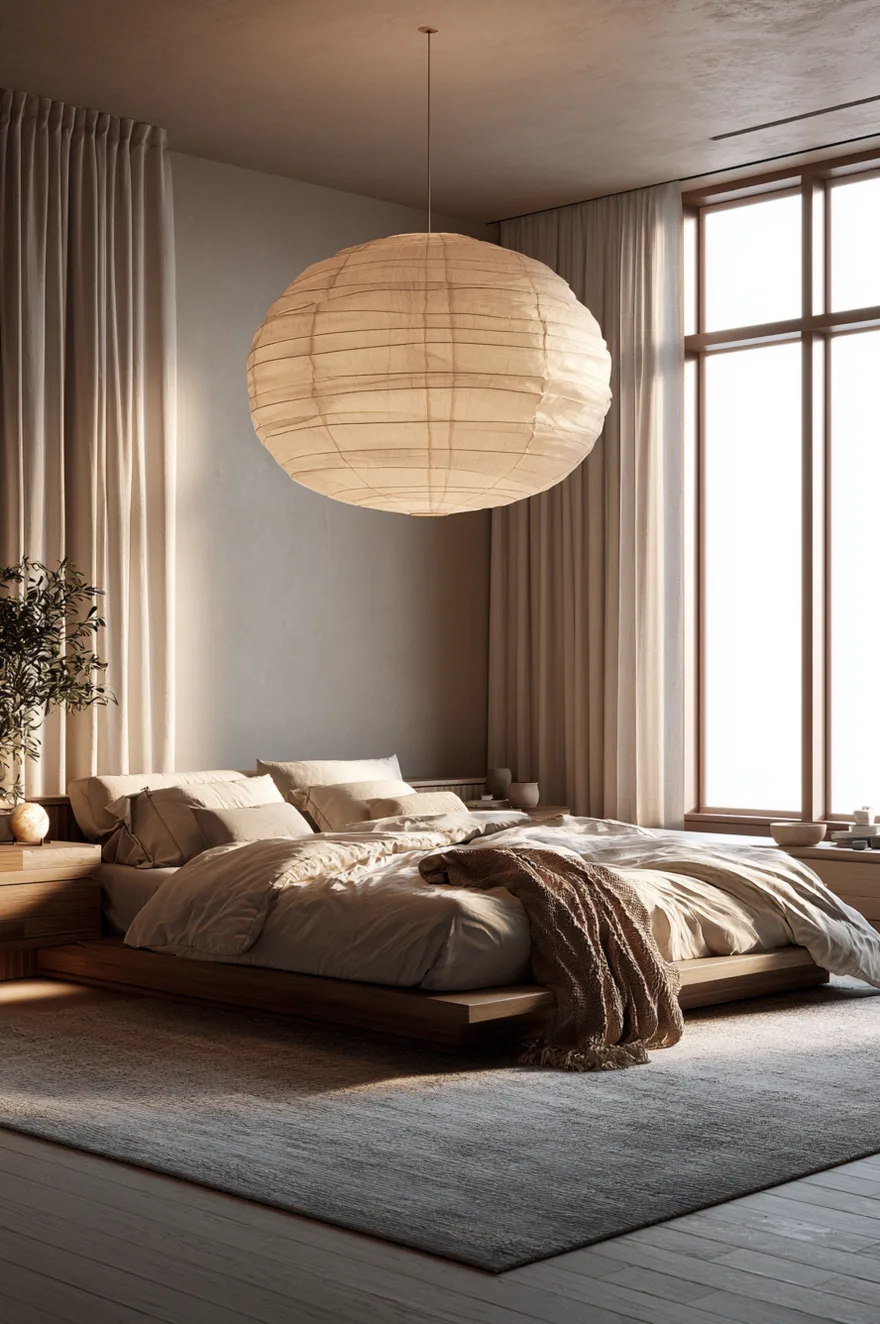
If there’s one splurge that makes a Japandi bedroom feel expensive, it’s the lighting. I’m talking about one really beautiful oversized pendant light instead of boring table lamps or those builder-grade ceiling fixtures nobody actually likes.
A big paper lantern or a sculptural pendant hung low over your nightstand or centered above the bed creates this soft, warm glow that makes the whole room feel intentional. It’s functional and decorative at the same time, which is very on-brand for Japandi style.
7. Bringing The Outdoors Inside With Green
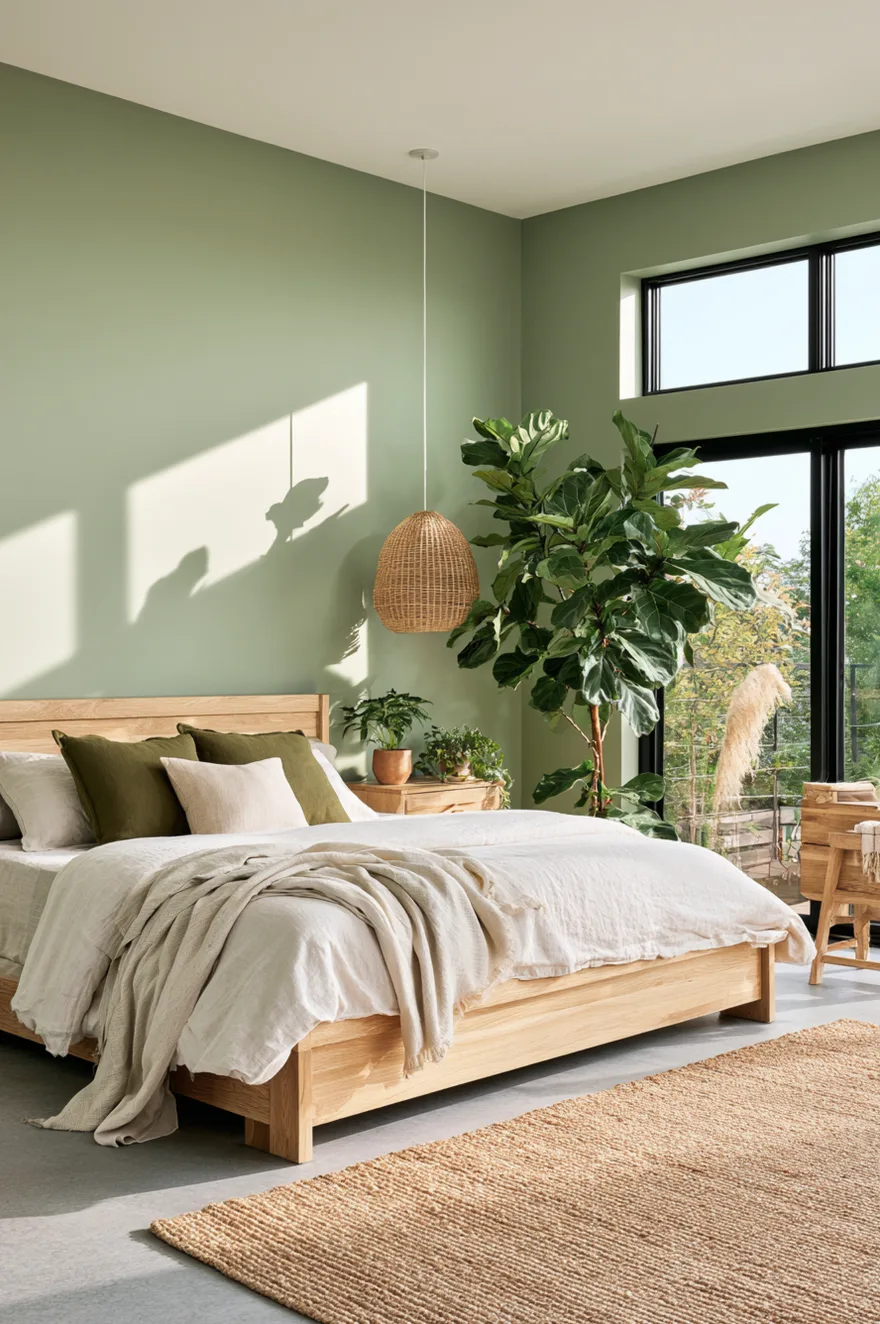
I’ve been trying to add more plants to our bedroom, and the combo of green tones with natural wood is just so calming. A sage green accent wall or even just olive-toned throw pillows paired with light oak furniture feels fresh without being too colorful.
Add a big plant in the corner – I’m obsessed with fiddle leaf figs even though they’re high maintenance – and maybe some smaller plants on your nightstand. The greenery makes the whole space feel alive and connected to nature, which is exactly what Japandi design is all about.
8. Earth Tones That Feel Really Comfy
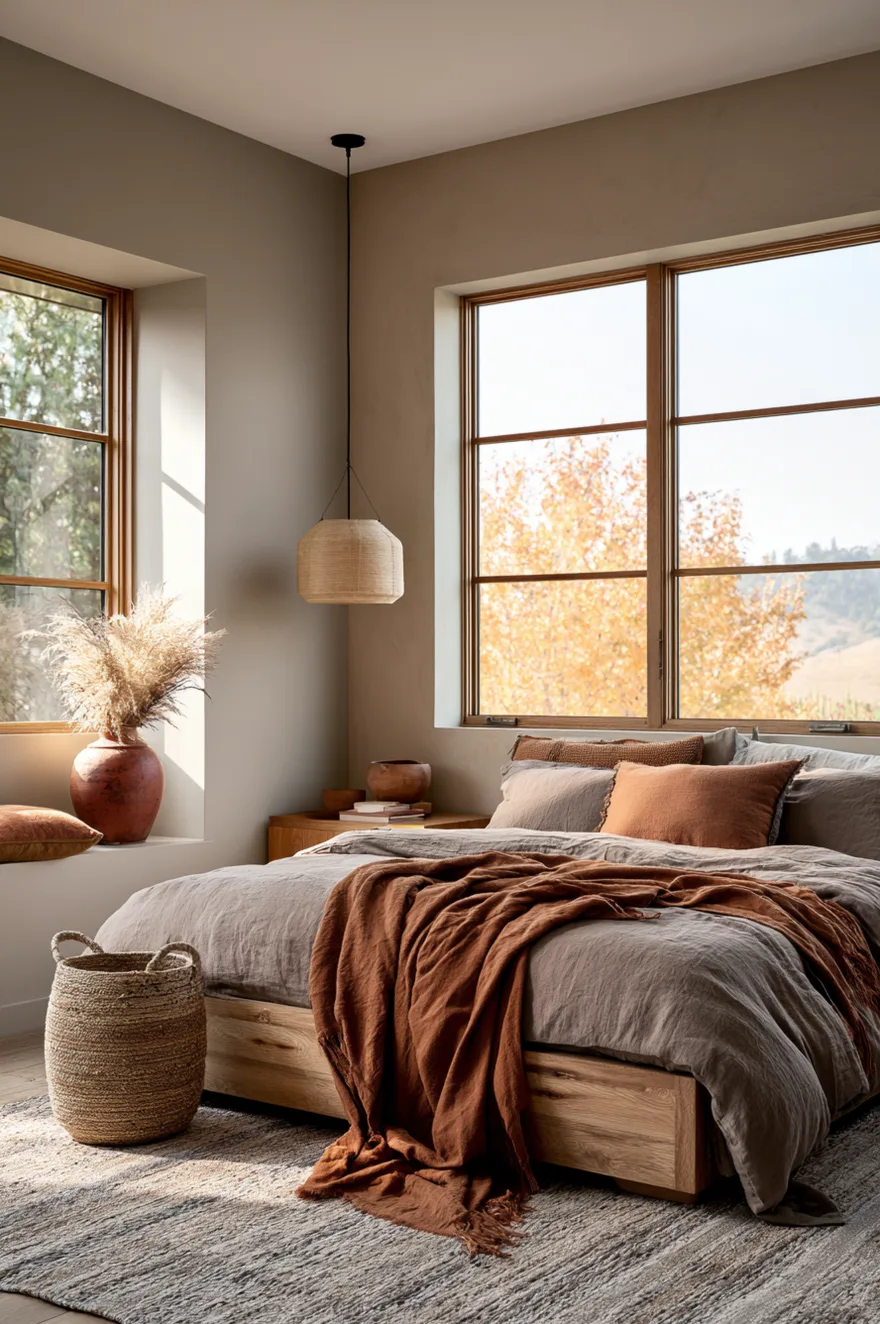
Warm earthy colors are having such a moment right now, and they work perfectly in Japandi bedrooms. Think terracotta, clay, caramel, taupe – all those colors that remind you of sunset or desert landscapes but in a really soft, muted way.
The key is layering different shades together instead of just picking one. A terracotta throw on caramel sheets with taupe walls creates this tonal, wrapped-in-warmth feeling that’s so much cozier than plain white everything. I’m a convert to the warm neutral life.
9. Vintage Furniture With A Modern Vibe
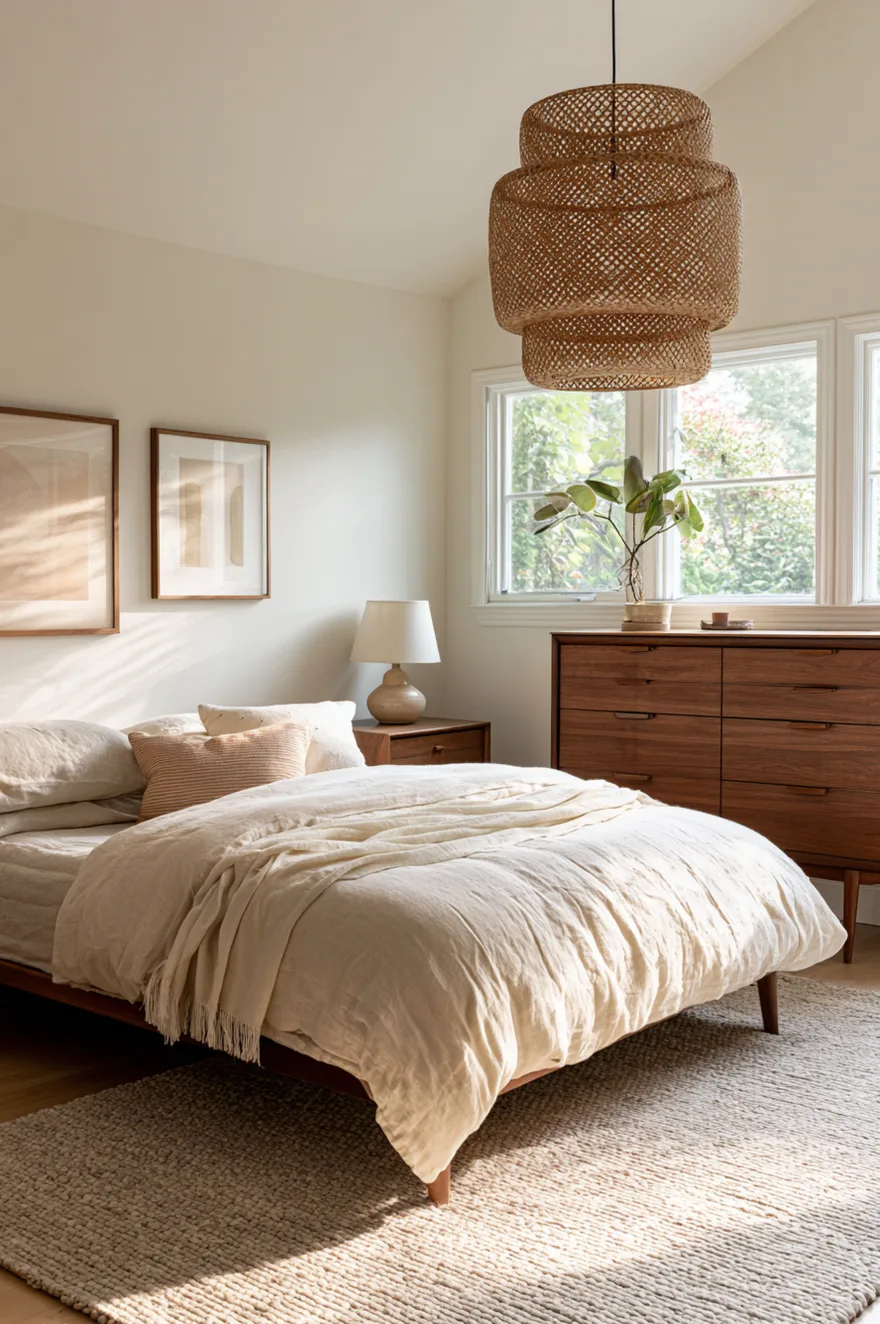
Mid-century modern furniture and Japandi style are basically best friends. Those tapered legs, the clean lines, the warm walnut tones – it all fits together so naturally that you’d think they were designed for each other.
I found a vintage walnut dresser at an estate sale last year and it would be perfect in a Japandi bedroom. Pair it with simple white linen bedding and minimal wall art, and you get that collected-over-time look instead of the everything-matches-from-one-store vibe.
10. Making Small Spaces Feel Bigger
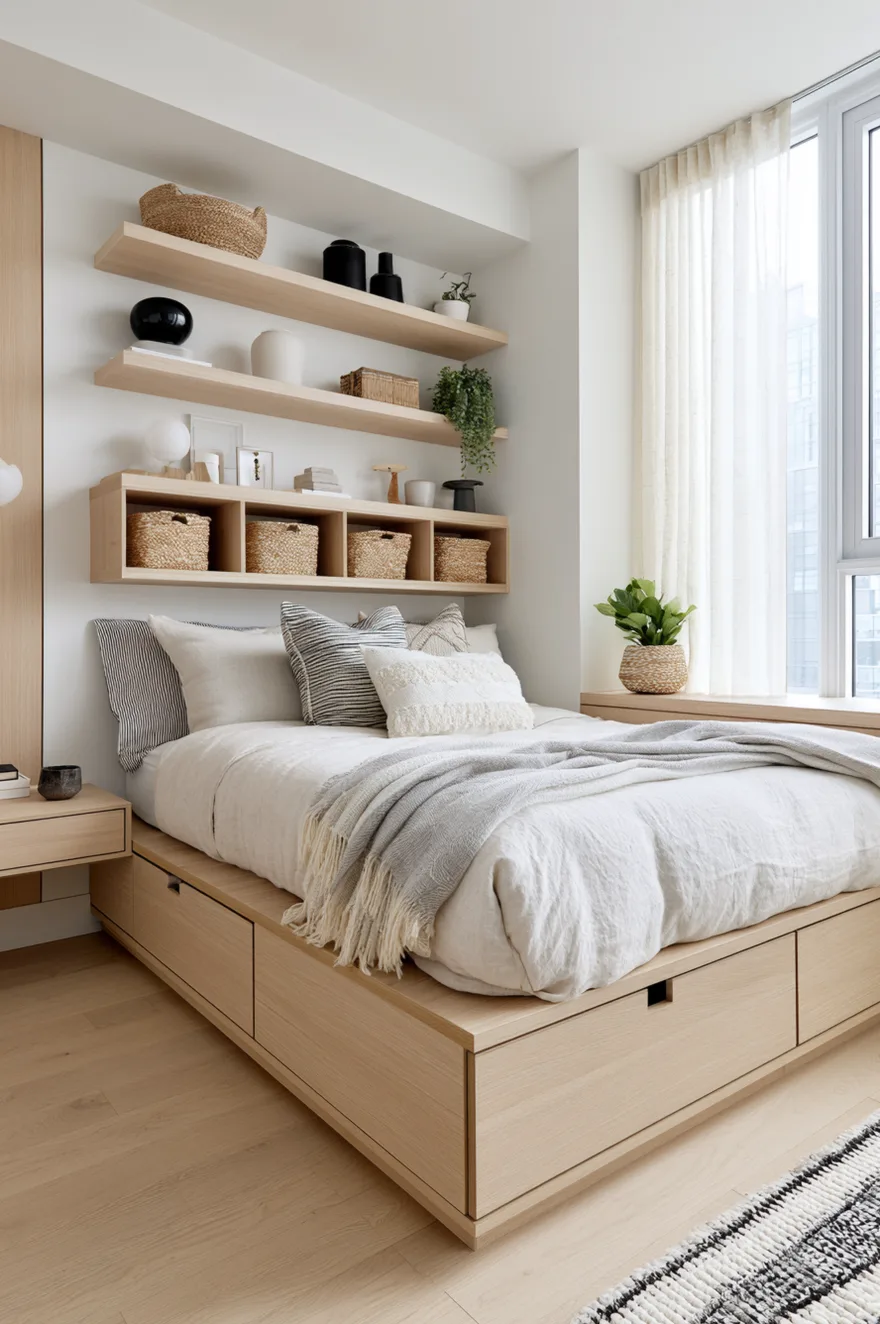
Small bedrooms are actually perfect for Japandi style because the whole aesthetic is about keeping things simple and clutter-free. When you only have room for the essentials, you’re basically forced to be intentional about what you keep.
Use a platform bed with built-in storage drawers, add floating nightstands to save floor space, and tuck woven baskets under the bed for extra stuff. Keep your surfaces clear and your color palette neutral, and suddenly that tiny bedroom feels way more spacious and calm.
11. When Blue Feels Like A Breath Of Fresh Air
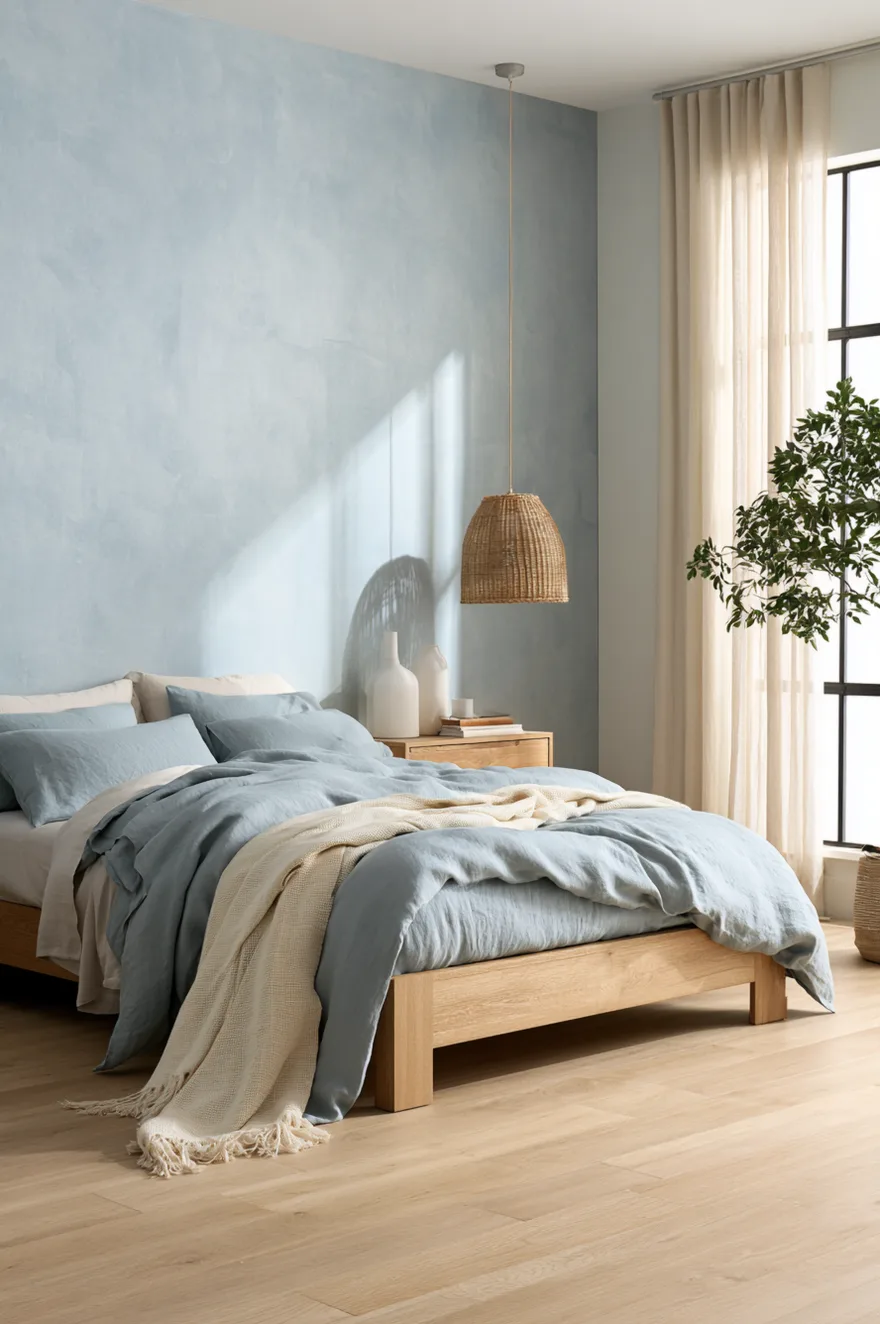
I usually stick to neutrals, but soft blue in a Japandi bedroom is so pretty and calming. We’re talking dusty blue, not bright royal blue – those muted, almost-gray blues that feel more like a soft exhale than a bold statement.
Try dusty blue bedding with light oak furniture, or a pale blue-gray wall with warm wood accents. Keep everything else neutral and textured, and the blue just adds this extra layer of serenity without disrupting the minimalist vibe.
12. Attic Bedrooms That Feel Like A Hideaway
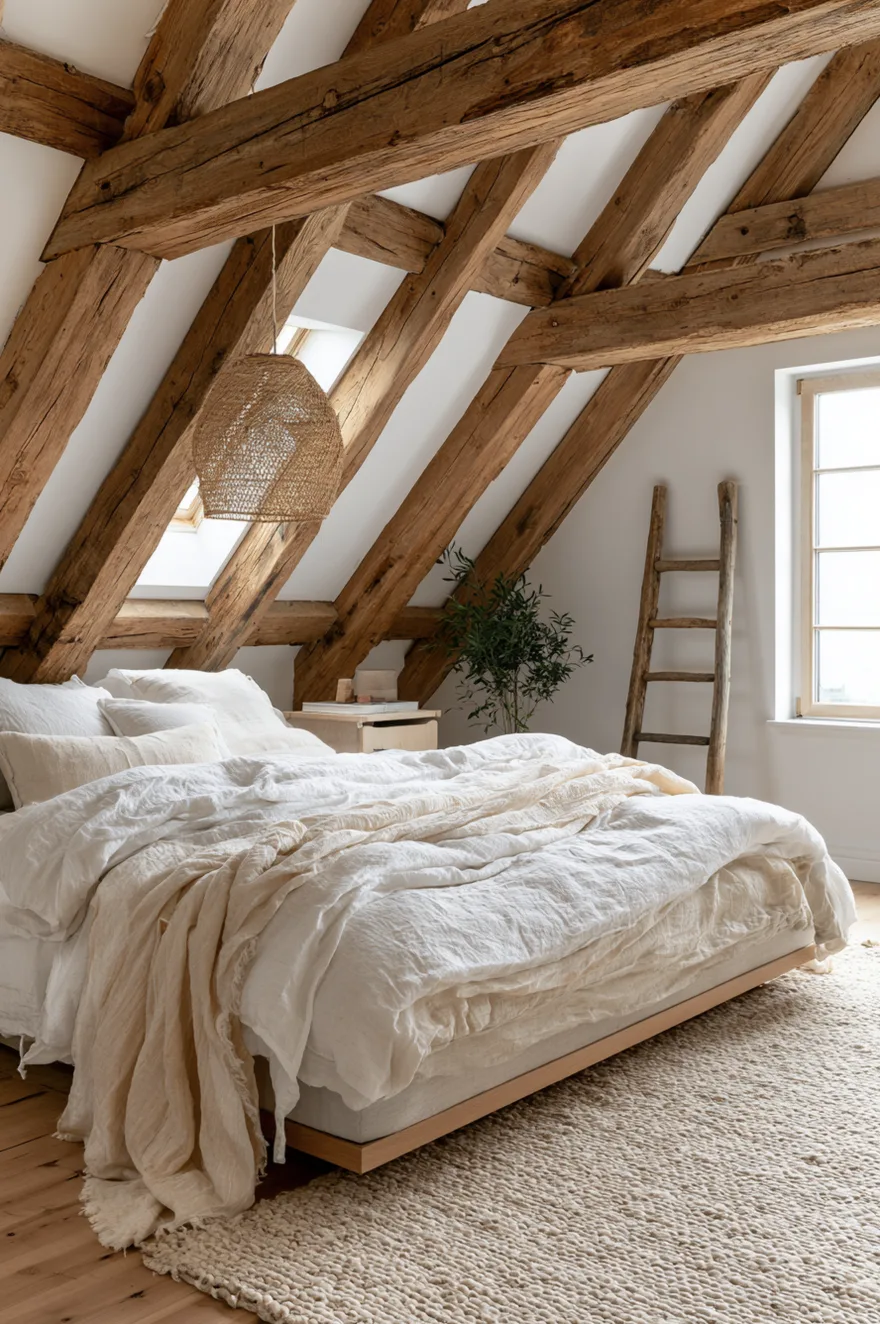
If you have a loft or attic bedroom with exposed beams, you’re already halfway to a gorgeous Japandi space. Those beams add so much character that you barely need any other decor – they’re doing all the heavy architectural lifting.
Keep the rest simple with white linen bedding, a low bed, maybe a ladder leaning against the wall for hanging throws or just for looks. Let the wood beams and the sloped ceiling be the stars. It’s cozy without feeling cluttered.
13. The Drama Of Black And Beige
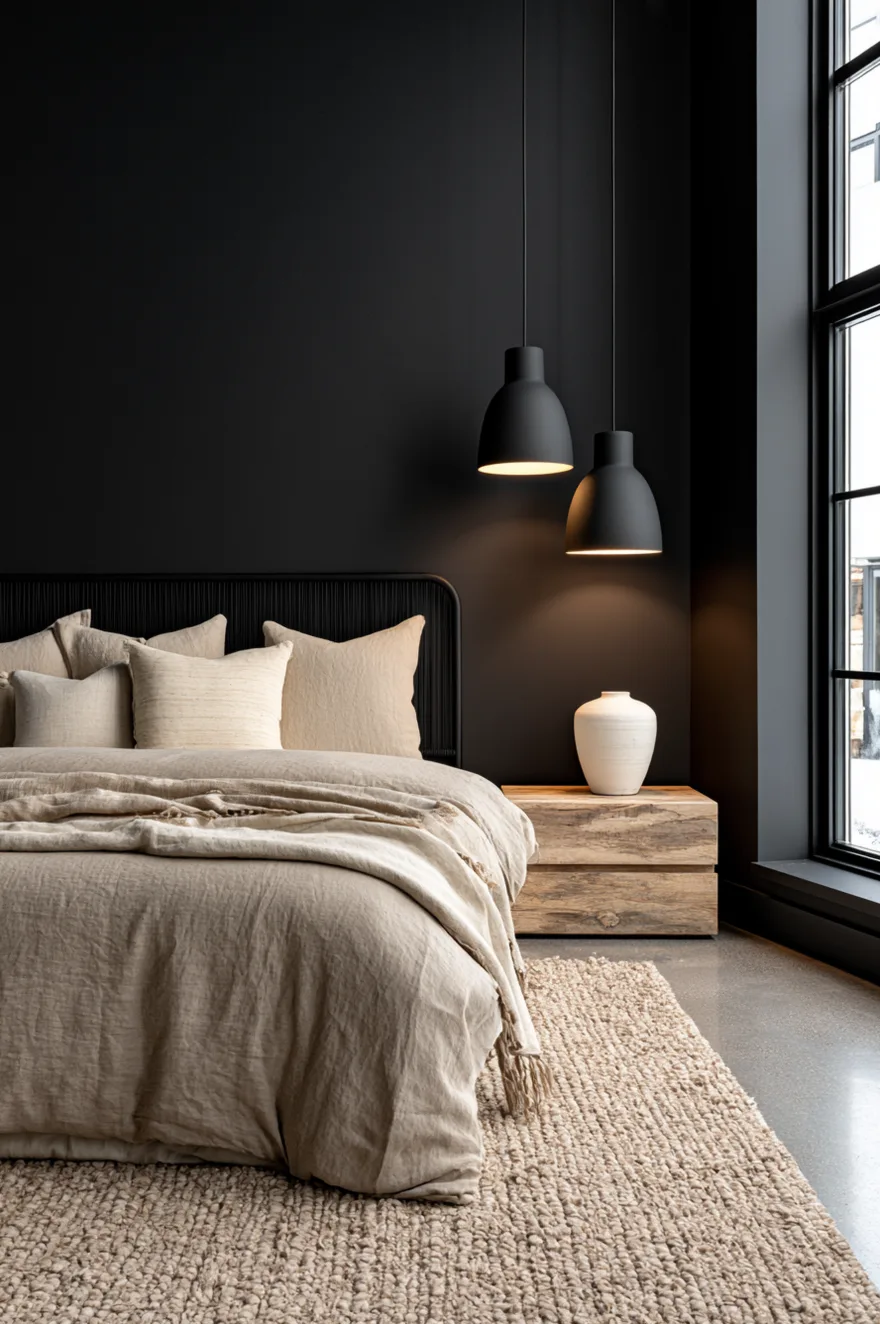
Black and beige together feels so much more interesting than just all-beige or all-white. The contrast makes the room feel modern and a little bit edgy, but it’s still warm and inviting because of all those soft beige tones.
Try a black accent wall behind the bed with beige linen bedding, or black pendant lights with a beige upholstered headboard. Add warm lighting and textured throws, and you’ve got that moody-but-cozy Japandi bedroom that feels way more sophisticated than expected.
14. The Guest Room That Feels Like A Hotel
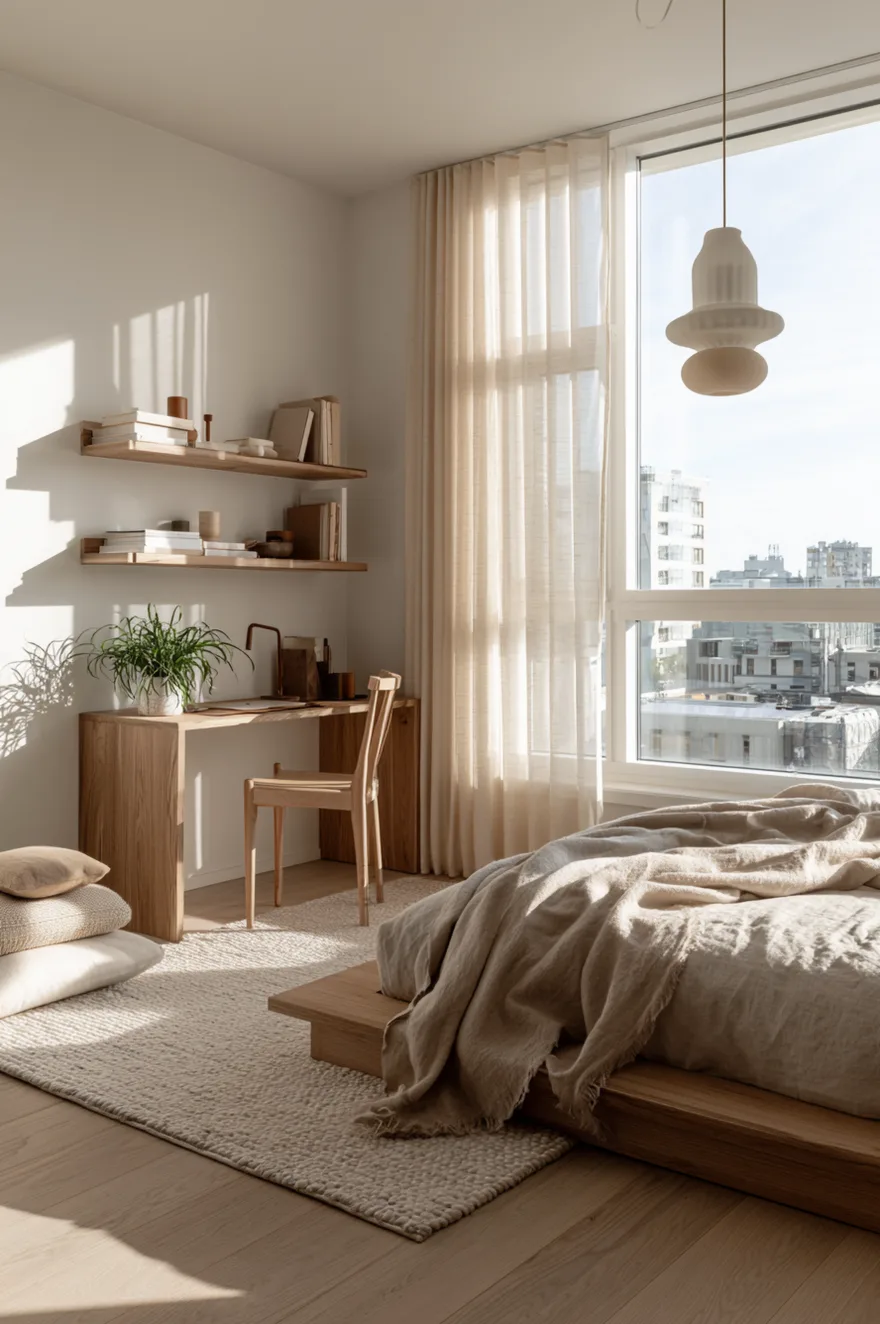
Whenever I stay at a really nice hotel, I always think about how they make the rooms feel so calm and uncluttered. That’s exactly how I’d want a Japandi guest bedroom to feel – simple, clean, welcoming, with just enough personality.
Crisp white bedding, a textured throw folded at the foot of the bed, a small bench for luggage, and maybe one vase with fresh stems. Nothing extra, nothing personal, just a peaceful space where guests can actually relax and settle in.
15. Vacation Vibes With Natural Materials
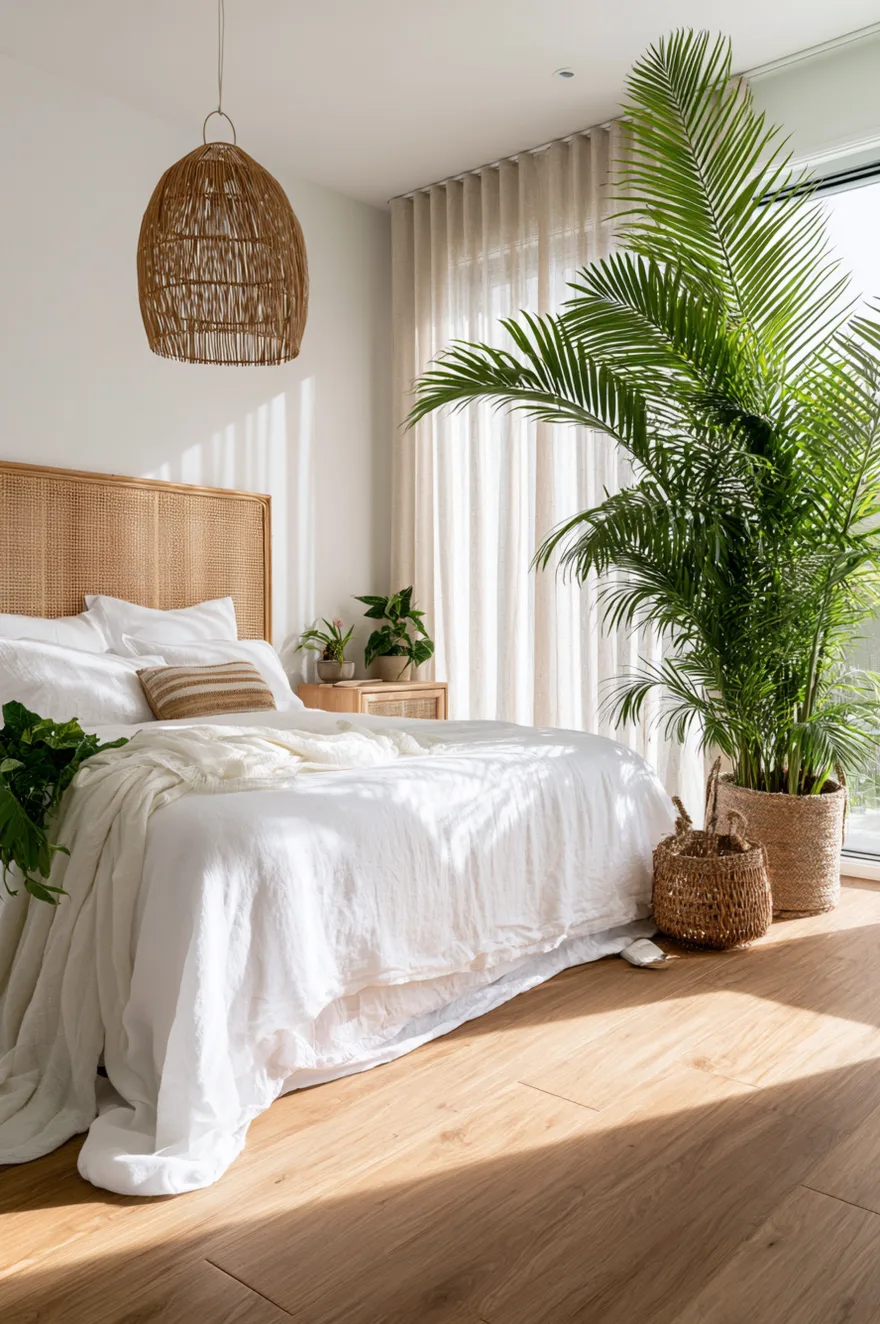
Tropical Japandi is such an unexpected combo but it totally works. Rattan headboards, cane furniture, tons of plants, and light linen curtains bring in that breezy vacation feeling while still keeping the clean, minimal aesthetic.
This works especially well if you have a bright, sunny bedroom. Add a palm plant in the corner, swap your wood nightstand for a woven rattan one, and suddenly you’re waking up in Bali instead of your regular bedroom. I’m here for it.
16. Hiding The Mess Behind Closed Doors
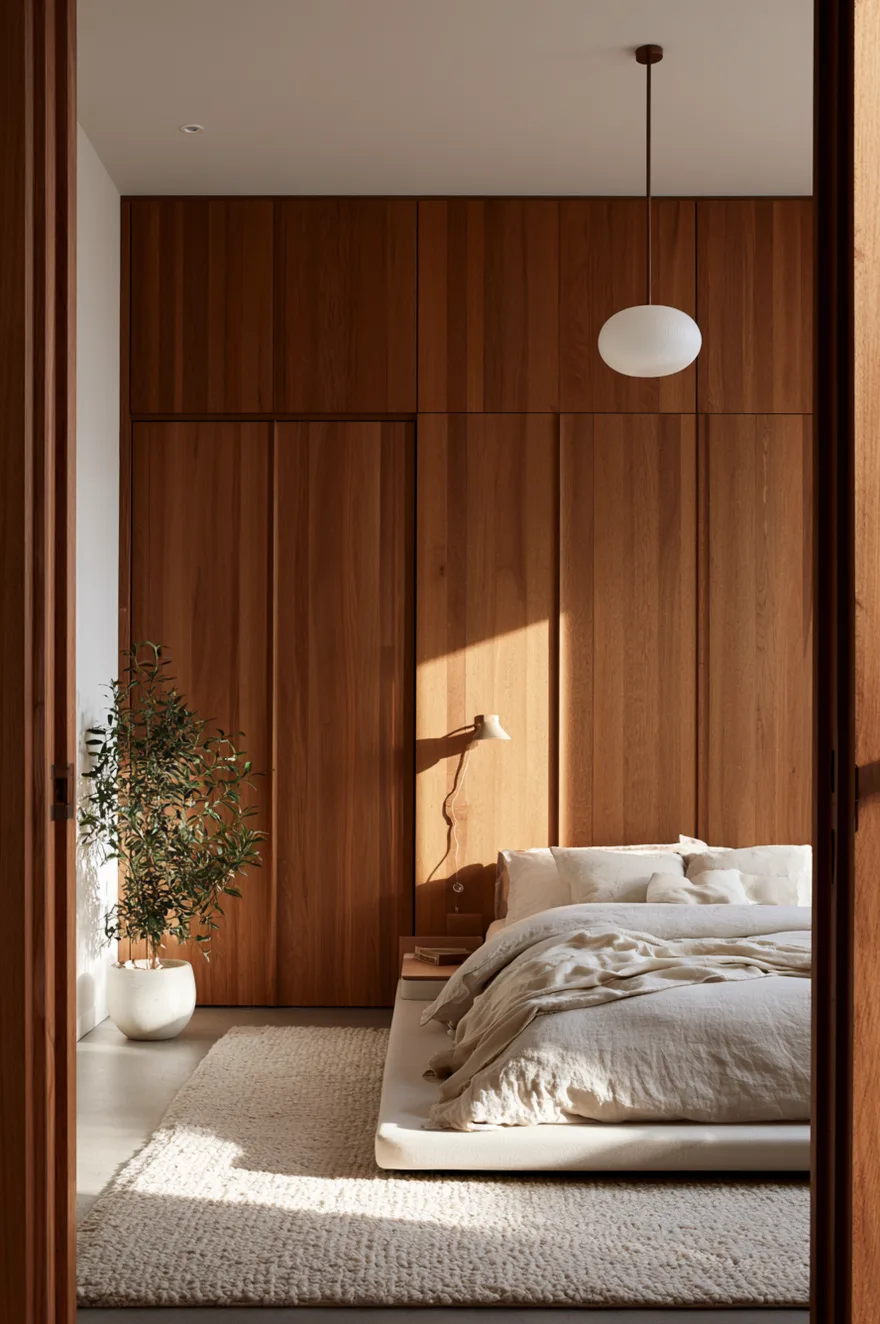
Built-in wardrobes are such a game-changer for keeping a Japandi bedroom clutter-free. Floor-to-ceiling storage in a warm wood finish gives you a ton of space without making the room feel cramped or busy.
The key is keeping it seamless – handleless doors or really minimal hardware, wood that matches your other furniture, and clean lines that blend into the wall. All your stuff gets hidden away, and the room stays calm and peaceful.
17. All White But Make It Warm
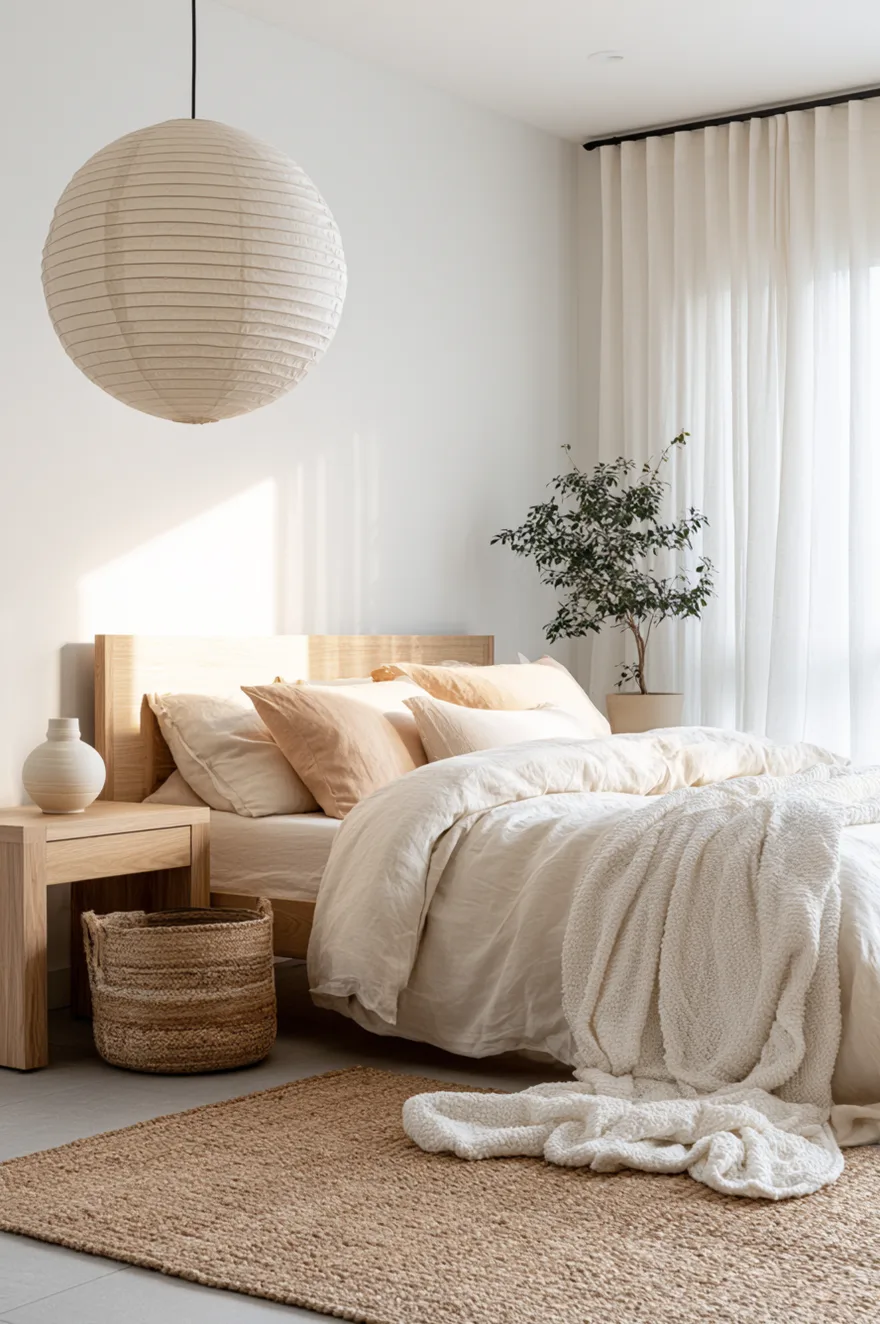
White bedrooms can go either way – they’re either cold and sterile or soft and inviting, and it all comes down to the textures and tones you layer in. For a Japandi bedroom, you want the warm, cozy version.
Use warm whites and creams instead of stark bright white. Add linen bedding with texture, light oak furniture, woven baskets, and a jute rug. Keep the lighting warm-toned. Basically, add enough natural materials that the white feels soft instead of clinical.
18. When Your Bedroom Doubles As Your Office
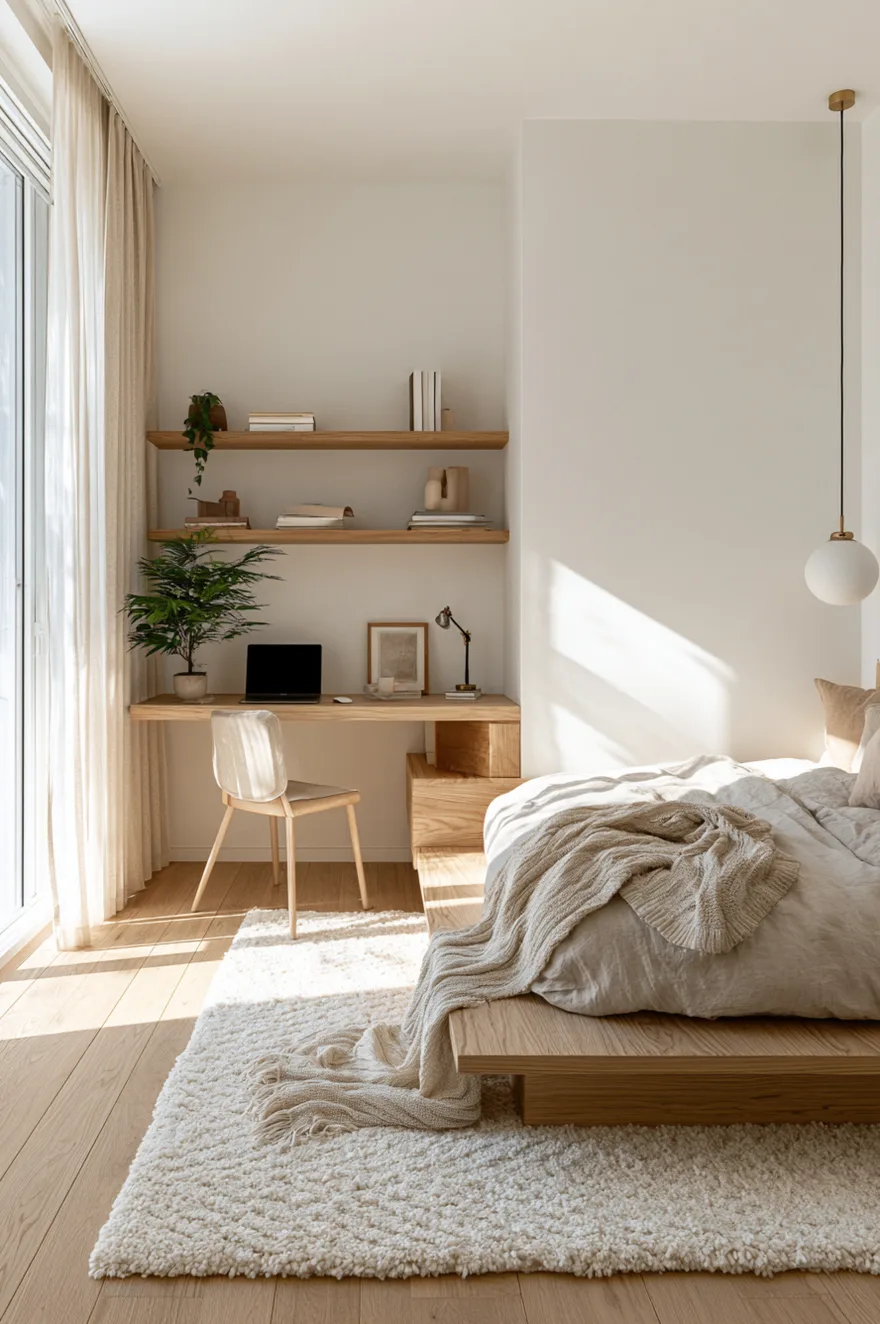
Working from home means a lot of us have desks in our bedrooms now, which can feel stressful if it’s not set up right. The Japandi approach is keeping the workspace super minimal so it blends into the calm bedroom vibe instead of disrupting it.
A simple wood desk in the corner, floating shelves above, and barely any visible office stuff. Keep your laptop and notebooks put away when you’re not working. The goal is making it feel like part of the room, not like you’re sleeping in your office.
19. Adding Personality With Boho Elements
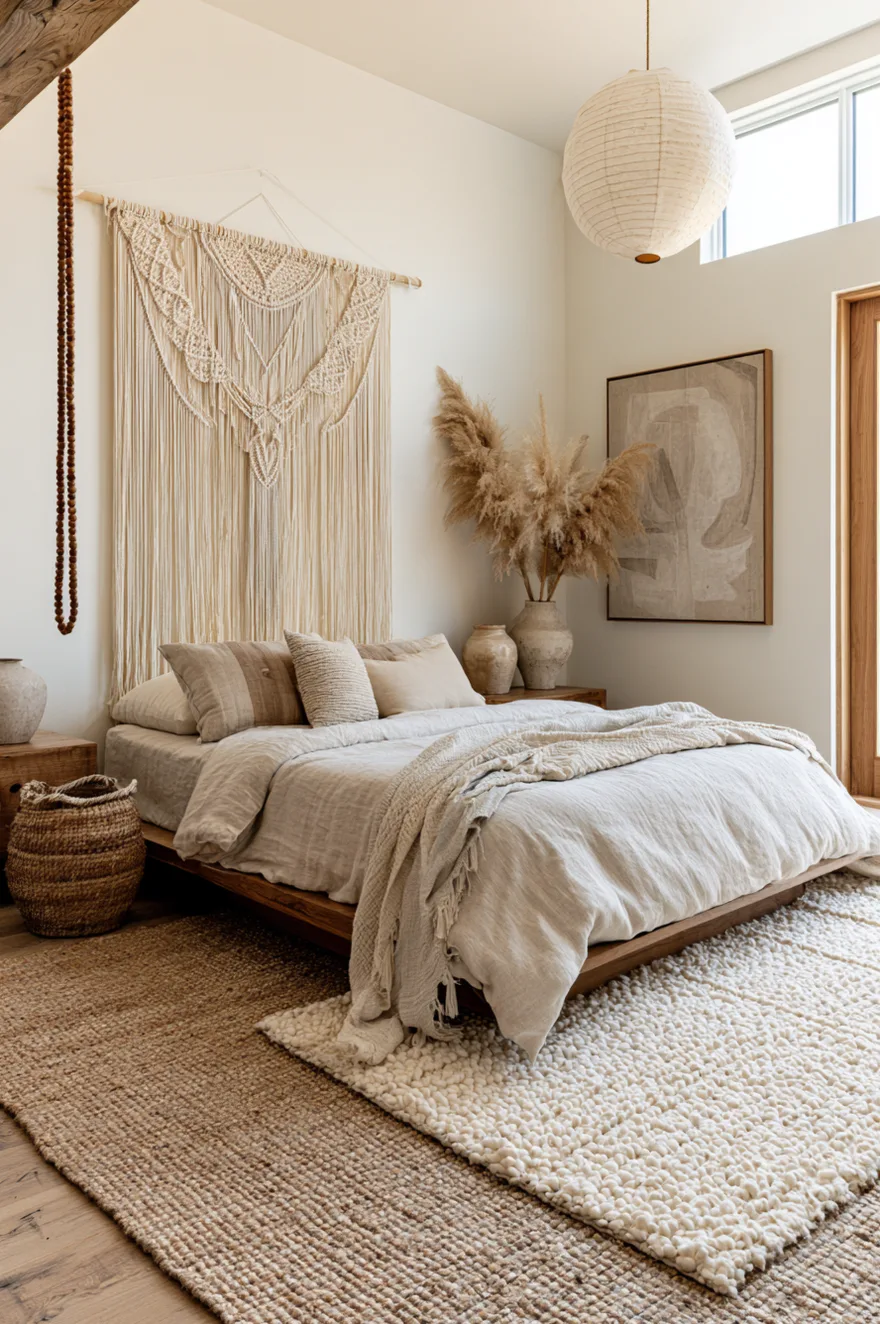
Boho Japandi is for people who love the minimalist vibe but still want the room to feel like them. It’s about layering in personality through textiles, art, and handmade pieces while keeping the overall aesthetic clean and calm.
Think macrame wall hangings, patterned rugs in muted tones, vintage pottery, woven baskets. The colors stay neutral and earthy, the furniture stays simple, but you get way more texture and visual interest than a super strict minimalist room.
20. The Shift To Richer Wood Tones
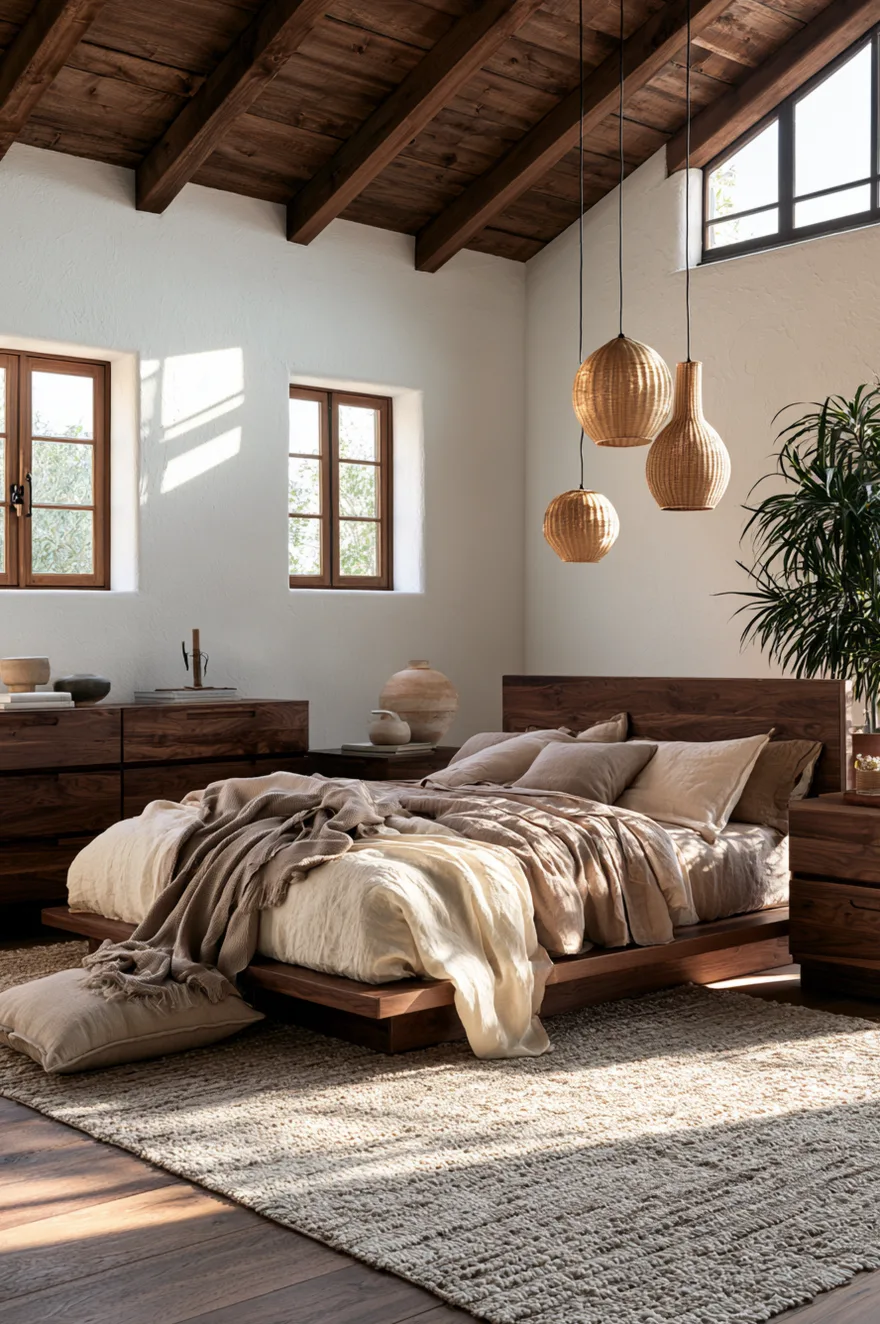
Lighter woods used to dominate Japandi bedrooms, but now everyone’s going darker with walnut, smoked oak, and espresso finishes. It feels more sophisticated and grounded while still being totally minimalist and calm.
I love how rich walnut furniture looks against white walls and cream bedding. It’s got more depth and warmth than pale oak without feeling heavy. Pair it with warm lighting and soft textures, and you get that updated Japandi look that feels really current.
21. Painting Everything The Same Color
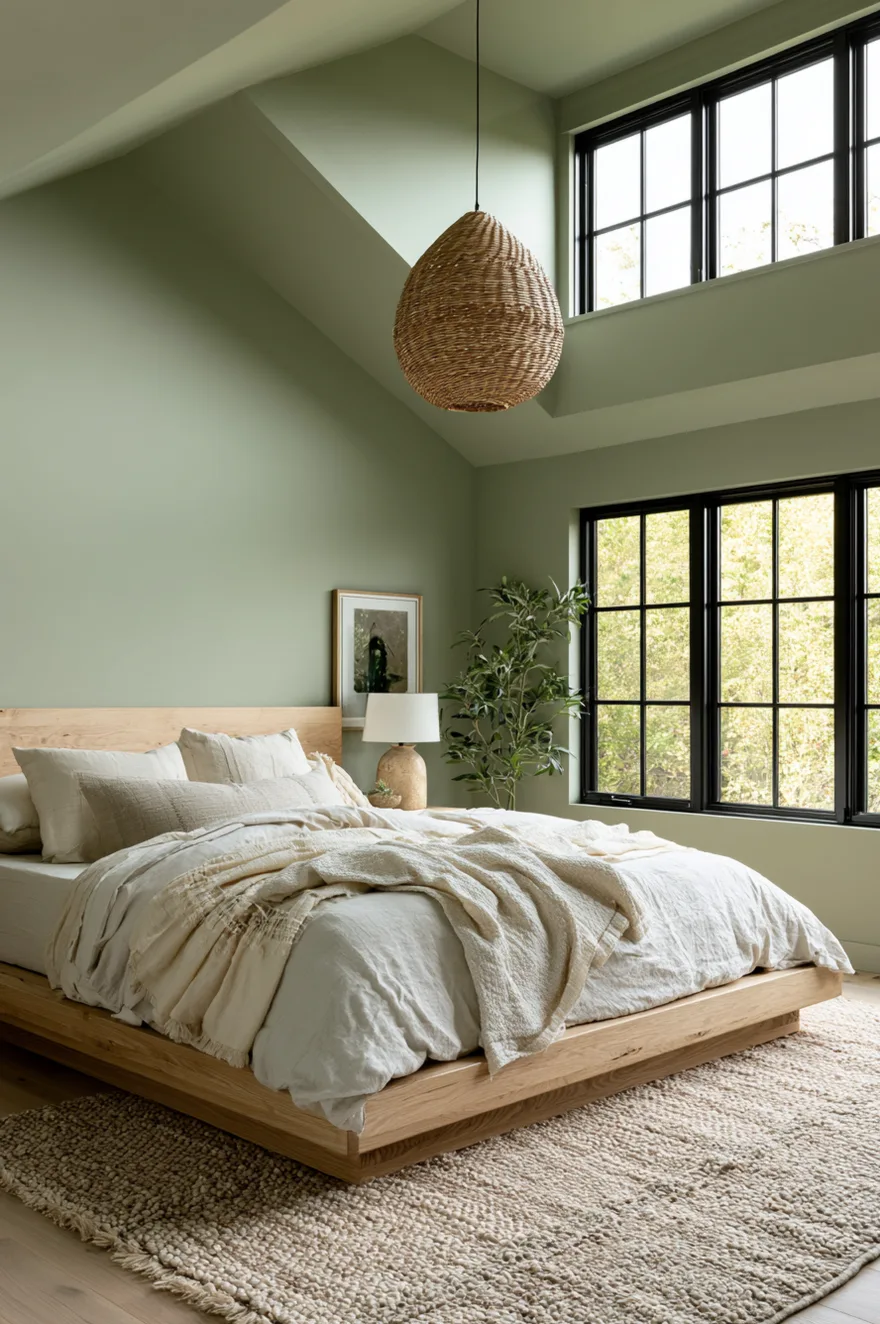
Color drenching is this trend where you paint the walls, ceiling, trim – literally everything – the same color. In a Japandi bedroom, doing this with a soft sage or warm greige creates this really cozy, wrapped-up feeling.
It sounds bold but it’s actually super calming because there are no harsh lines breaking up the space. Everything flows together. Just make sure you pick a muted, earthy tone so it doesn’t feel overwhelming. I’m seriously considering trying this in our bedroom.
Making Your Bedroom Actually Feel Like A Retreat
The whole point of Japandi style is creating a space that feels peaceful and intentional without being boring or sterile. It’s minimalism, but the warm, cozy version that you actually want to live in.
Stick to warm neutrals and earthy tones. Use natural materials like wood, linen, and stone. Hide clutter with smart storage. Choose soft, layered lighting instead of harsh overheads. Add tons of texture through bedding, rugs, and throws. Bring in plants for life and color. Invest in fewer, better pieces of furniture. Embrace wabi-sabi and let things be imperfect. Keep your styling simple and don’t overcrowd surfaces. And most importantly, balance that Scandinavian coziness with Japanese simplicity – that’s where the magic happens.
Which of these Japandi bedroom ideas are you most excited to try? I’m already planning our bedroom makeover and I can’t wait to finally have a space that feels this calm and put-together!
With love,
Liv