Trying to mix Scandinavian simplicity with Japanese warmth can feel confusing without a clear direction. These Japandi living room ideas for 2026 give you fresh inspiration for mid-century modern furniture, cozy lighting, TV wall design, and luxury decor that blends both styles without looking sterile. Save these ideas for your next living room refresh.
Ever walk into a room and feel like you can actually breathe? Like everything just makes sense and there’s nothing extra? That’s what I love about Japandi design – it’s that sweet spot where Scandinavian clean lines meet Japanese warmth and you get a space that’s calm but not cold.
I’ve been kind of obsessed with this style lately because it works in real life. You can have a toddler running around with yogurt hands and it still feels put together. I’m going to walk you through 21 ways to bring this vibe into your living room – from TV walls that don’t scream “TV wall!” to green sofas that ground the whole space. We’re talking warm wood, moody moments, and those little luxury touches that make you want to stay on the couch all weekend.
Warm Lighting That Doesn’t Feel Like a Dentist’s Office
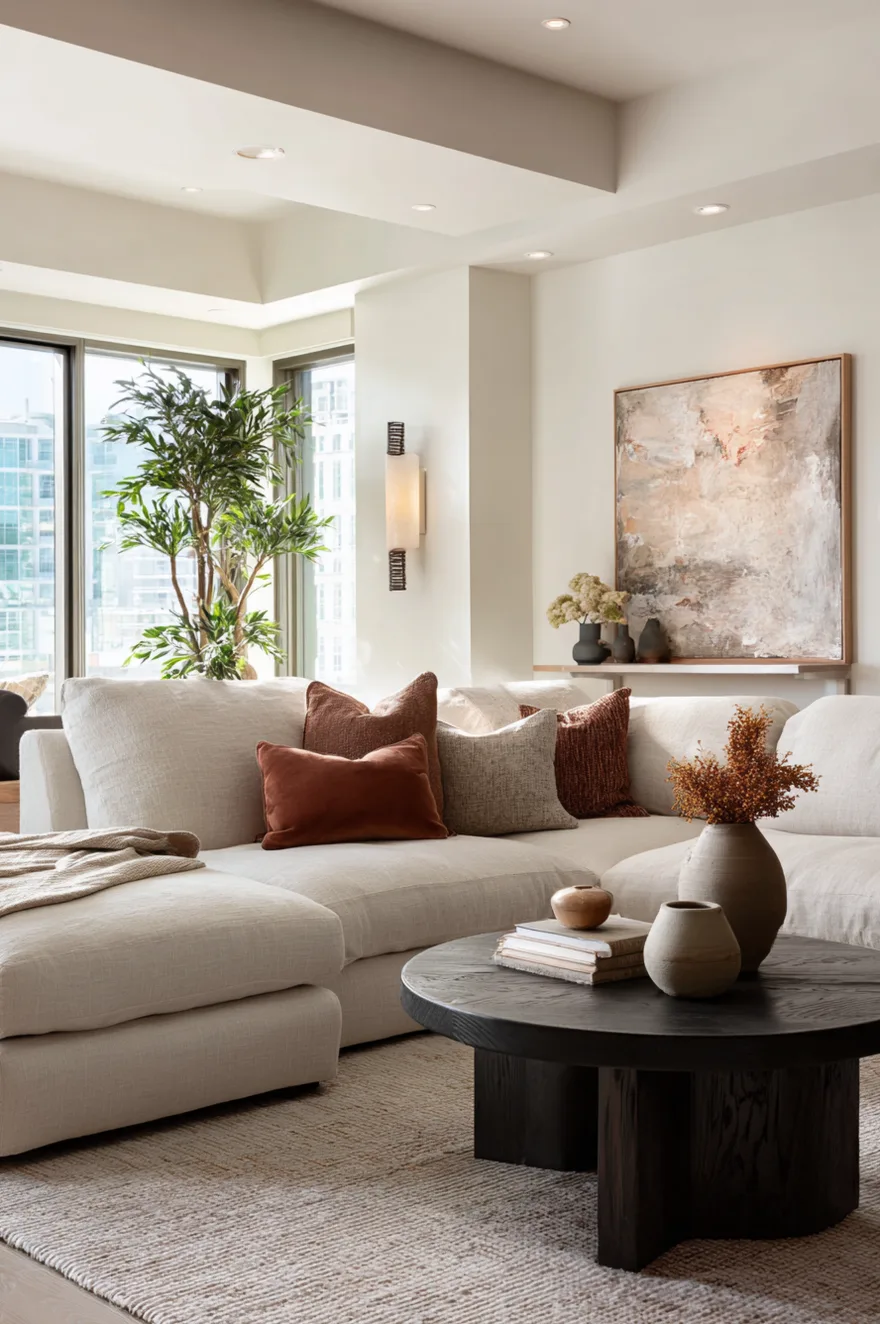
Recessed cove lighting is having a moment and I’m here for it. The kind where you run LED strips along the ceiling perimeter and everything gets this soft, indirect glow at night. It’s way better than those harsh overhead fixtures that make everyone look tired.
I installed warm white LEDs at 2700K in our living room last year and it completely changed how the space feels after sunset. The light bounces off the ceiling instead of hitting you in the face. Pair it with a couple of warm-toned wall sconces and you’ve got layers.
Skip the cool white bulbs. They’ll kill the whole vibe.
Vertical Wood Slat Walls Behind the TV
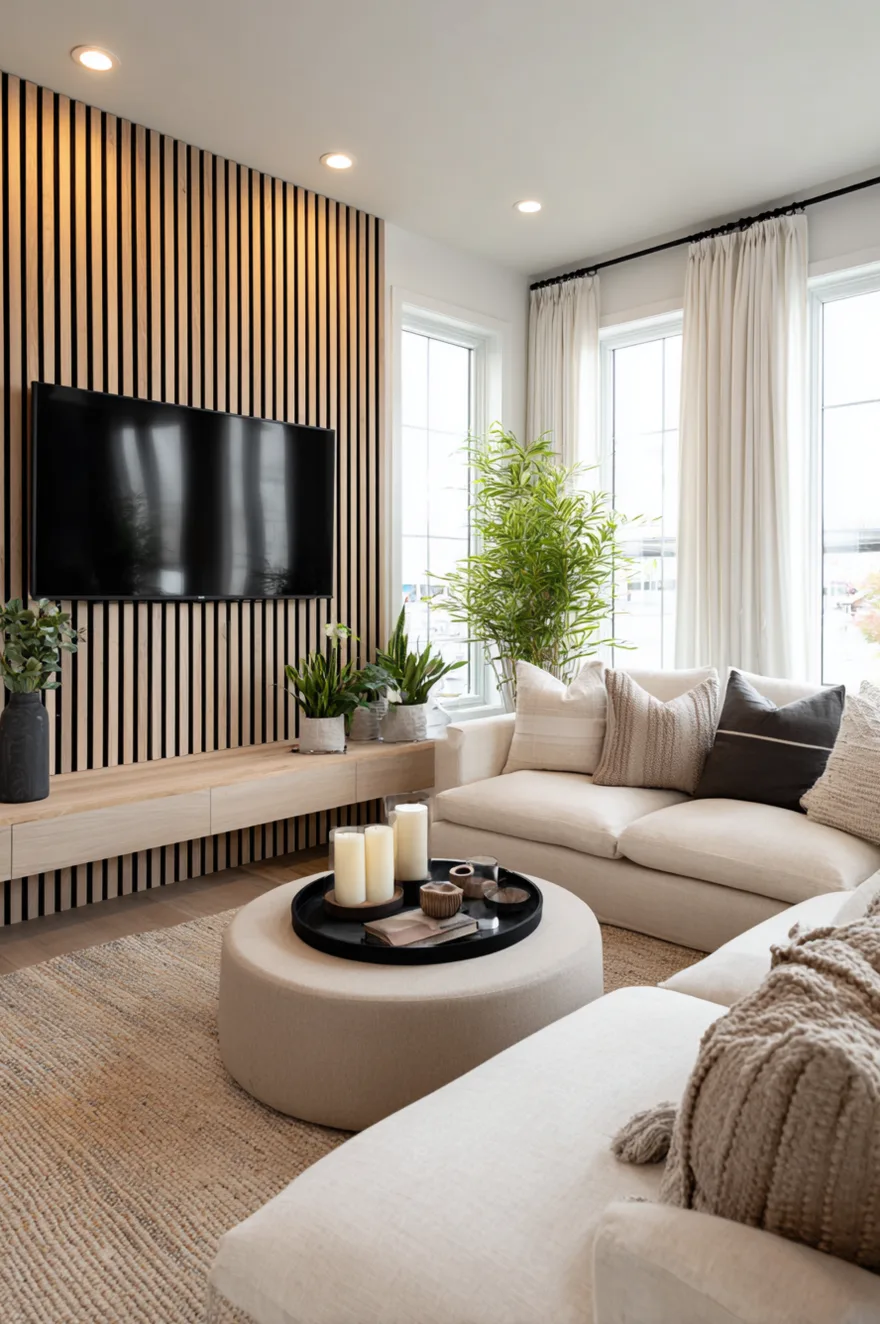
This is one of those things that looks expensive but isn’t impossible if you’re handy. Vertical wood slats behind your TV create texture without adding clutter, and they hide all the cords you’d rather not see.
I’ve seen people use light oak, walnut, even painted MDF slats. The spacing matters – about 1 to 2 inches between each slat keeps it from looking too busy. You can run them floor to ceiling or just behind the TV as an accent panel.
Mount your TV directly to the slats or float a low media console underneath. Either way, it feels intentional instead of like you just stuck a black rectangle on the wall and called it done.
The Low Coffee Table You Didn’t Know You Needed
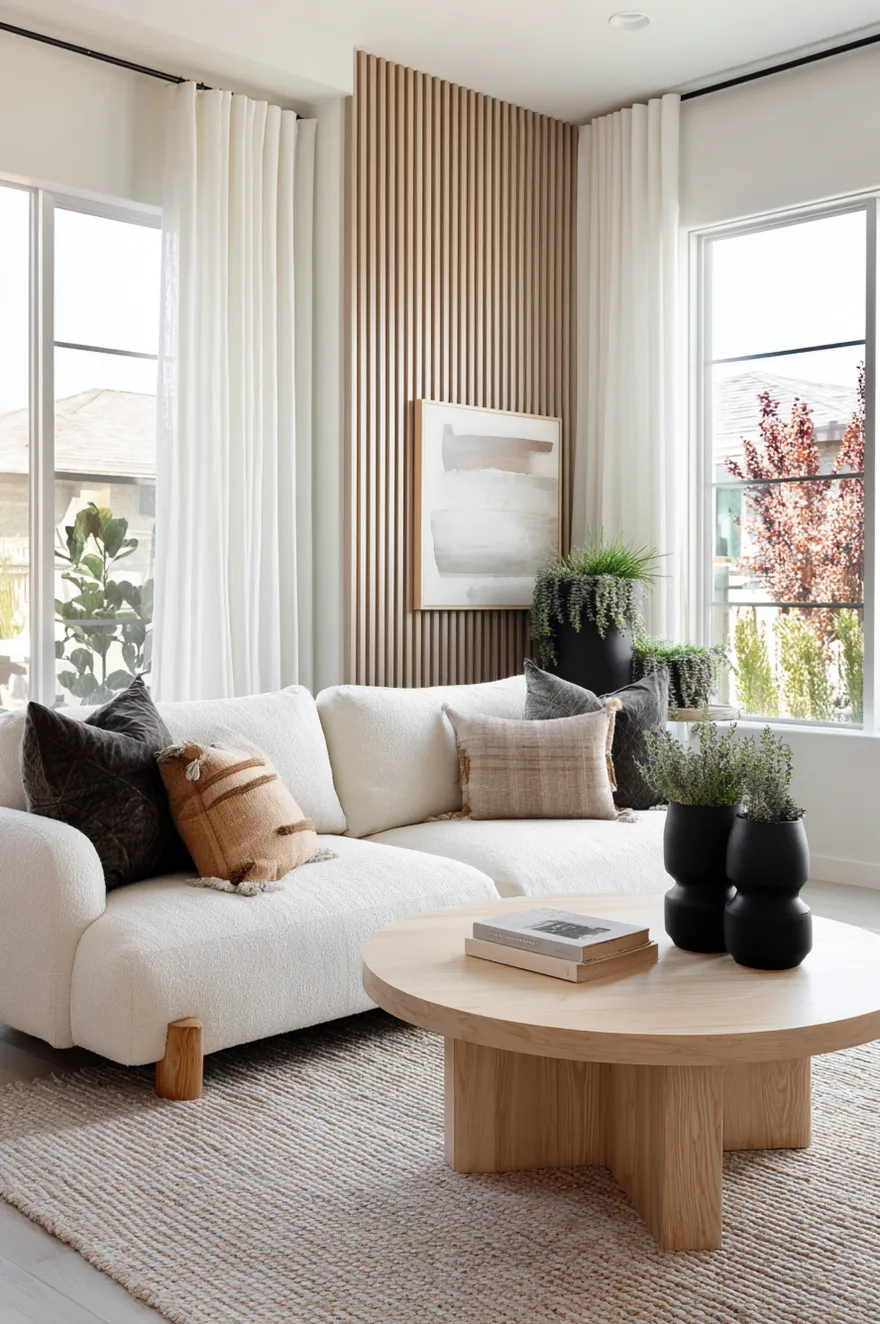
Platform coffee tables that sit maybe 12 to 14 inches off the ground are everywhere in Japandi spaces. They force you to slow down a little, and honestly they make small living rooms feel bigger because they don’t block sightlines.
Look for ones with a cross-base or pedestal leg in light oak or walnut. The wood grain should be visible – that’s the whole point. I found mine at a local furniture consignment shop for less than $200 and it’s probably my favorite piece in the room.
Style it with a small ceramic bowl, a couple of books, and maybe a single stem in a vase. Don’t pile it high with stuff.
Floating Media Consoles for a Cleaner Look
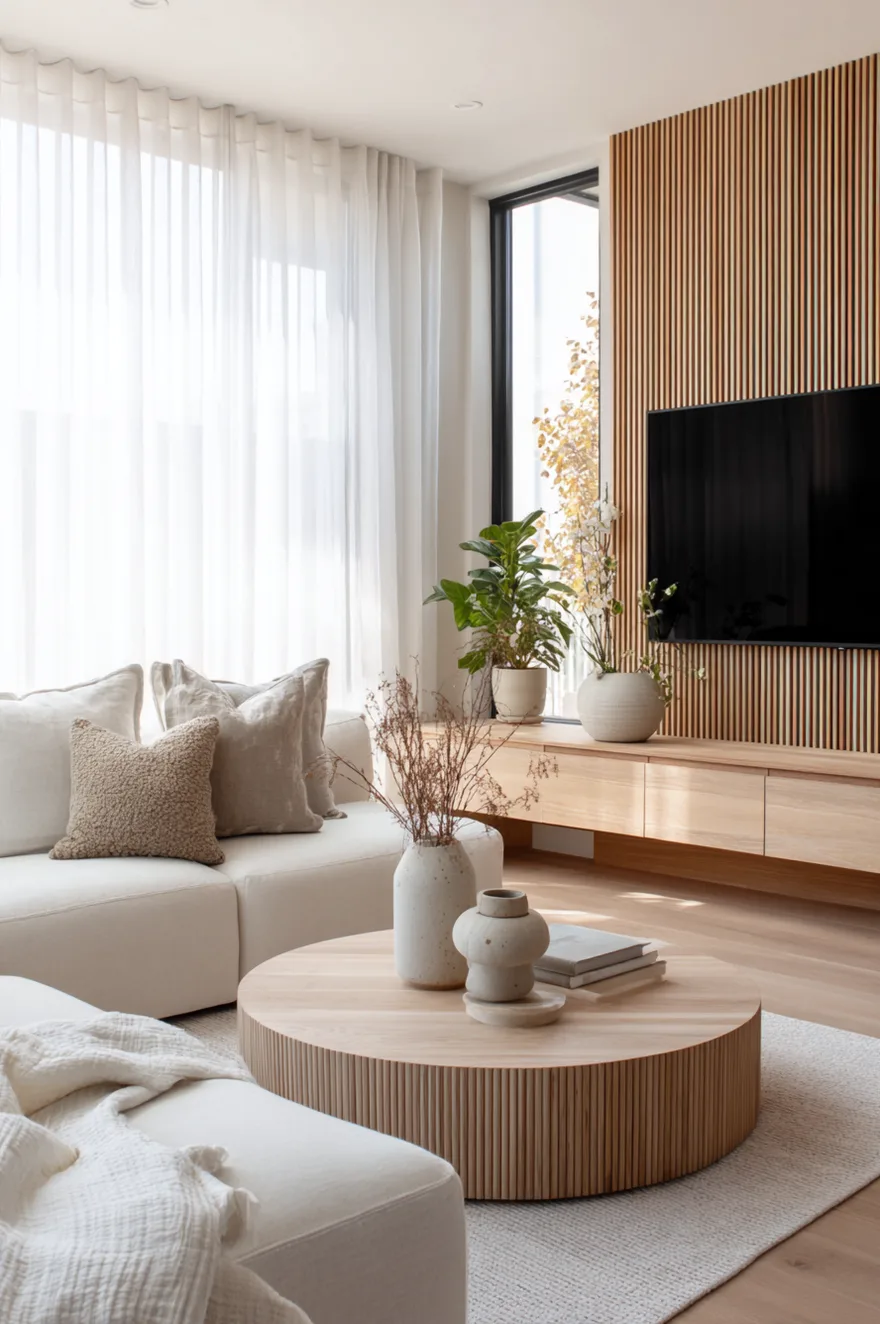
Wall-mounted media consoles are a game changer if you want your living room to feel less cluttered. They create this visual breathing room underneath and make vacuuming way easier (not glamorous but true).
Go for light wood with clean lines and hidden storage. IKEA’s BESTÅ system is actually perfect for this – you can customize the size and add legs or mount it to the wall. I added LED strip lighting underneath mine and it gives off this nice ambient glow at night.
Keep the top styled simply. A couple of vases, one plant, maybe a wooden tray. That’s it.
Scandi Meets Japanese: The Art You Hang Matters
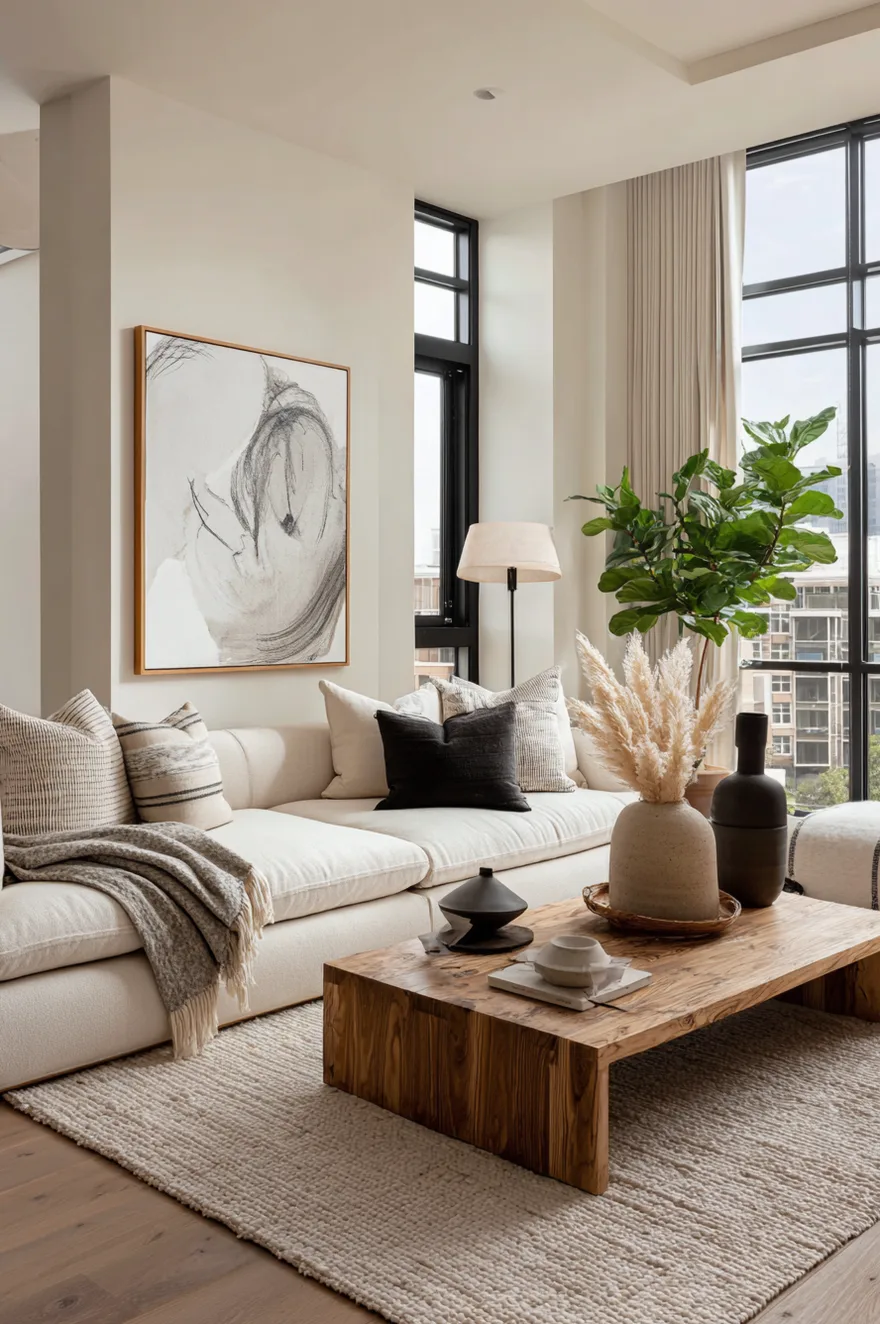
Abstract art with organic shapes in neutral tones is where these two styles meet. Think soft curves, muted earth tones, maybe some black line work. Nothing too loud or busy.
I picked up a large canvas with sandy beige tones and a dark brushstroke from a local artist and it’s the first thing people notice. The wooden frame matters too – go for light oak or walnut to tie into your furniture.
Hang it at eye level, centered over your sofa or across from it. One large piece is better than a gallery wall in this style.
Mid-Century Modern Chairs That Ground the Space
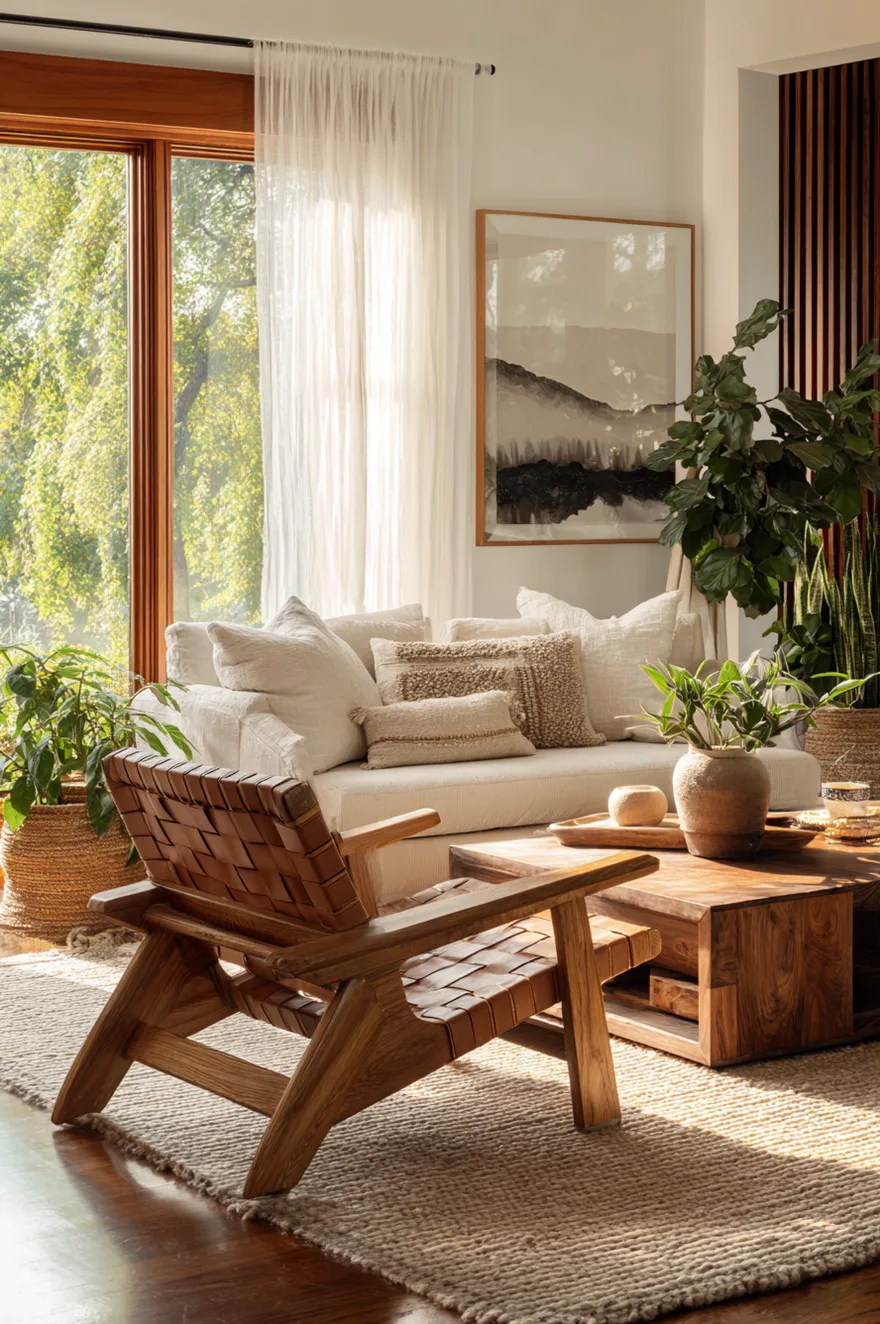
A pair of low-slung lounge chairs with wooden frames and leather or linen seats adds that mid-century Scandi touch without fighting the Japanese minimalism. Look for pieces with visible wood grain and simple lines.
I love the woven leather strap chairs you see everywhere right now. They’re comfortable, they age well, and they don’t take up a ton of visual space. Position them across from your sofa or angled toward the TV.
Skip the matchy-matchy thing. Your chairs don’t need to be the same wood tone as your coffee table.
Built-In Shelving with Warm LED Lighting
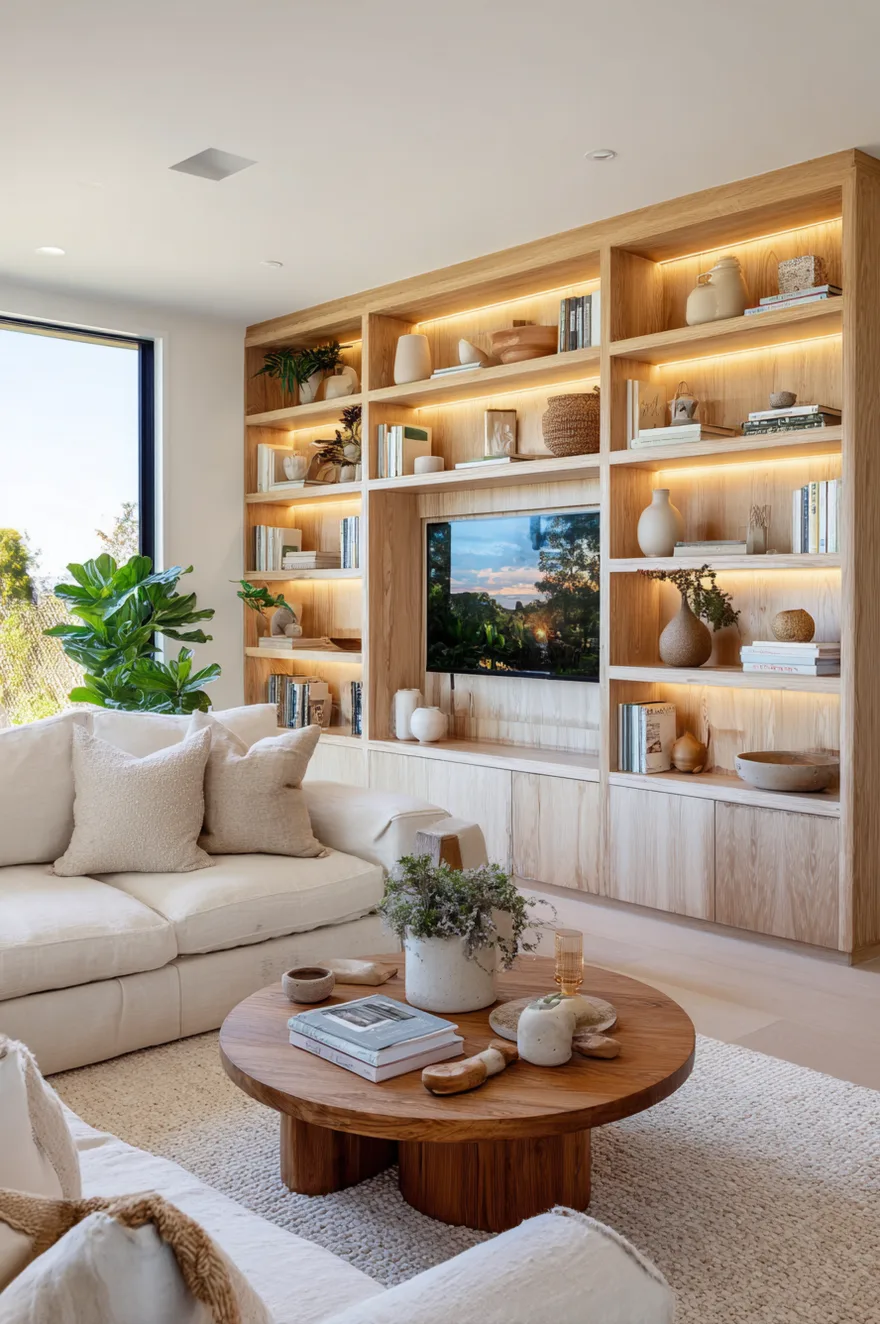
If you have the wall space, built-in shelving flanking your TV wall is worth the investment. Add LED strip lighting inside each shelf and suddenly your pottery collection or books become part of the design.
I’ve seen this done with open cubbies in walnut or light oak. The lighting should be warm – around 2700K – and mounted at the back of each shelf so it washes forward. It’s moody in the best way.
Style the shelves with a mix of books, ceramic vases, small plants, and a few sculptural objects. Leave some shelves empty. White space is your friend.
TV Wall Ideas in Japandi Design
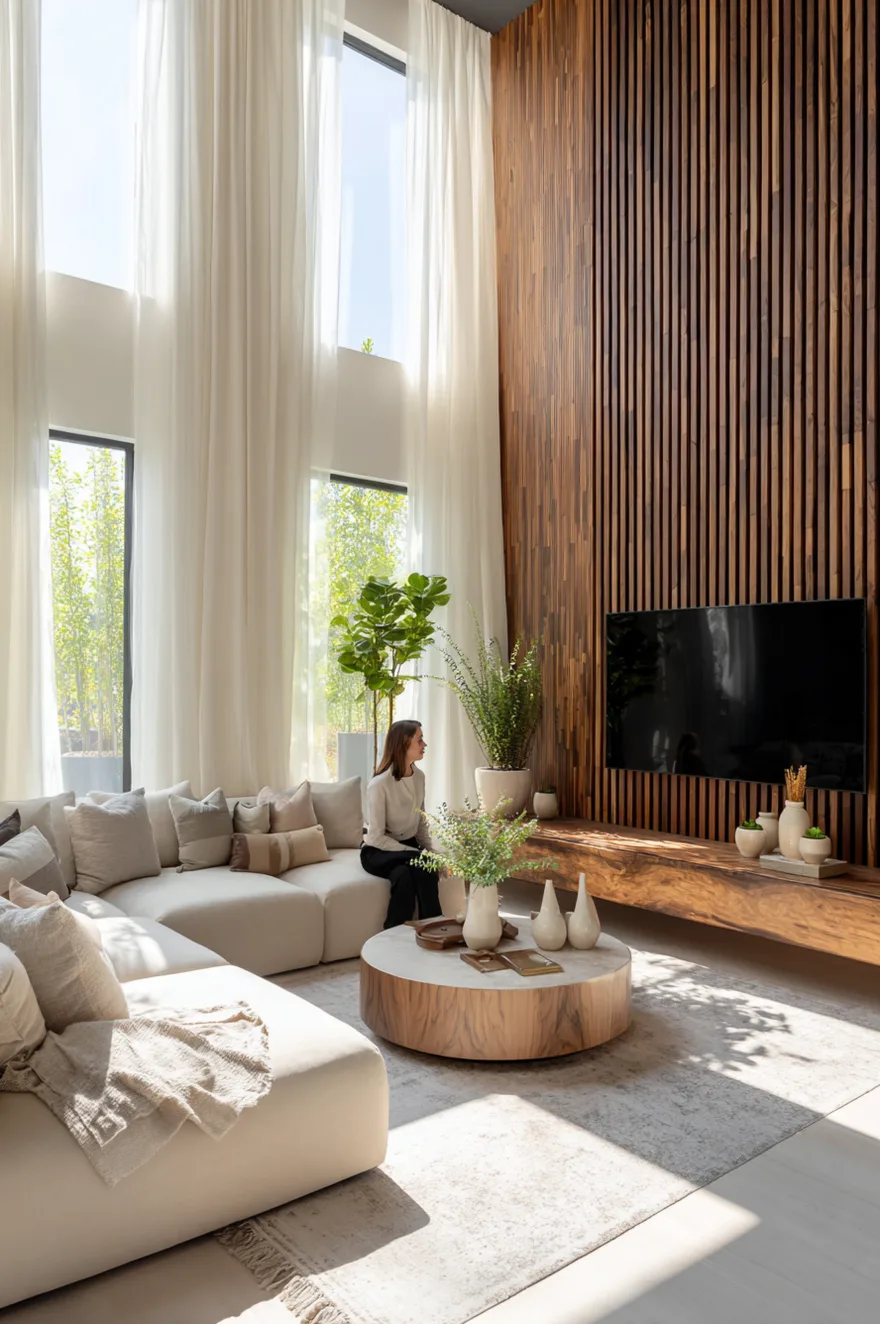
Let’s talk about making your TV look like it belongs instead of like an afterthought. A floor-to-ceiling wood panel wall with the TV mounted in the center does this perfectly. Add some asymmetry with vertical slats on one side and smooth panels on the other.
You can even build in a little alcove or niche for the screen so it feels recessed. I’ve also seen people add a single floating shelf underneath to hold the remote and maybe a small plant.
The key is contrast – light wood panels with a dark TV screen creates that visual balance Japandi design is all about.
The Magic of Textured Rugs in Neutral Tones
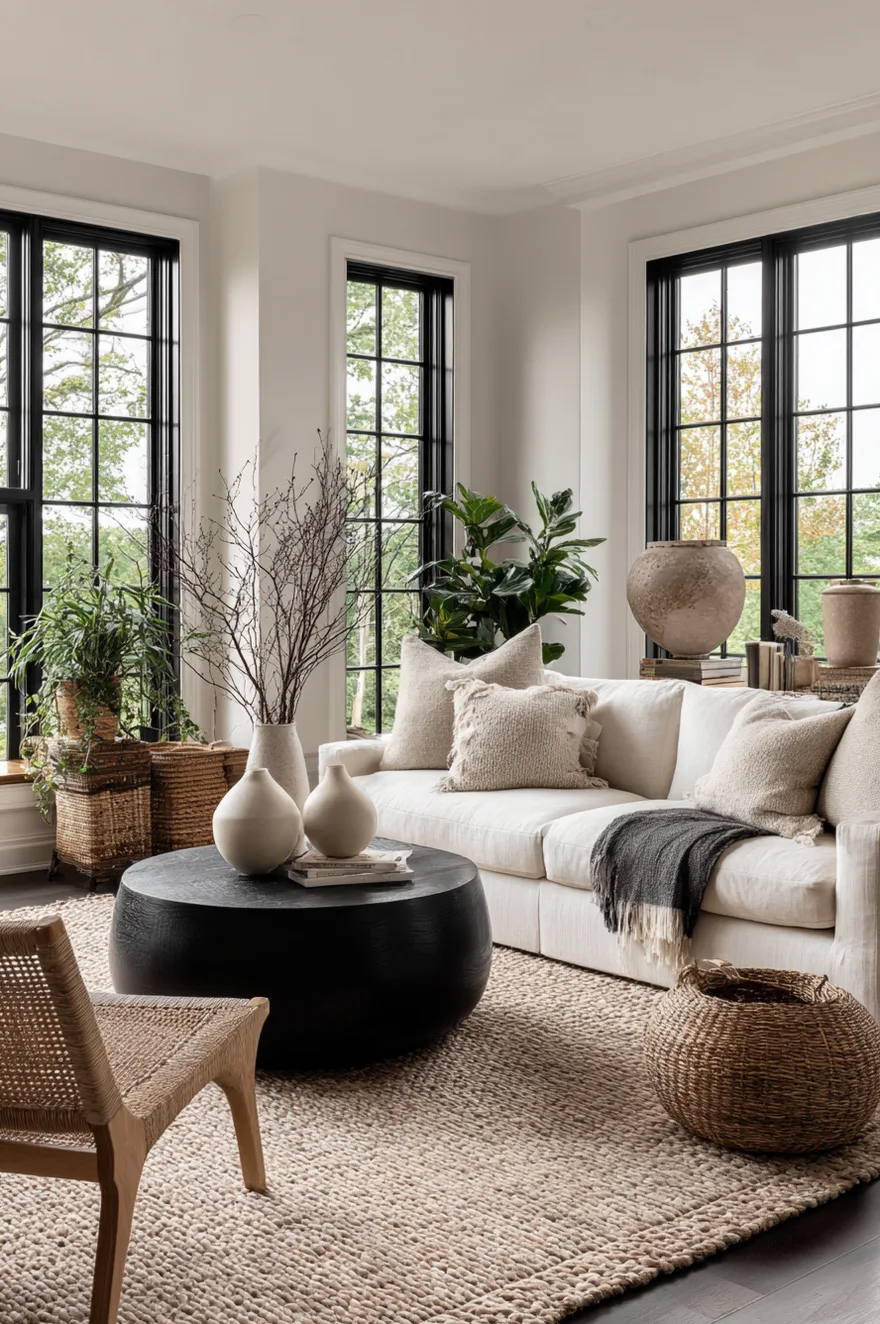
A thick jute or sisal rug in a natural tan or cream tone anchors the whole room and adds warmth underfoot. These rugs are durable, they hide dirt like champs, and they work with literally every color palette.
Go big. An 8×10 or 9×12 rug should fit under your coffee table and extend at least 18 inches beyond it on all sides. I made the mistake of buying a 5×7 once and it looked like a bath mat in the middle of the room.
Layer a smaller flatweave rug on top if you want extra texture. Just keep the colors neutral.
Green Sofas That Actually Work
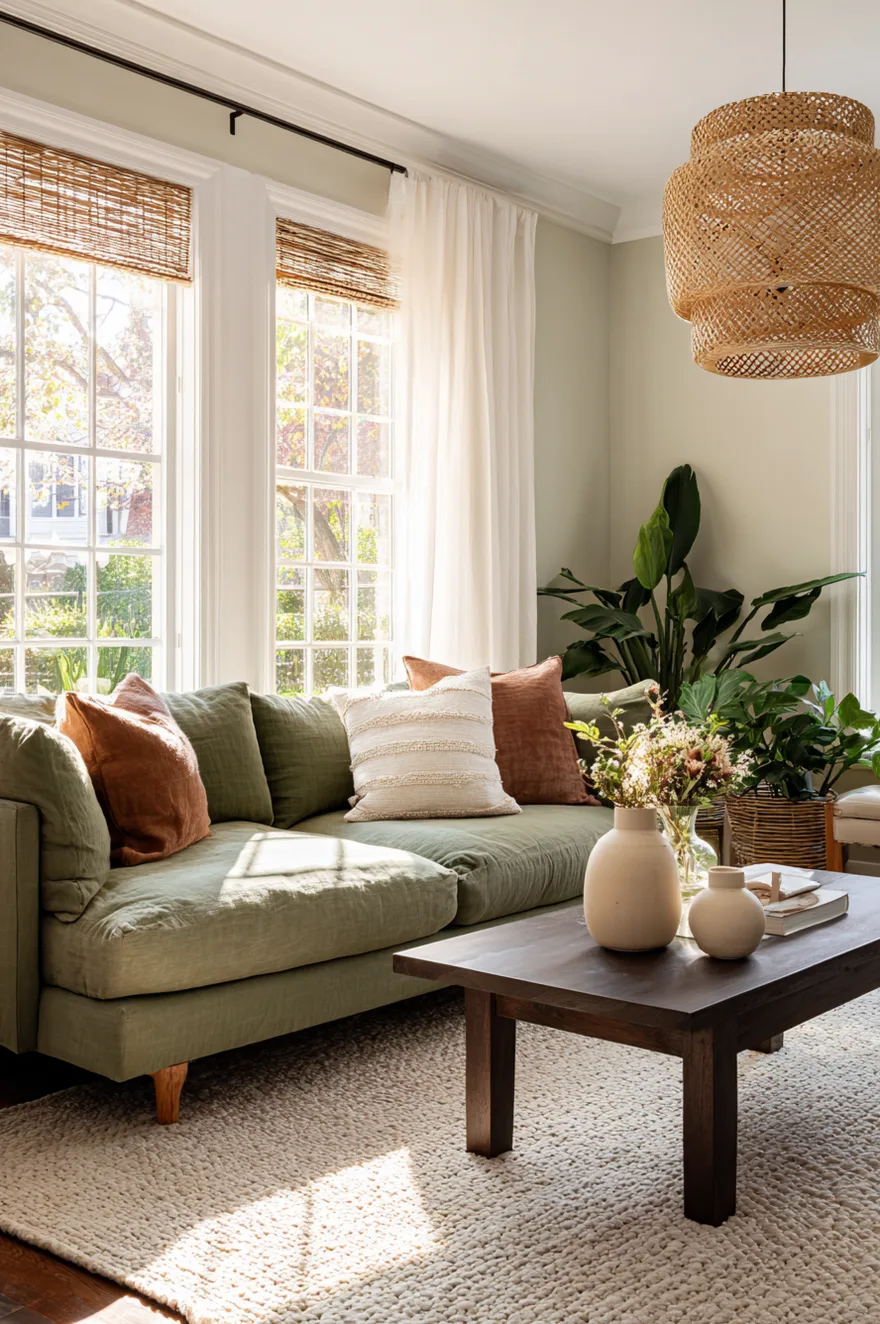
Okay hear me out – a sage green or olive linen sofa is the perfect way to bring color into a Japandi living room without going overboard. Green feels earthy and calm, especially when it’s a muted tone.
Pair it with rust, terracotta, or burnt orange pillows for warmth. I’ve also seen charcoal gray and cream pillows work really well. The key is keeping the green soft, not bright.
Look for a low-profile sofa with wooden legs. The legs should be visible and ideally in a light or medium wood tone.
Wabi-Sabi Decor: Imperfect and Better for It
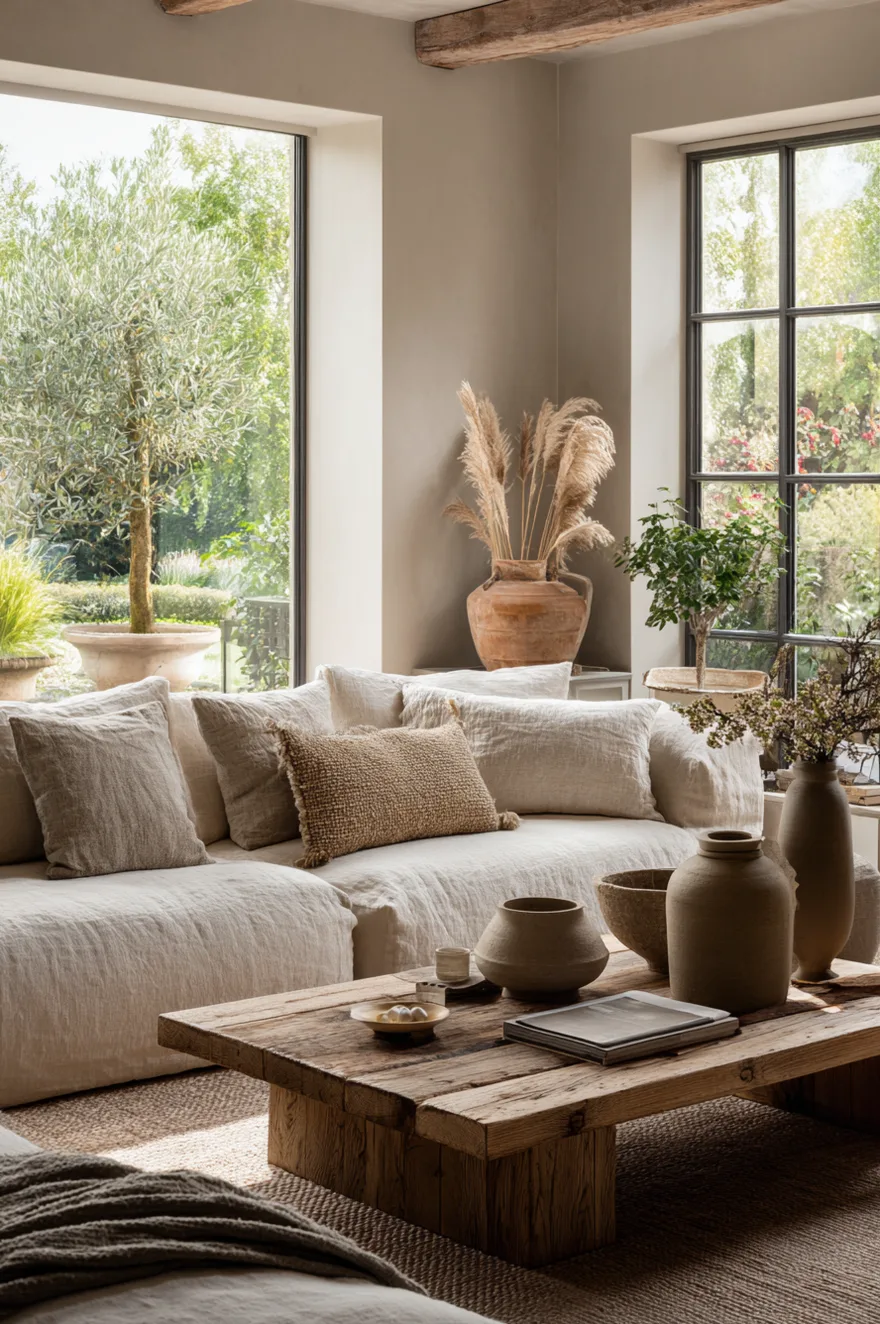
Wabi-sabi is the Japanese concept of finding beauty in imperfection, and it’s all over Japandi design. Think handmade ceramic vases with uneven glazes, wood furniture with visible knots and grain, linen that wrinkles.
I started buying pottery from local makers instead of mass-produced stuff and it completely changed how my living room feels. Each piece has its own character. Same with vintage wood furniture – those dings and scratches tell a story.
Don’t stress about everything matching. That’s kind of the point.
Floor Cushions and Poufs for Extra Seating
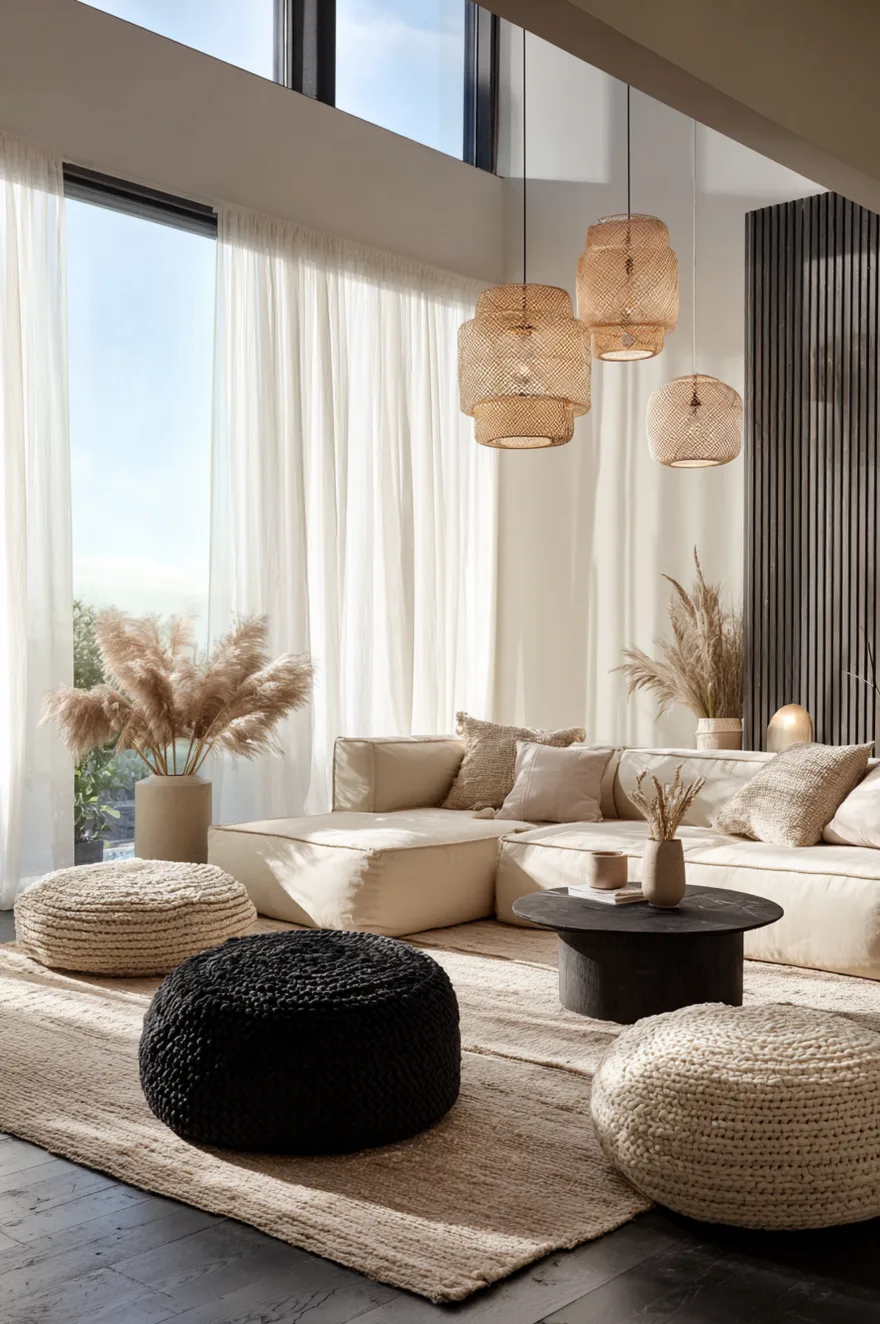
Chunky knit poufs or flatweave floor cushions in cream or charcoal add extra seating without taking up visual space. They’re also great for when Nora has friends over and everyone ends up on the floor anyway.
Look for natural fibers – cotton, wool, jute. The texture matters. I have a big black woven pouf that lives under our coffee table and gets pulled out constantly.
Toss a couple around the room. They should feel casual, not staged.
Moody Moments with Dark Accent Walls
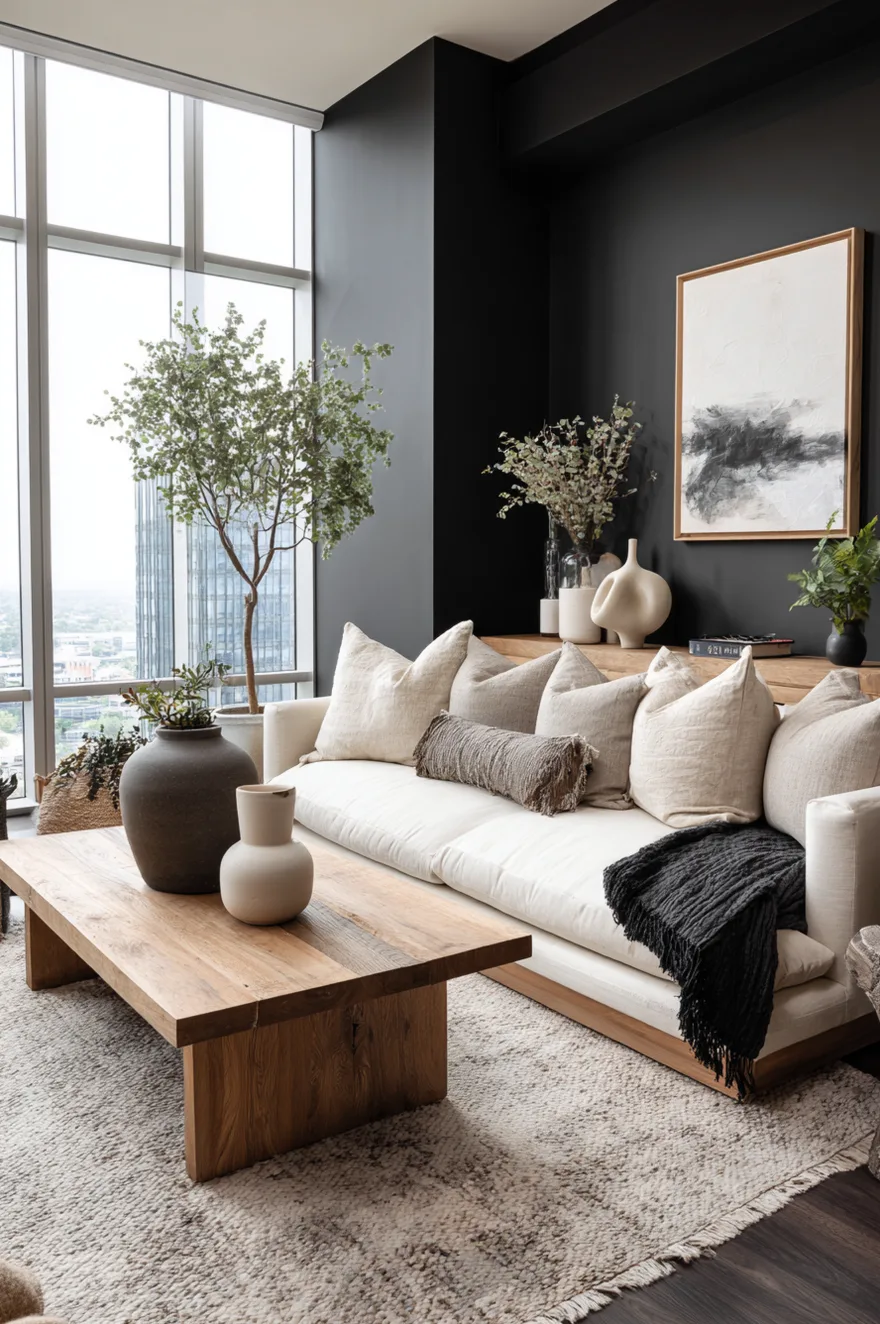
You don’t have to go all-white to get that Scandi feel. A dark charcoal or warm greige accent wall behind your sofa adds depth and makes the room feel more grounded. It’s especially good in spaces with tons of natural light.
I painted one wall in our living room a soft charcoal and it makes the light wood furniture pop. The trick is balancing it with lighter tones everywhere else – white walls, cream sofa, light wood.
Test the color in different light before committing. What looks moody at noon might look muddy at 6 p.m.
Black Window Frames That Change Everything
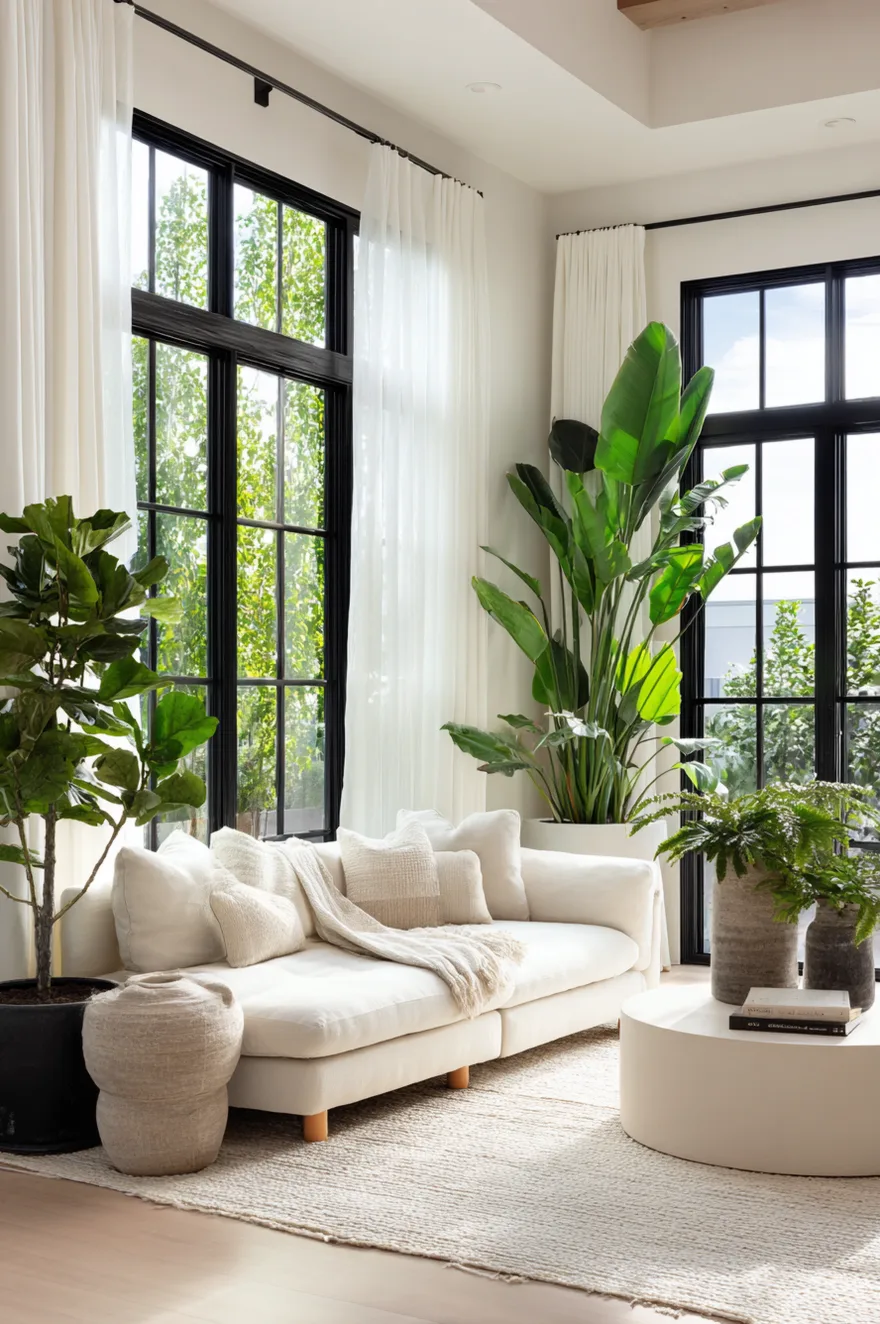
If you’re building or renovating, black metal window frames are worth every penny. They create these crisp lines that frame the view outside like artwork, and they work with both the Scandi and Japanese sides of Japandi.
Floor-to-ceiling windows with black frames flood the space with light while keeping things minimal. Pair them with sheer linen curtains in white or cream so you can filter the light without blocking it completely.
I know this one’s a bigger investment, but if you’re doing windows anyway, go black.
Pampas Grass and Dried Botanicals
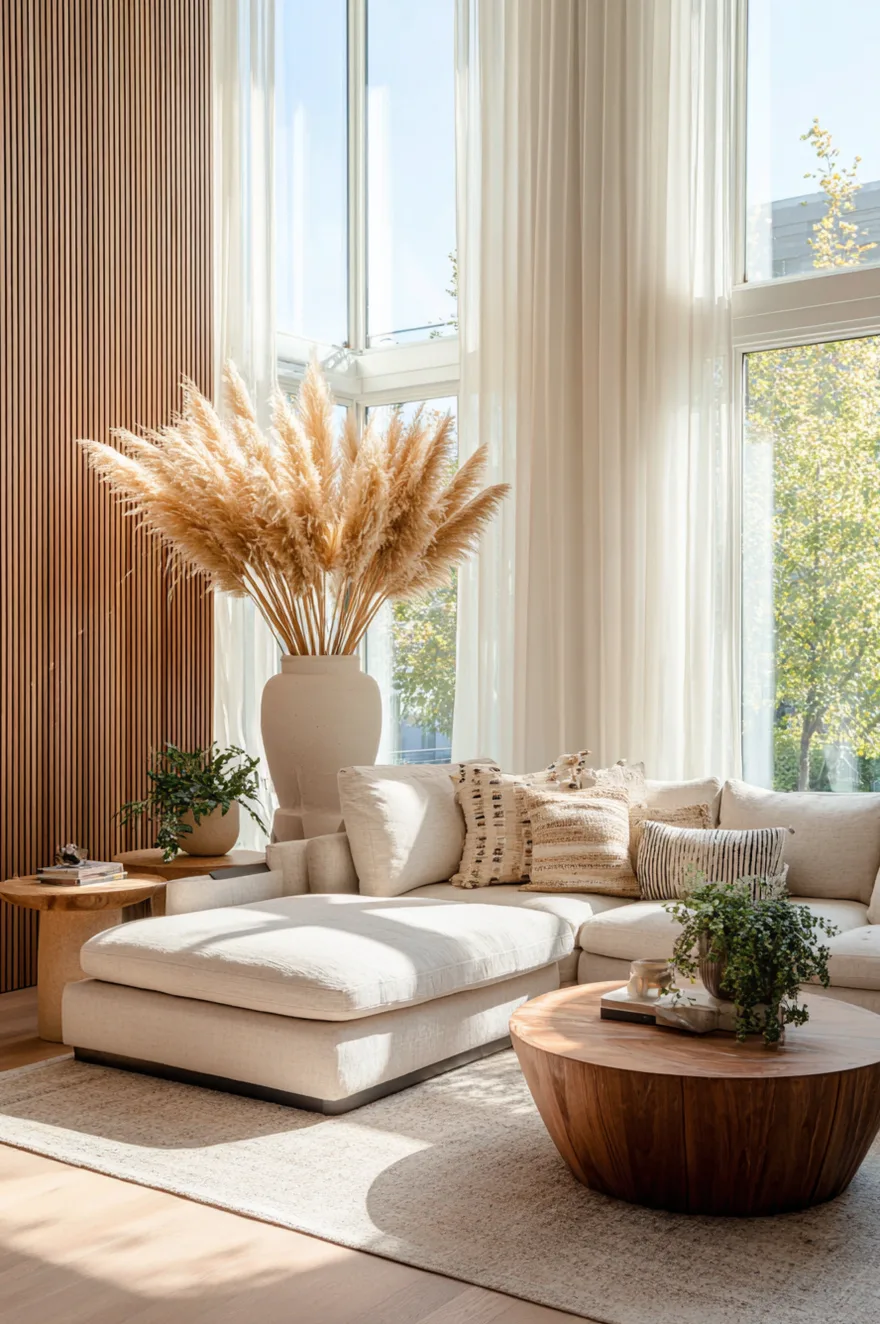
Fresh flowers are great but they die in three days. Dried pampas grass, eucalyptus, or branches in a tall ceramic vase last for months and fit the Japandi vibe perfectly.
I keep a big bunch of natural pampas in a matte white vase by our window and it softens the whole corner. The movement and texture add life without the upkeep.
Go tall – like 3 to 4 feet. You want it to make a statement. And stick to natural tones: cream, beige, soft brown.
Sculptural Coffee Tables with Storage
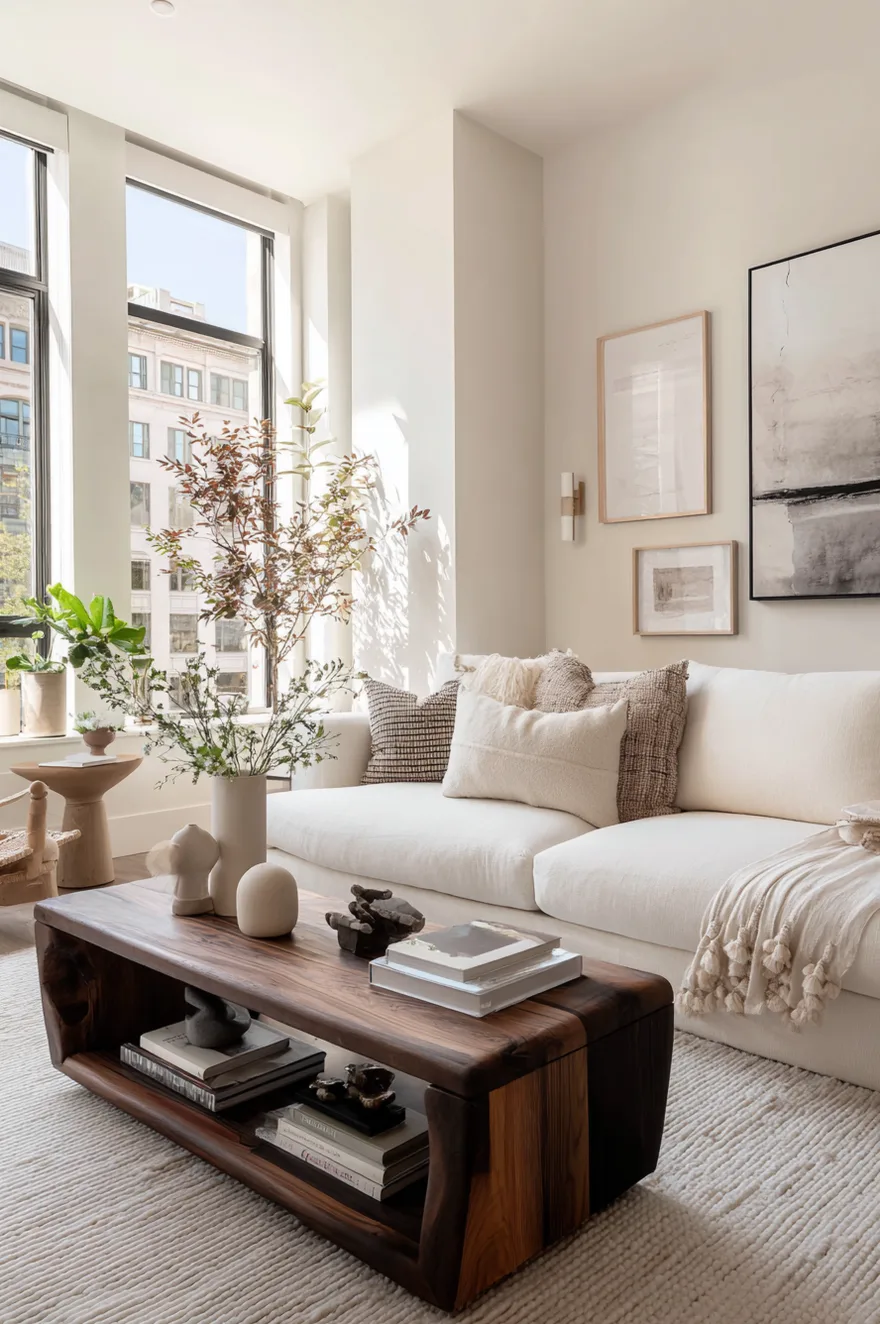
Coffee tables that double as storage are clutch in small spaces. Look for designs with a lower shelf or hidden compartments where you can stash remotes, coasters, or Nora’s coloring books.
I love the ones with a thick wood top and an open shelf underneath. The storage is there but it doesn’t feel heavy or bulky. Keep the lower shelf styled with a few books or a small basket.
The table should be low – around 14 to 16 inches high – to keep sightlines open.
Small Living Room Design That Feels Open
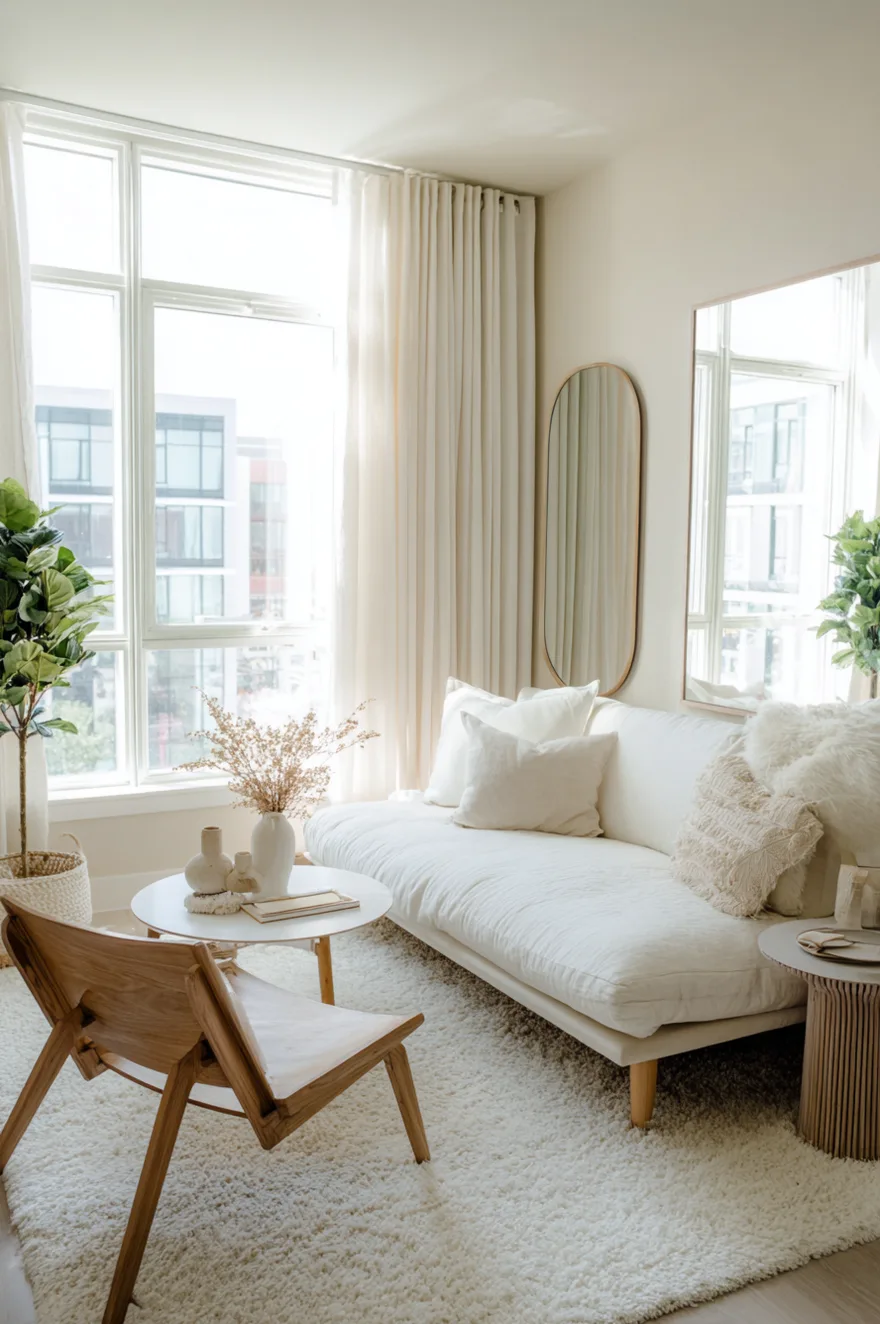
The trick to making a small Japandi living room feel bigger is keeping furniture low and leggy. A sofa with visible wooden legs, a coffee table that doesn’t block the floor, and open shelving instead of closed cabinets all help.
I avoid bulky sectionals in tight spaces. Instead, go for a streamlined sofa and add a single accent chair if you need more seating. Keep the color palette light and use mirrors strategically to bounce light around.
And please, leave some empty space. Not every corner needs to be filled.
Cozy Throw Blankets in Chunky Knits
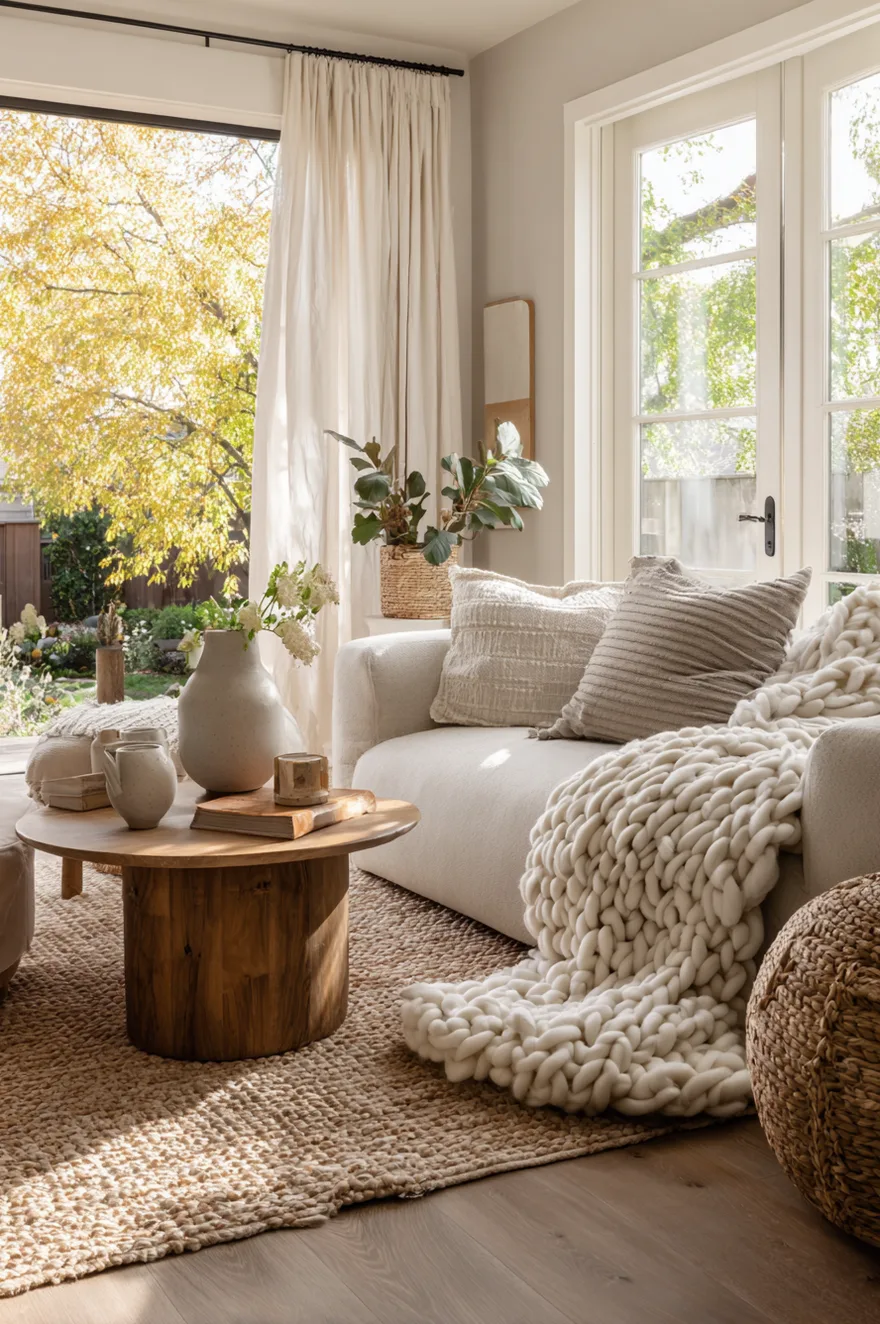
A chunky knit throw in cream, oatmeal, or soft gray draped over the arm of your sofa adds instant warmth. It’s also functional because let’s be real, you’re going to use it.
Look for oversized knits in natural fibers like cotton or wool. The chunkier the better – those thick loops and stitches add serious texture. I have one from Target that I’ve had for three years and it still looks great.
Drape it casually. Don’t fold it into a perfect rectangle. It should look like you just used it.
Luxury Touches: Marble and Brass Accents
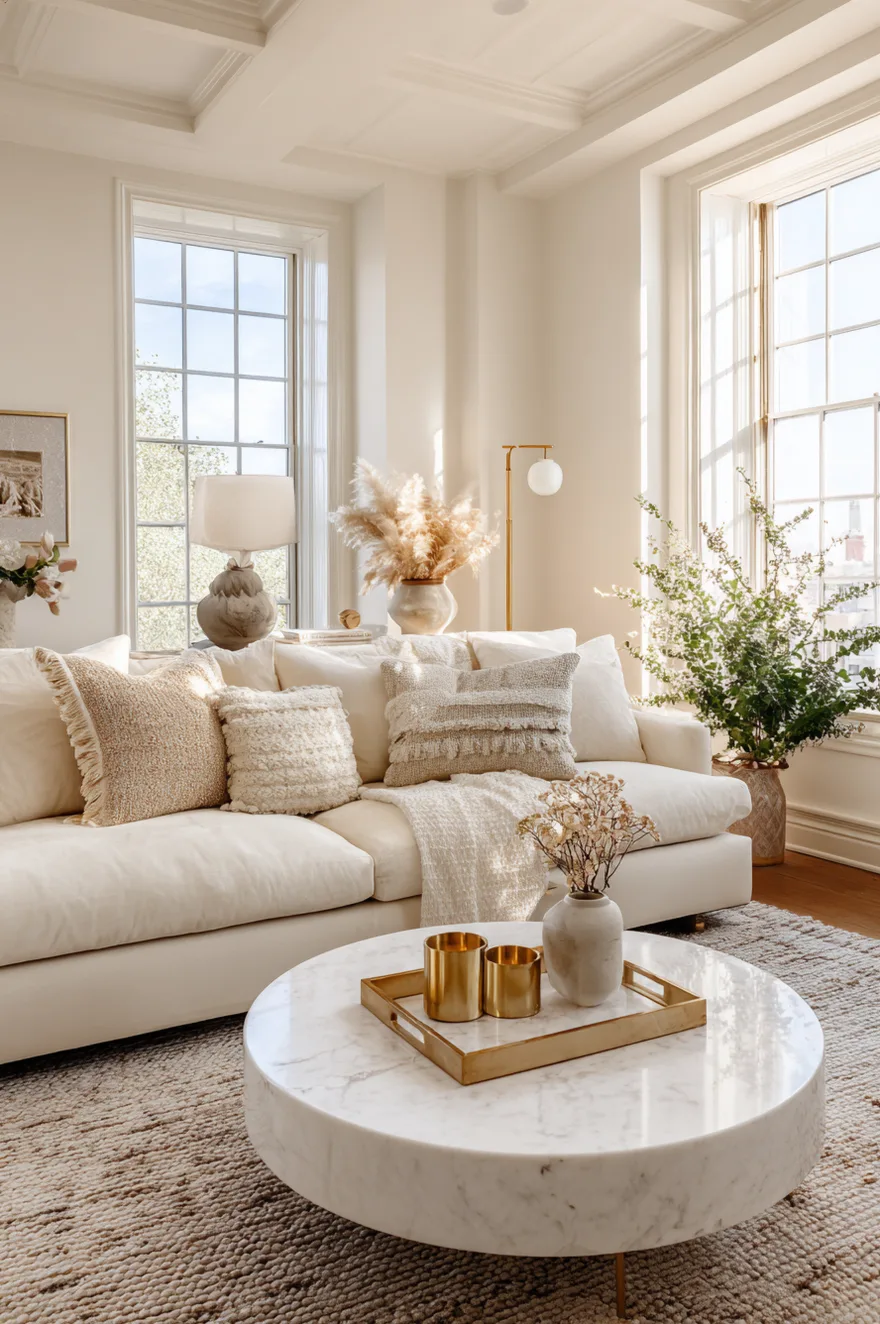
You don’t need a huge budget to add a little luxury. Small touches like a marble tray on your coffee table or brass handles on your media console go a long way.
I picked up a white marble catchall dish at HomeGoods for $12 and use it to corral remotes and coasters. It just elevates the whole setup. Same with brass – a single brass floor lamp or a set of brass candle holders adds warmth without feeling too shiny.
Keep it subtle. One or two pieces per room is plenty.
Paper Lantern Pendants for Soft Overhead Light
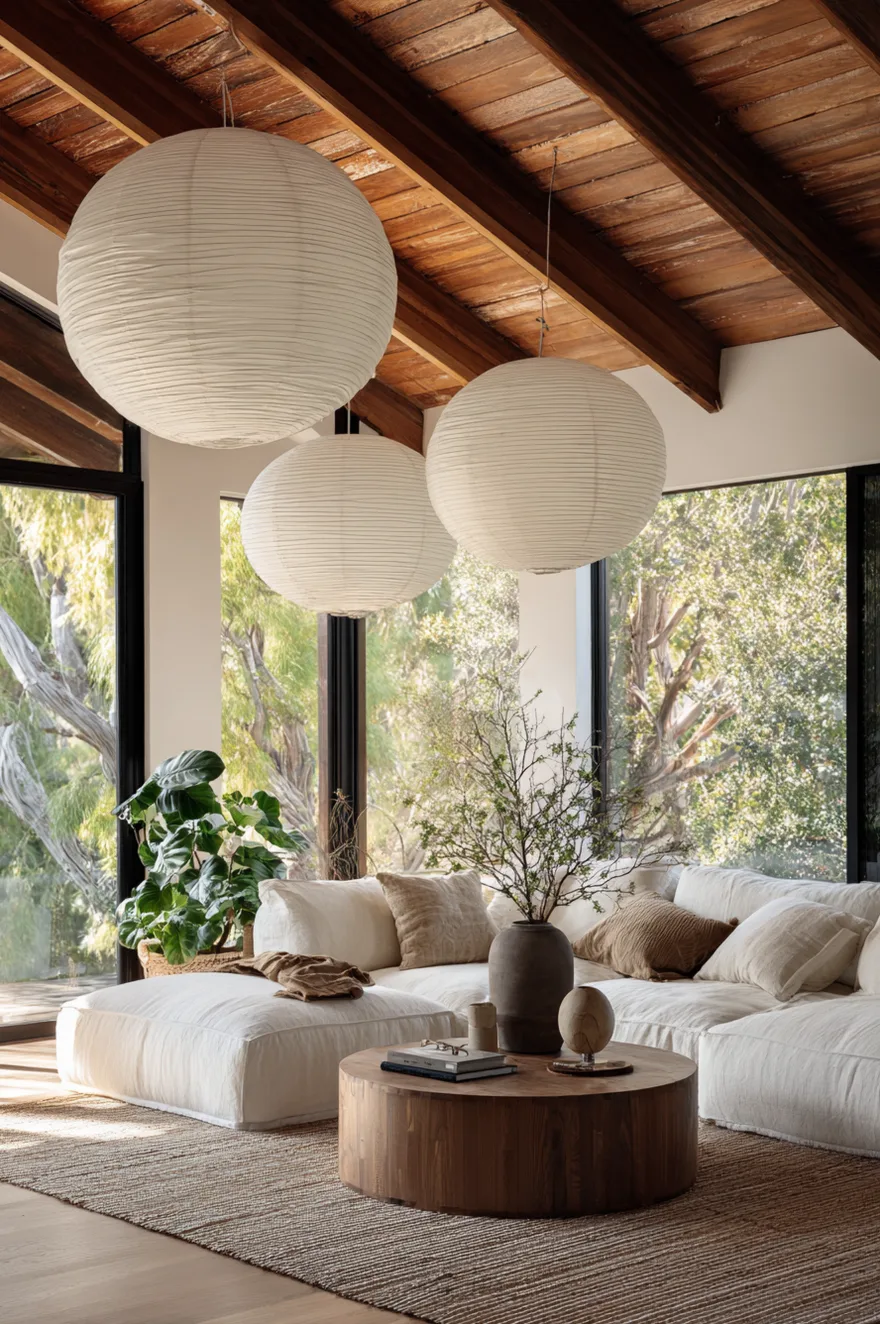
Noguchi-style paper lanterns or ribbed pendant lights in white bring that Japanese influence without being too literal. They diffuse light beautifully and create these soft shadows on the ceiling.
Hang them over your coffee table or in a cluster of three at varying heights. I love the look of large round paper lanterns – they’re affordable and they make a big impact.
Pair them with warm bulbs. Cool white light will ruin the whole vibe.
The Sofa You’ll Actually Sit On
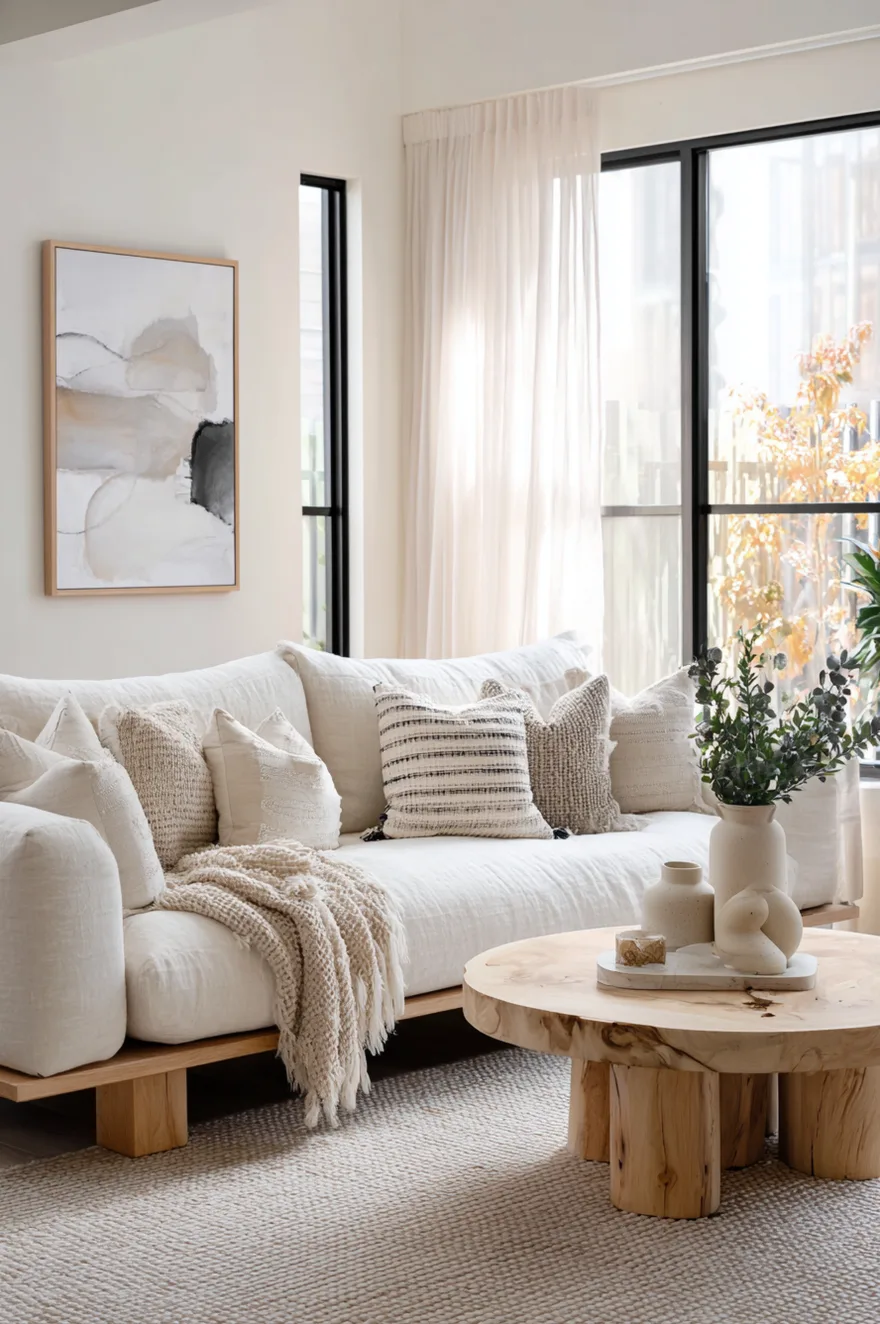
Low-profile linen sofas with wooden legs are everywhere right now and for good reason. They’re comfortable, they age well, and they don’t dominate the room.
Look for a neutral linen in cream, oatmeal, or light gray. The fabric should have a little texture to it – smooth linen feels cheap. Wooden legs in walnut or oak tie into the rest of your furniture.
Add a mix of throw pillows in varying sizes and textures. I do two large pillows in linen, two medium in velvet or cotton, and one lumbar pillow for contrast.
Built-In Fireplace with Wood Surround
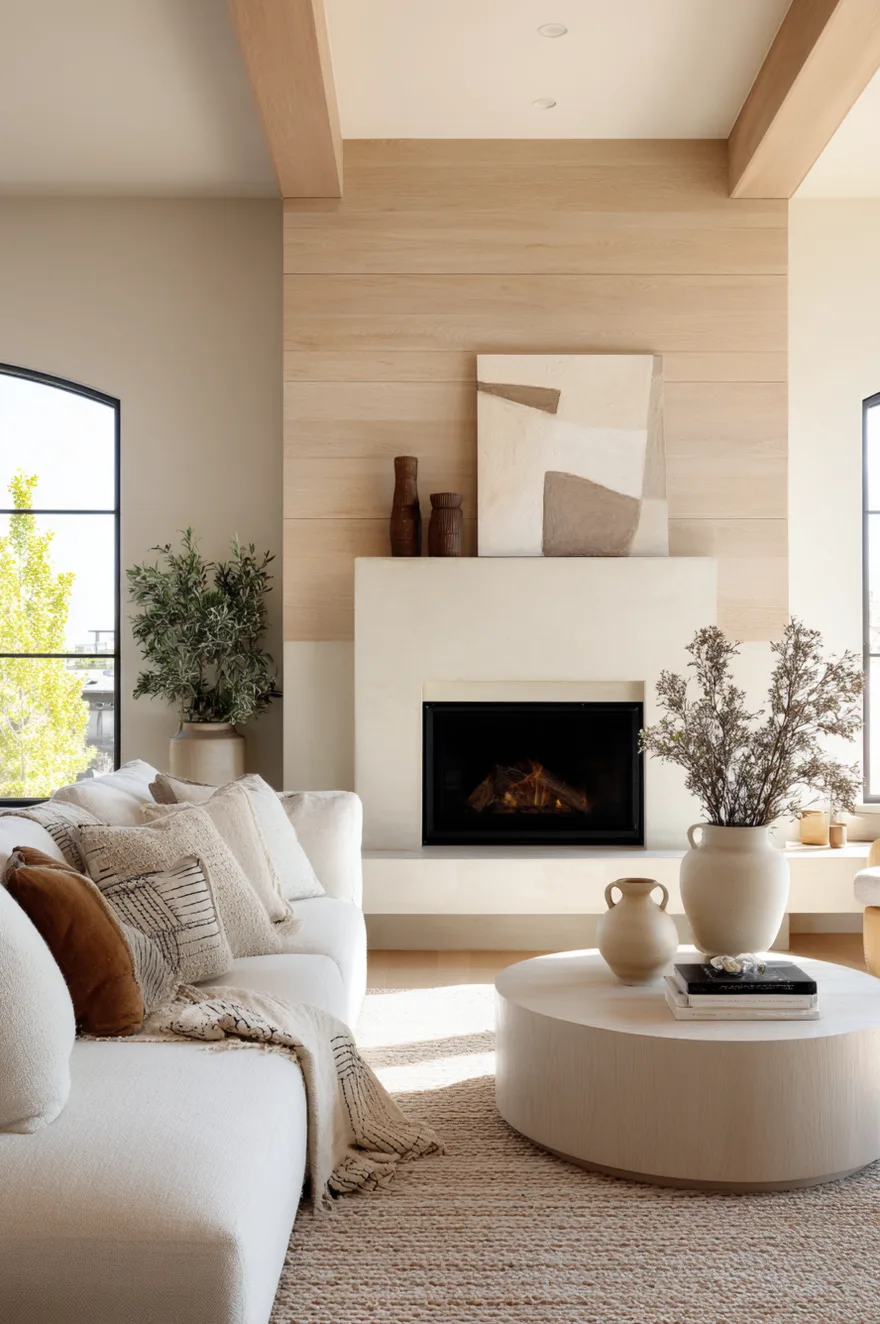
If you have a fireplace or are planning one, a wood surround in light oak or walnut keeps it minimal and warm. Skip the ornate mantels and go for a clean, flush design.
I’ve seen gorgeous setups where the wood panels run floor to ceiling with the fireplace recessed in the center. You can mount your TV above it or keep it separate – both work.
Style the mantel (if you have one) sparingly. A couple of ceramic vases, one piece of art leaning against the wall, maybe a small plant. That’s it.
Bringing It All Together: Your Japandi Living Room
So there you have it – 21 ways to bring that calm, lived-in Japandi vibe into your living room without it feeling like a museum. The key is balancing those clean Scandi lines with the warmth and imperfection of Japanese design. Low furniture, natural materials, warm lighting, and a healthy dose of greenery.
Start with one or two ideas that feel doable – maybe it’s swapping your light bulbs to warm white or adding a chunky throw blanket. You don’t have to do it all at once.
Which idea are you most excited to try? Let me know in the comments!
With love,
Liv