Kitchen sink ideas fall flat when you focus on looks without thinking about how you actually use the sink every single day. These kitchen sink ideas for 2026 combine smart functionality with beautiful design – undermount sinks that make cleanup easier, farmhouse sinks with personality, black sinks that hide stains, gold faucet upgrades that elevate the whole space, and clever storage solutions that keep your counters clear. Save these kitchen sink ideas for your next renovation.
Most Kitchen Sinks Look Good But Work Terribly
Here’s what nobody tells you about kitchen sinks: the prettiest options are often the least practical, and the most functional ones can look boring as hell. You end up choosing between a gorgeous farmhouse sink that’s too shallow for your sheet pans or a deep undermount that works great but looks like every other kitchen on your block.
The reality is that your kitchen sink gets used more than any other fixture in your house. You’re washing dishes, prepping vegetables, filling pots, dumping dirty water, rinsing muddy dog paws (just me?), and doing about seventeen other tasks that have nothing to do with the Instagram-perfect lifestyle the design magazines show you. A sink that looks amazing but doesn’t have a good faucet, enough depth, or a smart layout is going to frustrate you every single day.
The best kitchen sink ideas I’ve seen lately solve real problems while still looking fantastic. They have integrated accessories like cutting boards and drying racks. They pair the right sink material with the right faucet finish. They add storage above the sink or use workstation-style designs that maximize functionality. They think about what actually happens in a kitchen instead of just what looks good in photos.
I’m going to walk you through 18 kitchen sink ideas that work in real life – different sink styles, smart faucet choices, clever storage solutions, and design tricks that make your sink area both beautiful and genuinely useful. Let’s fix your kitchen sink situation.
Undermount Stainless Steel Sinks Are Workhorses
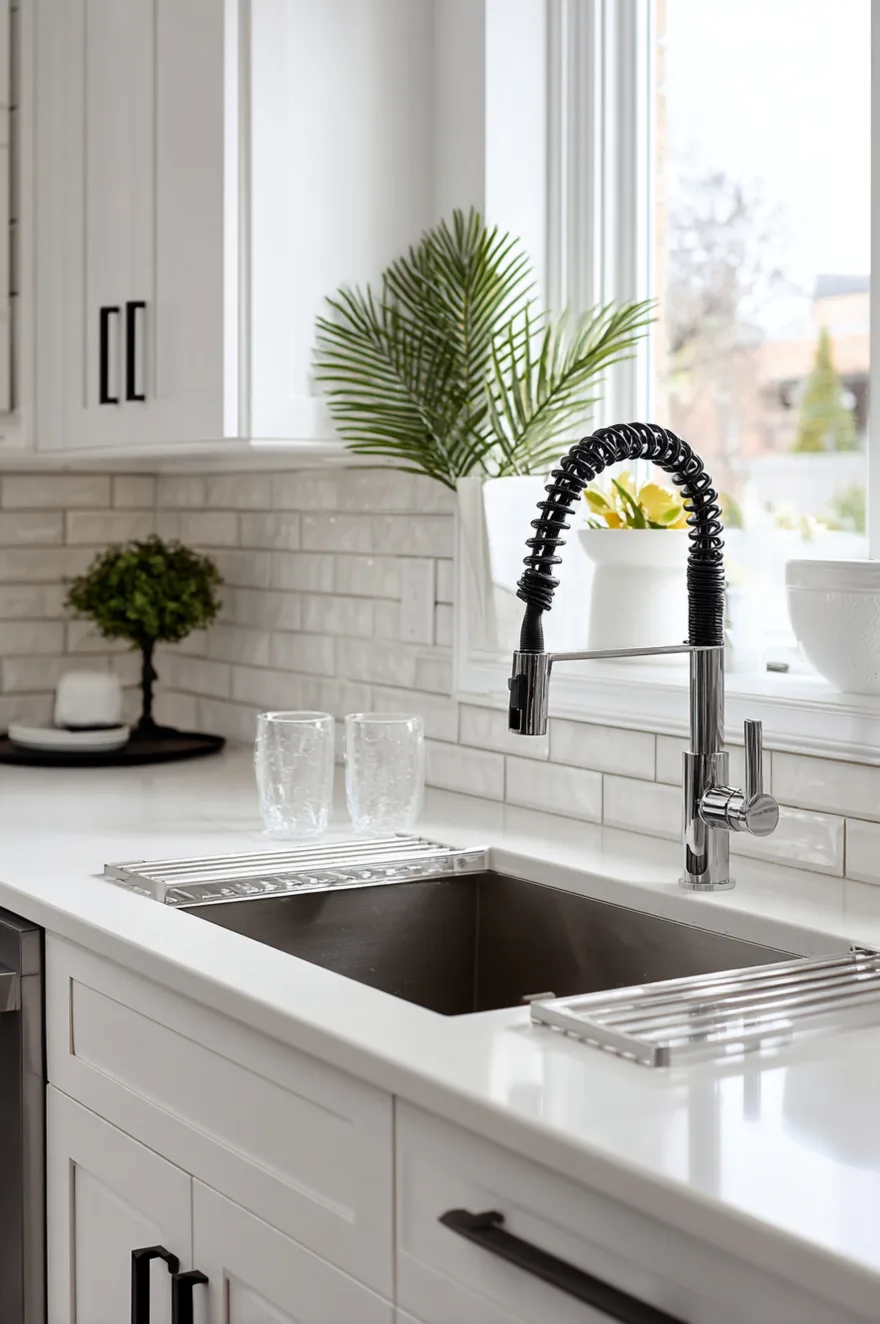
Undermount kitchen sinks in stainless steel are the most practical choice for busy kitchens, and the modern versions look way better than the builder-grade ones from ten years ago. The sink sits below the countertop edge so you can wipe crumbs and water directly into the basin without hitting a lip or rim.
I’m a huge fan of undermount sinks for this reason alone – cleanup is so much faster when you’re not fighting with the sink edge. You just swipe everything into the sink and you’re done. Plus stainless steel hides water spots better than you’d think (especially the brushed finishes), it’s basically indestructible, and it works with any design style from modern to farmhouse.
Look for 16-gauge or 18-gauge stainless steel – the lower the number, the thicker and sturdier the steel. The cheap thin sinks are loud and they dent easily. Spend a little more for a quality sink with sound-dampening pads on the bottom, and you won’t regret it when you’re not listening to every dish clang against the metal. Pair it with a good faucet and you’ve got a setup that’ll last twenty years easy.
Farmhouse Sinks With Brass Faucets Create Classic Style
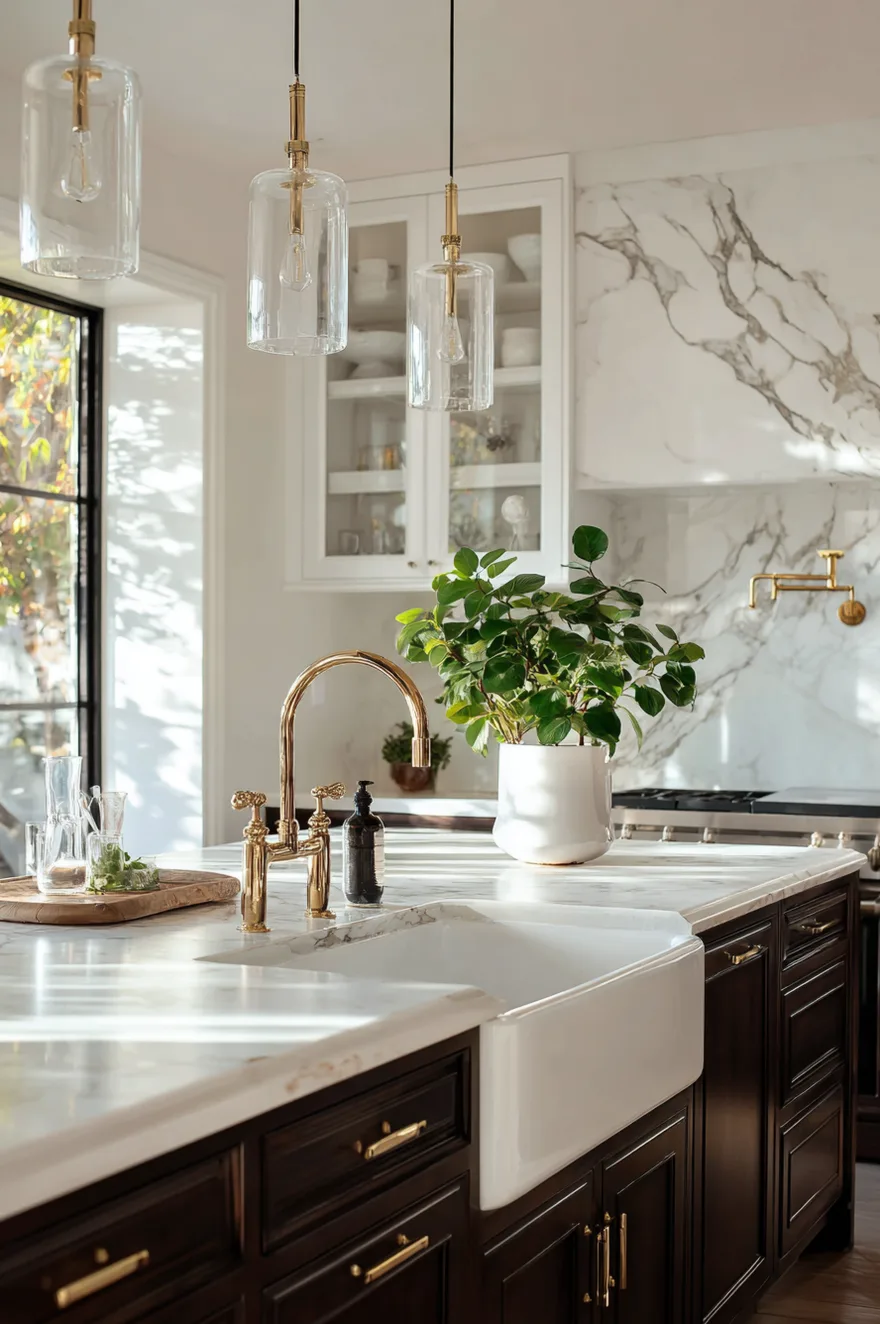
Farmhouse kitchen sinks (also called apron-front sinks) make a statement, and when you pair them with a brass or gold faucet, you get that warm classic look that never goes out of style. The front of the sink is exposed rather than hidden behind cabinet doors, which creates a focal point in your kitchen.
The thing about farmhouse sinks is that they’re not just decorative – the extra depth and the front apron position make them genuinely easier to use. You’re not reaching over a countertop edge to get into the sink, which saves your back if you spend a lot of time doing dishes. They’re also deep enough to hide a pile of dirty dishes when unexpected guests show up (we’ve all been there).
White fireclay farmhouse sinks are the classic choice, but they can chip if you drop something heavy. Stainless steel farmhouse sinks are more durable and surprisingly affordable. Either way, pair them with a brass or champagne gold faucet to warm up the look and add that kitchen sink decor element that pulls the whole area together.
Black Kitchen Sinks Hide Stains And Look Sophisticated
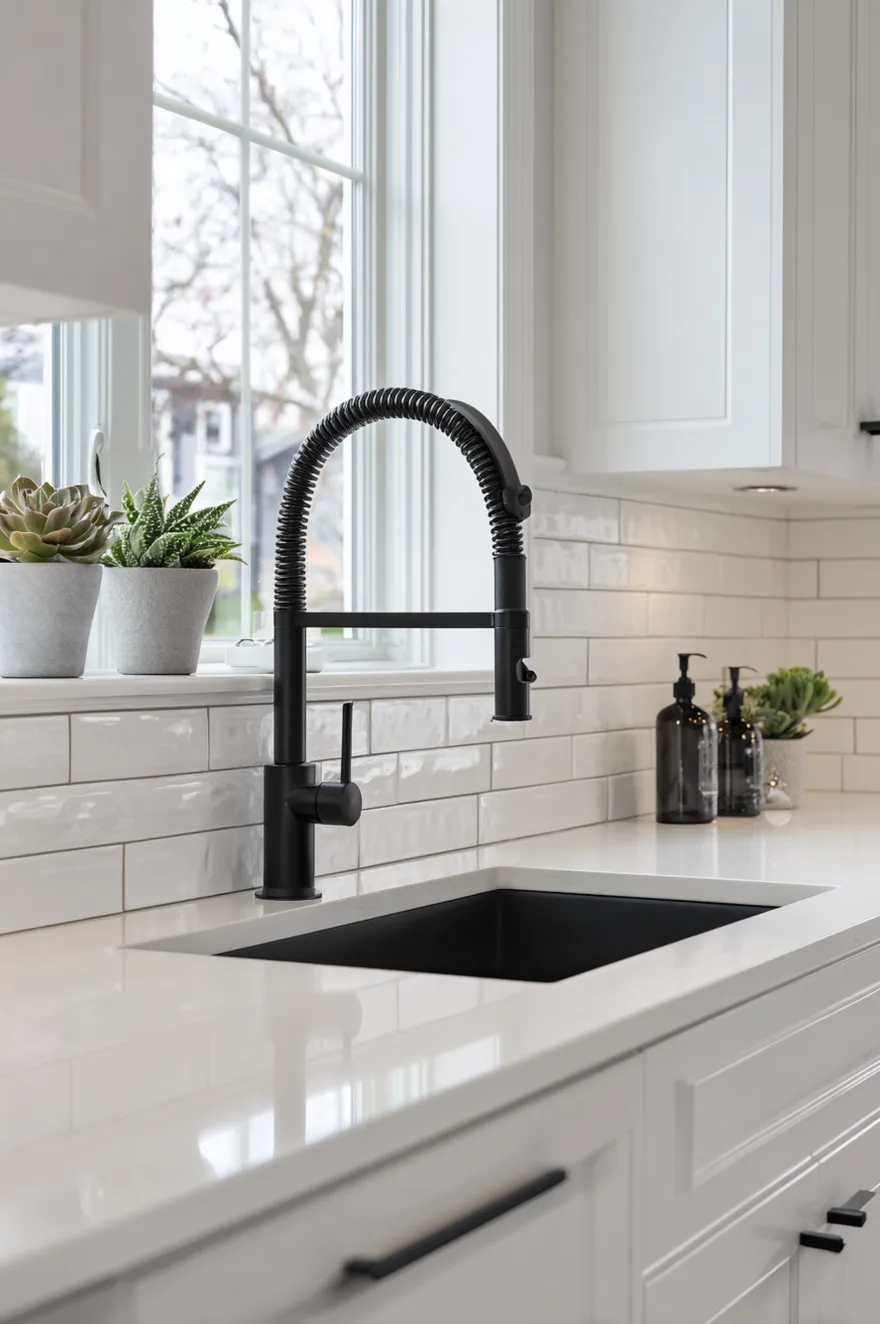
Black kitchen sinks are having a moment, and I totally get why – they hide water spots and stains way better than white or stainless steel, and they add visual interest without being loud about it. A black undermount sink or black workstation sink paired with matte black hardware creates a sophisticated modern look.
Jake was skeptical about our black sink at first (he thought it would show everything), but it’s actually the opposite. Coffee stains disappear. Hard water marks don’t show. The sink looks clean even when it’s not perfectly clean, which is basically magic when you have kids or a busy household.
Black composite granite sinks are the most popular option – they’re made from a mix of granite stone dust and acrylic resin, so they’re durable and heat-resistant. They come in matte or satin finishes, and the matte hides scratches better. Pair a black sink with either matte black fixtures for a full monochrome look, or with brass/gold fixtures for contrast and warmth.
Double Bowl Sinks Give You Zones For Different Tasks

Double bowl kitchen sinks divide the basin into two sections, which gives you separate zones for washing and rinsing, or for prepping and cleanup. This setup works really well if you don’t have a dishwasher or if you do a lot of hand-washing.
The trick with double bowl sinks is getting the proportions right. Equal-sized bowls (50/50 split) work if you never wash large pots or baking sheets. But honestly, I think the 60/40 split makes more sense for most people – you get one larger bowl that fits your big stuff and one smaller bowl for the garbage disposal or for rinsing.
I’ve also seen people use the two-bowl setup in creative ways – one side for dirty dishes, one side with a drying rack. Or one side for food prep with a cutting board that sits on top, one side for washing. The separation creates natural organization that a single bowl doesn’t give you.
Workstation Sinks With Built-In Accessories Maximize Function
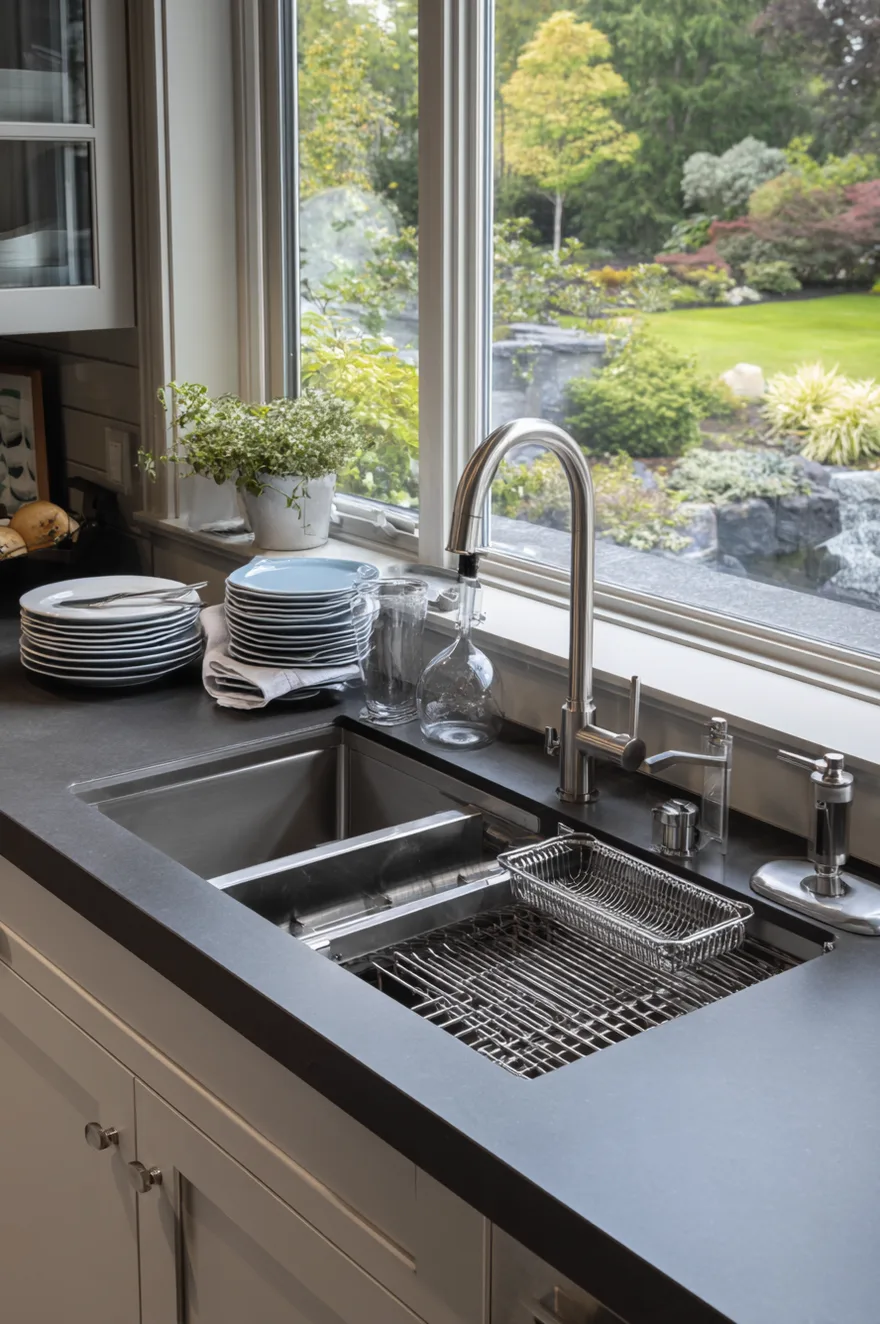
Workstation kitchen sinks are game-changers for functionality – they come with a ledge system that holds accessories like cutting boards, colanders, drying racks, and washing grids. Everything you need sits right over the sink, which saves counter space and makes food prep way more efficient.
I didn’t understand the appeal until I used one at my friend Sarah’s house and realized how smart it is. You’re washing lettuce in the colander directly over the sink so the water drains immediately. You’re chopping vegetables on the cutting board over the sink so the scraps fall right in. You’re drying dishes on the rack that sits perfectly over the basin. It’s like having a Swiss Army knife instead of a regular sink.
The stainless steel workstation sinks are the most common, and they come in both undermount and drop-in styles. Make sure the accessories are included (some brands sell them separately, which is annoying), and look for a deep basin – you want at least 9 inches of depth so the accessories don’t take up all your sink space.
Black Workstation Sinks With Integrated Drying Racks
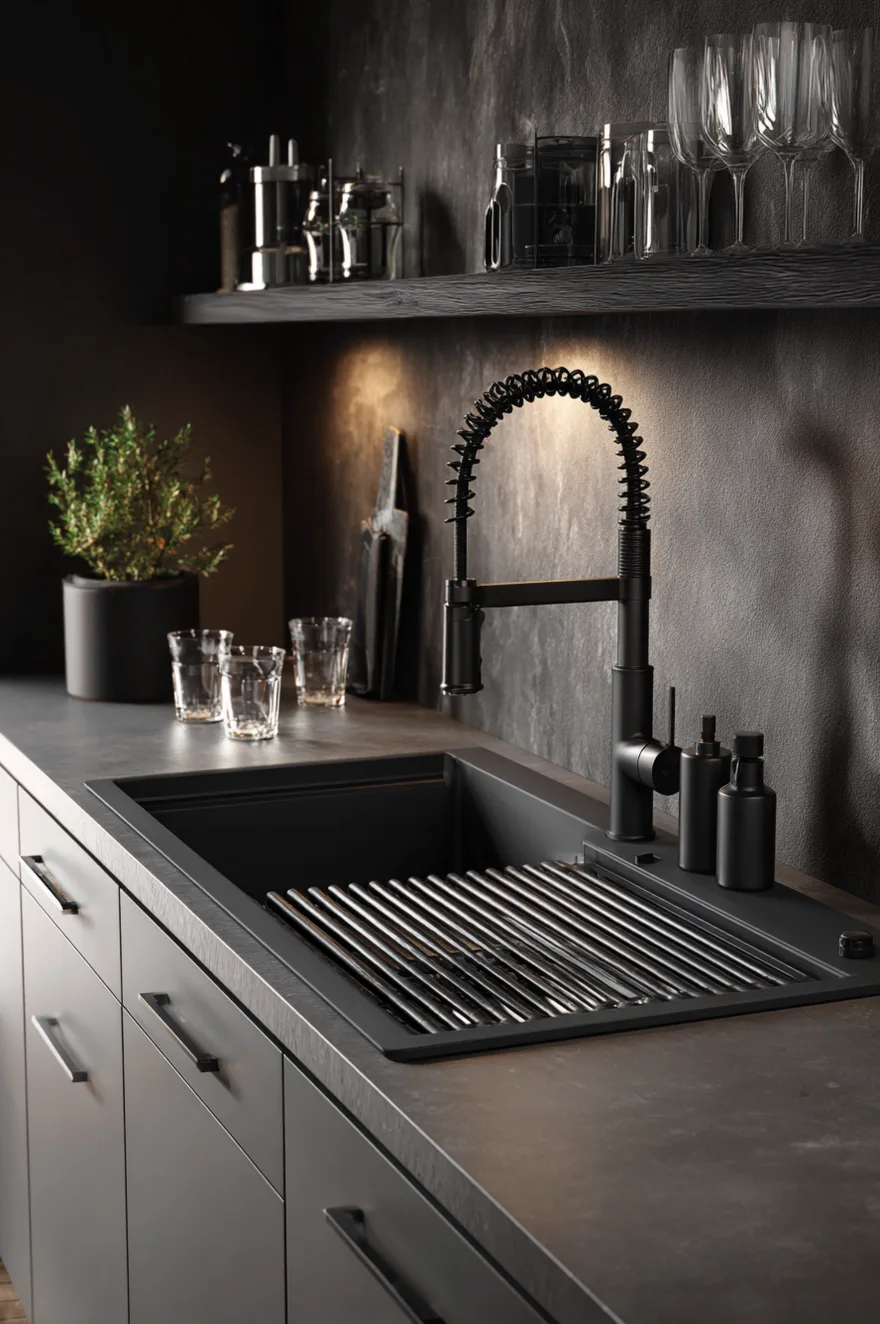
Black workstation kitchen sinks combine the stain-hiding benefits of black composite material with the functionality of built-in ledges and accessories. You get a sink that looks clean, works hard, and adds visual interest to your kitchen design.
The black composite material is more forgiving than stainless steel – it doesn’t show every water spot or fingerprint, and scratches blend in rather than standing out. When you add the workstation features (cutting boards, drying racks, washing grids), you’re basically getting a full prep and cleanup station in one fixture.
I especially love black workstation sinks in kitchens with wood countertops or butcher block – the black grounds the space and creates contrast without feeling harsh. Pair it with a matte black faucet for a monochrome look, or with brass/gold hardware for warmth. Either way, you’ve got a sink that’s both beautiful and seriously functional.
Gold And Brass Faucets Elevate The Whole Sink Area
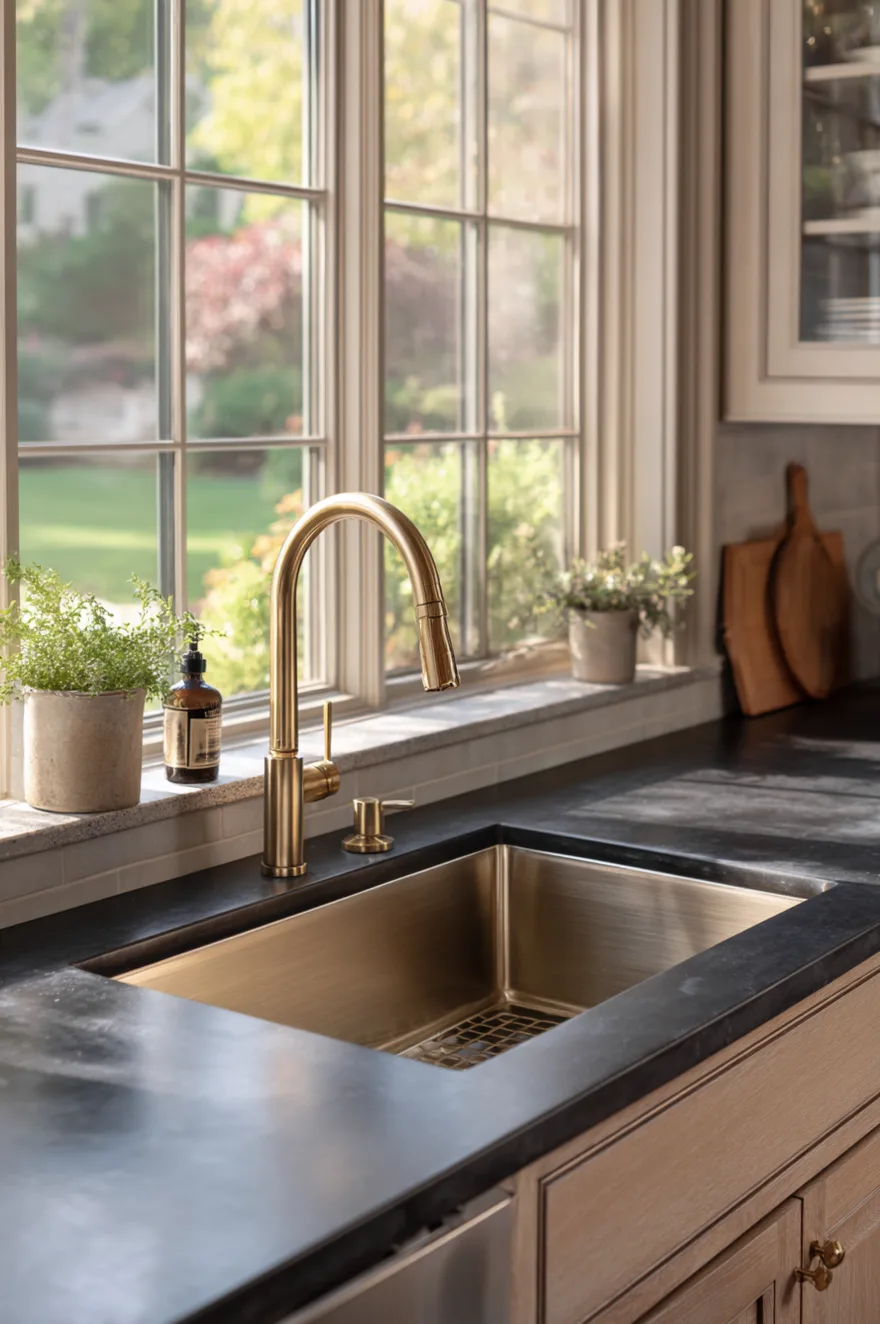
A gold faucet or brass faucet is hands-down the easiest way to upgrade your kitchen sink area without replacing the entire sink. The warm metallic finish adds that kitchen sink decor element that makes the space feel intentional and designed rather than just functional.
I was nervous about going with a brass faucet because I thought it would be too trendy, but honestly it’s been three years and I still love it every single day. The warm tone works with everything – white cabinets, gray cabinets, wood cabinets, marble counters, quartz counters. It just makes the whole sink area feel more expensive and pulled-together.
You’ve got options with gold faucets: brushed gold (more matte and subtle), polished gold (shinier and more traditional), champagne gold (lighter and softer), or unlacquered brass (which develops a patina over time). For a modern kitchen, go brushed or champagne. For a traditional kitchen, polished brass works. And if you want something unique that ages beautifully, unlacquered brass is gorgeous but requires accepting that it will change color.
Overhead Dish Rack Storage Saves Counter Space
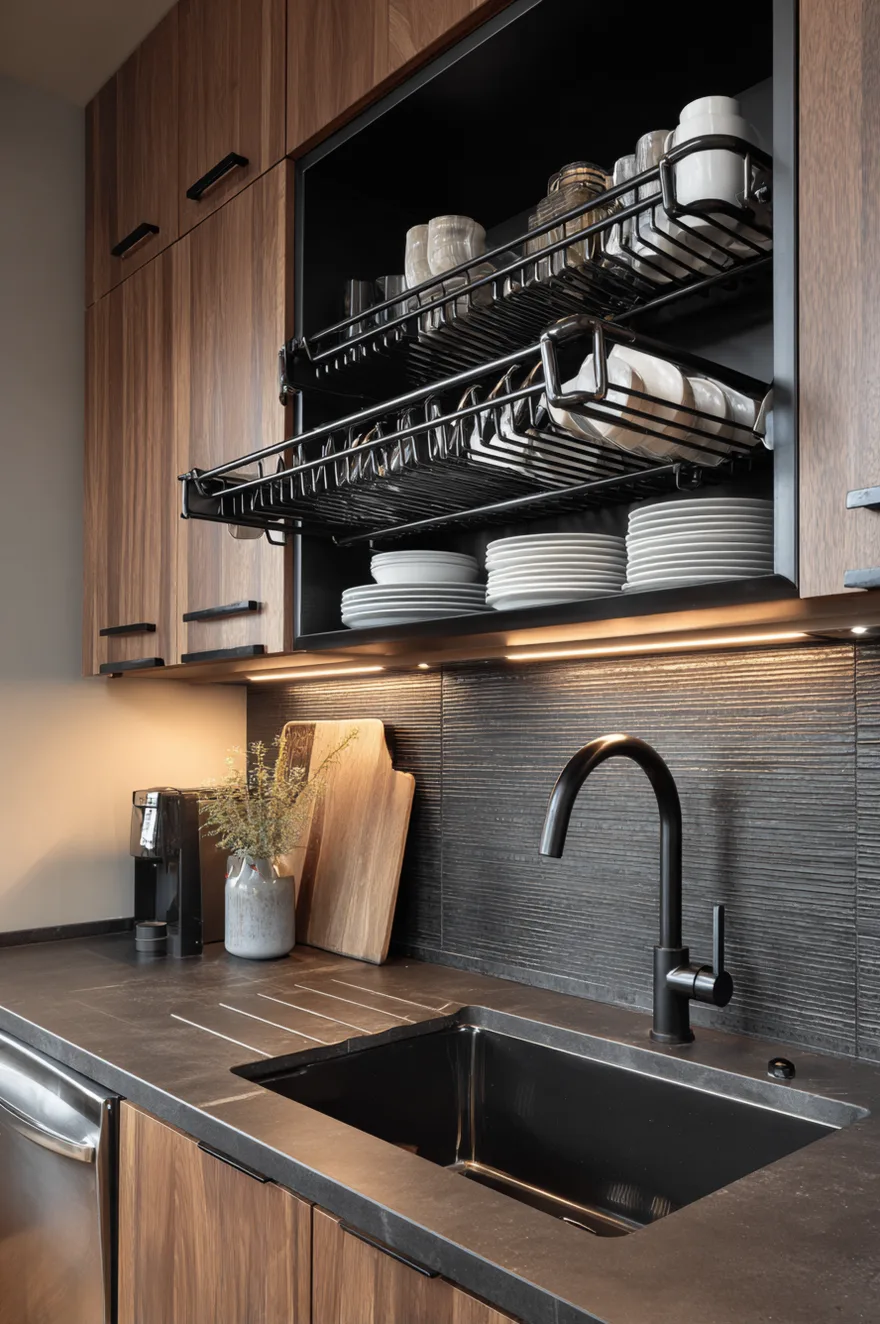
Overhead dish rack storage above your kitchen sink is common in European and Asian kitchens, and it makes so much sense – your dishes drip directly into the sink, you’re not taking up counter space with a drying rack, and everything is within easy reach when you need it.
I installed one of these in our last kitchen and it changed my life. No more dish rack cluttering the counter. No more water pooling on the countertop. Just clean dishes drying overhead where they’re out of the way but still accessible. It’s especially great in small kitchens where counter space is precious.
You can find stainless steel overhead racks that mount to the cabinet bottom or wall, or you can get fancier versions with integrated lighting and multiple tiers. Some are open wire racks, some have solid shelves. The key is making sure it’s positioned directly over the sink so water drips where it should, and that it’s low enough to reach comfortably but high enough that you’re not hitting your head.
Black Sinks In Wood-Tone Kitchens Create Contrast
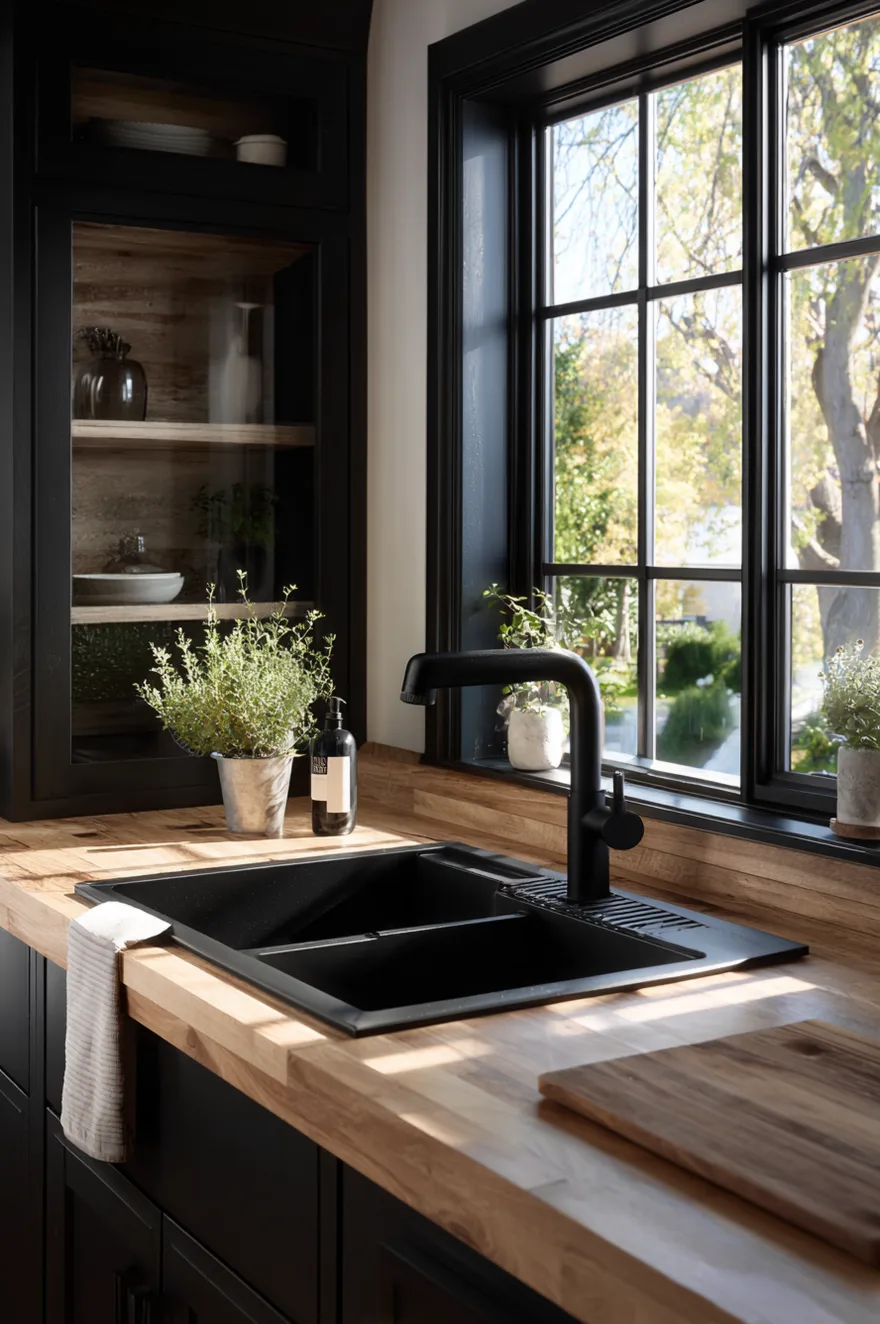
Black kitchen sinks in kitchens with wood cabinets or butcher block countertops create beautiful contrast and ground the space. The dark sink adds weight and definition against the warm natural tones, and it keeps the kitchen from feeling too monotone or washed-out.
I’ve seen this combo done really well in both modern and rustic kitchens. In modern spaces, a matte black undermount sink with sleek black hardware looks clean and intentional. In rustic or farmhouse spaces, a black farmhouse sink with brass fixtures creates that perfect blend of old and new.
The key is balancing the black with enough warmth – if your cabinets are wood, your faucet can be brass or gold. If your countertops are wood, your backsplash can be warm stone or neutral tile. You want the black to feel like an intentional accent that adds depth, not like it’s competing with everything else in the room.
Farmhouse Sinks In Traditional Kitchens With Brass Hardware
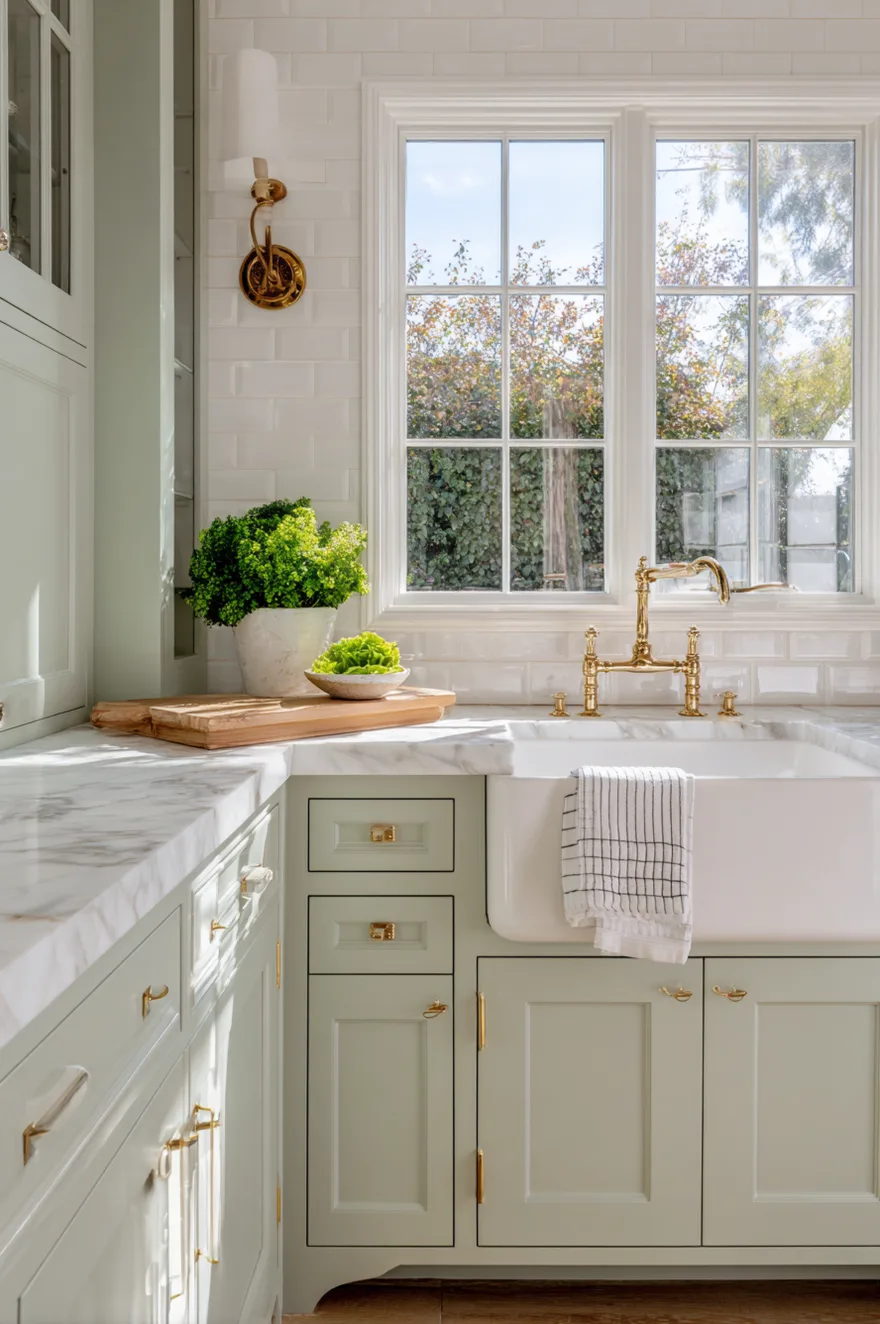
Farmhouse kitchen sinks in traditional-style kitchens create that timeless look that feels collected and warm rather than trendy. Pair a white farmhouse sink with brass cabinet hardware, brass faucets, and classic details like shiplap or beadboard, and you’ve got a kitchen that could work in any decade.
The reason this combo works so well is because it’s rooted in actual historical design – farmhouse sinks were standard in old farmhouses, and brass was the most common hardware finish before chrome and stainless steel took over. When you use these elements together, you’re not following a trend, you’re referencing real design history.
For a traditional kitchen, go with a white fireclay farmhouse sink and a bridge-style brass faucet with separate handles for hot and cold water. Add brass cup pulls or knobs on your Shaker cabinets, brass sconces or pendants over the sink, and maybe some open shelving with brass brackets. The brass ties everything together and gives the space warmth that polished chrome or stainless steel can’t match.
Light Cabinets With Brass Faucets And White Sink
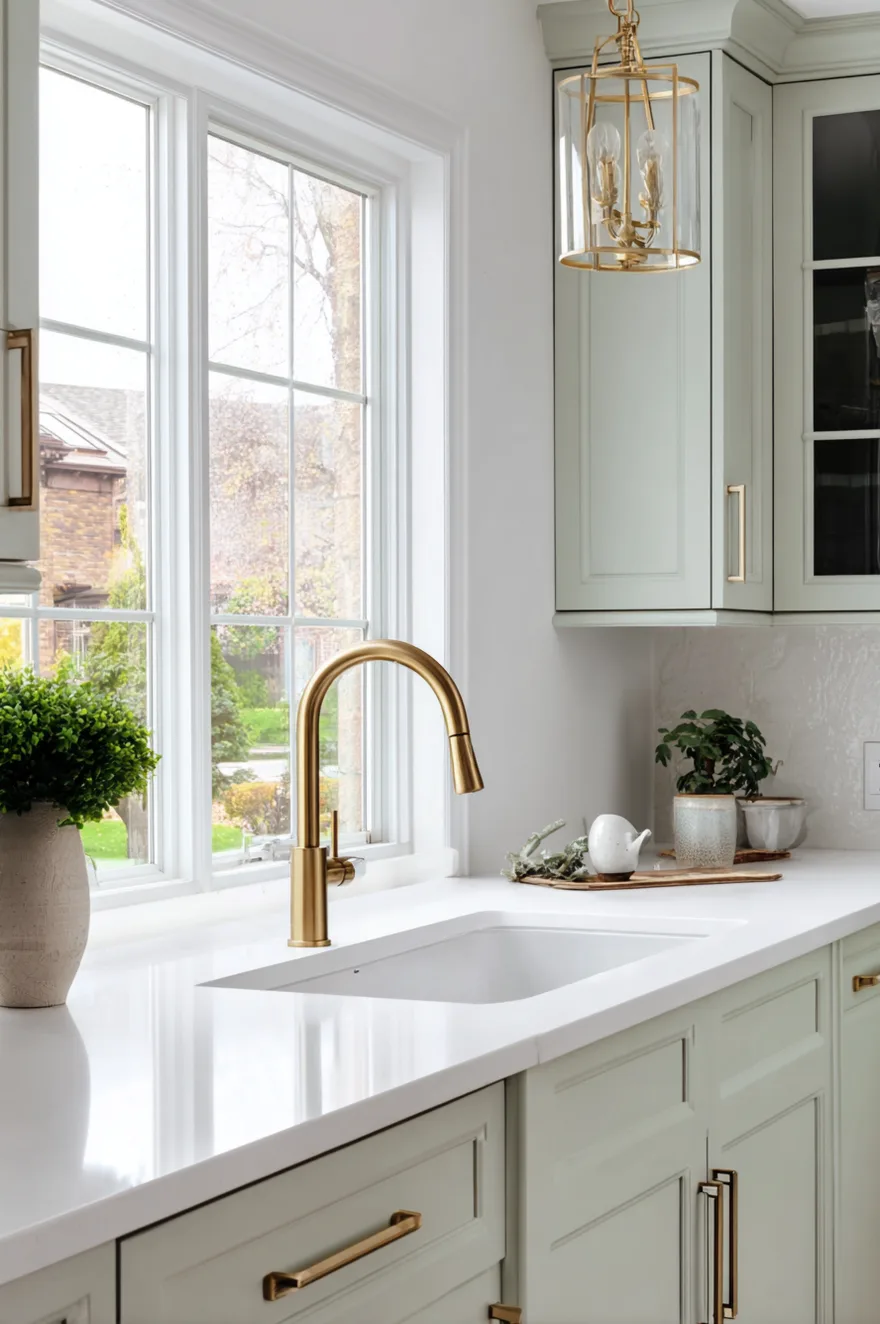
Light-colored kitchen cabinets with brass or gold faucets and white or light sink and countertops create an airy sophisticated look that works in both traditional and contemporary kitchens. The warm brass adds just enough contrast and interest without overwhelming the light palette.
This is basically the safe-but-stunning option – it’s not going to feel dated in five years, it works with almost any flooring and backsplash, and it makes small kitchens feel bigger because of all the light tones. But the brass faucet keeps it from being boring or too matchy.
Go with soft gray, greige, light sage, or white cabinets. Pair them with white quartz or marble countertops. Add a brass faucet (brushed or champagne gold works best in light kitchens), brass hardware on the cabinets, and maybe brass pendant lights. The whole space feels fresh and bright, but the brass gives it warmth and keeps it from feeling cold or sterile.
Integrated Sinks Cut From The Countertop Material
Integrated kitchen sinks cut from the same material as your countertop create a seamless look with no joints or seams where water and grime can collect. This works with solid surface materials like quartz, Corian, or natural stone, and it’s the ultimate low-maintenance option.
The aesthetic is super clean and modern – the sink and counter are one continuous surface, which makes the whole area look custom and high-end. And functionally, it’s amazing for cleanup because you can wipe everything directly into the sink without hitting any edges or cracks.
This option costs more than a standard undermount sink because the fabricator has to cut the sink basin from your countertop slab, but if you’re already investing in good countertops and you want that seamless look, it’s worth it. It works especially well with white or light-colored quartz or marble – the integrated sink looks like a natural part of the stone rather than a separate fixture.
Minimalist Sinks With Single-Lever Modern Faucets
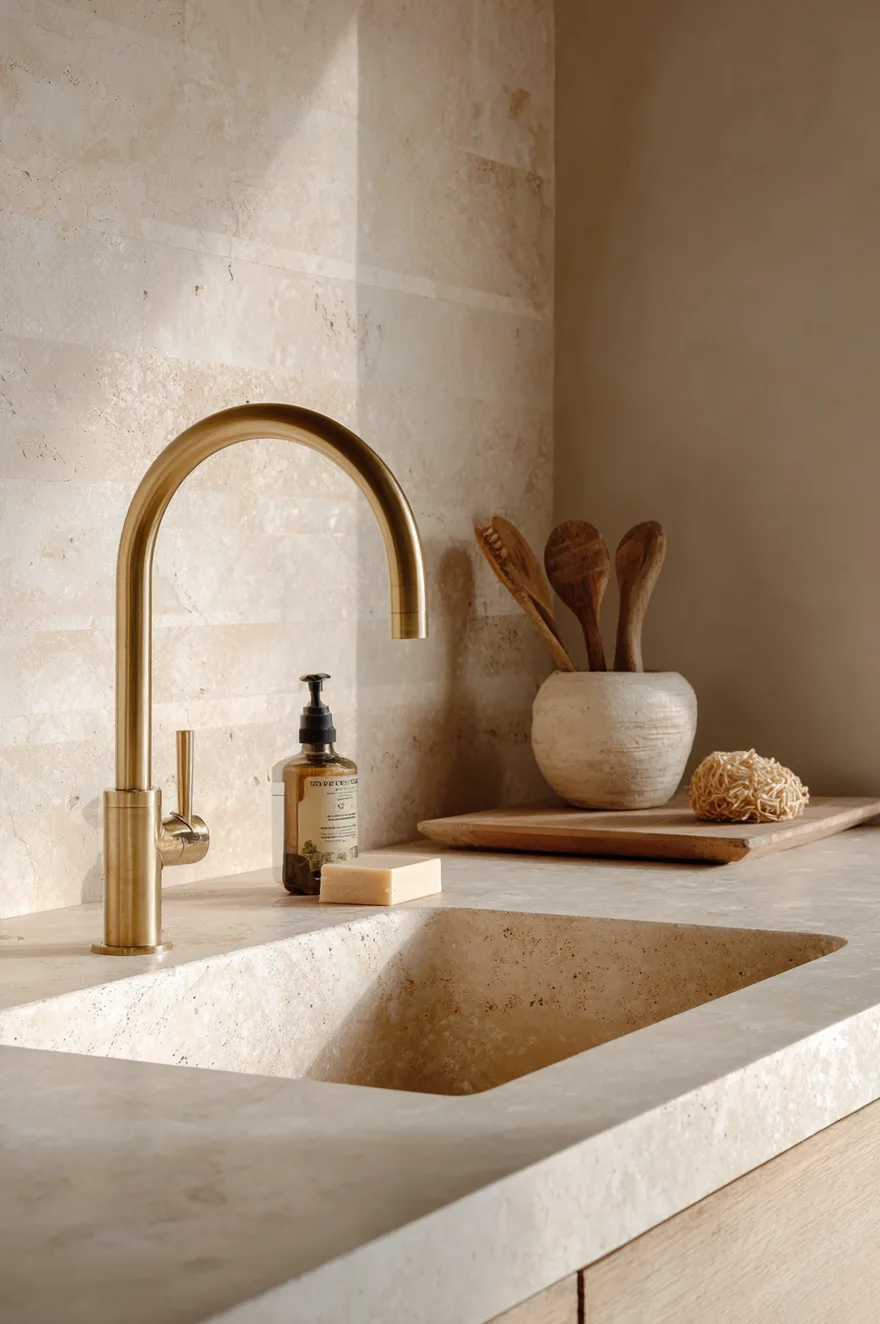
Minimalist kitchen sinks with single-lever modern faucets create a clean uncluttered aesthetic that works in contemporary kitchens. The sink is simple – usually undermount, single-bowl, no fussy details. The faucet has clean lines, a single handle, and focuses on function over decoration.
This is my preferred style because it’s so easy to keep clean and it never looks busy or cluttered. There’s nowhere for grime to hide because there are no cracks, seams, or decorative details. The faucet operates with one hand, which is crucial when you’re cooking and your other hand is covered in raw chicken.
For a minimalist sink setup, go with either stainless steel or white undermount sink, a single-lever faucet in matte black or brushed nickel, and keep your counters as clear as possible. No soap dispenser clutter, no sponge holder, no dish rack – everything should be hidden or integrated. The whole area should look calm and intentional, not like a staging ground for dirty dishes.
Concrete-Look Sink and Counters
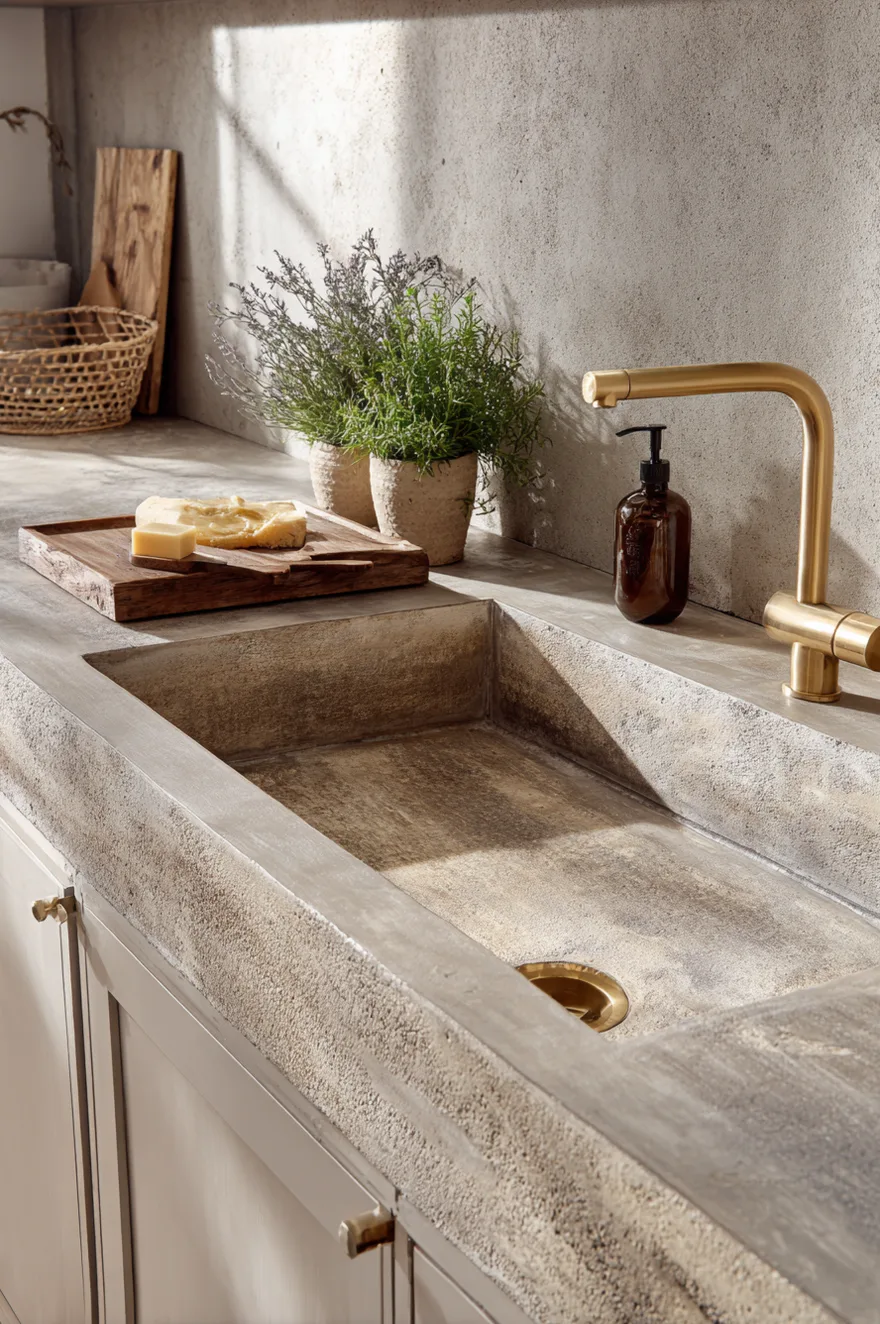
Concrete-look countertops (or actual concrete counters) paired with the same kitchen sinks and matte faucets create an industrial-modern aesthetic that feels urban and cool. The gray tones of the concrete work beautifully with brass or black fixtures, and the combination feels intentional and designed.
This look works especially well in loft-style spaces or modern homes with exposed brick, metal accents, or open shelving. This combination grounds the space and adds visual weight without feeling heavy because the gray is relatively neutral.
Go for a matte finish on both the concrete counters and the sink and faucet – glossy surfaces would fight with the natural texture of concrete. Add some warmth with wood cutting boards, brass or copper accents, or potted herbs, so the space doesn’t feel too cold or industrial.
Hidden Sink Storage With Pullout Drawers
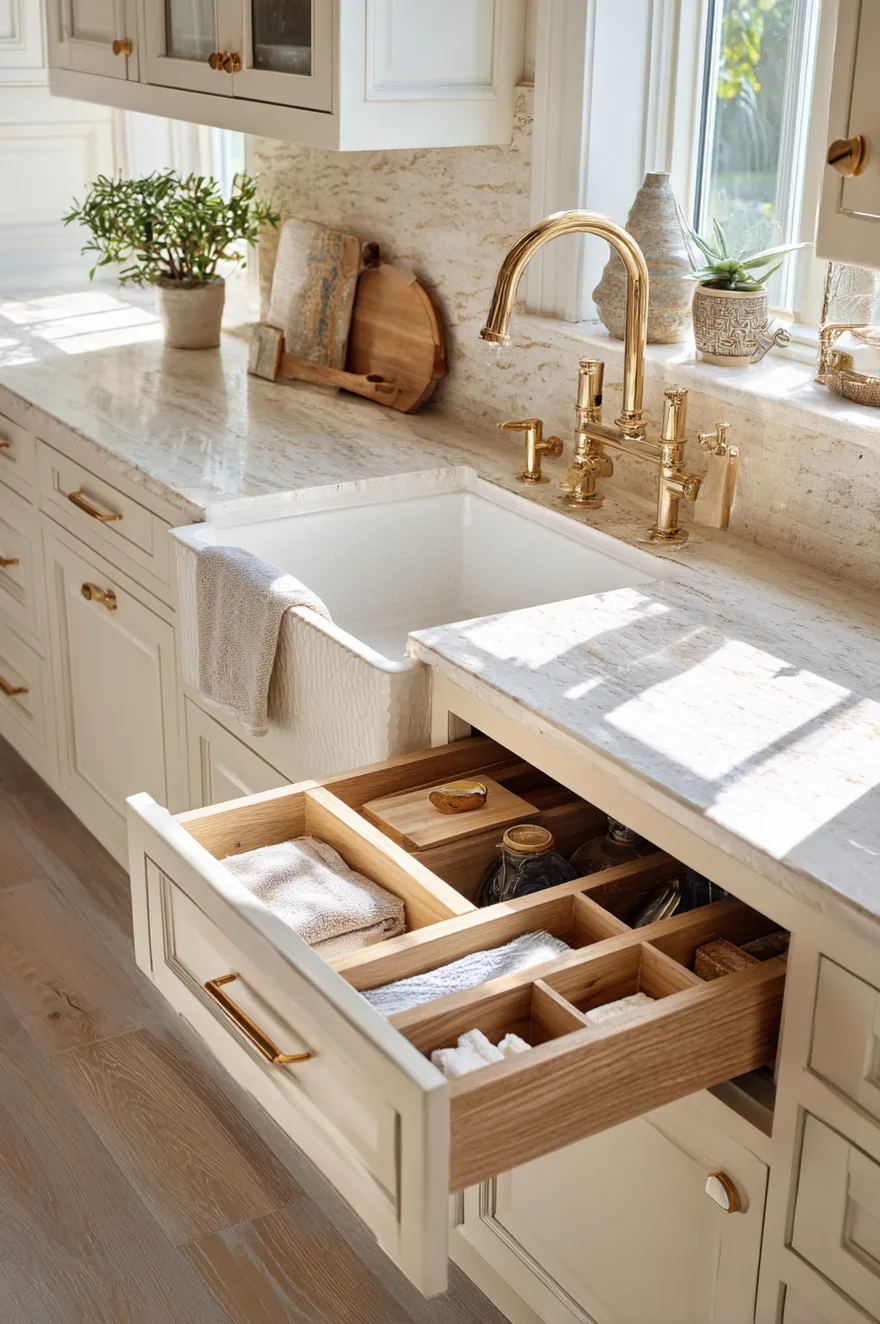
Hidden storage around your kitchen sink – specifically pullout drawers right below the basin – keeps sponges, dish soap, scrub brushes, and cleaning supplies organized and out of sight. This transforms your sink area from cluttered to clean, even though you’re keeping the exact same items.
I added pullout trays under our sink and it’s one of the best organizational moves I’ve made. No more sponges sitting on the counter getting gross. No more dish soap bottles cluttering the space. Everything has a designated spot in a drawer or tray that pulls out when you need it and disappears when you don’t.
Look for sink base cabinets with custom drawer inserts specifically designed for cleaning supplies. Some have compartments for bottles, slots for sponges, and hooks for dish towels. Some have tilt-out trays in the false drawer front above the sink cabinet. Either option beats leaving everything on your counter or in a jumbled pile under the sink.
Marble Integrated Sinks With Brass Fixtures Create Luxury
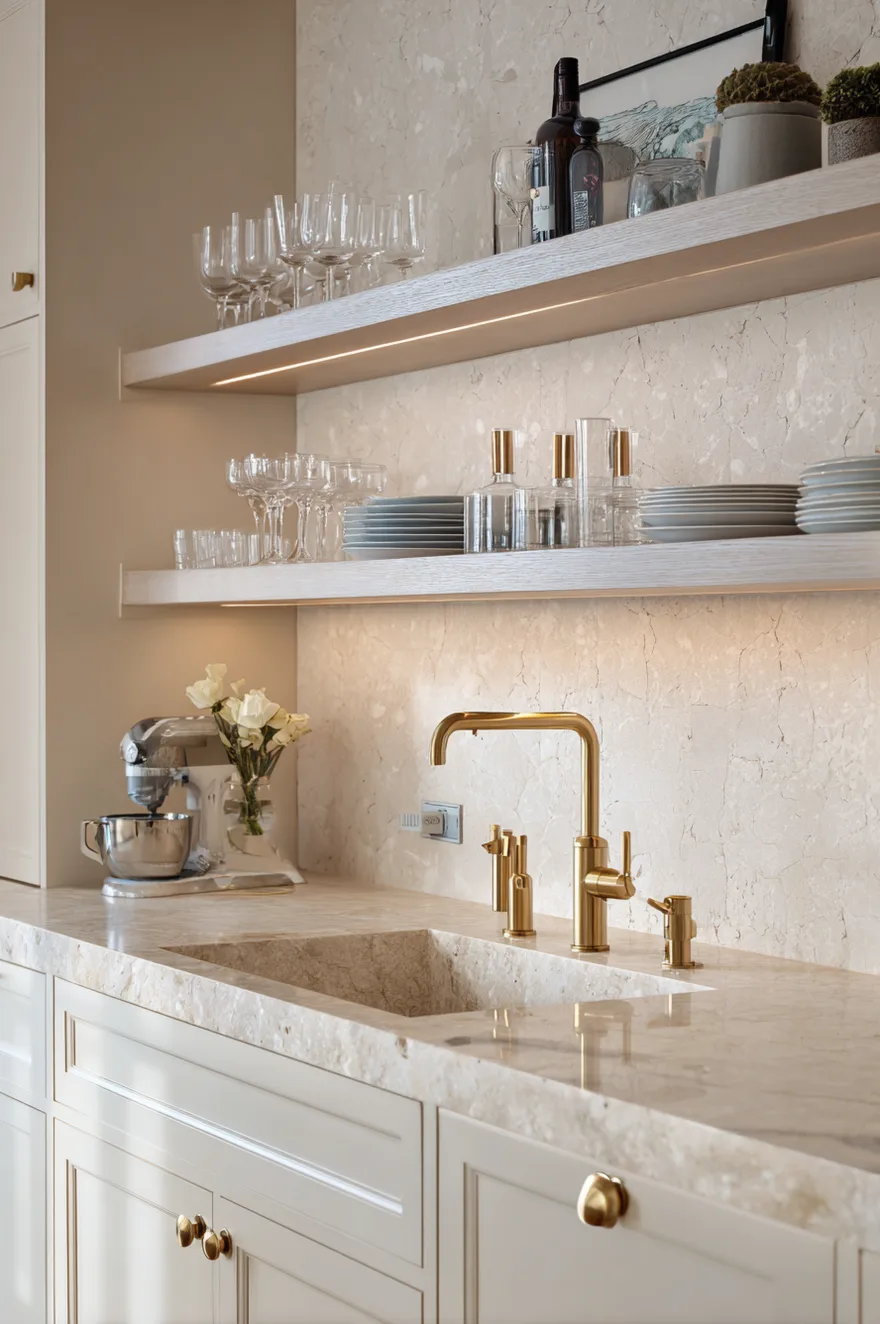
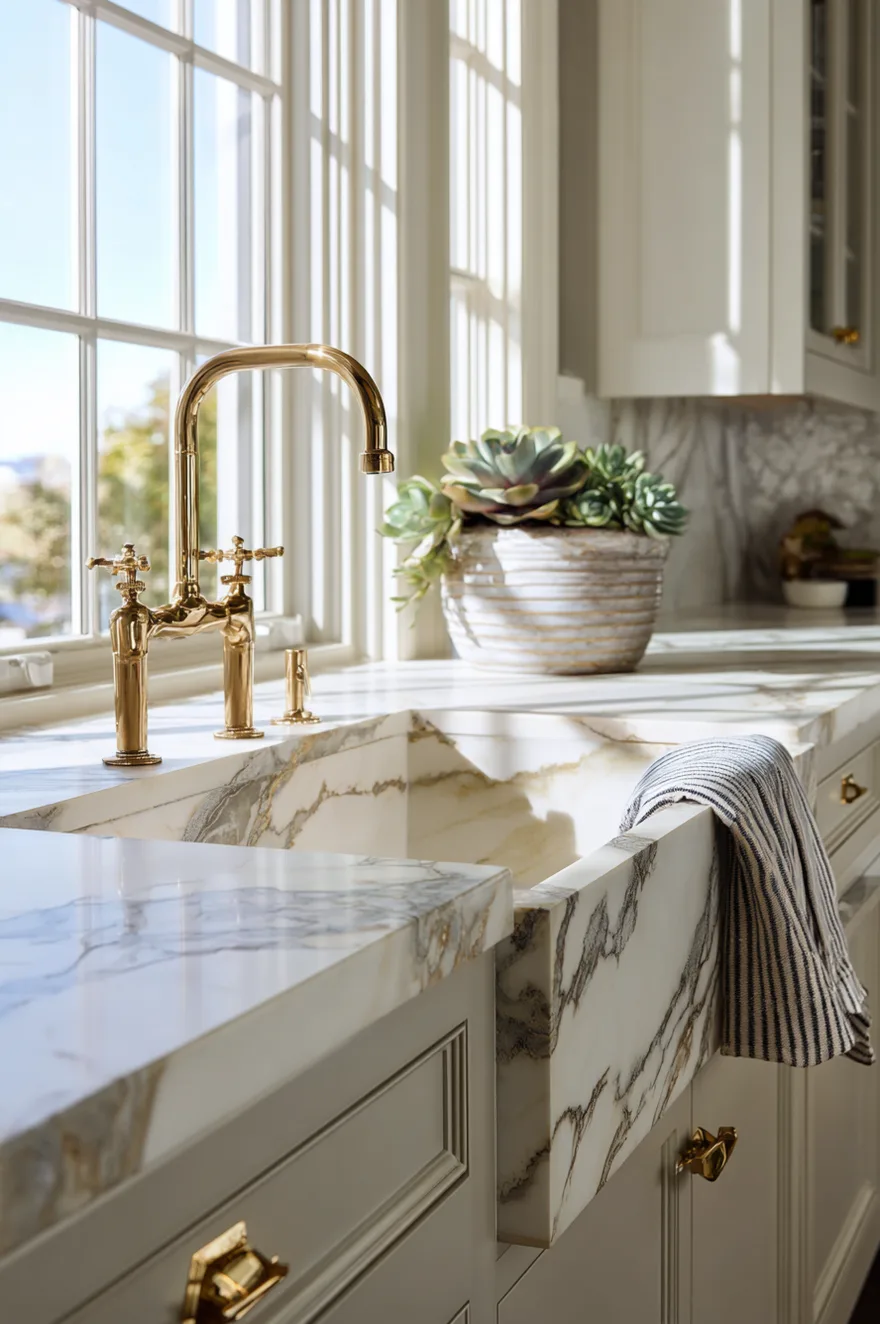
Marble countertops with integrated sinks carved from the same slab create an ultra-luxurious look, and when you pair them with brass or gold faucets and hardware, you get a kitchen that feels expensive and timeless. The veining in the marble continues through the sink basin, which makes the whole setup look custom and intentional.
This is admittedly not the most practical option – marble can stain, it needs to be sealed regularly, and the integrated sink means you can’t replace the sink without replacing the whole counter. But if you’re going for high-end luxury and you’re willing to maintain it, there’s nothing that looks quite like marble.
Use white Carrara marble for a classic look, Calacatta for more dramatic veining, or even a warmer marble with beige or gold tones. Pair it with unlacquered brass fixtures that will develop a patina over time, or with polished brass for a more traditional feel. Either way, you’ve got a kitchen sink area that looks like it belongs in a design magazine.
Natural Stone Sinks In Neutral Kitchens
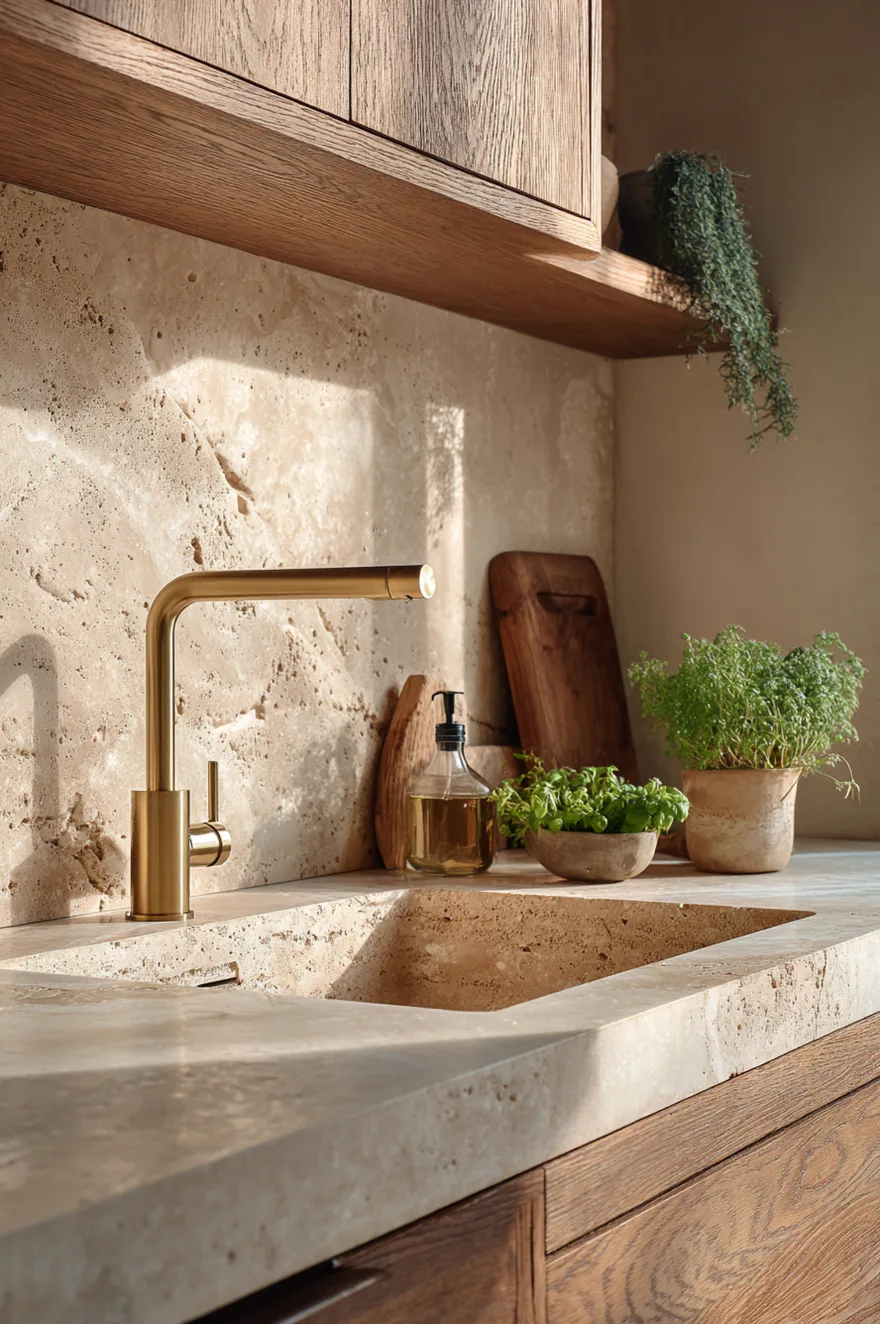
Natural stone sinks carved from limestone, travertine, or marble create an organic earthy aesthetic that works beautifully in neutral kitchens with natural materials. The stone adds texture and visual interest without loud color or pattern, and it ages gracefully rather than showing wear.
These sinks are statement pieces – the natural variation in the stone means each one is unique, and the material itself becomes a focal point. Pair a stone sink with wood cabinets, natural fiber textures, brass or bronze fixtures, and a neutral color palette, and you’ve got a kitchen that feels warm and grounded.
Stone sinks do require maintenance – they need to be sealed to prevent staining, and you can’t use harsh chemicals on them. But if you love natural materials and you’re willing to take care of them properly, a stone sink adds character and warmth that man-made materials can’t replicate.
Small Kitchen Sinks That Maximize Limited Space
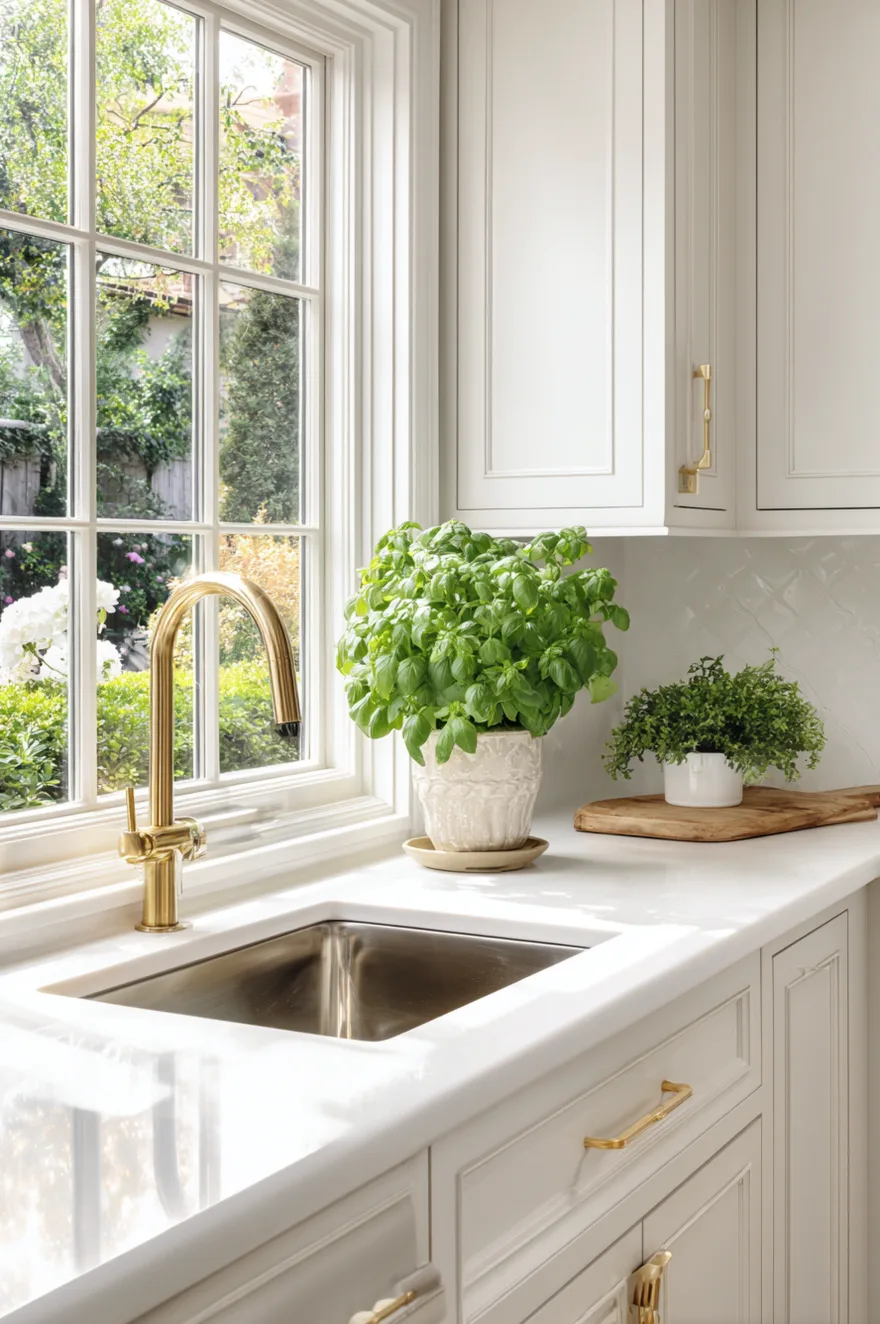
Kitchen sink ideas for small spaces require choosing compact sinks that don’t sacrifice too much functionality while leaving enough counter space for prep work. A smaller single-bowl undermount sink or a narrow farmhouse sink can work in tight kitchens if you’re strategic about layout.
In small kitchens, I’d skip the double-bowl sink entirely – you’re better off with one decent-sized basin than two tiny ones that can’t fit anything. Go for an undermount sink that’s 24-30 inches wide instead of the standard 33 inches. Pair it with a compact faucet that doesn’t take up a lot of space behind the sink.
Also think about depth – a deeper sink (9-10 inches) hides dishes better and gives you more usable space even in a smaller footprint. And consider adding a cutting board or drying rack that sits over the sink to create temporary extra workspace when you need it.
Your Kitchen Sink Can Actually Work Well And Look Great
After going through all these kitchen sink ideas, here’s what actually matters: choosing a sink and faucet combination that works for how you cook and clean, not just for how it looks in photos. A gorgeous farmhouse sink is pointless if it’s too shallow for your sheet pans. A sleek undermount is useless if your faucet is too low to fill tall pots.
Start with functionality – think about whether you need one bowl or two, how deep the basin should be, whether you want integrated accessories, and what faucet style makes sense for your space. Then add the design elements – the finish, the material, the hardware – that make it look intentional and beautiful.
Your kitchen sink is probably the most-used fixture in your entire house. It deserves the same thoughtful planning as your appliances or cabinets. Pick something that works hard, looks good, and makes your daily kitchen routine easier rather than harder. That’s the whole point.
With love,
Liv