Trying to add art deco style without a clear plan usually ends up looking like a themed restaurant. These art deco interior design ideas show you how to mix geometric patterns, velvet furniture, and 1920s-inspired touches into rooms that feel fancy but still livable. Whether you’re styling an art deco interior living room or trying art deco interior bedroom vibes, these tips help you get the art deco interior aesthetic without your house looking like a movie set.
What is Art Deco Actually?
Last year, I found this insane vintage brass floor lamp at an estate sale for $40, and it completely changed how I thought about art deco.
I’d always assumed art deco was too fancy for regular people – like, you needed a penthouse and a trust fund to pull it off. But this lamp, with its geometric frosted glass shade and heavy brass base, looked incredible next to my IKEA sofa. It made the whole living room feel more intentional, more grown-up, without me having to replace everything I owned.
That’s when I realized art deco interior design isn’t about recreating a 1920s time capsule. It’s about understanding the building blocks – geometric shapes, rich materials, bold contrast – and mixing them into the home you already have. You don’t need to commit to the whole look. You just need to know which pieces carry the vibe.
I’ve been diving deep into art deco lately because so many of you have been asking about it. I get it – the style is gorgeous, but it can feel intimidating. So I’m breaking down all the art deco interior ideas I’ve been collecting, from art deco interior living room layouts to art deco interior kitchen hardware to art deco interior bedroom styling. Some of these are small swaps you can make this weekend. Others are bigger commitments for when you’re ready to go all in. I’ll show you what works in real homes with real budgets.
1. Geometric Rugs That Anchor Your Whole Room
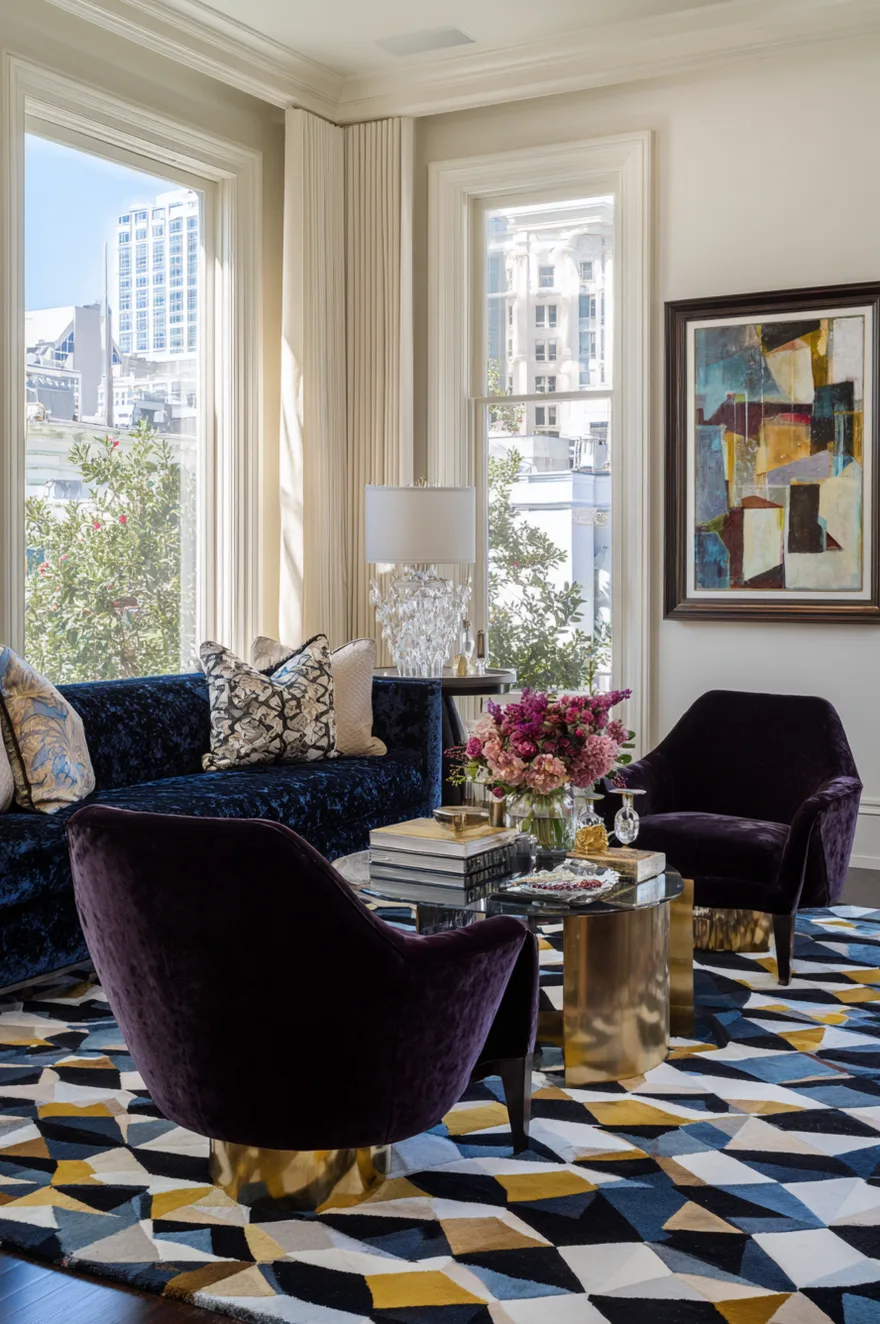
I cannot stress this enough – the rug is where you start. A geometric rug in the right pattern sets the entire art deco tone without you touching anything else in the room. Chevrons, hexagons, Greek key borders – these patterns immediately signal the style.
Scale matters more than you think. I learned this after buying a 5×7 geometric rug that just floated awkwardly in my living room. Go bigger. An 8×10 lets your furniture sit on it properly and actually anchors the space instead of looking like an afterthought.
Color-wise, I love black and white for maximum drama, but navy and cream or charcoal and gold work if you want something slightly softer. Just make sure there’s contrast – low-contrast geometric patterns lose all their impact.
2. Rich Velvet Seating That Feels Like A Hug
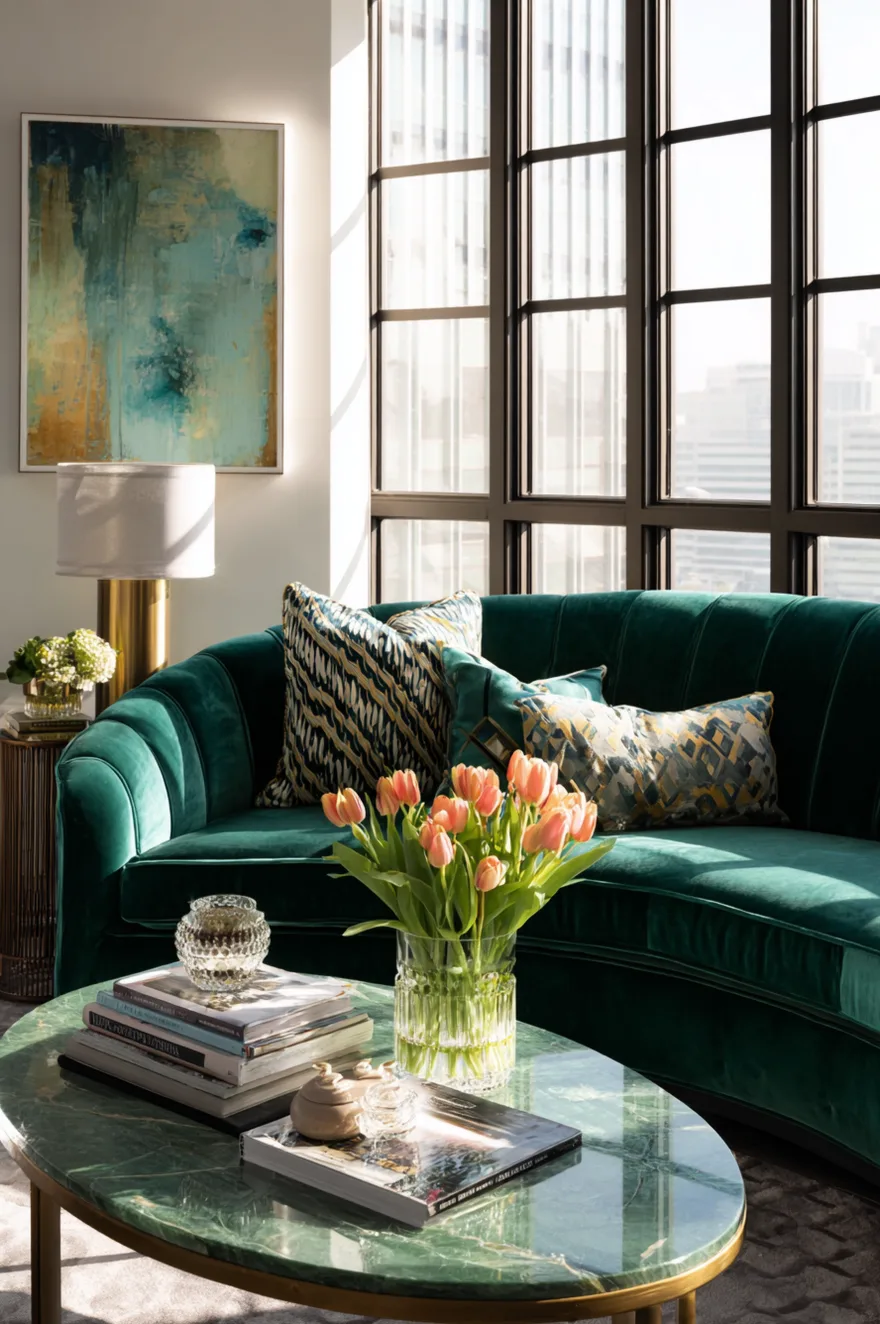
There’s a reason velvet shows up in every single art deco space – it photographs like a dream and it feels incredible to sit on. I’m talking deep jewel tones here. Forest green, sapphire, burgundy, burnt orange. Colors that feel saturated and intentional.
Channel tufting is peak art deco if you can find it. That vertical ribbed look on the back of a sofa or chair is so distinctly 1920s. But even a simple curved velvet armchair without any tufting will get you there.
Here’s what I actually did – I bought two emerald green velvet dining chairs from Target (under $200 each) and use them as accent chairs in the living room. They’re not vintage, they’re not expensive, but they completely shifted the vibe of the space.
3. High-Gloss Surfaces That Reflect Light Back Into The Room
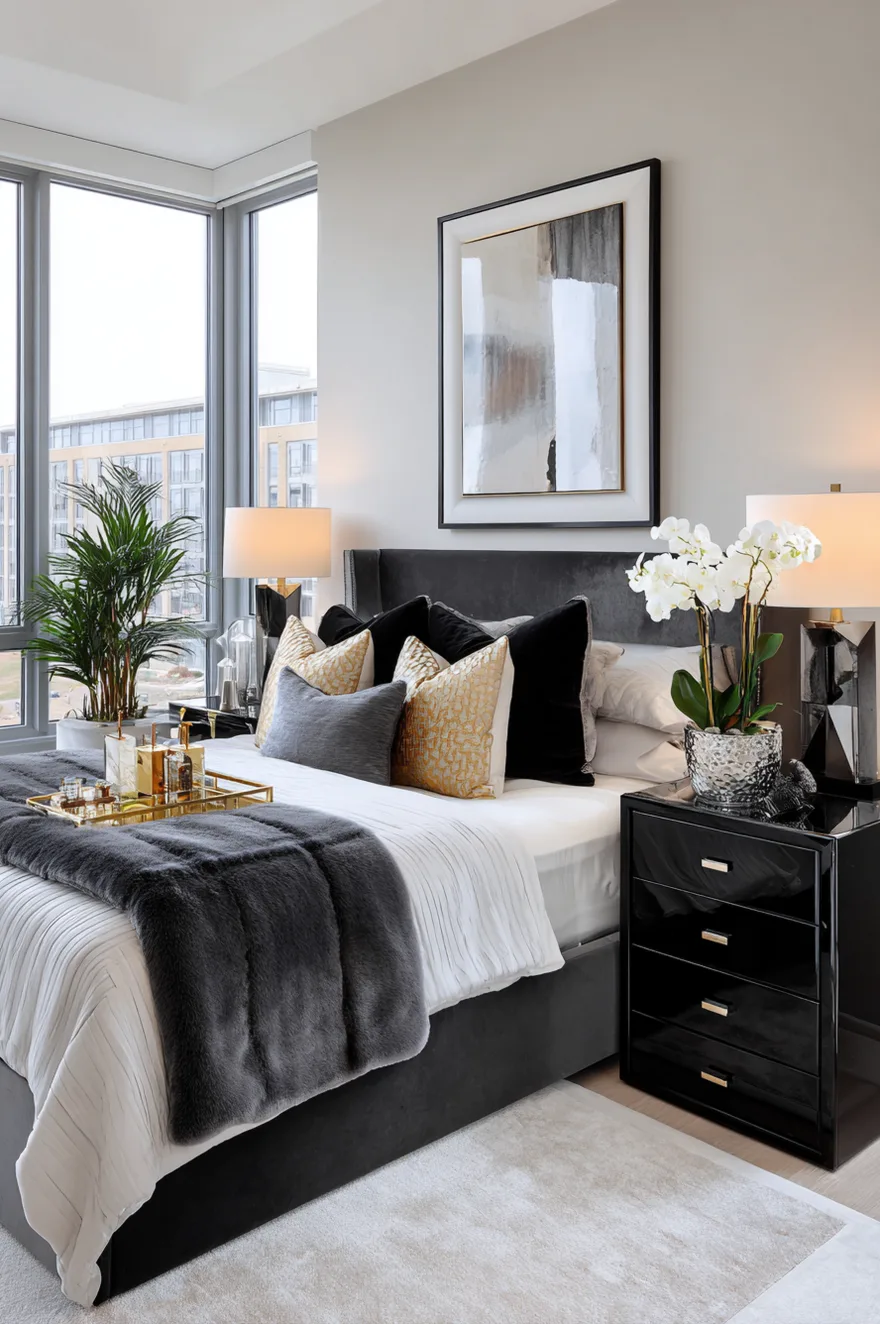
Shiny black lacquer is intimidating until you see how much depth it adds. I’m not saying paint everything glossy black, but one or two lacquered pieces make everything around them look more expensive.
Coffee tables are the easiest place to start. A round lacquered coffee table with a brass base becomes an instant focal point. Nightstands work too – the reflection from the lamps at night is honestly really pretty.
If you’re going the DIY route, invest in good paint. I used Benjamin Moore Advance in high-gloss black on an old dresser and it took four coats to get that glassy finish, but it was worth it. Sand between coats and use a foam roller to avoid brush marks.
4. Furniture Arrangements That Mirror Each Other Perfectly
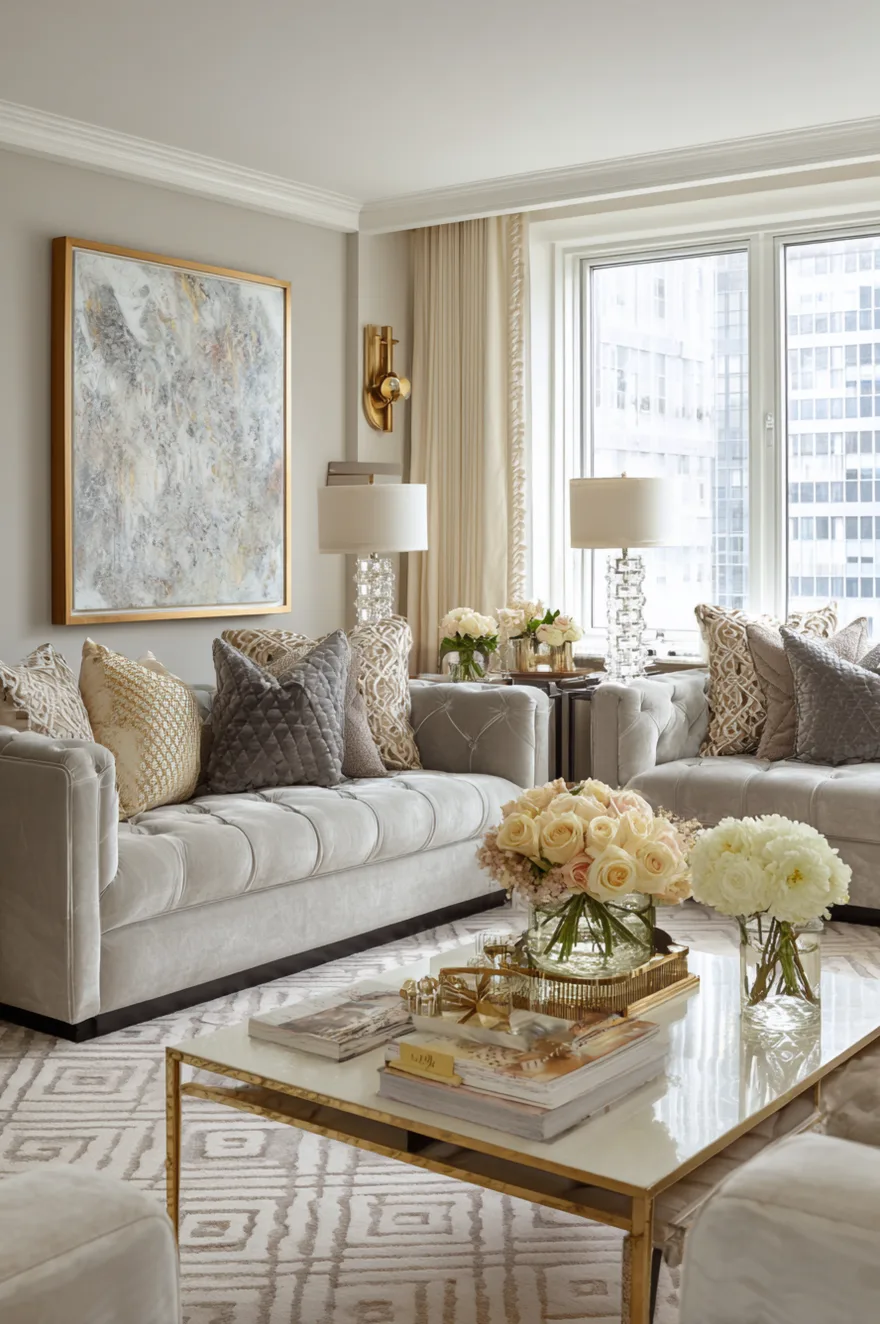
Art deco rooms are almost aggressively symmetrical, and once you notice it, you can’t unsee it. Two identical lamps flanking a sofa. Matching nightstands on either side of the bed. A pair of chairs facing each other across a coffee table.
This is the opposite of how we usually decorate now, where everything is casual and asymmetrical. That formality is what makes it feel special and pulled-together.
I rearranged our living room last month to be perfectly centered on the window, with the sofa directly in the middle and matching floor lamps on either side. It felt weirdly formal at first, but now I love how intentional it looks. Guests always comment on it.
5. Swapping Hardware For Instant Glamour
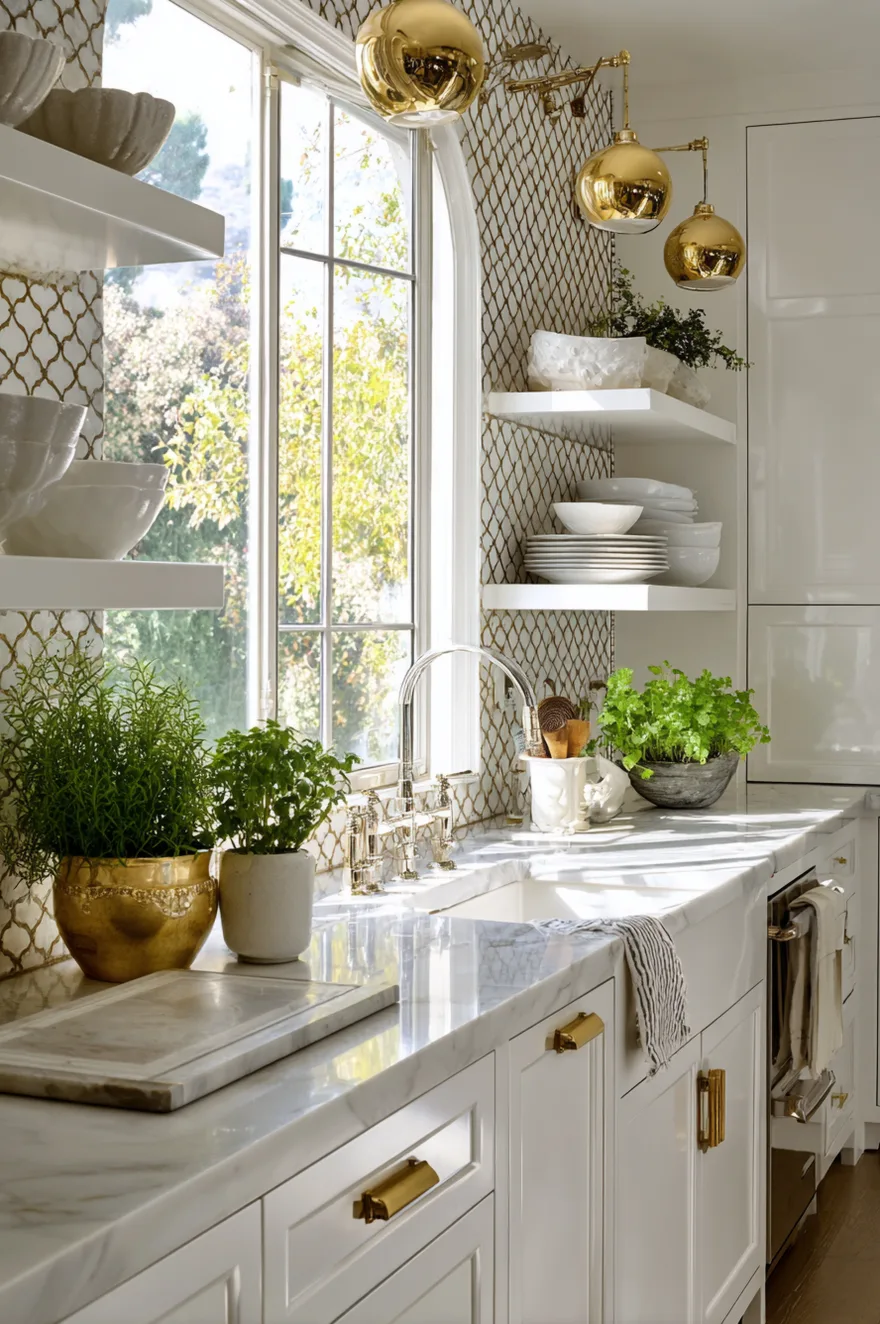
Okay this is my favorite budget hack – new hardware changes everything and takes like twenty minutes. Brass cup pulls on kitchen cabinets, chrome knobs on bathroom vanities, oversized brass pulls on bedroom dressers.
The key is weight. Pick up the hardware in the store before you buy it. If it feels light and hollow, put it back. Art deco hardware should feel substantial and well-made. I order most of mine from Rejuvenation or Schoolhouse Electric because the quality is consistent.
Don’t mix metals within the same room unless you really know what you’re doing. Pick brass or pick chrome for each space and stick with it. The consistency is what makes it look cohesive instead of chaotic.
6. Reflective Accent Tables That Double Your Light
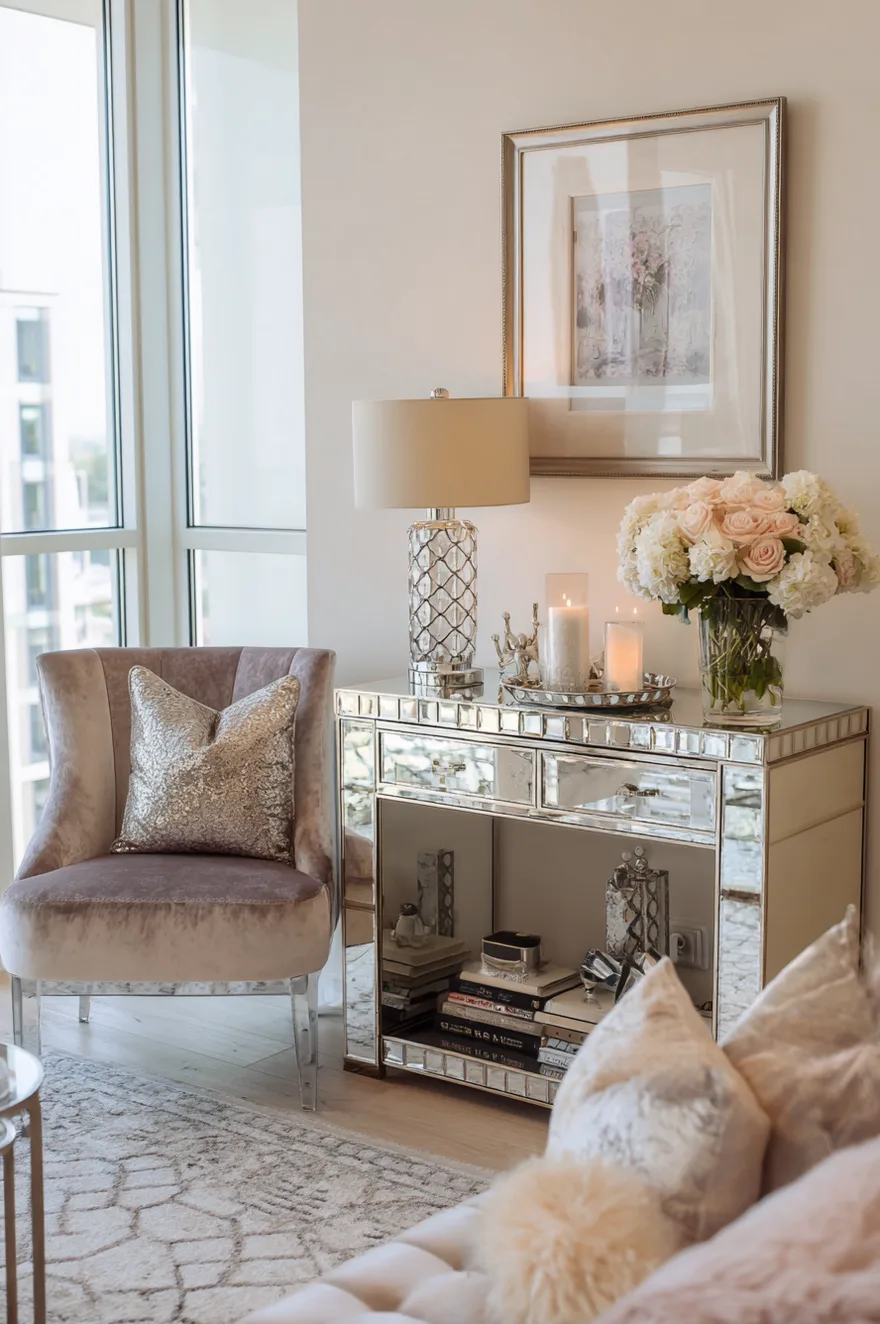
Mirrored furniture gets a bad rap, but used sparingly it’s so effective. A mirrored side table next to your sofa reflects the lamp and makes the whole corner feel brighter. A mirrored console in the entryway bounces light from the window back into the space.
I would not do a mirrored coffee table – it feels unstable and shows every fingerprint. But side tables, nightstands, or a bar cart? Perfect.
Keep a microfiber cloth nearby and wipe them down every few days. Dusty mirrors look sad and defeat the whole purpose.
7. Light Fixtures That Look Like Art Pieces
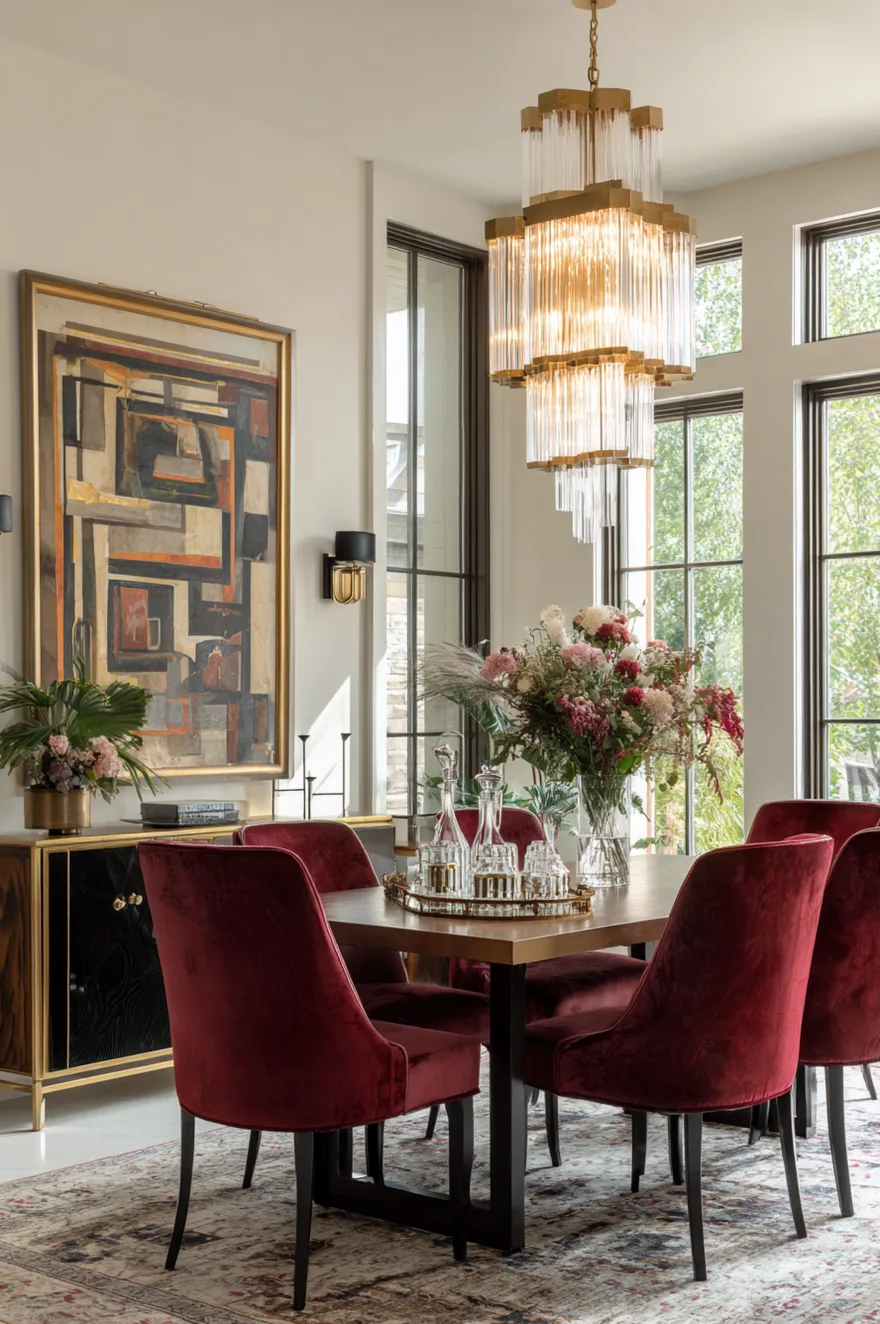
Art deco lighting is where you can go bold without it being permanent. A tiered brass chandelier, a geometric pendant, a sconce with milk glass shades – these fixtures are sculptural enough to be the main event.
I hung a three-tier brass chandelier over our dining table last year and it is hands-down the best design decision I’ve made. It’s dramatic without being over-the-top, and the warm light at night makes everything look better.
Avoid anything with crystals or traditional candelabra shapes – that’s a different vibe entirely. You want clean geometric lines and warm metallic finishes.
8. Wood Pieces With Unexpected Pattern Details
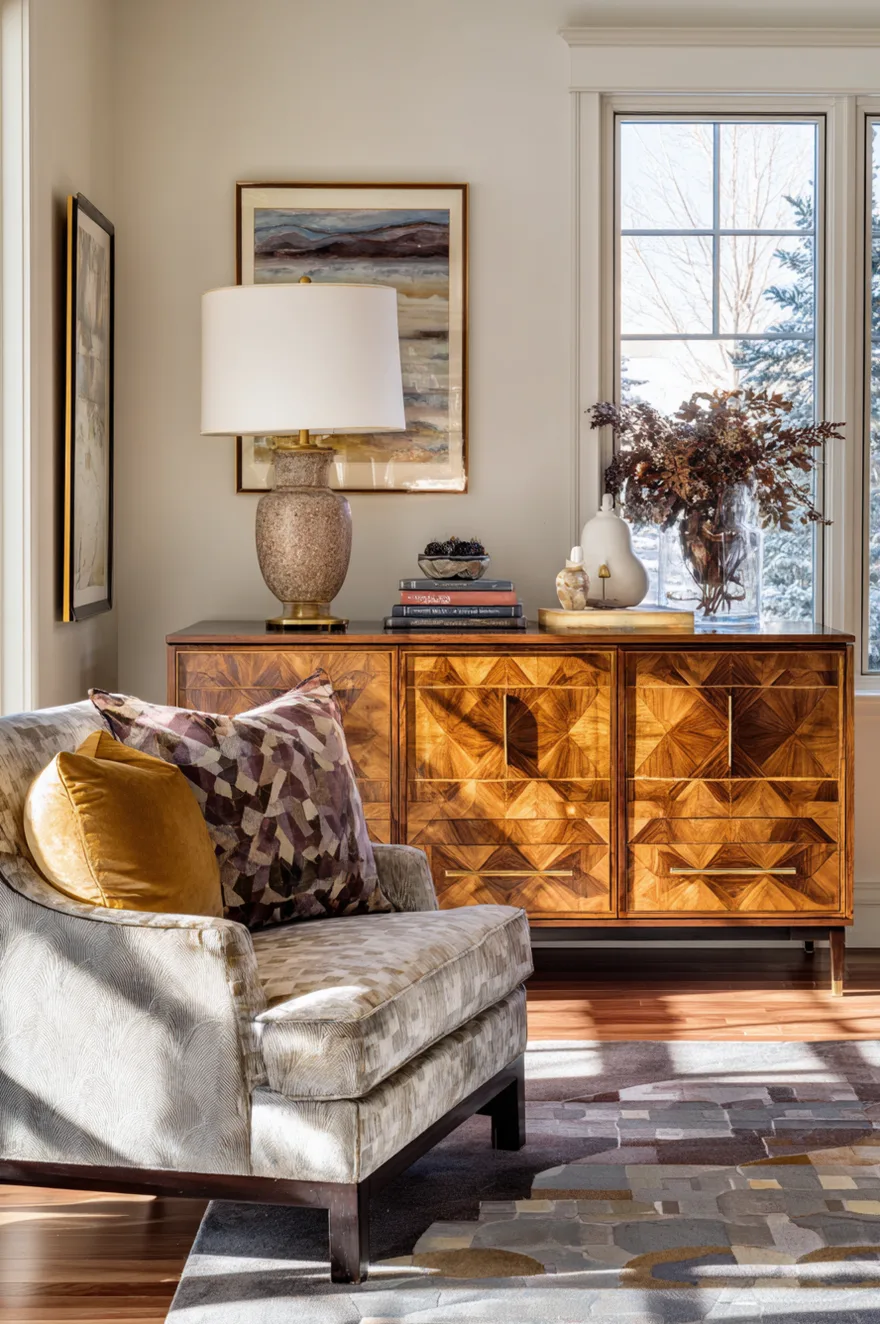
This is where you find those special vintage or vintage-inspired pieces that make people ask where you got them. Credenzas with geometric inlay work, side tables with contrasting wood veneers, headboards with sunburst patterns built into the wood itself.
The inlay is usually lighter wood against darker wood – maple against walnut, or brass inlay against rosewood. It catches the light and creates this subtle pattern that feels way more interesting than plain furniture.
I found a 1940s waterfall dresser on Facebook Marketplace for $150 that has the most beautiful wood grain and curved edges. It needed new hardware (brass, obviously) but otherwise it was perfect. Estate sales and vintage shops are where you find this stuff.
9. High-Contrast Black and White Everywhere
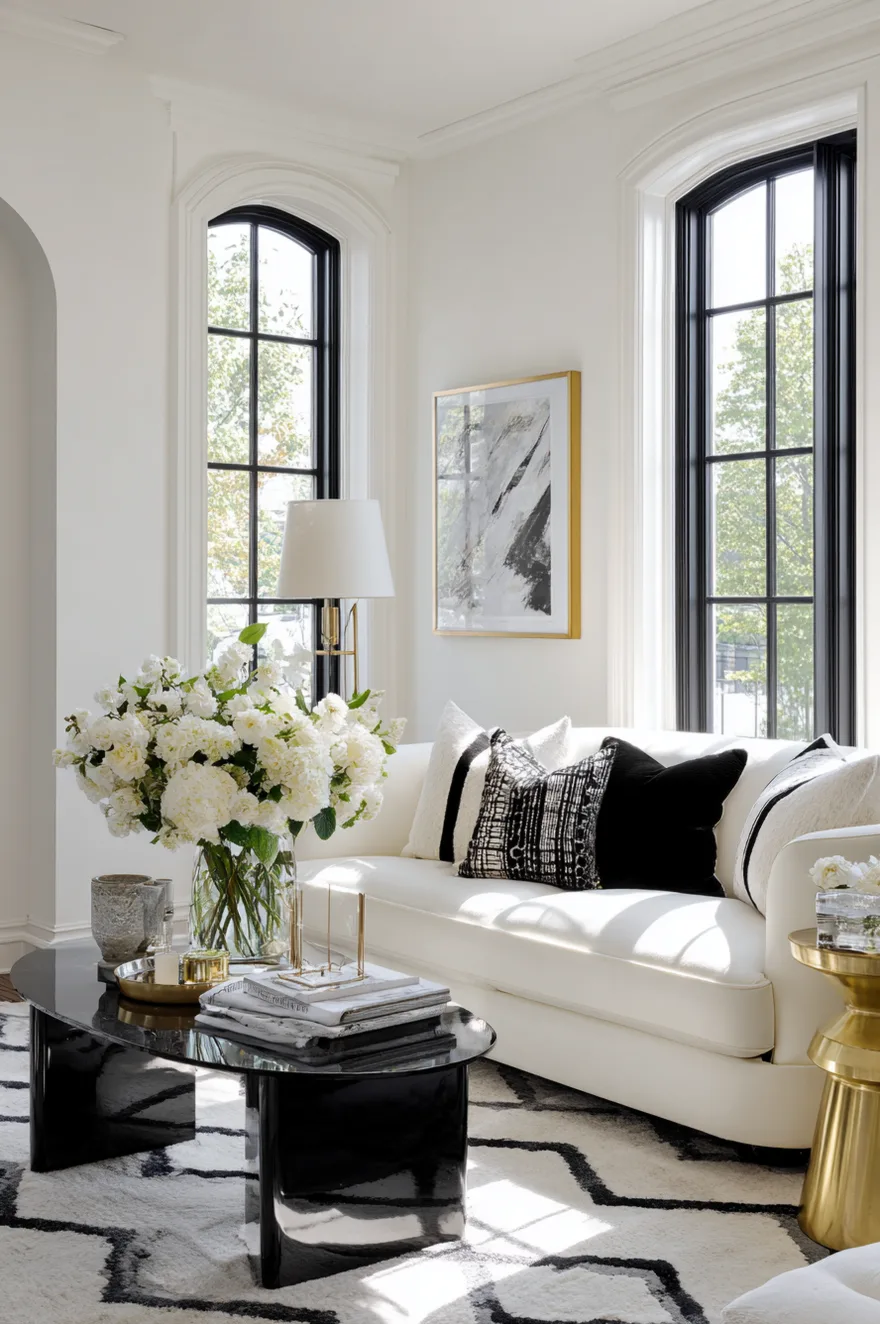
If you want instant drama, go black and white. Not gray – actual black and actual white with nothing wishy-washy in between. Black window trim against white walls. A black and white striped runner. Black furniture on a white rug.
I painted all our interior doors black last year and it was shockingly transformative. The contrast makes the white walls look crisper and the whole house feels more defined.
Soften it with brass or gold accents so it doesn’t feel too stark. A brass picture frame on a black console, gold drawer pulls on white cabinets – the warm metal makes the black and white livable instead of cold.
10. Plush Bedroom Layers That Balance The Hard Edges
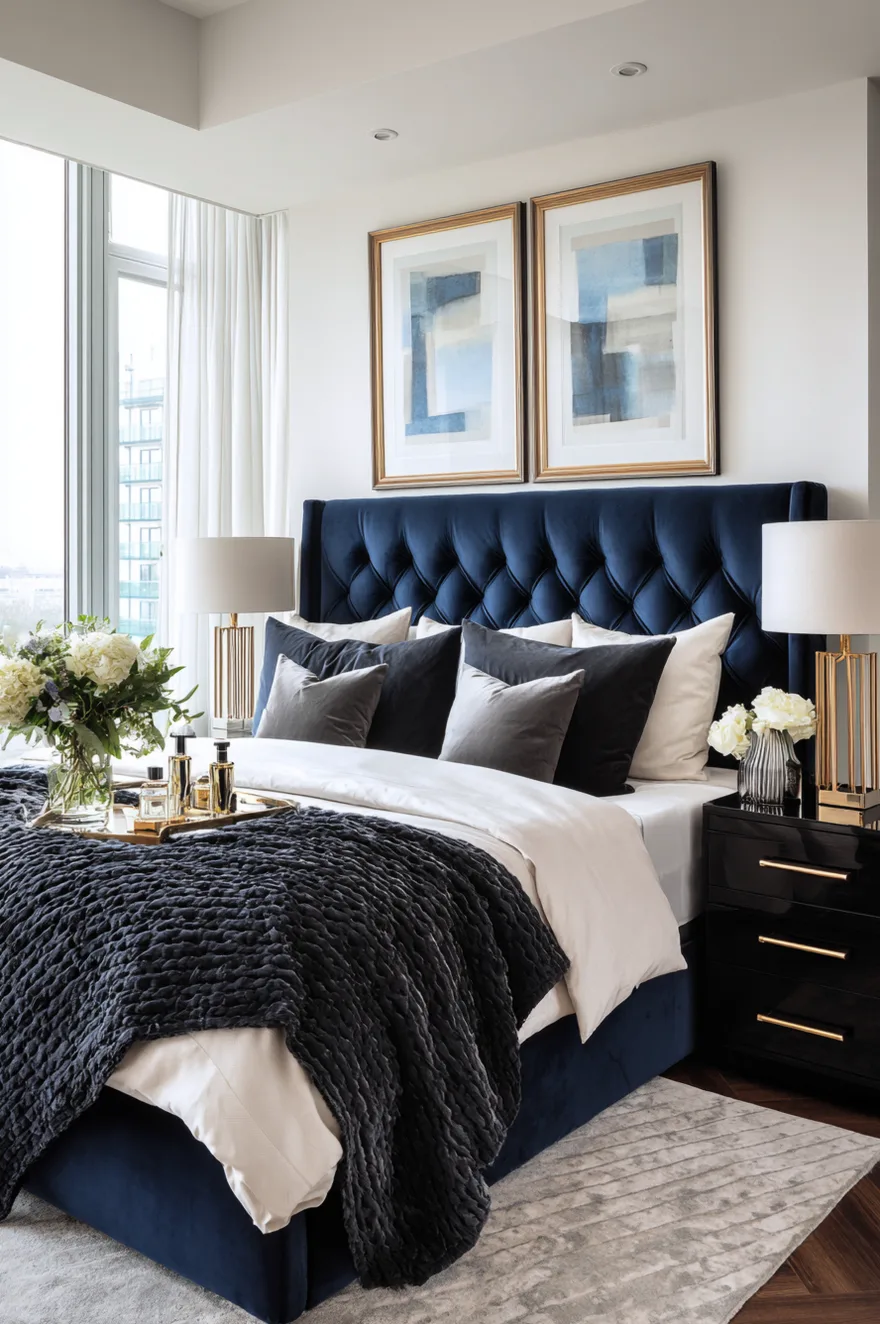
An art deco interior bedroom can easily feel too formal if you don’t soften it with texture. I pile on the layers – a velvet headboard, crisp white sheets, a chunky knit throw at the foot of the bed, a sheepskin rug on the floor.
Keep the nightstands and lamps symmetrical, but let the bedding be a little undone. Art deco doesn’t have to mean uptight.
I also love a low platform bed for this style. It keeps the sightlines low and makes the room feel more spacious. Add a velvet bench at the foot if you have space – it’s functional and looks expensive.
11. Round Coffee Tables That Break Up All The Angles
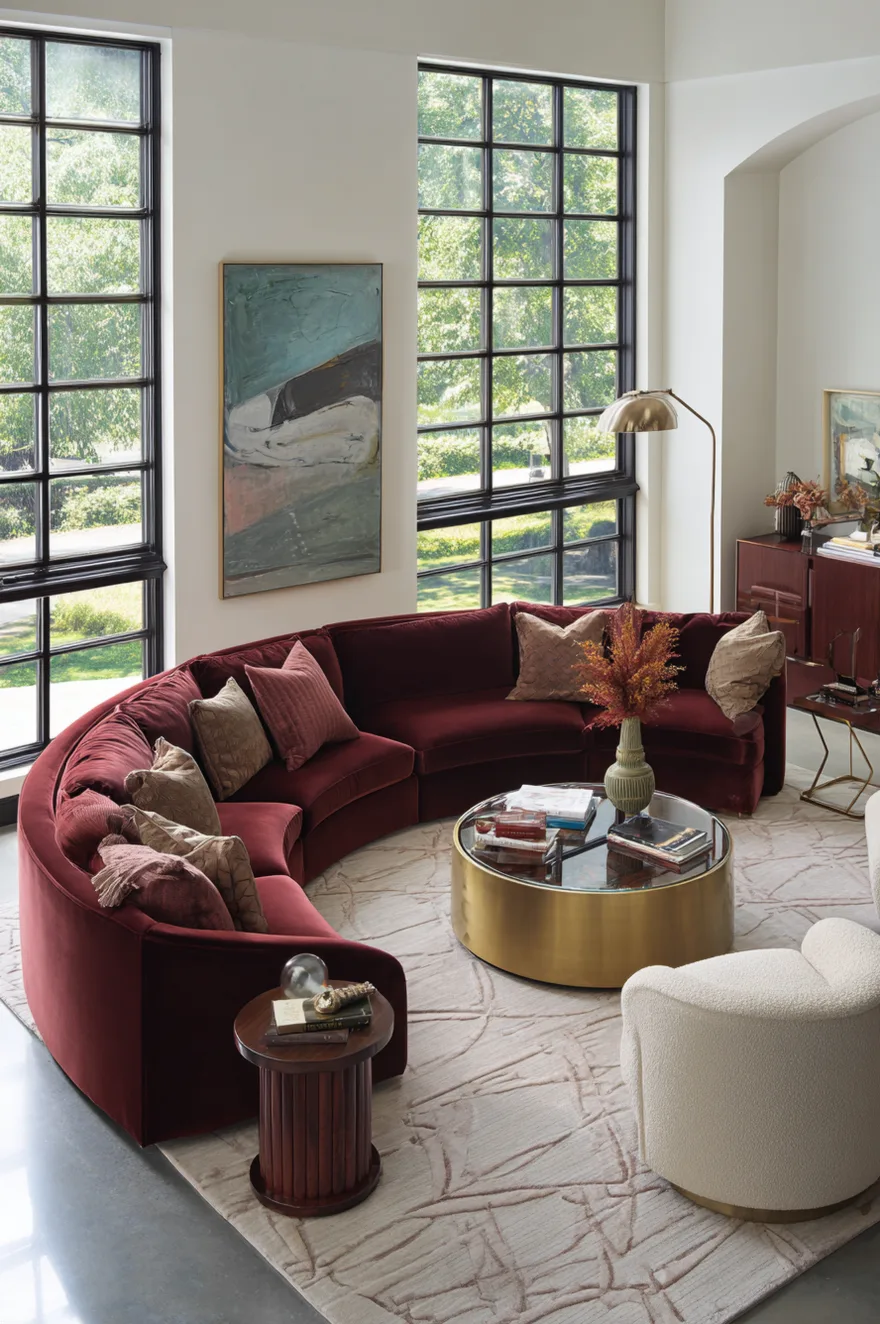
With all the geometric patterns and hard lines happening in art deco spaces, you need some curves to balance it out. Round coffee tables, curved sofas, barrel chairs – these softer shapes keep the room from feeling too rigid.
I switched from a rectangular coffee table to a round one last year and it completely changed how the room flows. People can move around it easier, and visually it’s a relief from all the sharp corners.
Pair a round marble-top table with a brass or chrome base and you’ve nailed the art deco vibe in one piece.
12. Stone Surfaces That Add Weight and Luxury
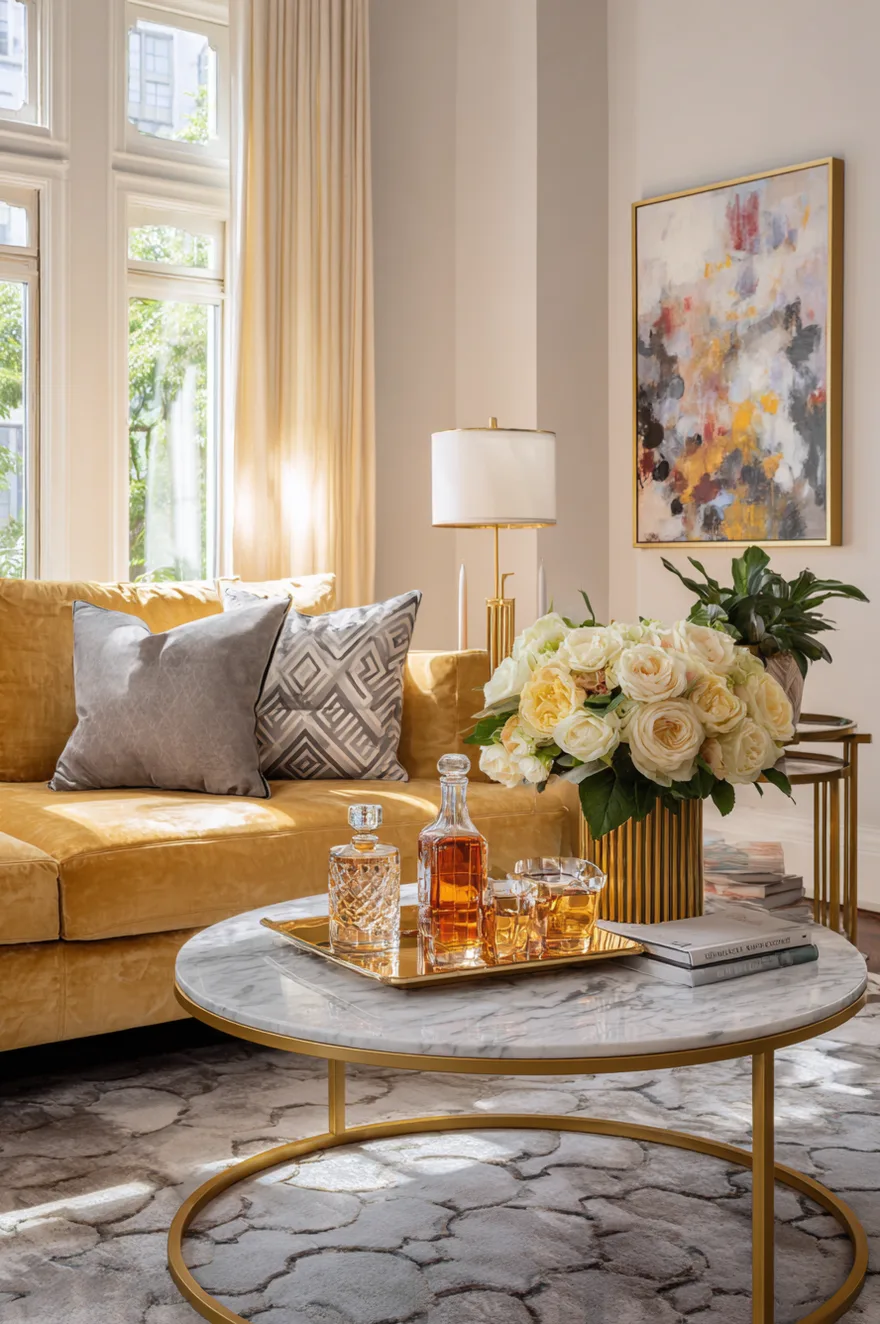
Marble is the obvious choice, but it’s not the only one. I’ve seen art deco spaces with onyx side tables, granite countertops, even polished concrete. The point is having a natural stone surface that feels substantial and expensive.
White marble with gray veining is classic and works everywhere. But if you want something moodier, green marble or black marble with gold veining is so striking.
I use marble in small doses – a marble tray on the dresser, a marble cheese board on the bar cart, marble coasters on the coffee table. You get the luxe material without the massive price tag of redoing all your countertops.
13. Walls With Texture Instead Of Pattern
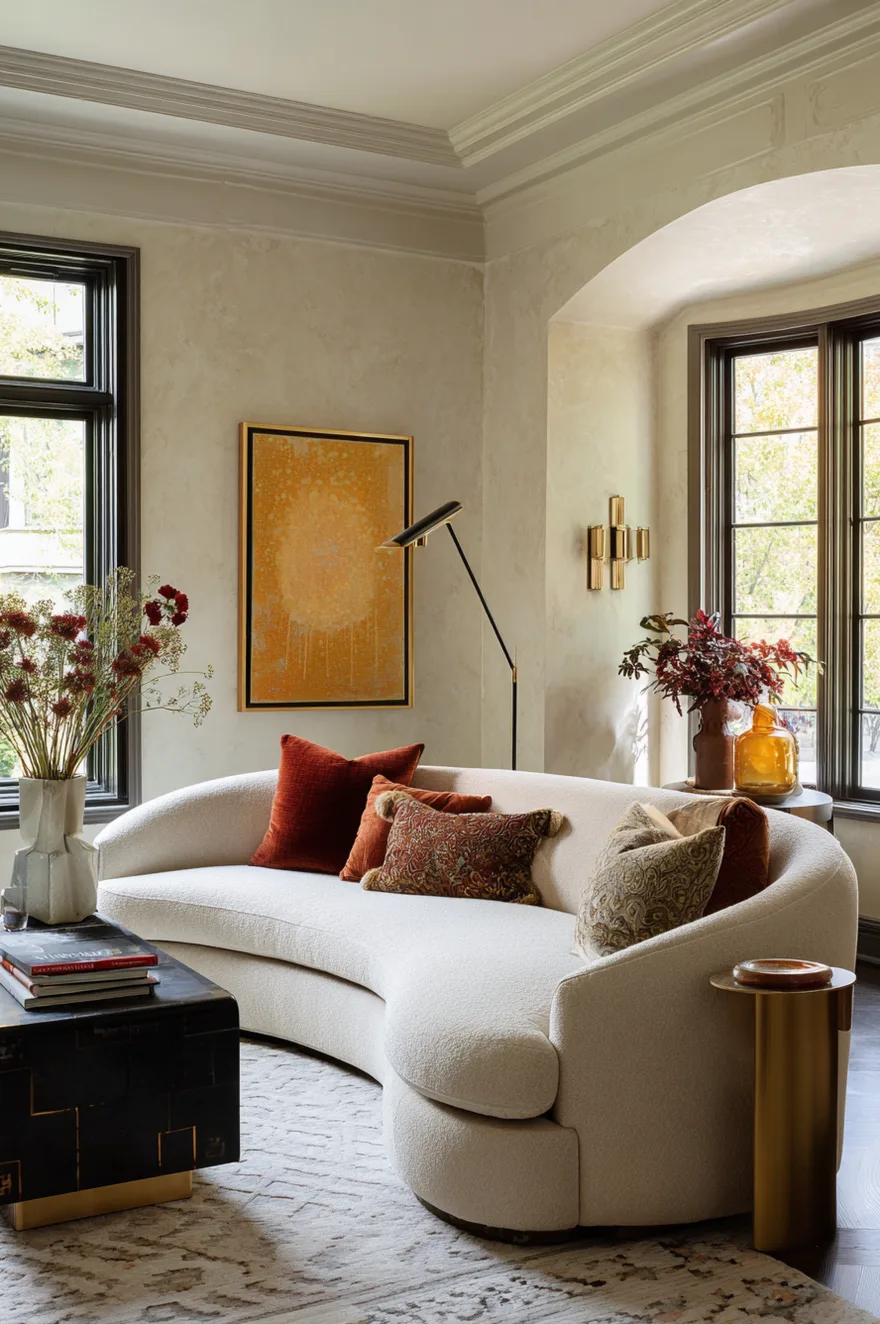
If wallpaper isn’t your thing, textured walls still give you visual interest. I had a friend’s dad (who used to do plastering) come over and do a Venetian plaster technique on our dining room walls, and the subtle texture catches light all day long in the most beautiful way.
You can also do a faux stucco finish with joint compound and a trowel – there are a million YouTube tutorials. It’s messy but totally doable as a DIY project.
Paint the trim in high-gloss white to contrast with the matte textured walls. The combination is very art deco and adds architectural detail even if your house is basic.
14. A Styled Bar Cart That’s Always Ready
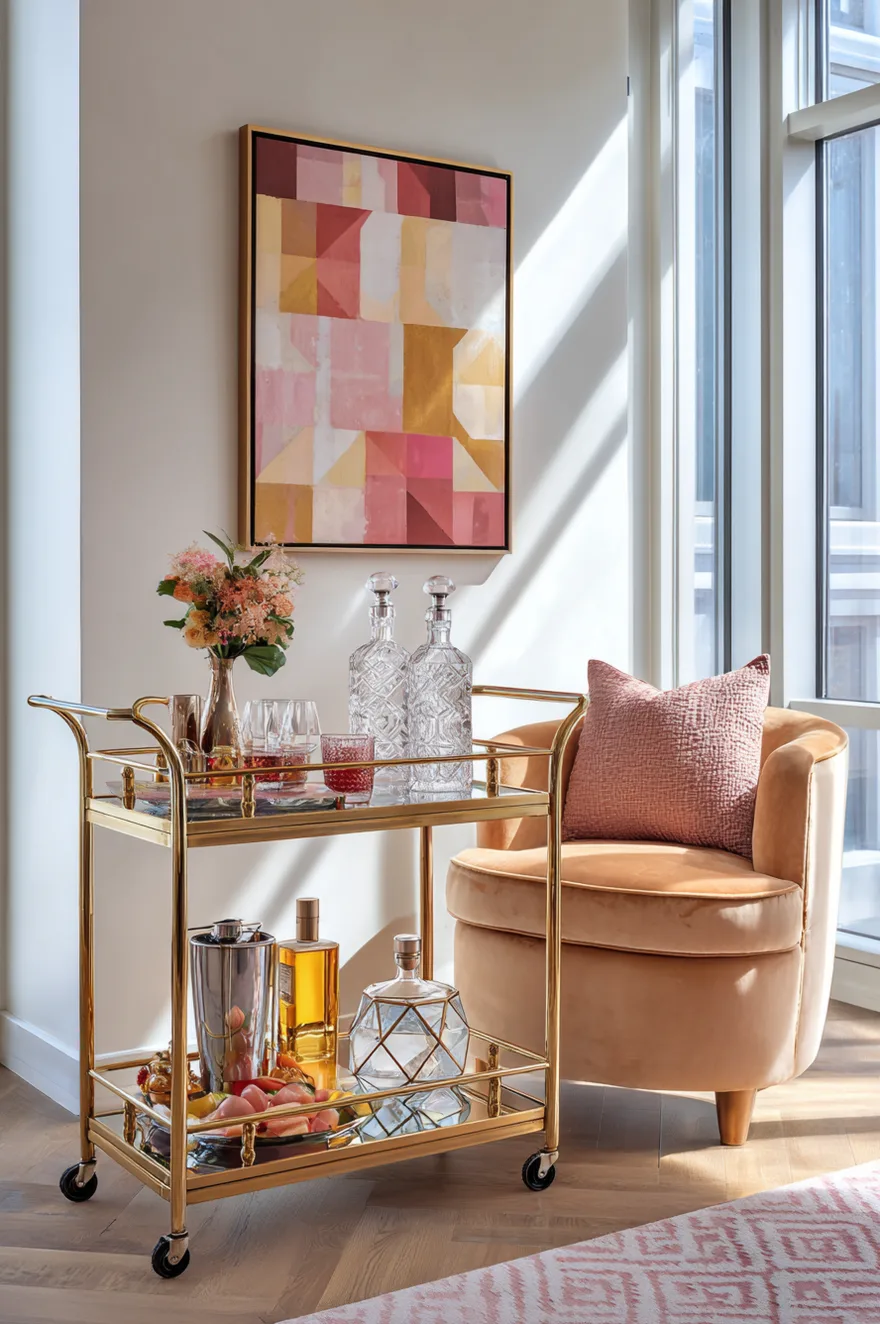
I love a good bar cart because it’s both decorative and functional. Get one with a brass or chrome frame and glass shelves – the transparency keeps it from feeling heavy in a room.
Stock it with your actual liquor bottles (the pretty ones), a cocktail shaker, some interesting glassware, maybe a small plant or a decorative object. It should look styled but also like you actually use it.
Mine lives in the corner of our living room near the record player, and I refresh what’s on it every few weeks so it doesn’t get stale. Right now I have a vintage brass ice bucket and some etched crystal glasses I found at a thrift store.
15. Mixing Old and New Without It Looking Random
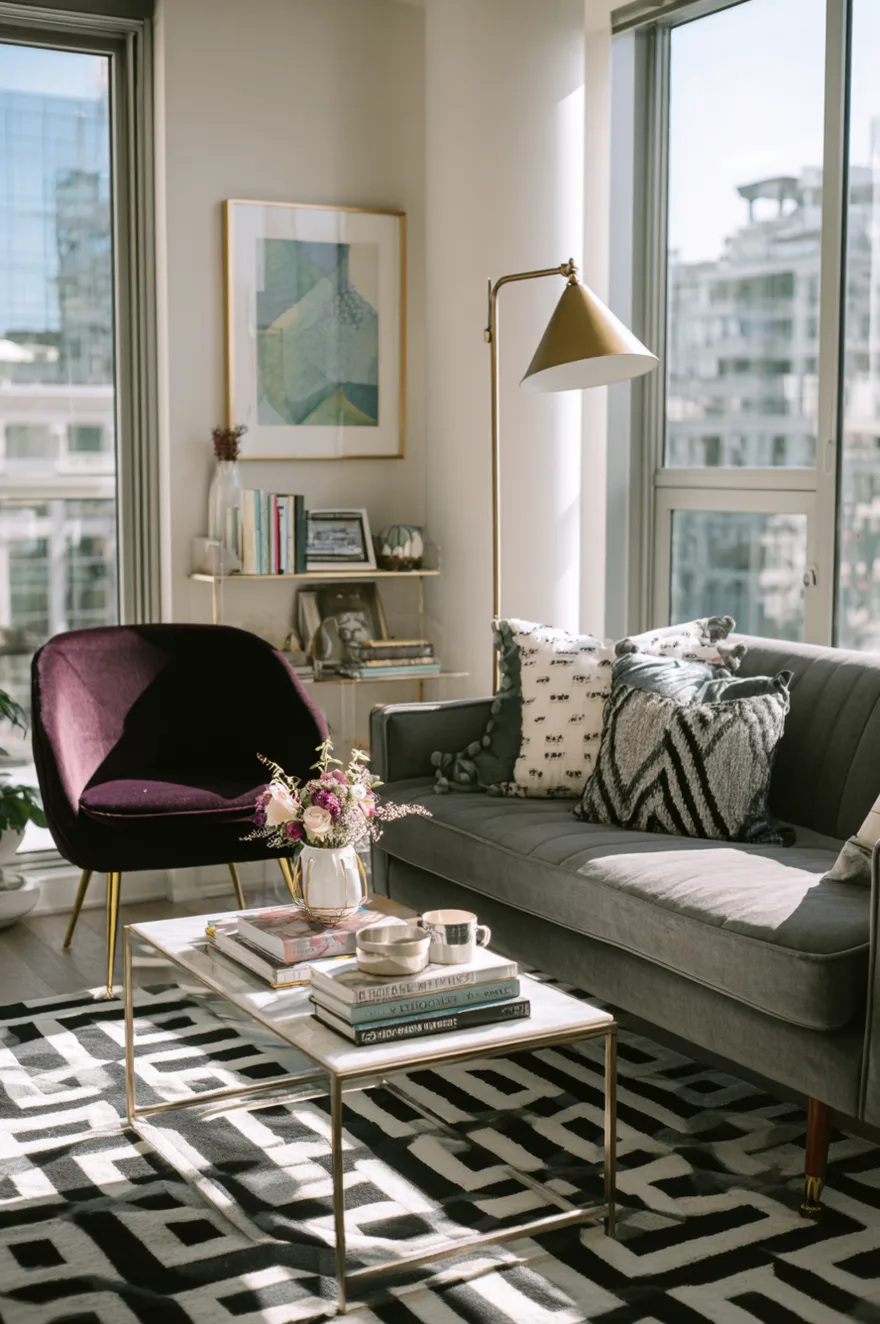
You don’t need all vintage furniture to pull this off. In fact, some modern pieces mixed in keep it from feeling like a museum. A vintage brass chandelier over a modern dining table. A sleek contemporary sofa with art deco accent chairs.
The key is committing to the materials. If you’re mixing eras, the brass needs to be real brass, the marble needs to be real marble, the velvet needs to actually be velvet. Real materials read as intentional. Cheap substitutes read as confused.
I have a very modern gray sectional from Article, but I styled it with a vintage brass floor lamp, velvet pillows, and a geometric rug. The mix works because the materials are consistent even though the furniture ages aren’t.
16. Repeating Elements From Room To Room
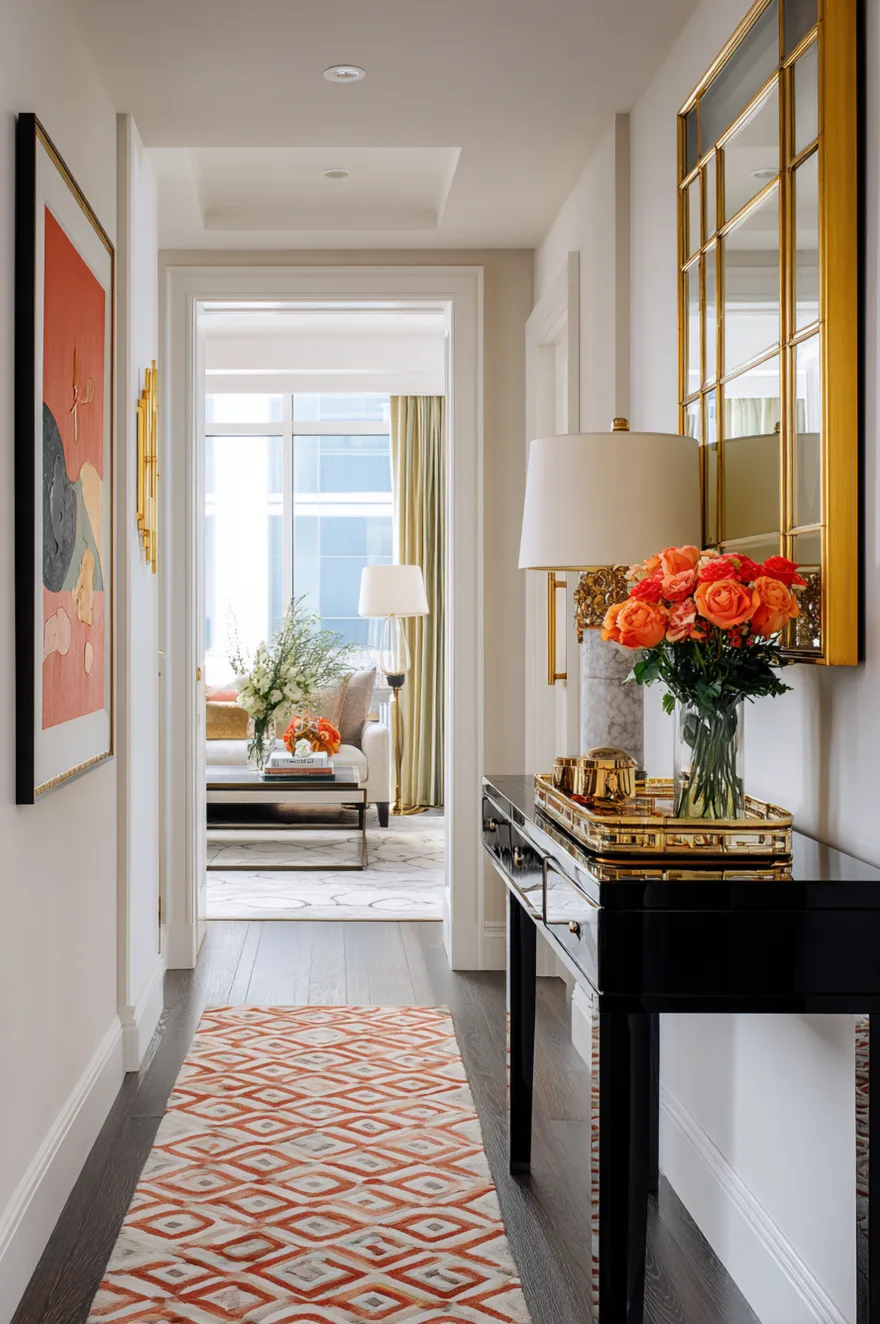
If you’re doing multiple rooms, pick a few signature elements and repeat them. I use brass hardware in every room – brass cabinet pulls in the kitchen, brass drawer pulls in the bedroom, brass towel bars in the bathroom. The repetition ties everything together.
I also repeat geometric patterns in different scales. Small hexagon tile in the bathroom, a larger hexagonal pattern in the hallway runner, hexagonal shapes in the living room artwork. It’s subtle but it creates flow.
You don’t need every room at the same intensity. Our living room is full-on art deco. Our bedroom just has hints of it. The variation keeps the house interesting.
Actually Making Art Deco Work In A Real House
Here’s what I’ve learned after a year of slowly turning our house more art deco – you don’t need to do it all at once. Start with one room, or honestly just one corner of one room. Get a geometric rug. Add a brass lamp. Swap your hardware. See how it feels.
The style is flexible enough to work with what you already own, especially if you focus on the accessories and finishes first. A velvet pillow on your existing sofa. Brass knobs on your existing dresser. A mirrored tray on your existing coffee table.
Which of these are you most excited to try? I’m always curious what resonates with people, so drop a comment and let me know what you’re thinking about tackling first!
With love,
Liv