Finding kitchen and dining chair ideas that look pulled-together without costing a fortune is genuinely hard. Most budget options read cheap, and the good-looking ones online turn out to be $400 each. This post rounds up 23 real seating ideas – from thrift flips to $60 IKEA hacks to one very specific velvet trick – covering everything from modern kitchen seating to farmhouse dining chairs to counter stools for tiny spaces.
My dining table situation was embarrassing for about two years. I had a solid oak table I loved – found it on Facebook Marketplace for $85, which still feels like a crime in the best way – and four mismatched chairs that didn’t go together at all. One was an old spindle-back. One was basically a plastic folding chair. The other two were some kind of builder-grade side chair in a finish I can only describe as “sad beige.” I kept telling myself I’d figure it out eventually. I didn’t figure it out. I just put a table runner over the whole situation and hoped nobody looked down.
Kitchen and dining chair ideas are one of those things that seem like a small decision but completely change how a room reads. The chairs are the most human part of a space – they’re what people actually sit in, pull out, push around, lean back in at 11pm with a second glass of wine. Getting them right (or interestingly wrong, in a way that looks intentional) is worth thinking about. Here are 23 ways to do it.
1. Cane-Back Dining Chairs That Steal The Show
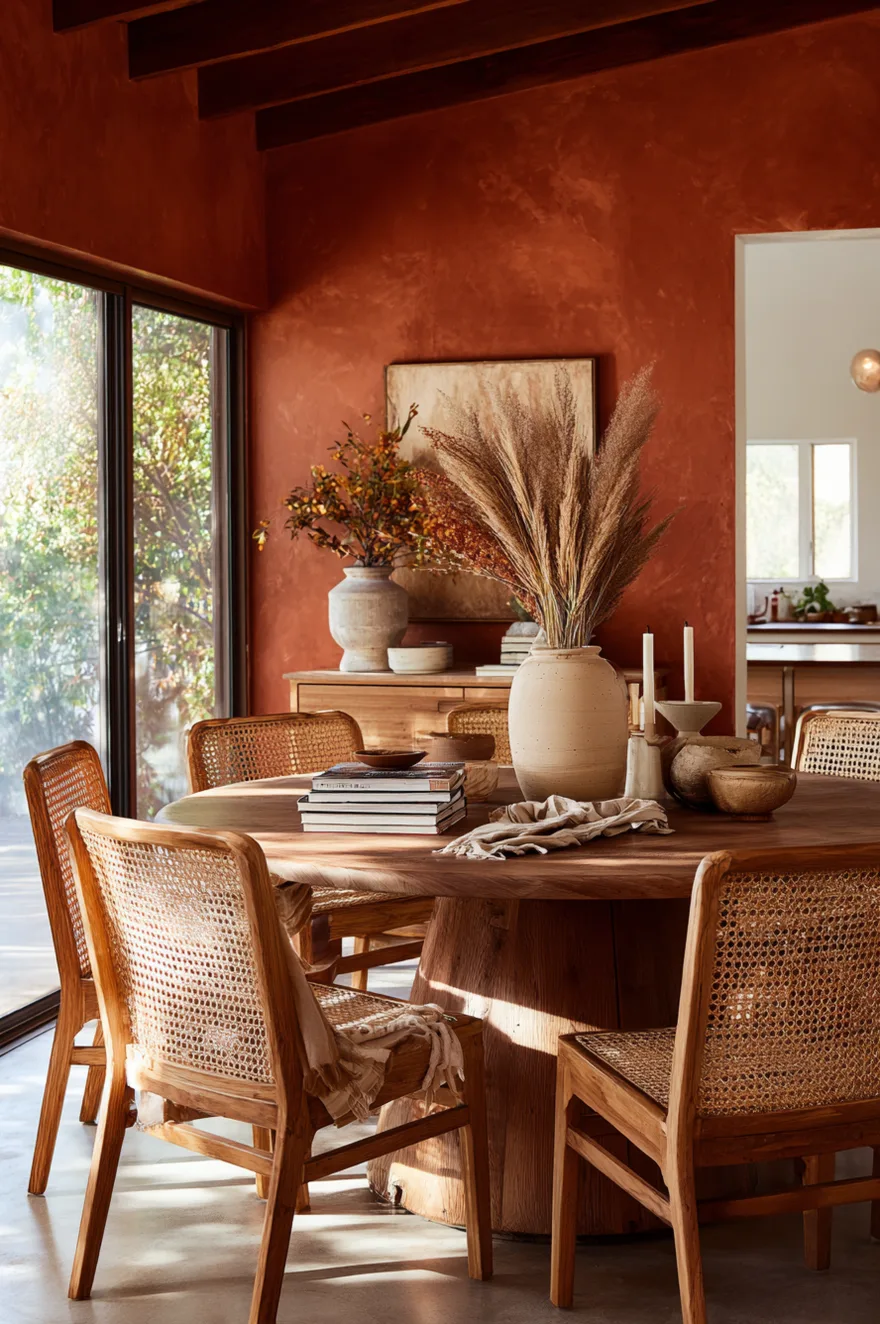
Cane-back chairs are having a real moment right now, and honestly, they deserve it. The woven texture does something that flat wood just can’t – it catches light differently throughout the day, it photographs beautifully, and it reads as expensive even when it isn’t. A honey-toned cane-back chair in front of a terracotta plaster wall is almost unfairly good-looking.
The thing people don’t always realize is that cane-back chairs work precisely because they have negative space built in. You see the wall behind them. In a smaller dining area, that visual breathability makes the room feel less crowded. Pair them with a soapstone or soapstone-look surface nearby and the whole combination – warm honey wood, rough plaster, cool matte stone – creates a layered, collected feel that looks like you’ve been curating it for years. (You haven’t. You bought two chairs from Facebook Marketplace last Thursday.)
If you’re worried about durability, look for chairs where the cane is set into a solid wood frame with a routed groove, not just stapled. The stapled version loosens and sags faster, especially in a humid climate like San Diego in late summer. Also worth knowing: replacement cane webbing is cheap and easy to find online if a panel does eventually give out. It’s a repair you can do yourself on a Sunday afternoon with a bottle of warm water and a rubber mallet. Start your search around the $150-$250 per chair range from mid-market retailers, or hunt estate sales where cane-back chairs show up constantly.
2. The Counter Stool Swap You’ll Wish You Did Sooner
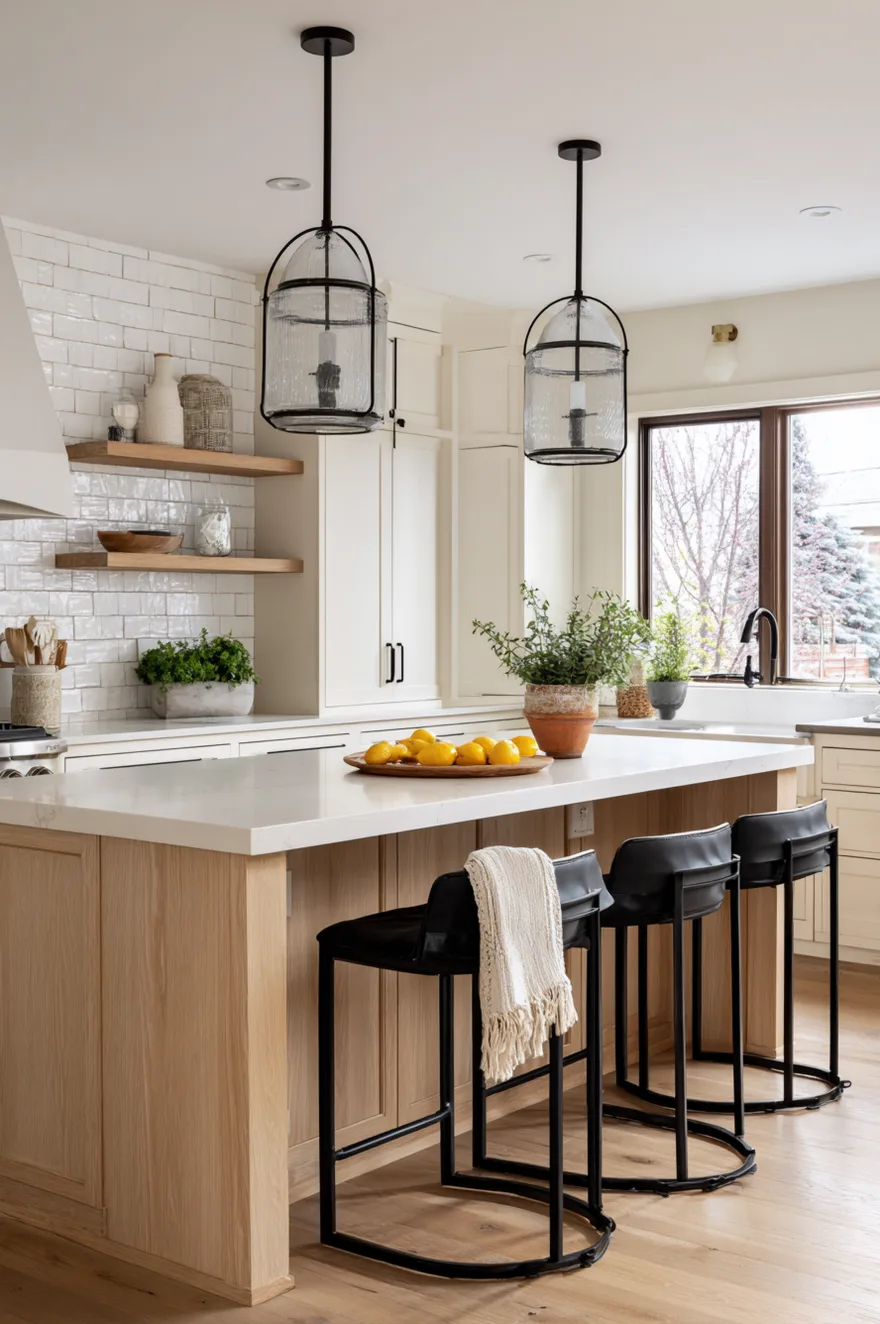
Matte black metal counter stools with a footrest ring are one of those swaps that costs maybe $200 total and makes people think you redid your whole kitchen. At a white oak island especially, the contrast is immediate – the dark metal sharpens everything, gives the space an industrial-modern edge that builder-grade kitchens desperately need.
I used to avoid black because I thought it would feel heavy. I was wrong. On a slender metal frame with a simple footrest detail, it reads as graphic rather than dark. Go for a stool with a footrest ring at roughly 9 inches from the ground – your feet will actually thank you after twenty minutes of sitting there drinking coffee.
3. Kitchen Island Bar Stools For Small Spaces
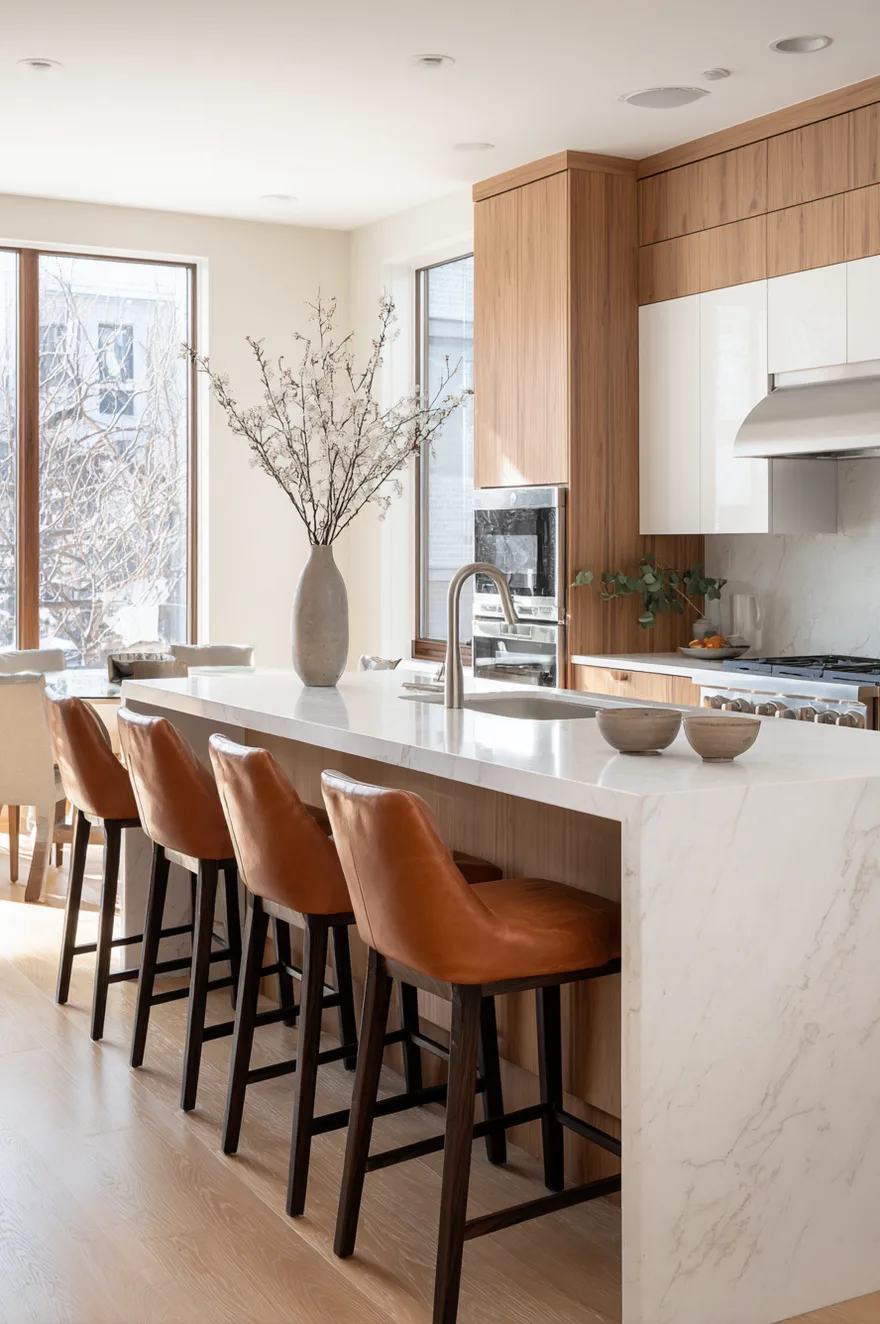
Backless swivel stools are the move for narrow kitchens. Full stop. When you have a galley layout or a waterfall island that doesn’t have much surrounding floor space, a backless stool tucks completely under the overhang when not in use. You get your walking path back. Sightlines stay open from the kitchen into whatever is beyond it – living room, back door, wherever.
Warm caramel leather (or a leather-look vinyl if you have a toddler named Nora who treats every surface as a canvas) works especially well here because it softens the hard edge of a quartz waterfall island without adding visual bulk. The swivel function is more useful than it sounds – it means you can spin to face the kitchen while someone’s cooking without pulling the stool out and blocking the aisle.
For a standard counter-height island with a 1.5-inch overhang, look for stools in the 24-inch seat height range. And check that the base diameter is narrow enough to tuck fully under your specific overhang before you buy. Measure twice, as they say.
4. What I’d Do With A Mismatched Dining Set
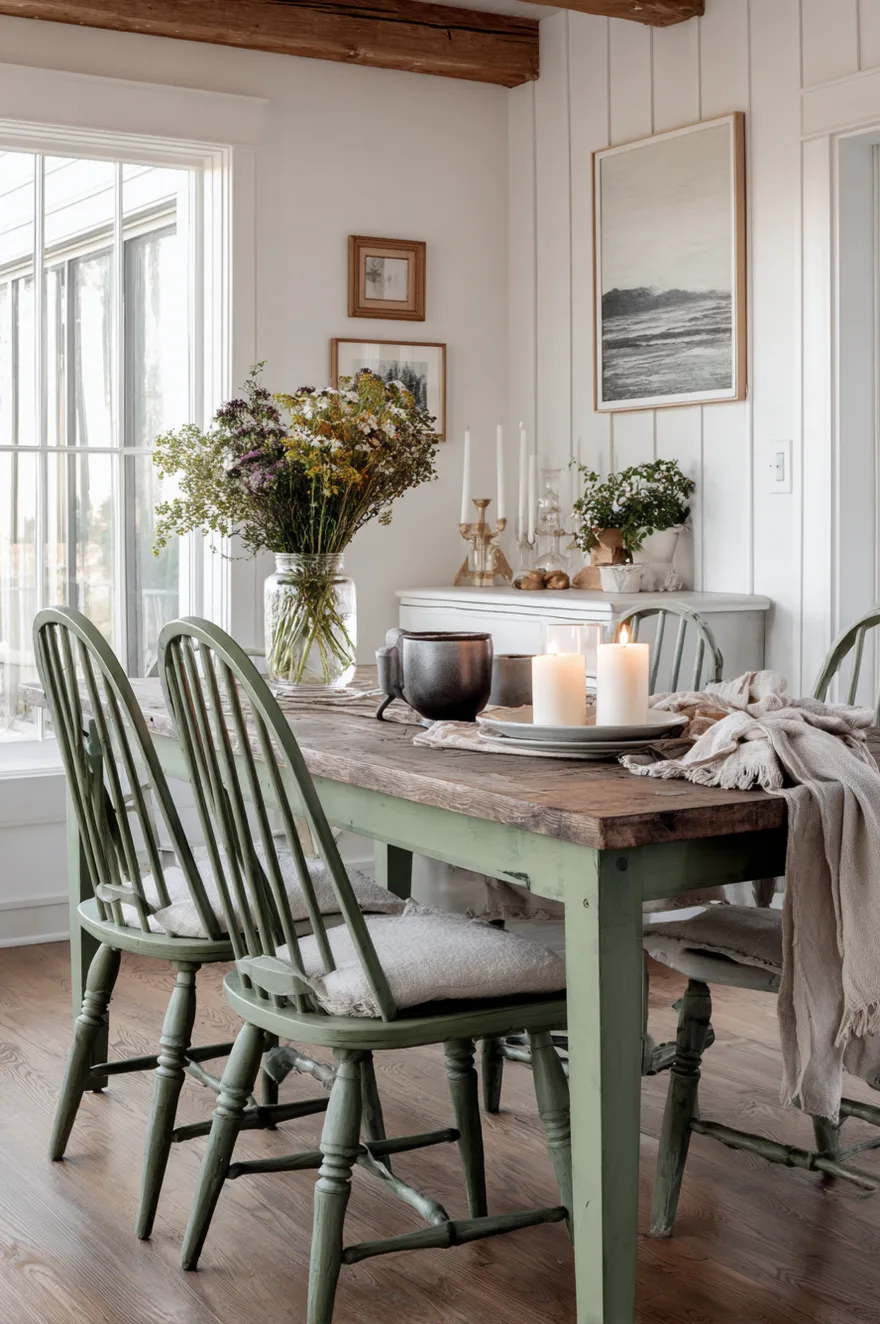
About two years ago, before I figured out my dining situation (the one I mentioned up top), I went to an estate sale in Chula Vista on a Saturday morning with Benny in the car and came home with four spindle-back chairs in completely different wood stains. They were $6 each, which felt like the right price for a problem I wasn’t sure I could solve.
The solution turned out to be obvious in retrospect: same paint, same fabric, and suddenly they’re a set. I used a muted sage green – not the bright Kelly green, more of a dusty oregano-sage – and recovered the seat pads in a natural linen. Against shiplap walls, shot at a slight angle so you can see the chair backs, the whole thing looks intentional. Collected. Like someone with taste assembled it slowly. (The whole project cost maybe $40 total including paint and fabric.)
If you go this route, don’t sand down to bare wood unless the existing finish is peeling. A light scuff with 120-grit paper, a coat of bonding primer, and two coats of chalk paint will hold well on dining chairs – they don’t take the abuse that, say, a floor does. Linen seat cushions tied with a simple bow at the back are forgiving for beginners and look genuinely good.
5. Minimalist Wooden Chairs That Age Like Fine Wine
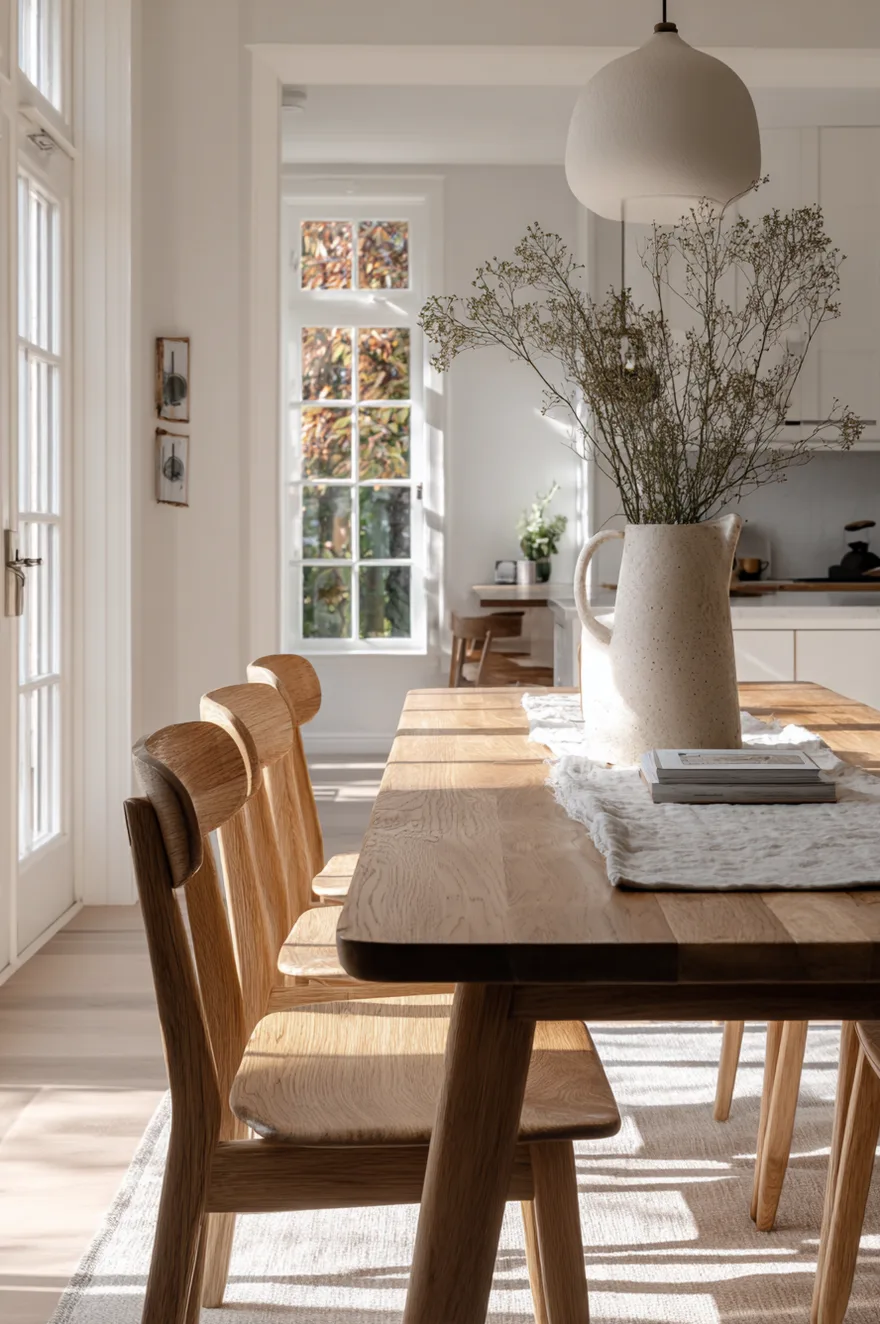
Slim Scandinavian-style dining chairs in solid oak – tapered leg, simple back, no fuss – are the thing you buy once and never replace. Against a soft white plaster wall with a butcher block table, they disappear in the best way. The room feels calm. Nothing is competing.
Here’s the honest contrast though: they are not the most comfortable chairs for a three-hour dinner. The slim seat and minimal back support are great for a quick weeknight meal and slightly less great for lingering. If your household does a lot of long dinner parties (mine does not – Nora is three and dinner ends when she’s done, which is whenever she decides), you might want a seat pad. A thin sheepskin draped over the back is the move: adds warmth, adds softness, looks like it belongs there.
6. Go Darker Than You Think
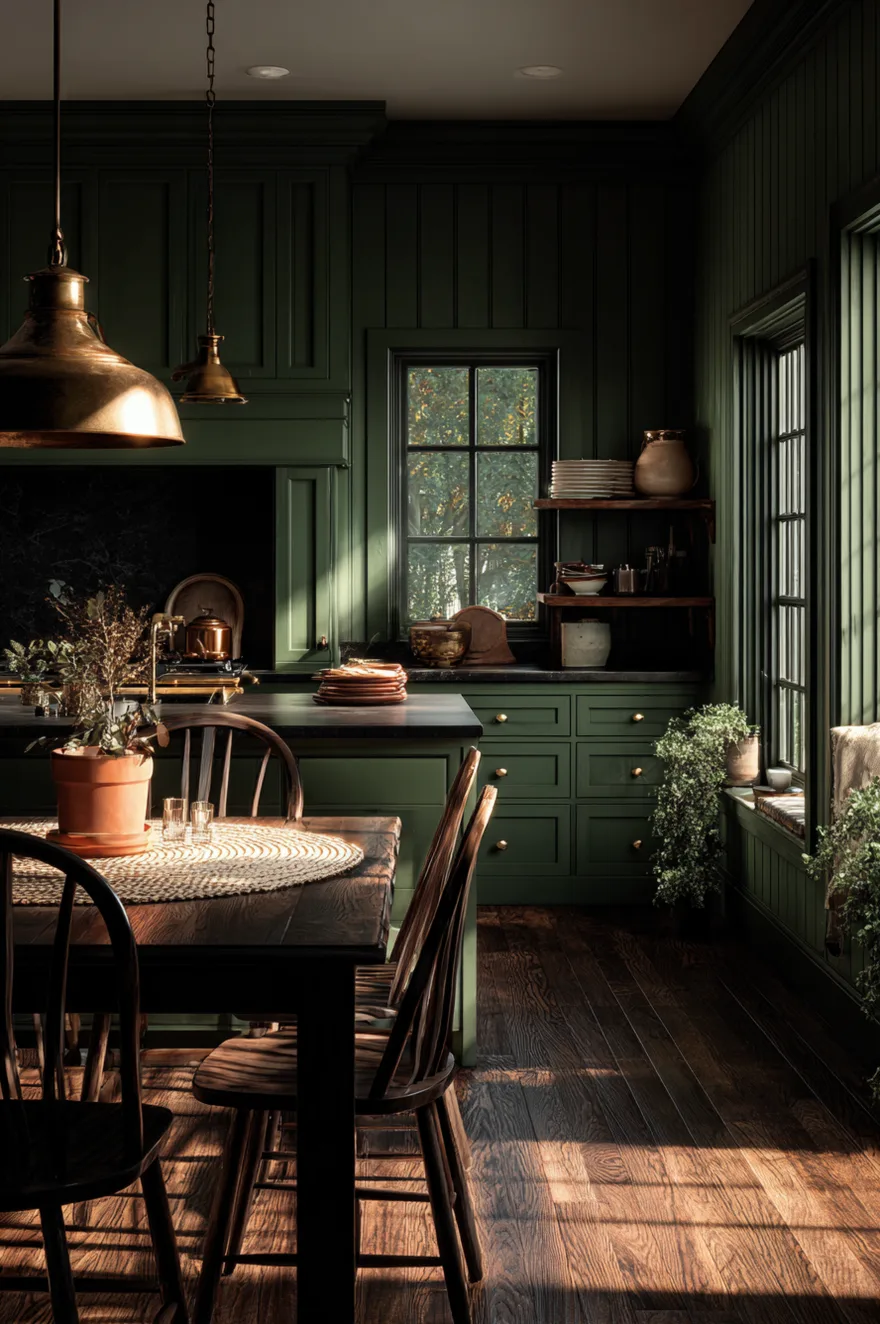
Deep walnut bentwood chairs against a forest-green shiplap wall is a combination most people don’t attempt because both elements are “dark.” But they don’t compete – the warm brown of walnut and the cool depth of green sit next to each other the way a good plaid works. Add unlacquered brass hardware on the cabinets and the whole thing glows.
The detail that makes it land is the flooring. Dark wide-plank hardwood under dark chairs on a dark wall should feel heavy, but the warm undertone of the walnut runs through all three layers and reads as rich rather than oppressive. If your floors are lighter, the same chair-and-wall combination still works – you just get more contrast. Either way, don’t add a shag rug in a busy pattern. Keep the floor simple.
7. Farmhouse Dining Chairs That Don’t Look Dated
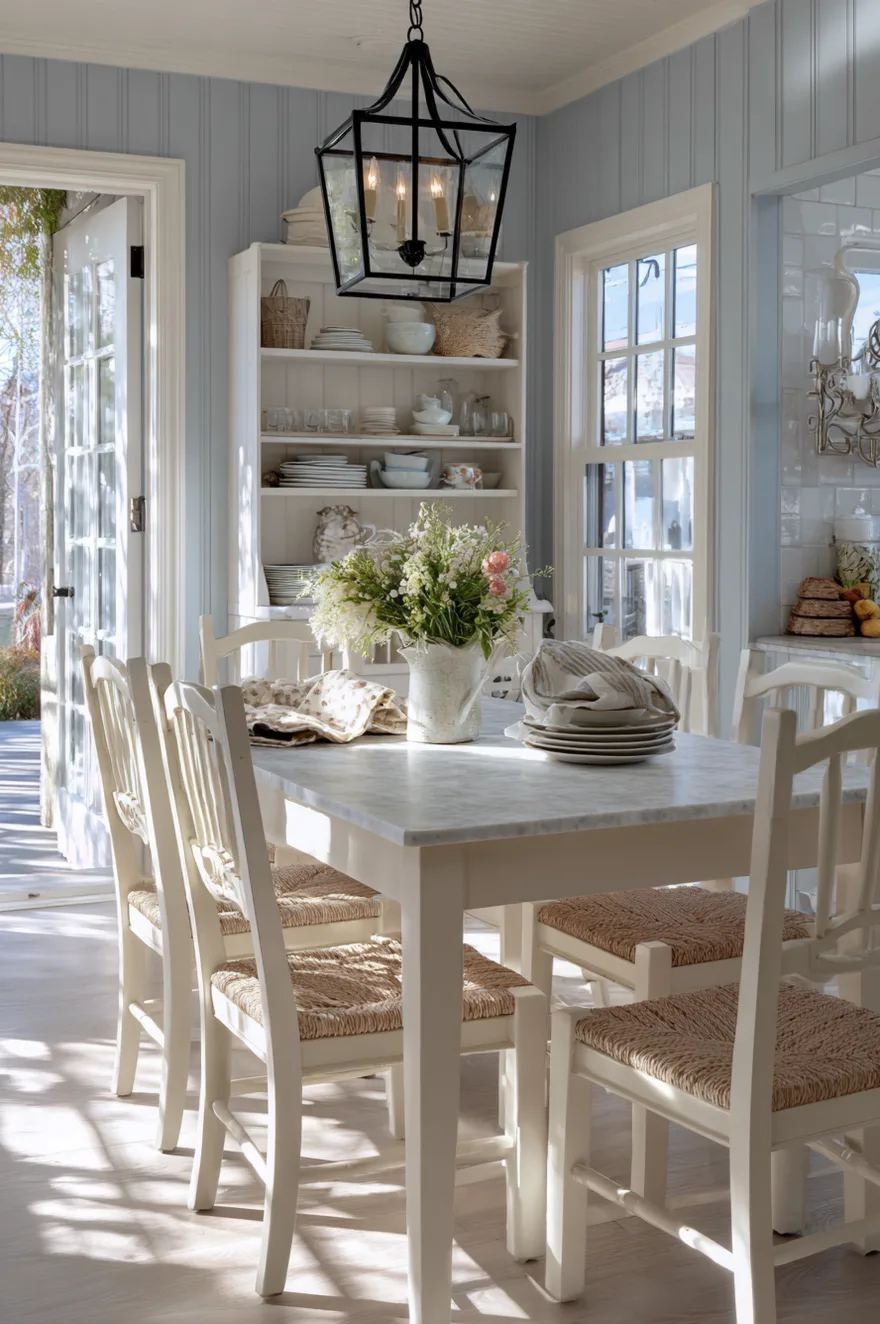
Ladder-back farmhouse chairs went through a rough patch, design-wise. The word “farmhouse” got attached to so much stuff between 2015 and 2020 that even good versions started to feel tired. But the right ladder-back – painted off-white (not stark white, off-white), with a rush seat instead of a solid wood one – is actually a classic silhouette that predates the trend by about two hundred years.
Against soft blue beadboard walls and a marble-look quartz table, the chair reads as cottage-traditional rather than shiplap-and-buffalo-check. Black iron pendant lights above keep it grounded. The rush seat detail is the thing that improves it from generic – the woven texture has warmth that a plain wood seat doesn’t, and it’s more comfortable for longer sitting.
To keep farmhouse chairs from tipping into dated territory, resist the urge to match everything. One or two modern ceramic pieces on the table, a slightly unexpected wall color – the soft blue instead of the expected white – and you’re pulling the look forward without abandoning what works about it.
8. Why I Love Rattan Counter Stools
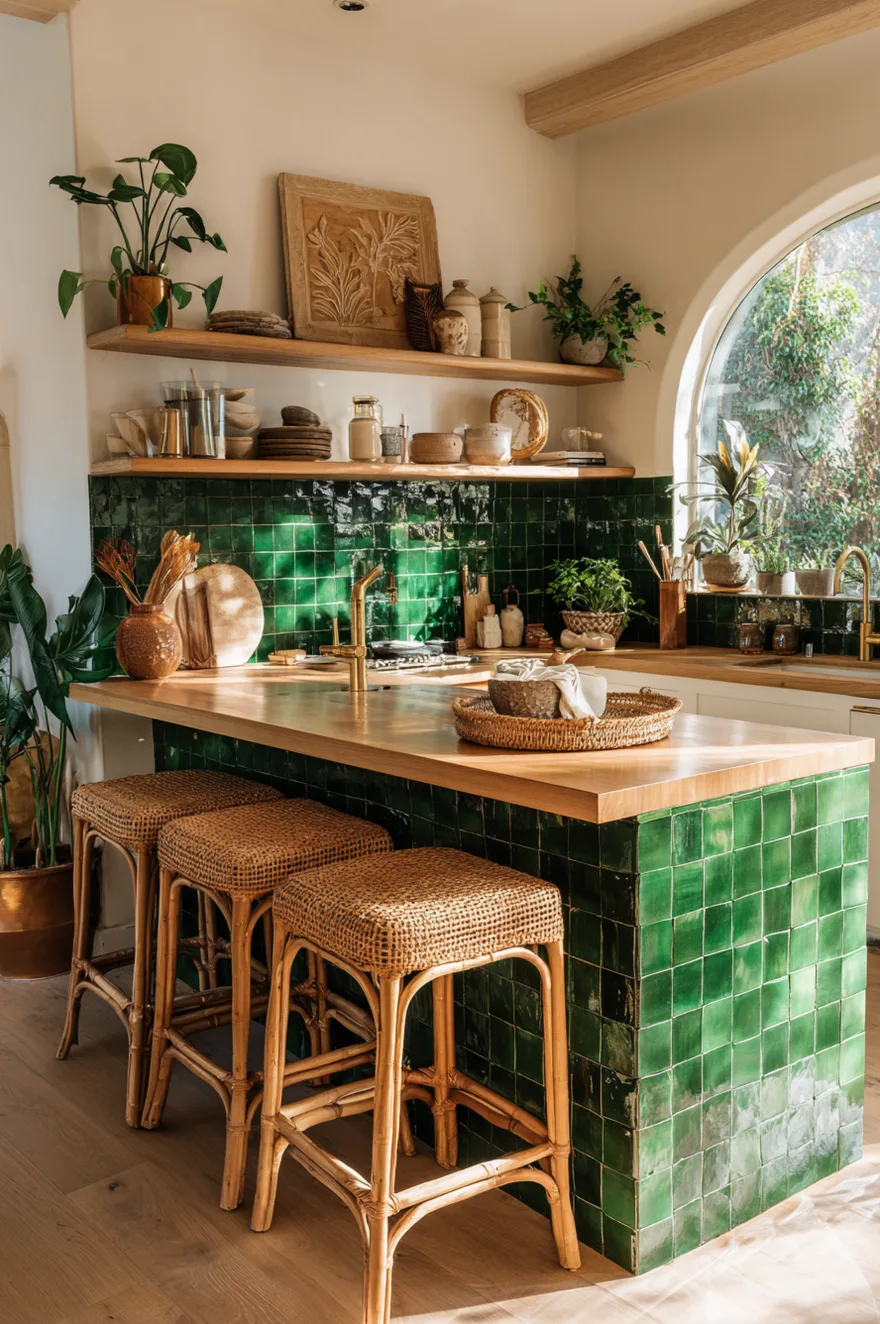
Rattan stools next to a tile-to-ceiling zellige kitchen island is one of those pairings that shouldn’t work on paper – natural fiber meets handmade Moroccan tile, both are textured, both want attention – and then it completely does work. The rattan softens the hard glossy surface of the zellige. The two textures talk to each other instead of fighting.
Under $120 a stool is genuinely achievable here. Target’s Threshold line and a handful of Amazon options land in the $80-$110 range and photograph well, which matters when you’re also trying to make your kitchen look good for the purposes of sending photos to your mother-in-law. At golden hour, the woven rattan texture catches the light and the whole setup looks like it belongs in a restaurant in Tulum. (I’m still not totally sure this combination works in every kitchen – if yours is very modern and high-gloss, rattan might fight it. But with handmade tile, yes, always.)
9. The Velvet Chair Trick Nobody Talks About
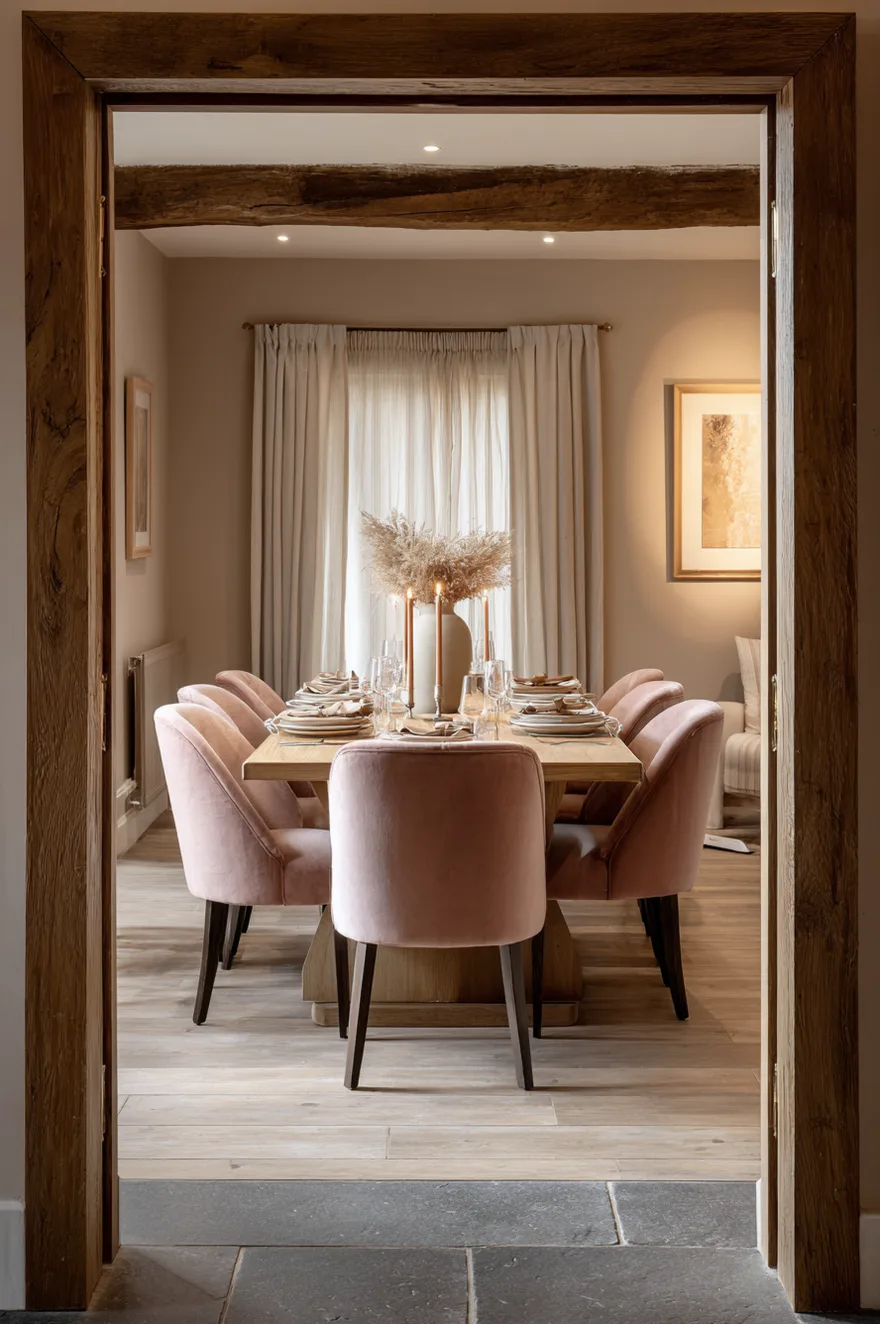
You don’t need six velvet chairs. You need two, and you put them at the heads of the table. The other four stay in natural linen. This is the move that makes a dining room look like a designer made a real decision rather than just buying a matching set.
Dusty rose velvet is the specific color worth trying here – not hot pink, not blush, dusty rose, which has enough gray in it to read as sophisticated. Against a table of natural wood and four linen side chairs, the two velvet heads become anchors. Stand in the doorway and look at the room: your eye goes immediately to those two seats, which frames the table and makes the whole composition feel intentional. And velvet at dining chairs is more practical than you’d think – a good performance velvet (more on that in section 19) wipes down easily and hides crumbs better than linen does.
10. Modern Kitchen Seating With An Industrial Edge
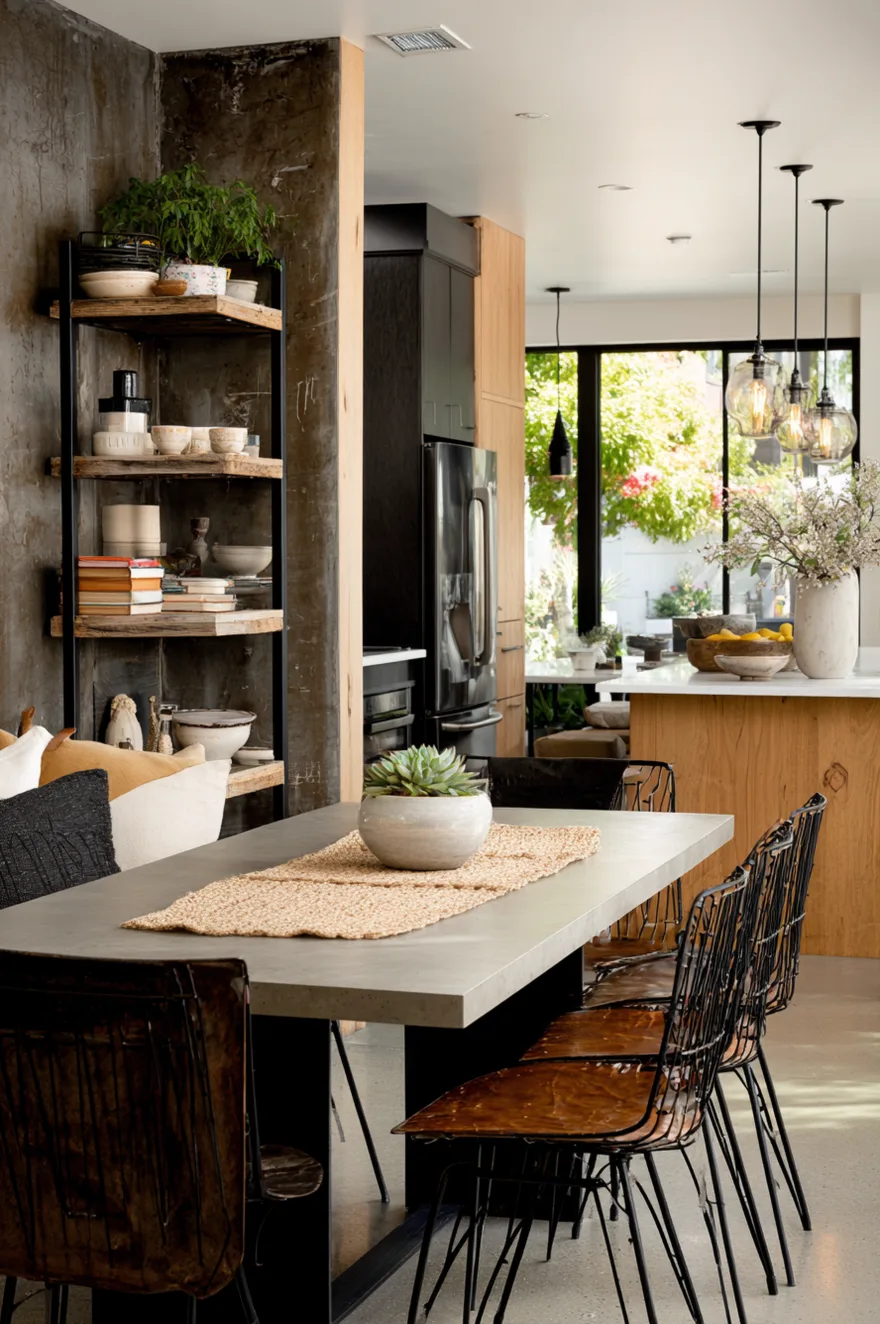
Hairpin legs are one of those details that do a lot of work for their size. A metal hairpin leg on a dining chair in solid ash changes the entire register of the piece – suddenly it’s not just a wooden chair, it’s a wooden chair with a loft-industrial edge, and that small shift in material language ripples out to the rest of the room.
Pair saddle seats in solid ash with hairpin legs around a poured-concrete-look laminate table (the laminate versions are genuinely good now and cost a fraction of real concrete) and you’ve got a kitchen that reads as intentional without being precious. Cement tile flooring and exposed Edison bulb pendants above do the rest. The ash grain and the concrete gray are both warm-toned neutrals, which is why they work together – neither one fights the other.
Practically: look for hairpin-leg chairs where the legs are welded directly to a metal seat plate that then attaches to the wood seat. Legs that screw directly into wood loosen over time, especially with daily use on tile floors. And measure the chair height against your table – hairpin-leg chairs tend to run slightly taller than standard dining height, so check before you order.
11. Spindle-Back Chairs For A Collected Look
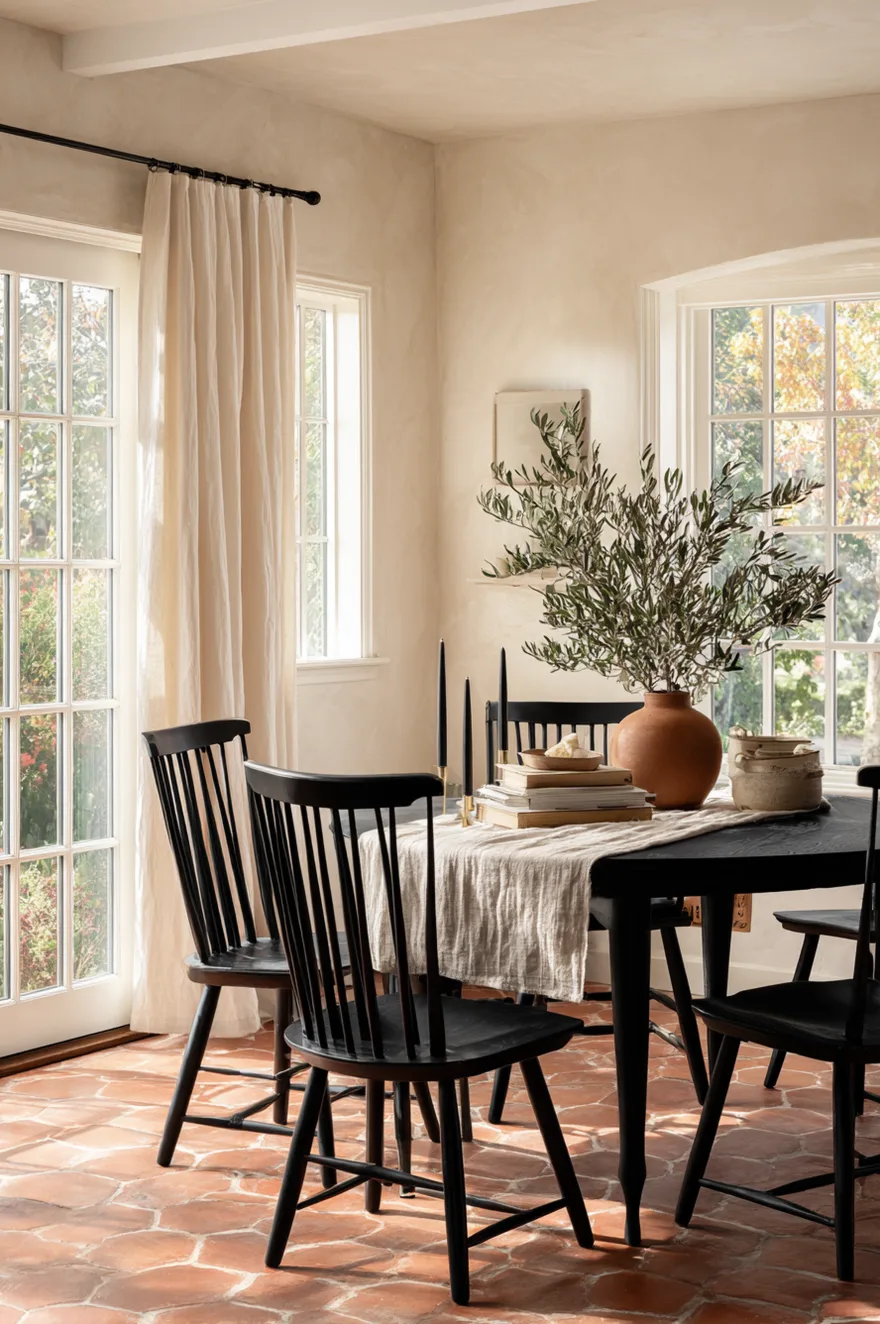
Windsor chairs are one of those silhouettes that keep showing back up in design because the geometry is genuinely good. The fan of spindles creates movement without fussiness. A distressed black finish on a classic Windsor brings the traditional form into something that reads contemporary – especially against warm cream plaster walls and terracotta hex tile underfoot.
What makes the spindle silhouette so useful is that it bridges traditional and contemporary styling without forcing you to commit fully to either. Spindle-back chairs at a mid-century oval table feel right. Spindle-back chairs at a farmhouse trestle table also feel right. They have enough inherent character that they work as an anchor piece around which you can mix other styles freely.
The distressed black finish specifically is worth hunting for in secondhand markets. Original Windsor chairs in old black paint show up at estate sales and flea markets regularly, and the old paint has a depth that a fresh coat of spray paint just doesn’t replicate. I found two at a market in Escondido for $30 total – they were already in distressed black, already had the worn-in look, and I brought them home and did nothing to them. That’s the dream. Look for ones where the spindles are all intact (replacing a single spindle is a whole project) and the seat is solid, with no cracks running through it.
12. A Breakfast Nook That Earns Its Corner
I have wanted a breakfast nook since approximately 2019. Our current house doesn’t have a corner that works for one, which I’ve made peace with, but I’ve helped two friends build theirs and both times it completely changed how they used their kitchen. A corner that was dead space – a chair nobody sat in, a plant that was just there – became the place everyone ended up every morning.
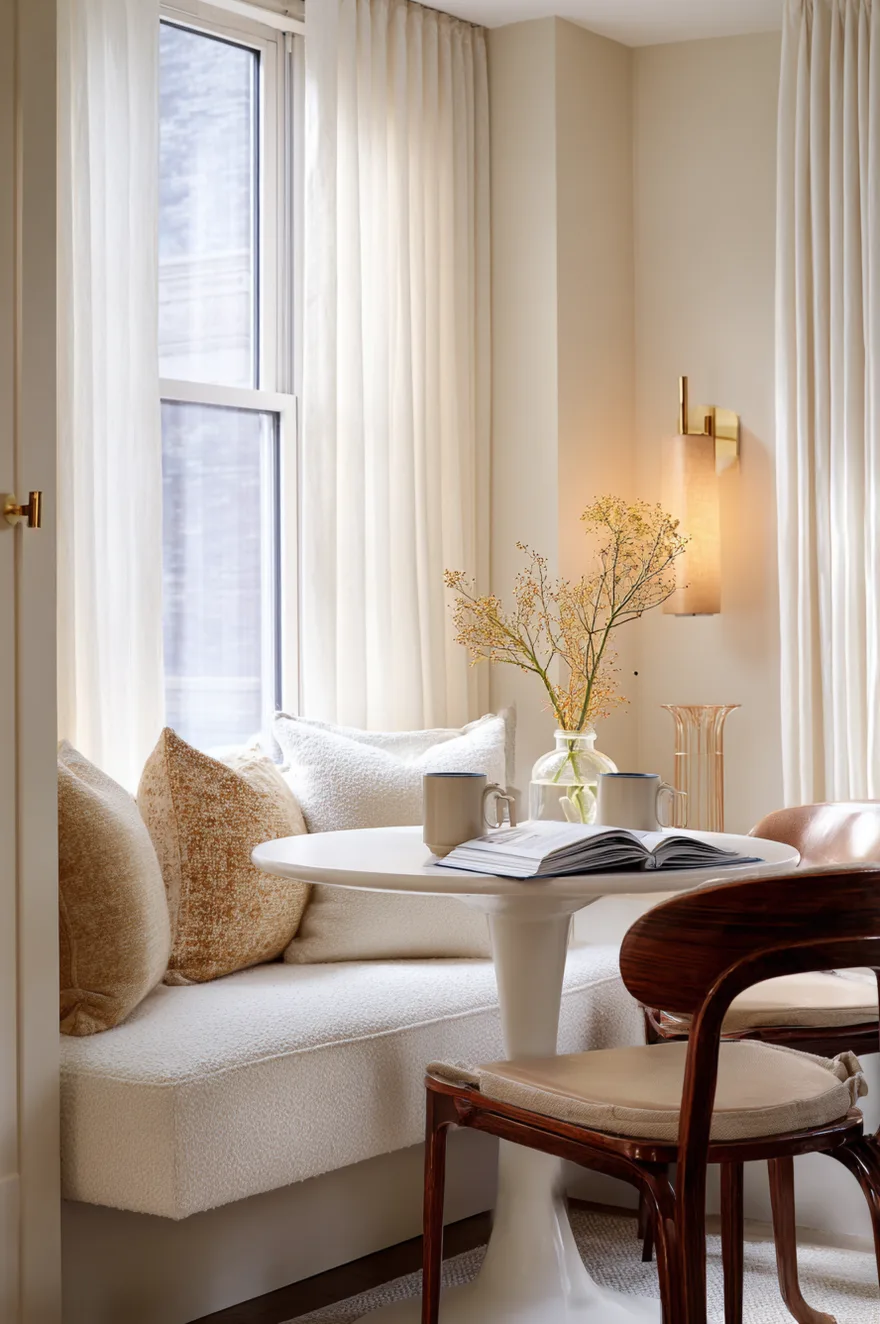
The combination that keeps working: cream boucle for the banquette upholstery, two bentwood chairs across a small round pedestal table, and enough lamp light nearby to make it feel distinct from the rest of the kitchen. The boucle reads warm and nubby, which contrasts nicely with the smooth curved lines of bentwood. A round pedestal table in that size (usually 30-36 inches) keeps the space from feeling crowded – no table legs to navigate around, more foot room for everyone.
Shot from the doorway at golden hour with a lamp on, this is one of those spaces that looks like a very specific lifestyle. Two coffee mugs. An open book face-down on the table. The dog not in the shot but definitely just off-frame. If you have the corner, do this. The built-in banquette adds storage underneath too – lift the seat, store the board games and extra linens. Practical and good-looking, which is usually the combination worth chasing.
13. Counter Stool Inspiration From A $60 IKEA Hack
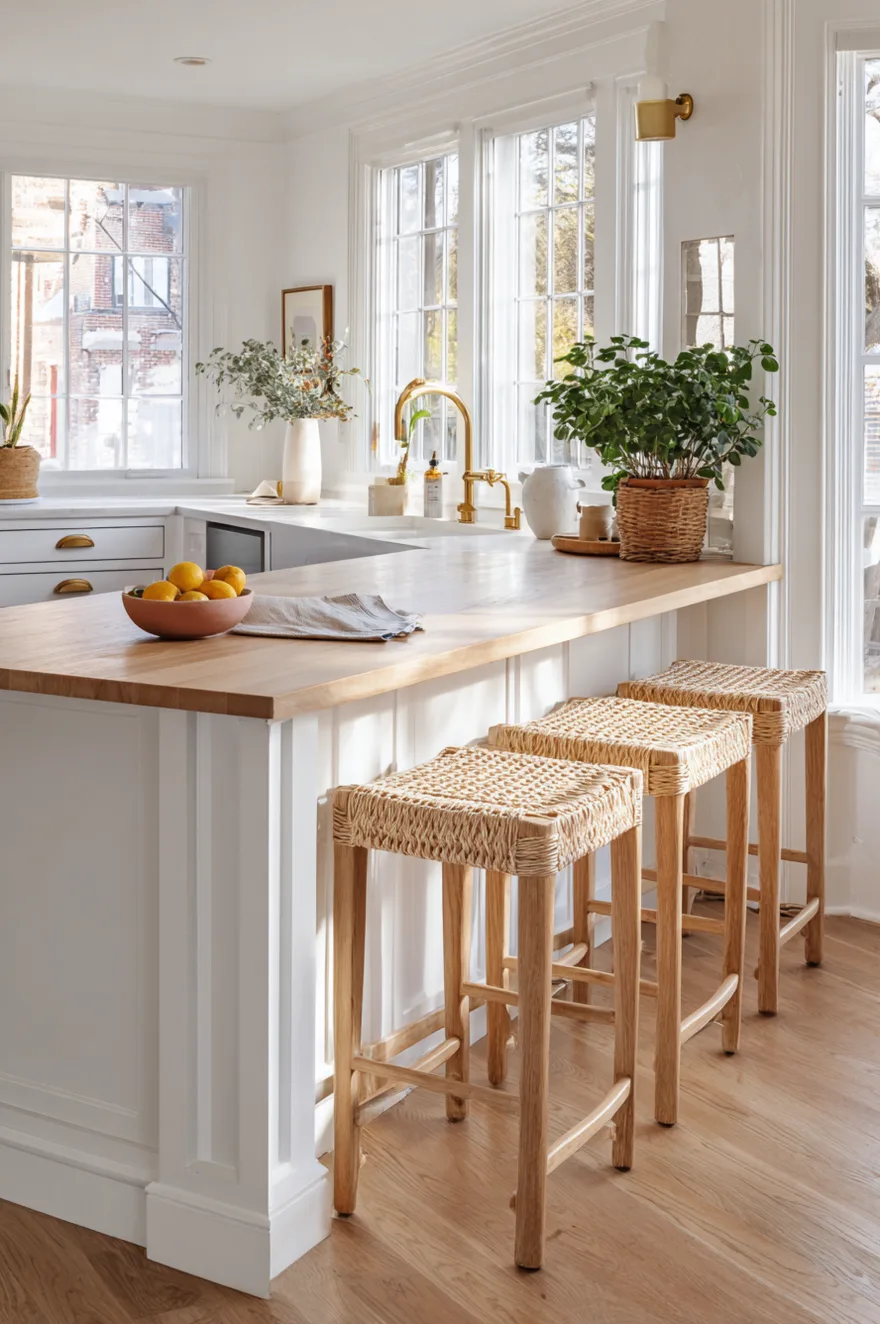
I swore I’d never do an IKEA hack. Too crafty, too much effort, too many tutorials that look easy and then take eleven hours. And then I saw someone press cane webbing into routed seat holes on a plain wooden counter stool and paint the whole thing in terracotta chalk paint and I immediately went to buy three plain IKEA stools.
The cane insert is the key detail – it takes the stool from generic wooden seat to something that looks like it belongs in a kitchen design Instagram account. At a white oak island with unlacquered brass fixtures catching the afternoon San Diego light, the terracotta and cane combination looks warm and intentional. Total cost for two stools, the cane webbing, and the paint: around $60. That’s a real number.
14. Mix Metals, Mix Chairs, Match The Mood
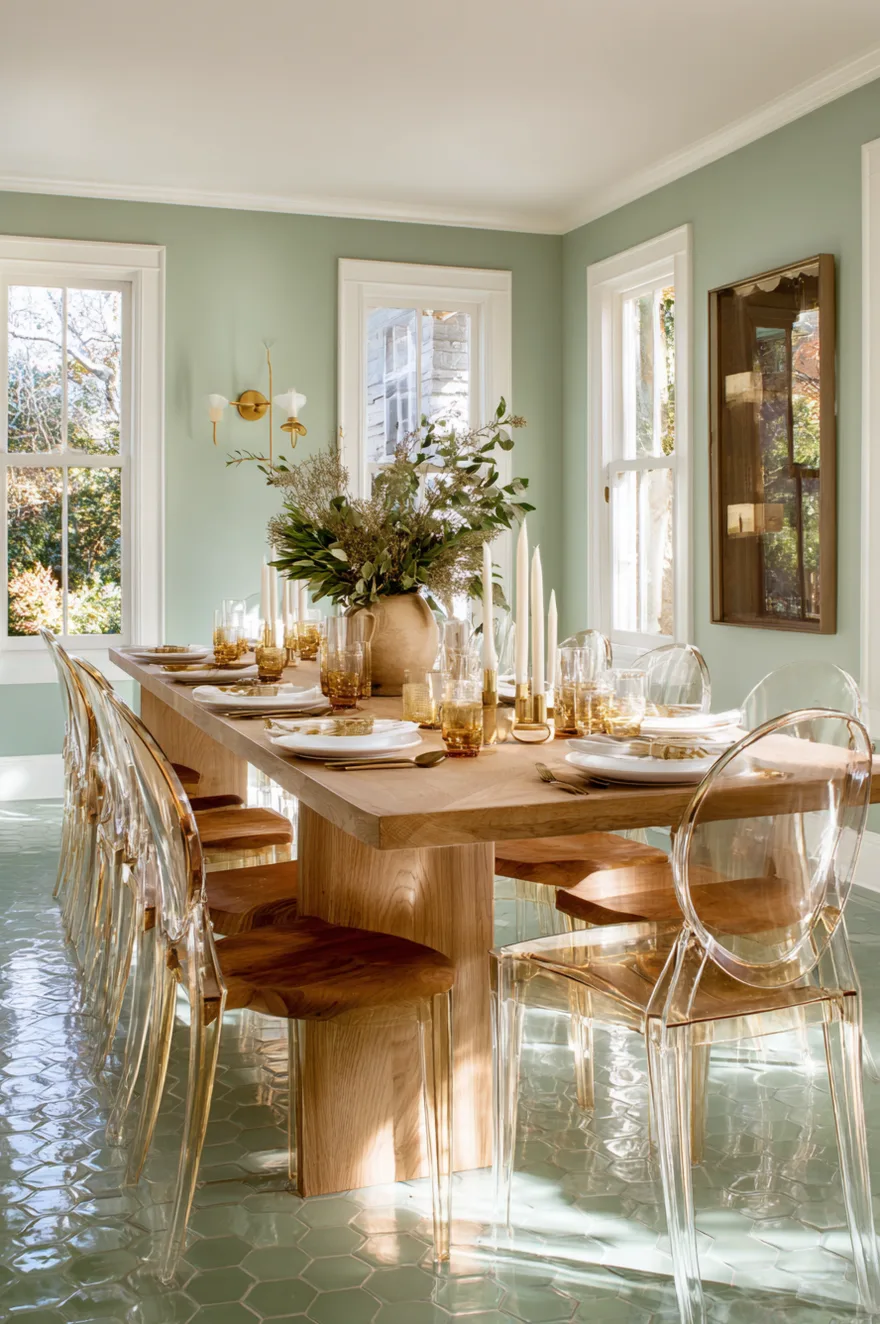
Alternating ghost-style acrylic chairs in brushed gold with warm oak wood chairs around the same table is a move that sounds risky and reads as considered. The acrylic disappears visually, which means the oak chairs become the visible form and the gold chairs become the accent. Against a soft sage wall with marble hex tile underfoot, the whole thing feels light and layered rather than chaotic.
Mixing chairs at a single table works when you have one unifying element – same seat height, same table, or (as in the velvet trick from section 9) a deliberate color anchor. Here, the brushed gold acrylic and the warm oak share a warm undertone. That’s the thread that holds the mix together. If you tried this with a cool gray acrylic and a warm honey oak, the disconnect would be more obvious.
15. Dining Room Decor Trends Worth The Investment
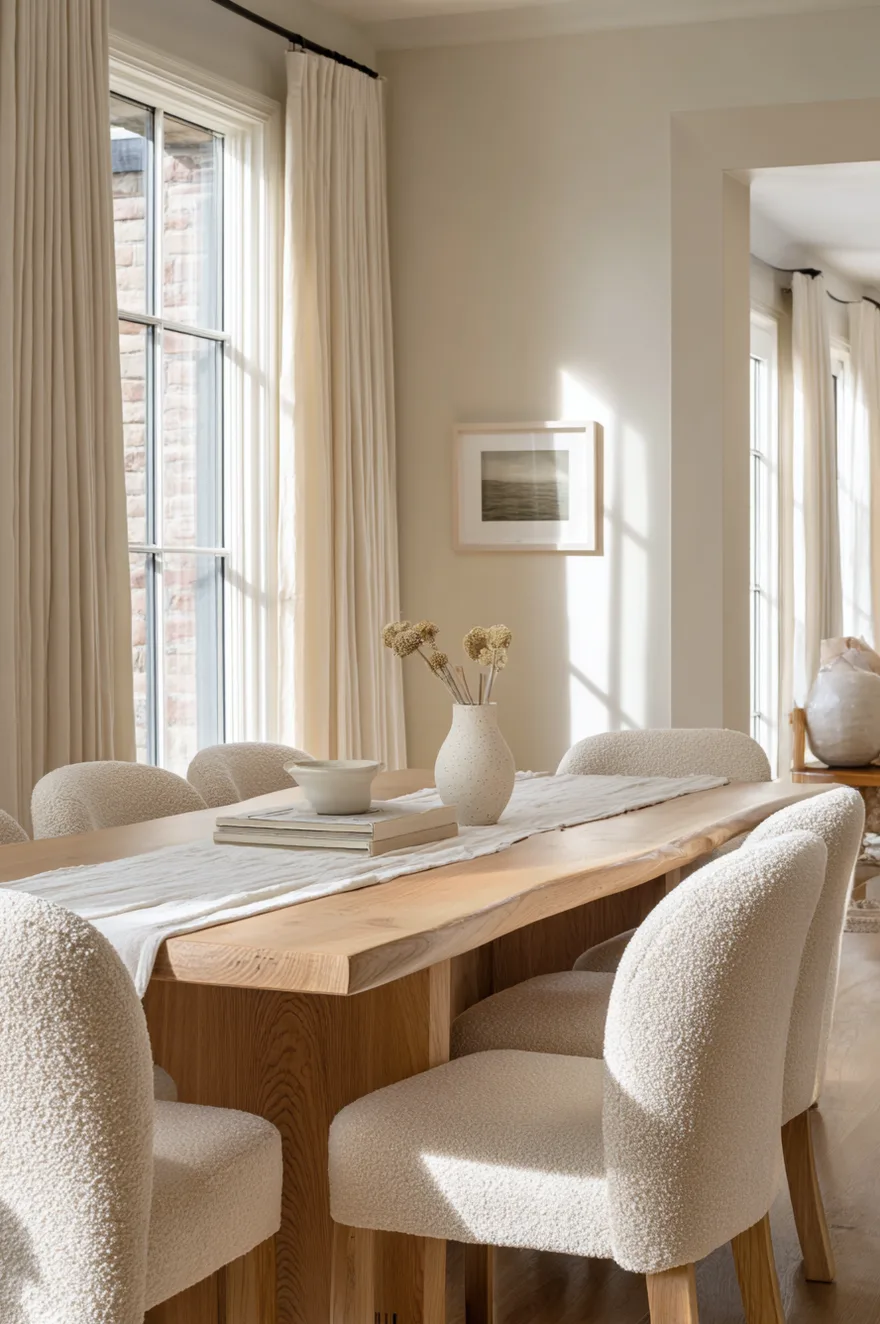
Curved dining chairs are everywhere right now and I think they’ll stick around. The barrel back silhouette – low, curved, upholstered – is genuinely comfortable in a way that most dining chairs aren’t, and it photographs beautifully around a live-edge oak table because the organic curves of the wood and the chair back echo each other.
In an oatmeal bouclé, the nubby texture adds dimension without pattern. Against a live-edge table with all the natural variation in the wood grain, you don’t need anything else competing. Keep the accessories simple: a ceramic vase, a linen runner, a few stacked books.
Price reality: good curved upholstered dining chairs run $250-$450 each from mid-range retailers like Article, Castlery, or similar. That’s real money. But if you’re buying four and keeping them for ten years, the math starts to feel reasonable. Lower-priced versions exist on Amazon in the $150 range – some are fine, some have foam that compresses within a year. Feel the seat depth before you commit if you can; you want at least 3.5 inches of foam. This is one of the dining room decor trends I’d actually spend a little more on.
16. The Stool Height Mistake Everyone Makes
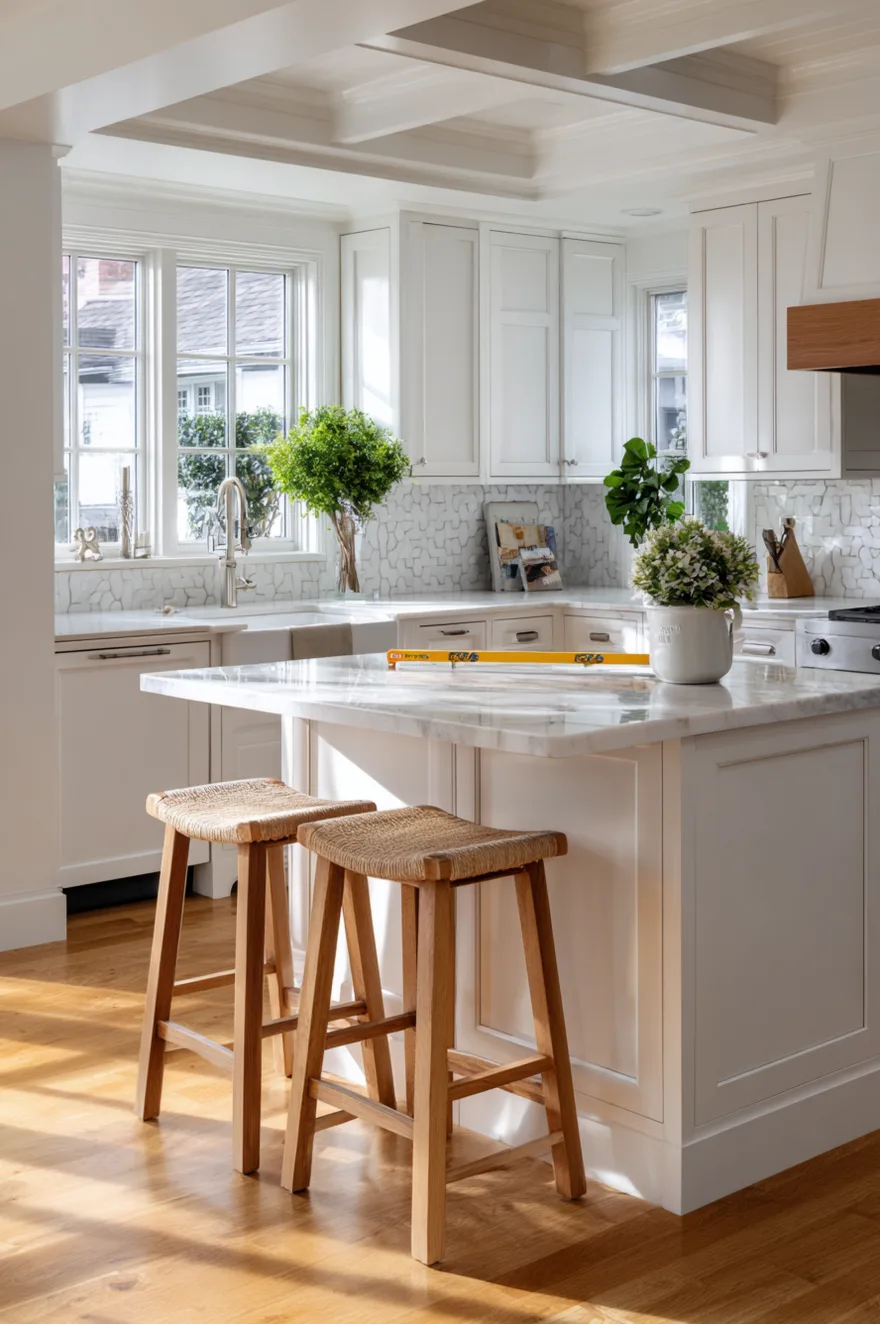
Counter height and bar height are not the same thing, and ordering the wrong one is a genuinely miserable experience. Counter height islands (the standard 36-inch kitchen counter) take a 24-26 inch stool. Bar height surfaces (42 inches, usually a raised island or a home bar) take a 28-30 inch stool. Those are completely different chairs, and the names are used interchangeably online in ways that will get you into trouble.
Here’s the practical check: measure from the floor to the underside of your island overhang. You want 9-12 inches of clearance between the stool seat and the counter surface. Less than 9 inches and you’re eating with your elbows above your plate. More than 12 inches and you feel like a toddler at a grown-up table – ironic because I spend a lot of time in that situation, but not by choice. And while you’re measuring: check the overhang itself. A 10-12 inch overhang gives comfortable knee room. Anything under 8 inches means you’ll be perching at an angle regardless of stool height, and no amount of good stool selection fixes that.
17. Kitchen Chair Ideas That Work For Renters
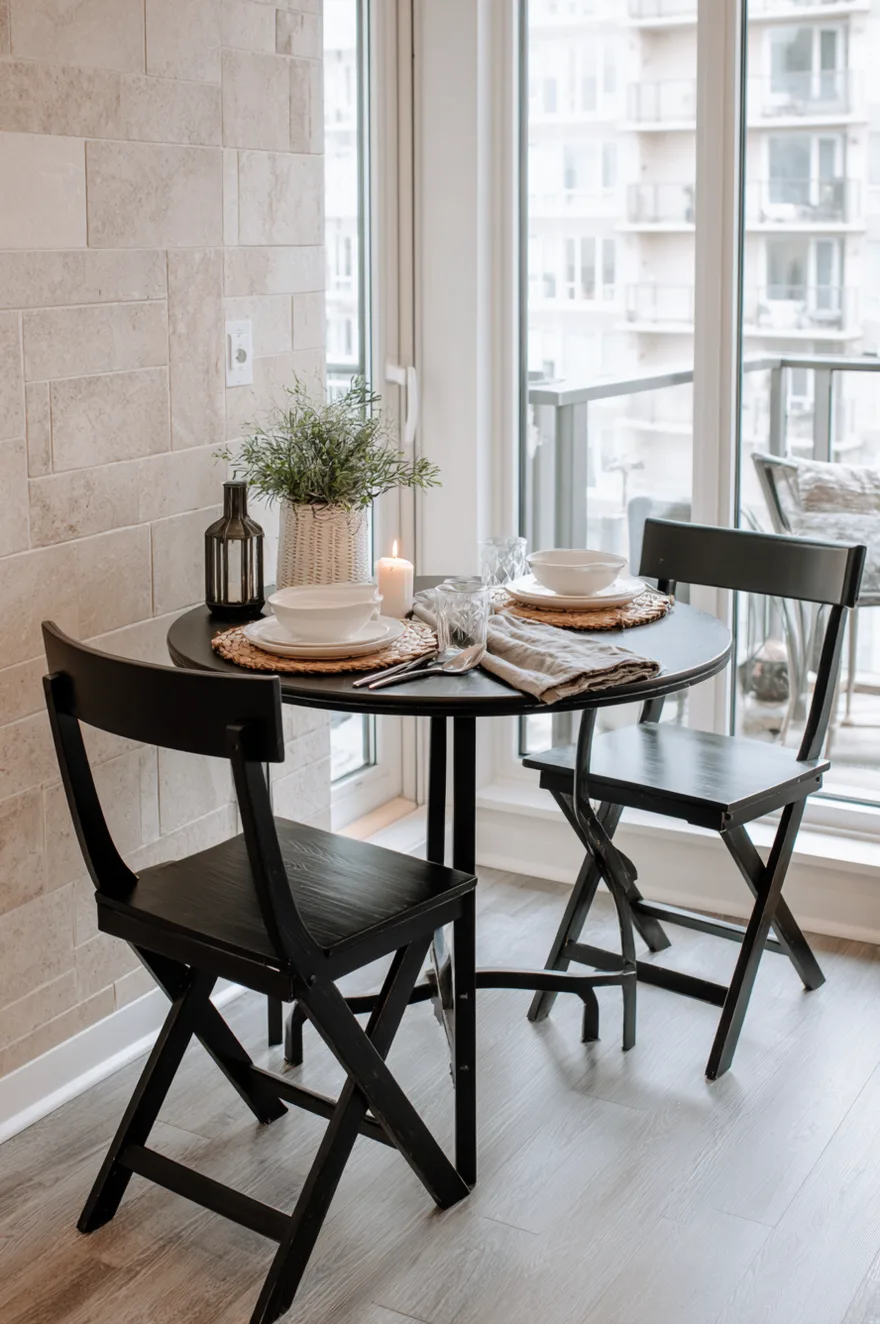
Foldable solid-wood bistro chairs in a matte black finish are one of the more underrated renter-friendly options out there. They stack flat against a peel-and-stick stone-look tile wall when not in use. They’re lightweight enough to move when you’re vacuuming. And they look genuinely good – clean, simple, graphic – rather than provisional.
The matte black finish on solid wood (not hollow or particleboard – check the weight when you pick them up, solid chairs are noticeably heavier) reads as intentional rather than cheap. Find them on Amazon or at a restaurant supply store, where the commercial versions are slightly sturdier and often cost less than the “designed” retail equivalents.
18. Painted Chairs Are Having A Moment
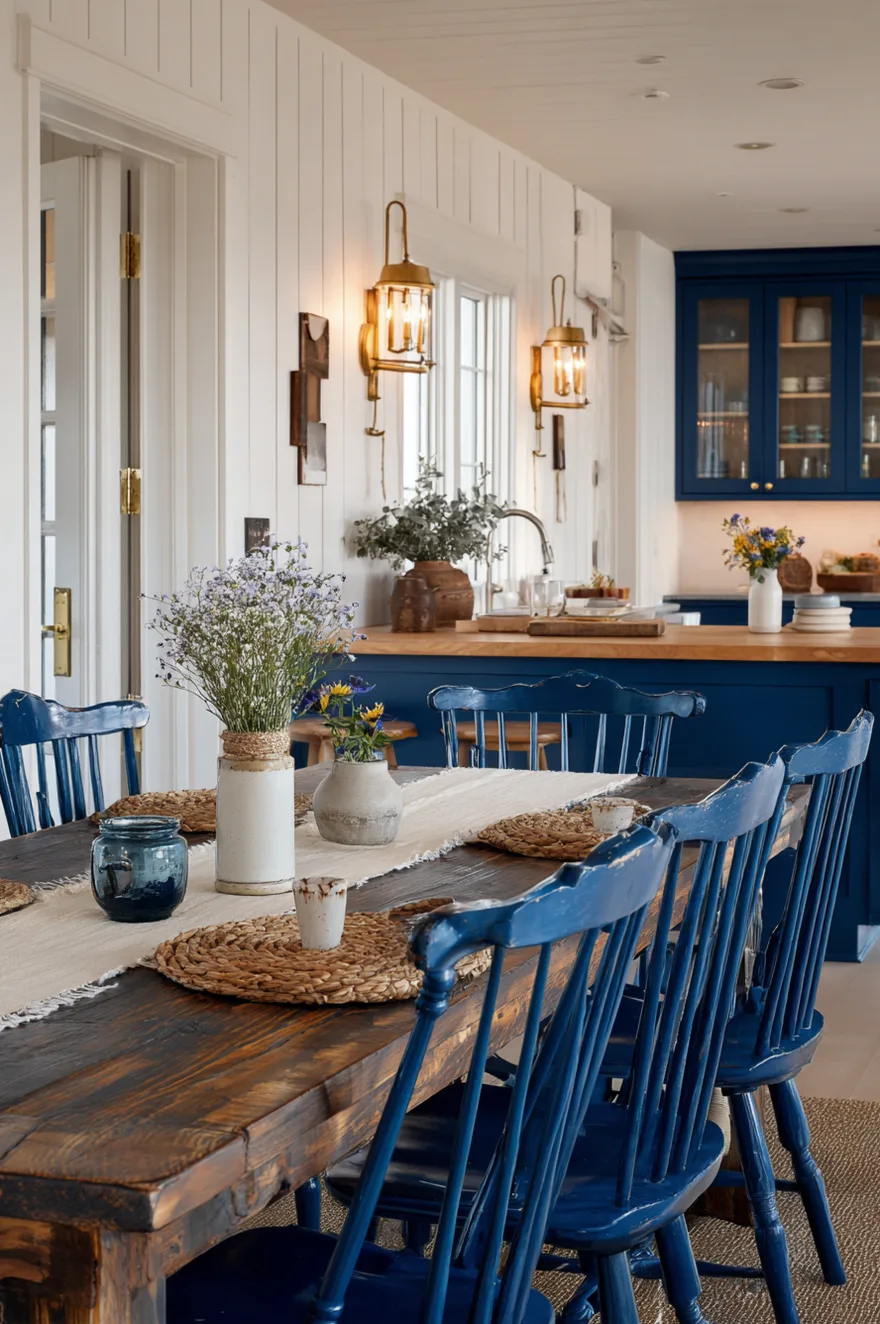
Deep cobalt blue on a set of mismatched secondhand chairs is one of those ideas that sounds bold and then, in execution, looks completely committed and right. Not a wishy-washy blue – deep cobalt, the kind that reads almost like a navy but with more personality. Against cream shiplap and butcher block, with brass sconces on at dusk, the blue chairs become the whole point of the room.
The thing about painting chairs a single strong color is that it also solves the mismatched problem from section 4 – you don’t need them to match in shape or silhouette because the color does all the unifying work. A spindle-back and a Windsor and a simple ladder-back, all in the same cobalt, will read as a set. I would do this in a kitchen with a lot of neutrals and no other color. Let the chairs be the thing.
19. Upholstered Seats That Survive Real Family Life
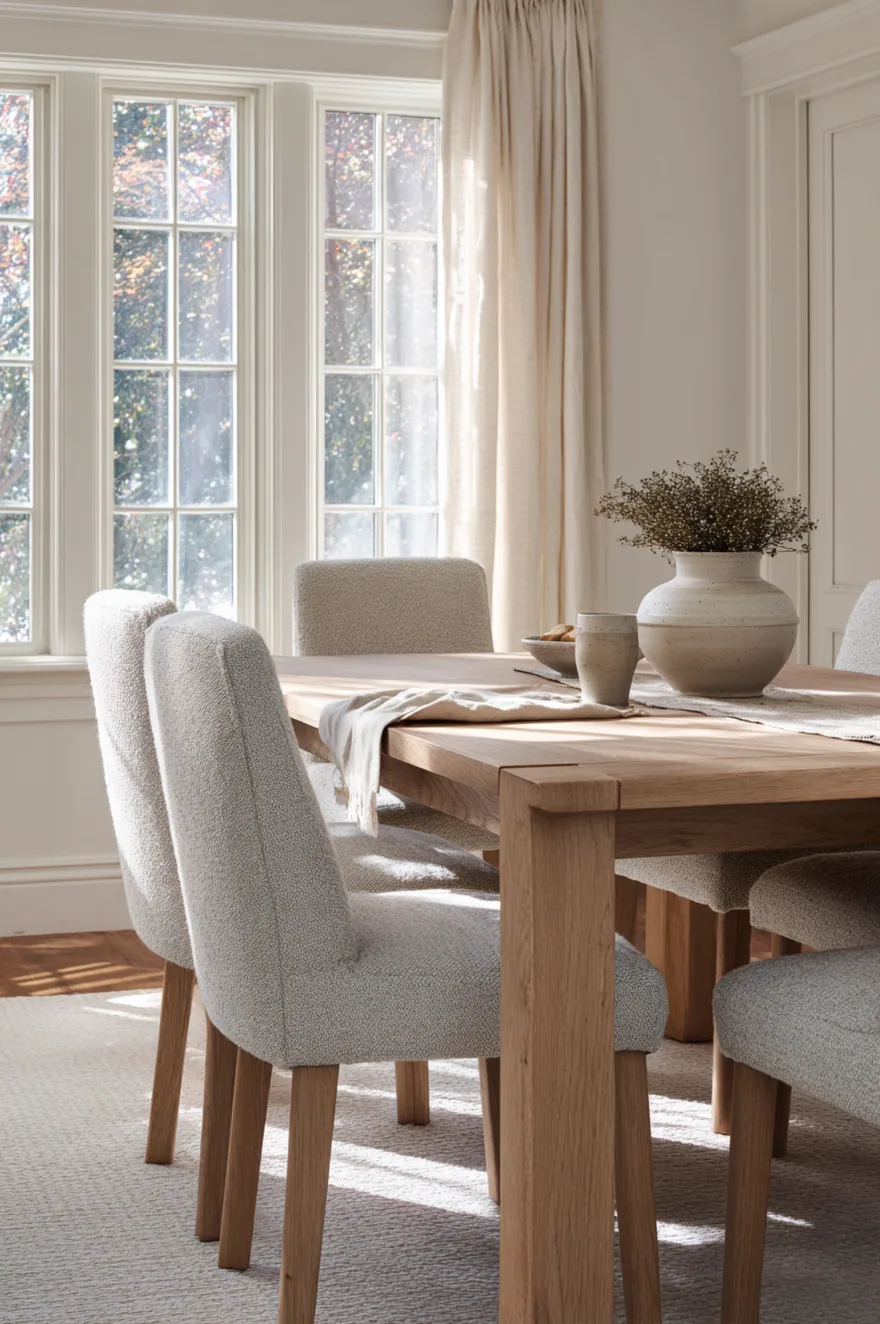
Performance fabric is a term that gets thrown around a lot without much explanation. Here’s what it actually means: the fiber has been treated or engineered to repel liquids, resist staining, and hold up to cleaning without breaking down. Most performance fabrics are solution-dyed – the color goes all the way through the fiber rather than sitting on the surface – which means a scratch or a scuff doesn’t expose a different color underneath.
For dining chairs specifically, look for performance weaves in polyester or a polyester-nylon blend. Olefin is another good option – it’s what a lot of indoor-outdoor fabrics are made from, and it’s genuinely wipeable with a damp cloth. A speckled stone-grey woven textile is a particularly good choice because the variation in the weave hides small debris between cleanings. (I learned this the hard way with a solid cream linen chair that I owned for four months before Nora introduced it to a blueberry.)
To check stitching quality: flip the chair and look at the corner seams. Clean, tight stitching with no loose threads and a double-stitched corner is a good sign. Pull gently on the fabric near the corner – it shouldn’t shift or pucker. Fast-furniture shortcuts show up most obviously at the corners and at the front edge of the seat, where the most stress lands. A solid beech frame under the upholstery is a good sign too; beech is denser than poplar and holds screw fastenings better over time, which matters when the chair gets pulled out and pushed in a hundred times a week.
20. Why A Stool With A Back Changes Everything
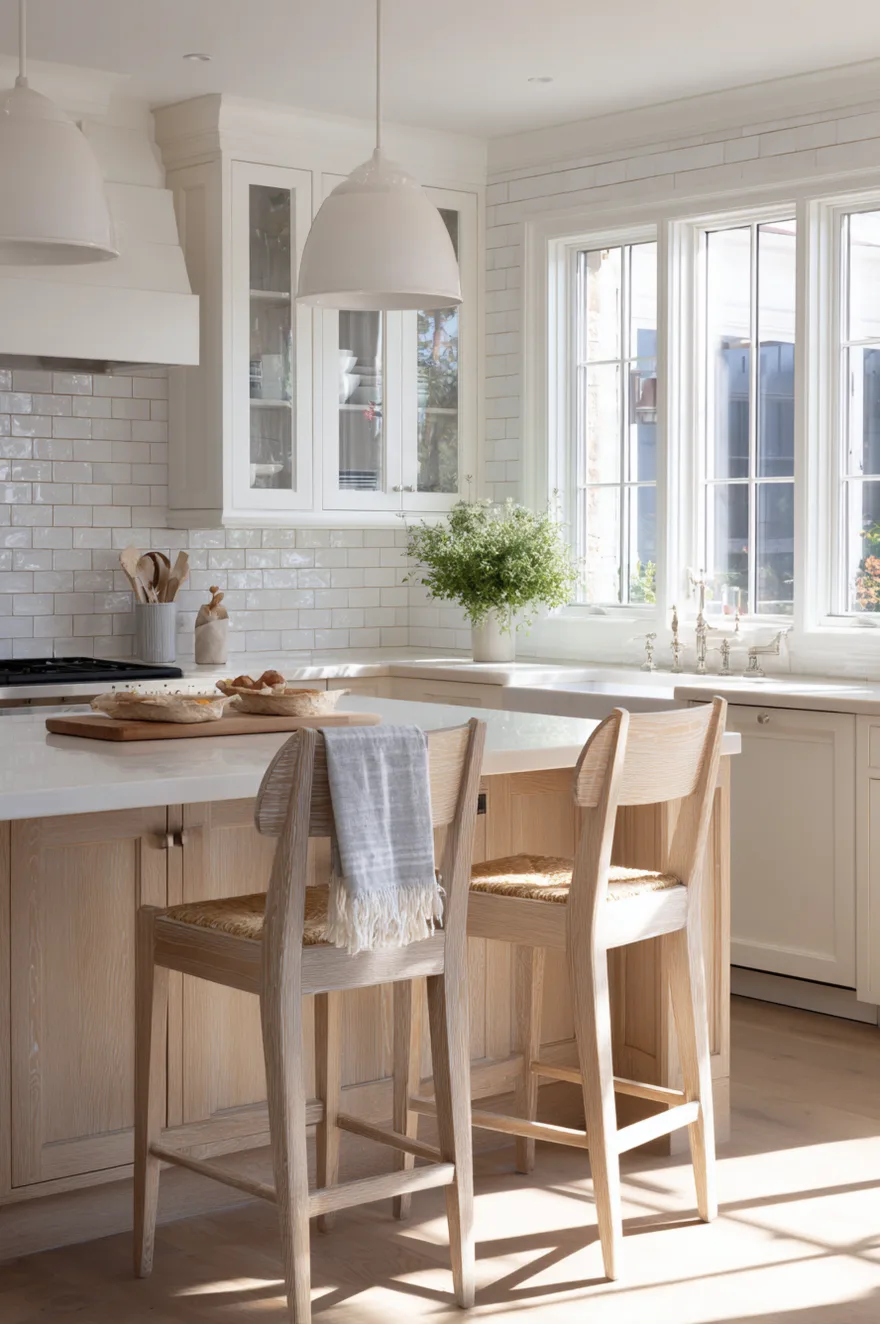
Backless stools look cleaner. That’s true. A backless silhouette tucks under the counter, keeps the sightlines open (see section 3), and photographs without visual interruption. But for anything longer than twenty minutes of sitting – a weekend brunch, a homework session, a slow morning with a laptop – the absence of lumbar support becomes genuinely uncomfortable.
A low-back stool with a subtle arch detail in white oak splits the difference well. The back is low enough that it still reads as open and minimal from across the room. But it gives your lower back something to contact, which changes the quality of sitting entirely. Against a tile-to-ceiling white subway island, the warm white oak arch detail adds exactly the right amount of warmth without breaking the clean line of the backsplash. My honest take: if your island is where people actually sit and stay – not just perch for a few minutes while someone passes them a coffee – get the back. The visual breathing room isn’t worth an aching lower back by noon.
21. Modern Kitchen Seating On A Thrift Store Budget
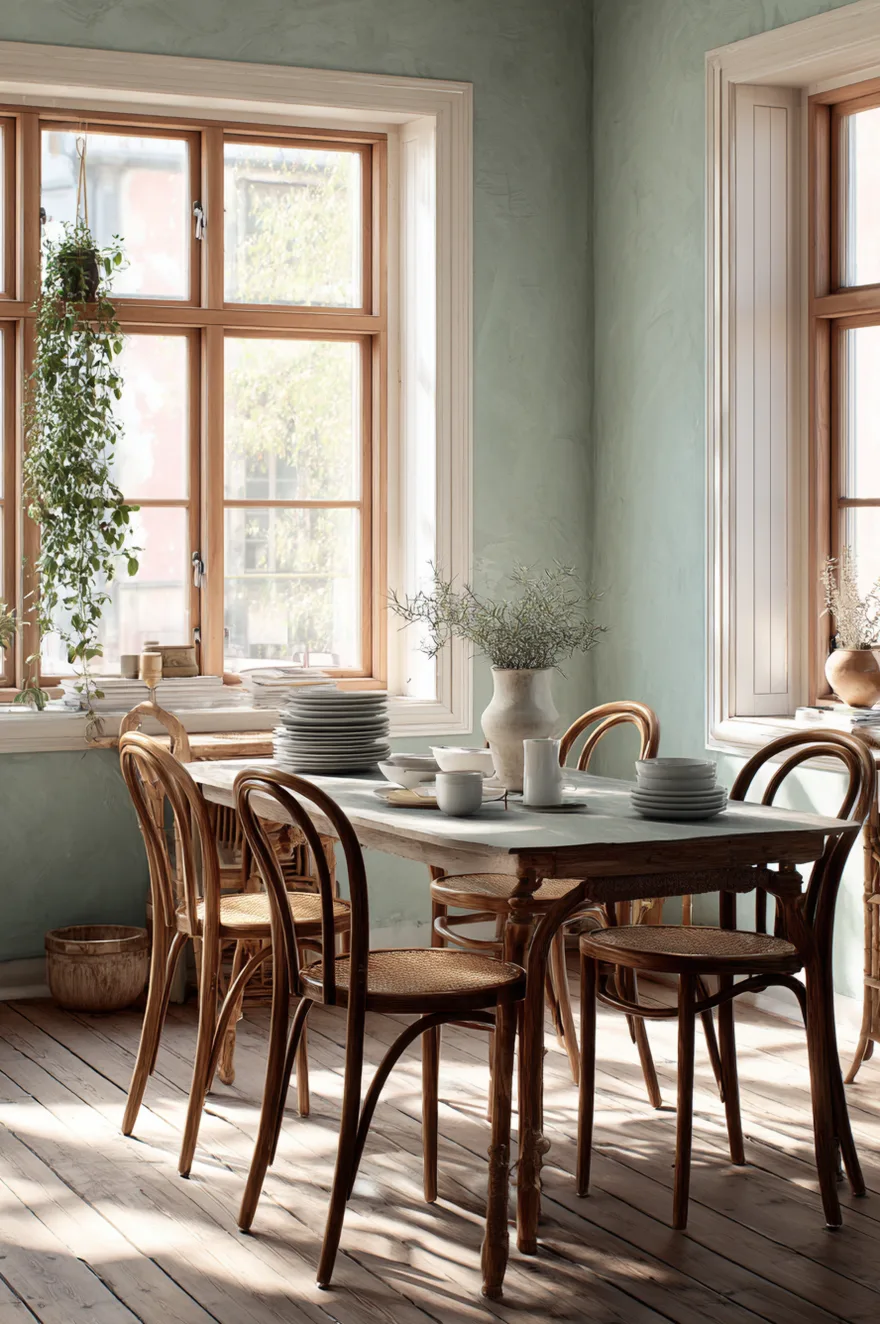
Four bentwood café chairs at $8 each sounds too good to be true. It was a Tuesday morning at a thrift store in National City, and they were stacked in a corner with a handwritten tag on the top one. The cane seats on two of them were blown out, which is why they were $8 instead of $30. I bought all four.
Re-caning a seat is one of those projects that looks intimidating and is actually just methodical. You soak the new cane webbing in warm water until it’s pliable, press it into the routed groove with a wood wedge, and tuck the edges under with a rubber mallet and a thin piece of spline. Done in an afternoon. I sanded the chair frames lightly and left the natural bentwood alone – no paint, just a wipe-down with mineral spirits to clean them up and a coat of lemon oil to re-hydrate the wood.
At a $200 IKEA dining table against a soft sage plaster wall, these chairs look like a considered vintage mix. The bentwood curves contrast with the clean lines of the flat-top IKEA table in a way that feels layered and collected. Total investment for four chairs, cane webbing, and supplies: around $50. That is my favorite money I have ever spent on furniture.
22. The Chair That Does Double Duty
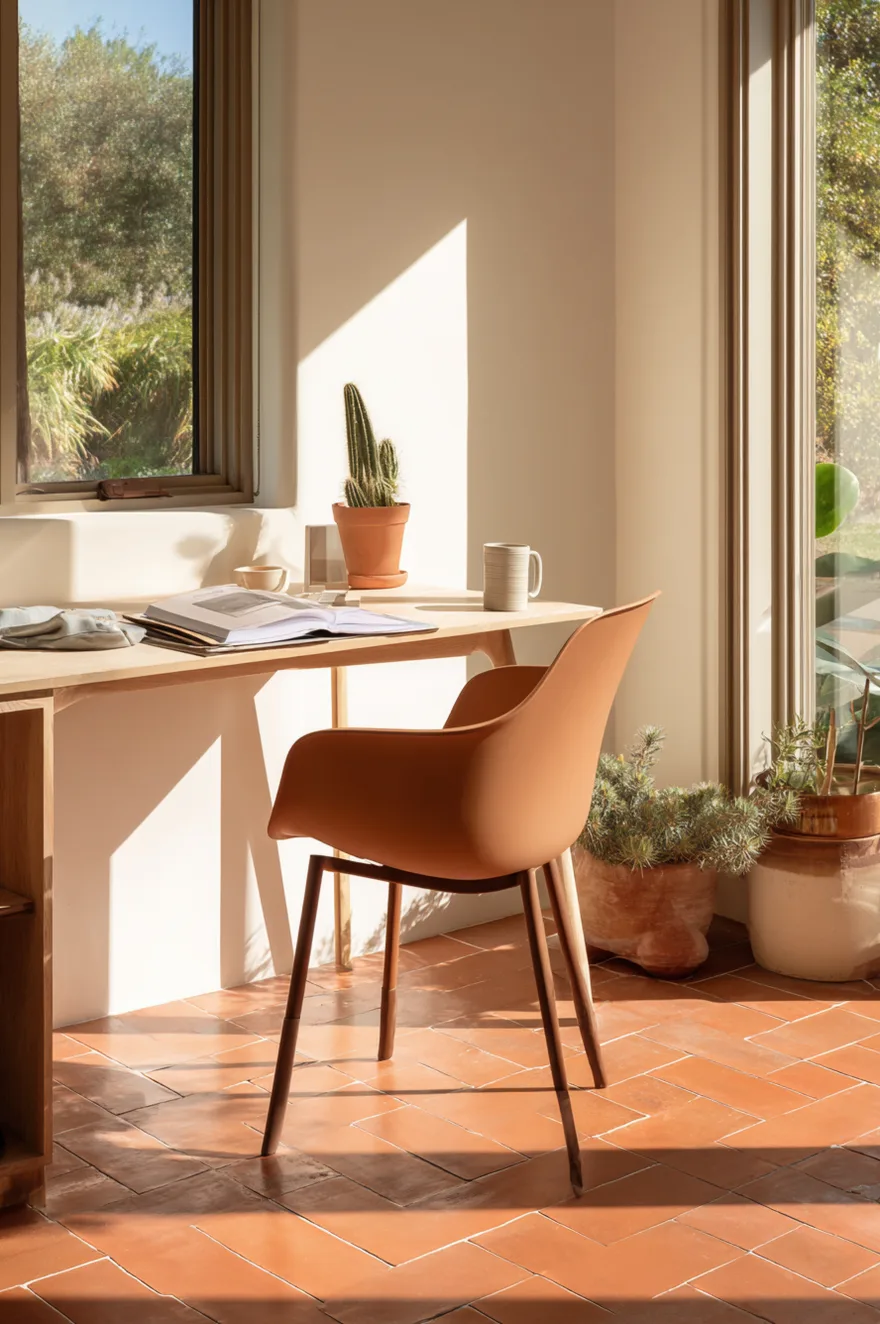
A slim polypropylene shell chair in warm sand is one of those objects that just quietly solves problems. At the dining table, it’s a clean modern seat. Pulled to the corner of the kitchen where my laptop lives, it’s a desk chair. Stacked in the closet when we have more people than chairs at a dinner, it barely takes up space. The stackable part matters more than people think until they live with it.
The warm sand tone is specifically useful because it reads as neutral-warm rather than cool-clinical, which is the problem most plastic chairs have. Against terracotta tile flooring, the sand shell picks up the warmth of the terracotta without matching it directly. And polypropylene wipes clean completely – a quality that becomes relevant the moment you have a small child or a golden retriever who also technically lives in your house and feels entitled to all the same surfaces you do.
23. One Bold Seat Changes The Whole Room
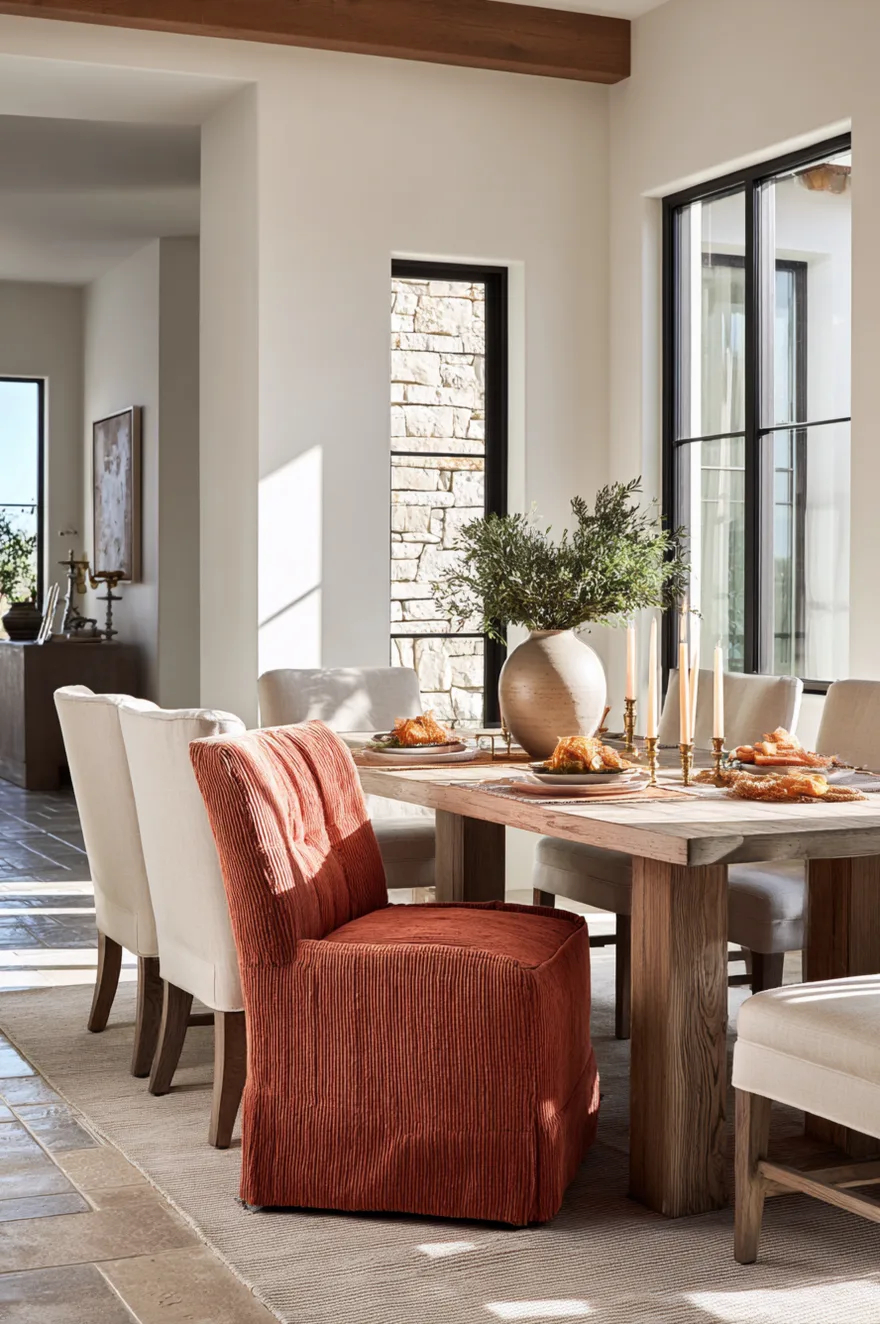
You need one paprika-orange linen armchair at the head of an otherwise completely neutral dining table. Natural wood, cream walls, stone floor, four quiet side chairs – and then that one seat. The linen texture in paprika is warm and matte, and the color has enough red in it to feel bold without reading as a mistake.
The single statement seat works because neutrality is the backdrop, not the decision. Putting one interesting chair at the head of the table says someone made a choice here. Everything else in the room is doing its job quietly. This one thing is doing something. And you only need one.
I’d start with two or three of these rather than trying to redo everything at once. The mismatched painted chairs and the stool height measurement are both low-effort, high-return. The breakfast nook will require more planning but is genuinely worth it if you have the corner. Honestly, even just swapping your counter stools can make the whole kitchen feel like a different room – it’s a faster reset than almost any other single change you can make. Let me know in the comments which of these kitchen and dining chair ideas you’re actually considering, or send me a picture of what you’re working with and I’ll tell you what I’d do.
With love,
Liv